
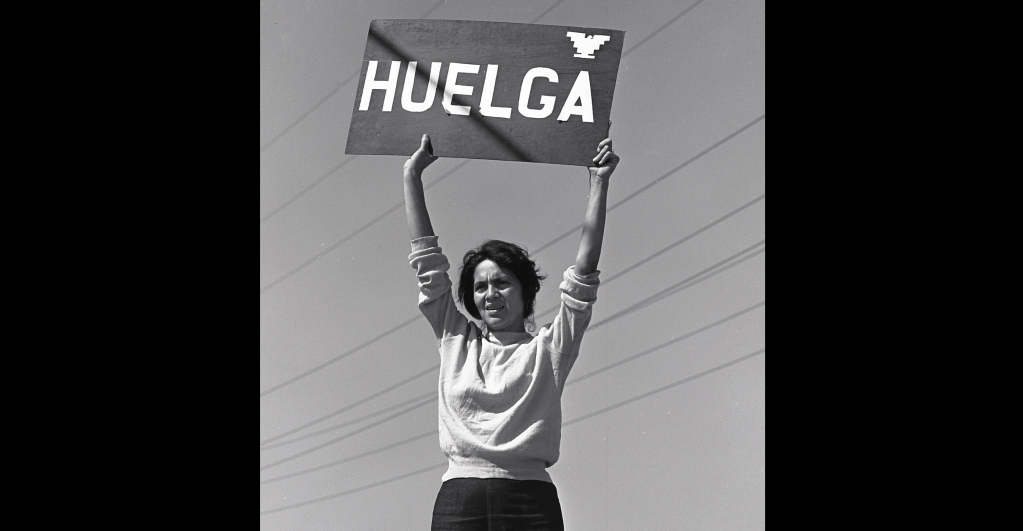
The Seattle teachers are on strike. Before you get all huffy puffy about unions because it’s the popular thing to do. Don’t forget the 36 Reasons Why You Should Thank a Union.
- Weekends
- All Breaks at Work, including your Lunch Breaks
- Paid Vacation
- FMLA
- Sick Leave
- Social Security
- Minimum Wage
- Civil Rights Act/Title VII (Prohibits Employer Discrimination)
- 8-Hour Work Day
- Overtime Pay
- Child Labor Laws
- Occupational Safety & Health Act (OSHA)
- 40 Hour Work Week
- Worker’s Compensation (Worker’s Comp)
- Unemployment Insurance
- Pensions
- Workplace Safety Standards and Regulations
- Employer Health Care Insurance
- Collective Bargaining Rights for Employees
- Wrongful Termination Laws
- Age Discrimination in Employment Act of 1967
- Whistleblower Protection Laws
- Employee Polygraph Protect Act (Prohibits Employer from using a lie detector test on an employee)
- Veteran’s Employment and Training Services (VETS)
- Compensation increases and Evaluations (Raises)
- Sexual Harassment Laws
- Americans With Disabilities Act (ADA)
- Holiday Pay
- Employer Dental, Life, and Vision Insurance
- Privacy Rights
- Pregnancy and Parental Leave
- Military Leave
- The Right to Strike
- Public Education for Children
- Equal Pay Acts of 1963 & 2011 (Requires employers pay men and women equally for the same amount of work)
- Laws Ending Sweatshops in the United States
A quick personal perspective on unions: I didn’t realize it at the time, but the University of Texas at Austin was a worse deal for my budget because I wasn’t unionized. I didn’t know any better until I moved to California State and my health insurance went from costing me about $400 a month to free. You can do the math on the yearly savings. Also, everyone received a raise during my first year at California State, that hadn’t happened in about six years at UT Austin. Do I think unions are perfect? I discussed this at Edweek in Teacher Unions and the Future.
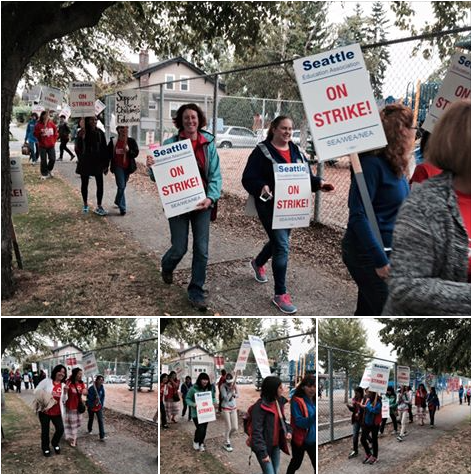
In Seattle, the teachers are striking. (This is the same state where the Supreme Court recently outlawed public money going to charter schools. Wow.) The strike is really about resources for schools in Seattle. The South Seattle Emerald writes,
Seattle Public Schools teachers haven’t had a cost of living adjustment in six years — and in that time, rents in Seattle have gone up about 40% in some places, meaning our educators are actively making less money than they were a few years ago, to do the same important job.
However, the strike is mostly about poverty,
So yes, they are asking for a raise. But they’re also asking for a lot more, and on behalf of a lot of other people. And it’s those additional demands that could have a huge impact on the cycle of poverty in some of Seattle’s lowest-income schools…
They’re the trusted adults that kids turn to when their homes are chaotic. They’re the professionals who can identify and address behavioral problems, learning disorders, or other issues, which may disrupt the education of a low-income student. They are the surrogate parent, the triage nurse, the support system, and the encouragement — myriad scholars agree that their roles are essential for helping low-income students succeed.
And for a very, very long time, they have operated under ruthlessly difficult working conditions, which make doing their jobs very hard.
“Without the state stepping up to their constitutional obligation, all of these groups are in difficult situations,” says Jonathan Knapp, President of the Seattle Education Association.
Some of the groups, like language and speech pathologists, have literally no contractual caseload limits, meaning they can easily have a caseload in the thousands. Counselors do have a limit — but it’s still astronomical.
“They have a caseload of 400 to one,” Knapp says. “Which is a lot. It’s way more than their professional organization recommends.”…
Darryl James, a middle school counselor at Aki Kurose who sits on the bargaining team, says that the problem begins long before high school, and that early intervention is key. For many students, behavioral problems begin in elementary school — where, thanks to budget cuts and a move toward more discretionary spending several years ago, low-income schools simply do not have — and that can mean loss of classroom time, which all but sets up poor kids not to go onto college.
“They have behavioral problems, so they get suspended,” he explained, “they get suspended, so they’re out of the classroom. And when you send them out of the classroom, they fall behind.”
And for low-income students, that’s a stumble from which they can’t and won’t recover — unless they have a trusted adult in a support role who has the time and energy to help them with it. Which is part of what the SEA is striking for right this minute.
“The caseloads have always been unbearable,” says James “and it’s worse in the high-poverty schools.”
But, says James, the school board seems unwilling to admit that requiring schools to hire support staff and cutting caseloads is anything other than optional. Rather than viewing a strong support staff as an essential step toward helping curb poverty (and all of the social issues that come along with it) at an early stage, the school board views them as extras — bonuses for schools that can afford them, and unnecessary for those that can’t.
“The way that it is now, we’re always waiting for something to happen,” James explains. “Instead, we need to be intervening. It’s only going to get worse if we don’t change that mindset.”
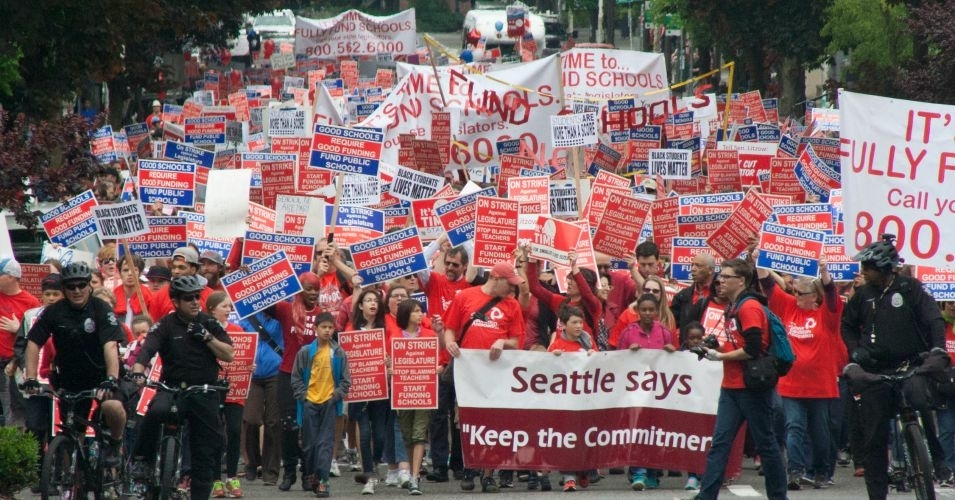
The challenge is that the courts have been telling legislators to fund public schools, but the legislatures in Texas, Kansas, Washington and many other states have not done so. This from the Seattle Times,
In the summer of 2005, the Kansas Legislature and that state’s highest court played a game of chicken over state support of public schools.
The Kansas Supreme Court had ordered the Legislature that spring to pony up an additional $285 million for K-12 education or the court would shut down every school in the state.
Lawmakers had come up with about half that money, but the court insisted on the full amount, setting a deadline of July 8.A few days before, in meetings over the Fourth of July weekend, legislators blinked, approving the rest.
This state’s Supreme Court ruled in 2012 that lawmakers are violating the constitutional rights of Washington’s 1 million schoolchildren by failing to provide them with an amply funded basic education.
The McCleary decision, named after parents Stephanie and Matthew McCleary, requires the Legislature to fully fund the state’s public schools by 2018.
Lawmakers so far have only come up with about $1 billion of the cost, which has been estimated at between $3.5 billion to $7 billion per two-year budget period.
In September, the court found the Legislature in contempt for failing to make sufficient progress.
But the court postponed punishment, giving lawmakers another chance to come up with much of that money in the next two-year budget, and a plan to provide the rest.

So while wages is one component of of the strike, to me the story is Seattle is really about how teachers and other education professionals are in a dogfight with politicians demanding that they have the resources to address poverty as first responders in our society.
I have reblogged the SOLIDARITY STATEMENT WITH STRIKING SEATTLE EDUCATORS from Brian P Jones blog. I was asked and agreed enthusiastically to sign on.
We, the undersigned stand in solidarity with 5,000 striking members of Seattle Education Association (SEA). These brave educators are taking this action in the face of growing privatization, increased standardized testing, and persistent inequality in public schooling. The educators’ demands would improve public schooling for everyone. They are demanding competitive pay, fair evaluations, less standardized testing, and end to systematic racial discrimination in student disciplinary actions. The union also represents school counselors and psychologists, and demands that their caseloads be capped, so that they can give students the individual attention they deserve. SEA is bargaining for quality education for their students, but in more than 20 meetings with the district prior to the strike vote, all of these demands were rejected.
The members of SEA are fighting for the schools Seattle’s children deserve. In doing so, they are standing up for the kind of schooling all of our children deserve. We, the undersigned, urge the Seattle Public Schools administration to grant the union’s demands immediately.
Signed*
Julia Aguirre University of Washington, Tacoma
Sam Anderson Coalition for Public Education, New York City
John C. Antush Movement of Rank and File Educators / United Federation of Teachers
Michael Apple University of Wisconsin
Chloe Asselin Graduate Center, The City University of New York
Wayne Au University of Washington, Bothell and Rethinking Schools
Megan Bang University of Washington, Seattle
Johanna Barnhart Graduate Center, The City University of New York
Tithi Bhattacharya Purdue University
Dan Berger University of Washington, Bothell
Dana Blanchard Berkeley Federation of Teachers
Stephen Brier Graduate Center, The City University of New York
Anthony Cappetta Chicago Teachers Union
S. Charusheela University of Washington, Bothell
Anthony Cody Network for Public Education
Dafney Blanca Dabach University of Washington, Seattle
Karam Dana University of Washington, Bothell
Thomas S. Davis Ohio State University
Beth Dimino Port Jefferson Station Teachers Association
Michael J. Dumas University of California, Berkeley
Michelle Fine Graduate Center, The City University of New York and Montclair Cares About Schools
John Gallagher Fremont Unified Teachers Association
Lily Eskelsen Garcia National Education Association
Ofelia Garcia Graduate Center, The City University of New York
Kiersten Greene State University of New York,New Paltz
Rico Gutstein University of Illinois at Chicago and Teachers for Social Justice
Helen Gym Parents United for Public Education
Julian Vasquez Heilig California State University, Sacramento and Network for Public Education
Sarah Hesson Rhode Island College
Barbara Hubert Graduate Center, The City University of New York
Carly Huelsenbeck Graduate Center, The City University of New York
Arlene Inouye United Teachers of Los Angeles
Pranav Jani Ohio State University
Brian Jones Graduate Center, The City University of New York
Stan Karp Rethinking Schools
Joyce E. King Georgia State University
Chris Knaus University of Washington, Tacoma
Herb Kohl Milwaukee, WI
Ron Krabill University of Washington, Bothell
Deepa Kumar Rutgers American Association of University Professors and Rutgers University
Scott Kurashige University of Washington, Bothell
Jia Lee Movement of Rank and File Educators / United Federation of Teachers and Change the Stakes, New York City
Kari Lerum University of Washington, Bothell
Karen GJ Lewis National Board Certified Teacher
Tom Lewis University of Iowa
Pauline Lipman University of Illinois at Chicago
Elliott Magers Racine Education Association and Racine Education Assistants Association
Nicholas Michelli Graduate Center, The City University of New York
Megan Moskop Movement of Rank and File Educators / United Federation of Teachers
Suhanthie Motha University of Washington, Seattle
Bill V. Mullen Purdue University
Mark Naison Fordham University
Jason Naranjo University of Washington, Bothell
Sonia Nieto University of Massachusetts, Amherst
Kathleen M. Nolan Princeton University
Bob Peterson Rethinking Schools and Milwaukee Teachers Education Association A
Anthony G. Picciano Graduate Center, The City University of New York Bree Picower and Montclair State University
Nagesh Rao Colgate University
Diane Ravitch New York University
Victoria Restler Graduate Center, The City University of New York
Onnie Rogers University of Washington, Seattle
David Russitano United Educators of San Francisco
Adam Sanchez Zinn Education Project and Rethinking Schools
Nancy Schniedewind State University of New York, New Paltz
Mira Shimabukuro University of Washington, Bothell
Janelle Silva University of Washington, Bothell
Alan Singer Hofstra University
Christine Sleeter California State University, Monterey Bay
David Stovall University of Illinois, Chicago
Keeanga-Yamahtta Taylor Princeton University
Amoshaun Toft University of Washington, Bothell
Carrie Tzou University of Washington, Bothell
Angela Valenzuela Department of Educational Administration, Education Policy and Planning, University of Texas at Austin
Jon Van Camp Prince George’s County (MD) Educators’ Association
Manka Varghese University of Washington, Seattle
José Luis Vilson New York, NY
Camille Walsh University of Washington, Bothell
Matthew Weinstein University of Washington, Tacoma
Elizabeth West University of Washington, Seattle
Earl H. Wiman National Education Association
Ken Zeichner University of Washington, Seattle
*Affiliations listed for identification purposes only.
To add your name, write to Brian Jones or Wayne Au.

Update 9/15/15:
https://twitter.com/ProfessorJVH/status/643856841114550272
Please Facebook Like, Tweet, etc below and/or reblog to share this discussion with others.
Want to know about Cloaking Inequity’s freshly pressed conversations about educational policy? Click the “Follow blog by email” button in the upper left hand corner of this page.
Twitter: @ProfessorJVH
Click here for Vitae.


 Cloaking Inequity
Leave a comment