
With nearly 1,000 hits and counting, my post “Why do hedge fund ADORE charters?” was surprisingly popular. One of the issues raised by commenters on the post was the New Markets Tax Credit. It has been discussed elsewhere (here and here). We thought we would add more hard numbers to the discussion. This post was written in collaboration with Lindsay Butterfield, an EPP masters student at UT-Austin. The post is based on her final presentation in my Fall 2012 School Law and Policy course. Disclosure: As I have mentioned previously, I was an instructor at Aspire’s East Palo Alto charter and I currently sit on the board of the UT-Austin charter school. This insider view on charters has inspired research that shows that not all is well in the direction of the choice movement.
Show Me the Money: Sample of Private Investment, Advocacy Groups, and Charters
In 2010, JPMorgan Chase publicized that it will provide $325 million in financing assistance to aid charter schools with facilities development, including $50 million in grants of permanent equity to community development financial institutions working with charters.
Texas based Harmony Public Schools made headlines in 2010 for a bond issued at $90 million underwritten by Morgan Keegan and Jefferies & Company.
The Democrats for Education Reform (huge proponents of charters) are heavily supported by wealthy management firms such as Anchorage Capital Partners and Greenlight Capital.
Education Reform Now, an advocacy group has also received millions of dollars in generous support from philanthropic Wall Street organizations.
The Financial Risk Gap: Traditional Public Schools vs. Charters
Default Rate: 3.91 percent of charter school bonds versus 0.03 percent of traditional school districts
National data from the Center for Education Reform reveals information on charter school closures: 6,700 charter schools that have opened since 1992 and 15% have closed.
Texas Data show that between 1998 and 2011- the Texas Education Agency closed 52 charters (Center for Education Reform, 2011)
Higher rates of closure = higher risk = higher bond rates. Charter Schools: Approximately 8% Traditional Public Schools: 3% Cloaking Inequity discussed here. Wall Street Journal discussed here (subscription).
Incentives to Invest in Charter Schools?: New Markets Tax Credit
New Markets Tax Credit that was a part of the Community Renewal Tax Relief Act of 2000
Expected to result in the creation of jobs and material improvement in the lives of residents of low-income communities.
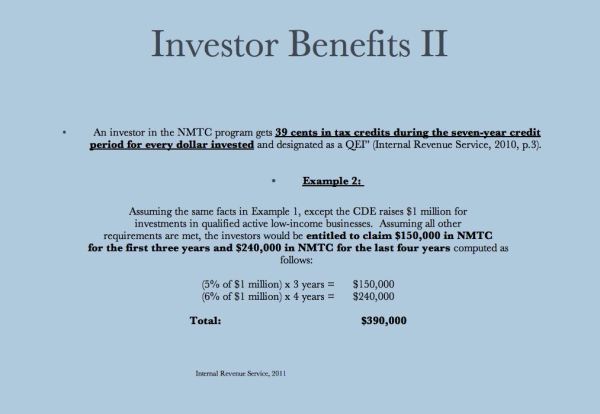
Section 45D of the Internal Revenue Code: “permits individual and corporate taxpayers to receive a credit against federal income taxes for making Qualified Equity Investments (QEIs) in qualified community development entities (CDEs)” (Internal Revenue Service, 2010, p. 1).
More from the IRS:








 Cloaking Inequity
Leave a comment