It was an honor to serve as the Dean of the University of Kentucky College of Education for almost four years. During my time in the Commonwealth, I also had the privilege of serving as the Education Chair and on the Executive Committee of the Kentucky NAACP. Additionally, I was appointed by Governor Andy Beshear to the Kentucky Education Standards Board, a nomination that was confirmed by a supermajority of Republicans in the Kentucky Senate. These roles gave me a deep appreciation for Kentucky’s education system, its challenges, and its potential to serve all students equitably.
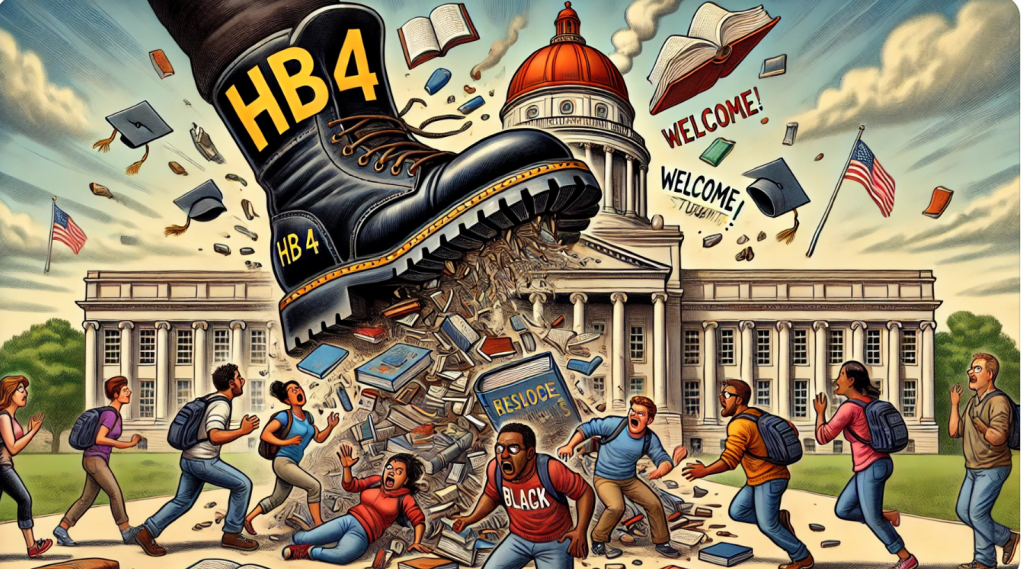
So, when I heard about Kentucky’s House Bill 4 (HB 4), the latest attack on Diversity, Equity, and Inclusion (DEI) in a state, I took notice. After watching similar legislation pass in Florida, Texas, and Utah, I believe it is critical for the nation to understand what is happening in these states and how it threatens the future of education in your state.
HB 4 is not just another bill targeting DEI—it is a direct assault on the recruitment, retention, and success of students in Kentucky’s public universities. It would strip institutions of the ability to proactively recruit and support students from underrepresented communities, making Kentucky’s universities less competitive, less diverse, and more financially unstable in the years ahead.
HB 4: A Blueprint for Rolling Back Progress
HB 4, introduced on February 12, 2025, proposes sweeping restrictions on DEI initiatives, banning public universities from providing any differential treatment or benefits based on race, religion, sex, color, or national origin. On the surface, proponents claim it ensures equal treatment and a “merit-based” system, but in reality, it is designed to make Kentucky’s public universities less accessible to students of color and religious minorities (i.e., the Jewish faith).
The bill would:
- Likely prohibit universities from conducting targeted recruitment of Black and Latino students, making it harder for them to access higher education.
- Likely prevents race, religion, or national origin from being considered in admissions or scholarships, shutting down pathways that have long helped first-generation, Jewish, refugee and other students succeed.
- Likely eliminates funding for DEI offices and specific student organizations, such as Black student organizations, Latino student organizations and religious student organizations.
- Likely restricts curriculum related to systemic inequities, effectively censoring academic freedom, freedom of speech via discussions about race, religion, and identity in the classroom.
The Hidden Costs: Enrollment Declines & Financial Penalties for Kentucky Universities
This bill comes at a particularly dangerous time for Kentucky’s public universities. The enrollment cliff is coming—a steep drop in college-aged students caused by the 2008 financial crisis, when fewer children were born. The only way for universities to maintain enrollment and financial stability is to expand recruitment efforts, particularly among Latino students, who are the fastest-growing segment of K-12 students in the U.S.
By banning race-conscious recruitment and outreach, HB 4 would cripple Kentucky’s universities at a time when they desperately need Black and Latino students to maintain enrollment and financial stability. Meanwhile, colleges and universities in states where targeted recruitment remains legal will continue actively recruiting students of color, putting Kentucky’s institutions at a severe disadvantage in an already competitive landscape. For example, in cities like Chicago and Louisville, where universities have historically drawn diverse students, Kentucky schools will struggle to compete, further shrinking their applicant pool and weakening their long-term viability.
This will lead to:
- Lower enrollment numbers, reducing tuition revenue and causing budget shortfalls.
- Fewer professionals from minoritized communities in the workforce, weakening Kentucky’s economy.
- Millions wasted in taxpayer dollars, as universities are forced to fight frivolous lawsuits over vague DEI provisions.
HB 4: Targeting Black, Latino, and Jewish Students
1. Banning Outreach and Recruitment for Students of Color
Historically, universities have used targeted recruitment strategies to ensure students from all backgrounds have access to higher education.
Under HB 4, universities would ostensibly no longer be able to:
- Hire Black and Latino recruiters to connect with communities of color in cities like Louisville, Lexington, and across Eastern Kentucky.
- Partner with high schools that serve predominantly Black and Latino students, cutting off outreach programs that encourage first-generation college attendance.
- Run scholarship programs that address the unique financial barriers facing minoritized communities (i.e. addressing the severe lack of teachers of color).
If universities are unable to actively recruit diverse students, Black and Latino enrollment will decline, setting the state back decades. Additionally, the restrictions on considering and discussing religion could be interpreted as an antisemitic measure.
2. Eliminating Support Systems for Underrepresented Students
Even for students who do enroll, HB 4 would make graduating significantly harder.
- DEI offices would be defunded, eliminating staff responsible for supporting students of color and religious minorities (Already happened at University of Kentucky and Northern Kentucky).
- Minoritized student organizations could be banned, making it harder for students to find community.
- Funding and/or other support (i.e. facilities use) for Black and Latino fraternities, sororities, and Hillel chapters could be cut, further isolating students.
Campus climate research consistently shows that a sense of belonging is essential for student success. By attacking these resources, HB 4 doesn’t just make college less welcoming—it actively sets students up for departure before graduation.
3. Silencing Conversations on Race & Religion in Admissions and the Classroom
HB 4 significantly restricts how race, identity, and systemic inequities can be discussed in university classrooms and admissions applications by banning certain DEI-related initiatives and limiting the consideration of race in decision-making processes.
While the bill does not explicitly ban all discussions of race or identity, its broad restrictions on DEI programming, bias incident investigations, and race-conscious policies create a chilling effect, discouraging faculty and students from openly engaging in these topics.
This approach stands in tension with the Supreme Court’s ruling in the Harvard affirmative action case, where Chief Justice John Roberts wrote:
“Nothing in this opinion should be construed as prohibiting universities from considering an applicant’s discussion of how race affected his or her life.”
Yet, HB 4 moves beyond the Supreme Court’s ruling by attempting to limit how universities engage with race, religion, and diversity in admissions—not just in policy decisions, but in the broader academic environment.
This is not about “fairness” or “merit” but rather an attempt to suppress critical conversations that acknowledge the ongoing racial and religious disparities in education and society.
Kentucky’s Future is at Risk
HB 4 Will Make Kentucky’s Universities Less Competitive
Higher education institutions in states without DEI bans will have a major advantage over Kentucky universities, as they will continue to recruit and retain diverse students.
- Black, Latino, and Jewish, Muslim and other minoritized students will leave the state for institutions where they feel welcomed and supported.
- Kentucky’s universities will fall behind in national rankings, hurting their reputation and ability to attract talent.
- As enrollment declines, budget cuts will follow, leading to fewer programs and job losses in higher education.
This bill is a short-sighted political stunt that will have long-term financial and reputational damage for Kentucky’s public universities.
Conclusion: Cloaking Inequity in the Name of Neutrality
This blog is called Cloaking Inequity for a reason. Legislation like HB 4 hides its true intent behind the language of fairness and neutrality, but its real goal is to roll back racial and religious progress in higher education.
- It won’t make admissions more fair—it will strip universities of the ability to recruit and graduate minoritized students.
- It won’t improve higher education—it will make Kentucky’s public universities less competitive, less diverse, and less financially sustainable.
- It won’t save taxpayer money—it will waste millions on lawsuits and lost tuition revenue.
Kentucky cannot afford to turn back the clock on progress. HB 4 is a step backward, and if passed, it will take decades to undo the damage.
The question now is: Will Kentucky’s leaders recognize the consequences in time?



 Cloaking Inequity
Leave a comment