
The Facade of Parental Advocacy
At first glance, the name “Moms for Liberty” sounds harmless—almost wholesome. It evokes a Norman Rockwell painting of concerned mothers banding together to protect their children from harm. In fact, that is the group’s carefully curated image. They claim to be defending “parental rights,” “liberty,” and “transparency” in public schools. But a closer examination reveals a far more troubling agenda: one that has little to do with grassroots parental concern and everything to do with enforcing a regressive political ideology under the guise of community activism.
Founded in 2021 in Florida, Moms for Liberty quickly gained national attention by showing up en masse at school board meetings, demanding that books be removed from shelves, that diversity programs be dismantled, and that school curricula conform to their narrow view of morality, patriotism, and “American values.” They claim to be fighting against “indoctrination,” but in reality, their policies seek to promote a sanitized, Eurocentric, heteronormative narrative of history, identity, and citizenship. What began as resistance to COVID-19 safety protocols—mask mandates, remote learning, vaccine guidance—morphed almost overnight into a broader, calculated campaign against what they call “woke ideology.”
What’s often left out of the mainstream coverage is how well-funded and strategically orchestrated this group is. According to research and reporting by education historian Diane Ravitch, Moms for Liberty is not a grassroots organization in any meaningful sense. “It is a well-funded, well-organized far-right movement that is intent on intimidating teachers, banning books, and reshaping public education to reflect their narrow worldview,” Ravitch writes on her blog (dianeravitch.net). In fact, the group has received funding and political support from major conservative donors and political action committees with deep ties to right-wing think tanks and legal organizations like the Heritage Foundation and the Alliance Defending Freedom. Their “local chapters” often receive messaging guidance, legal templates, and promotional materials from a centralized, national infrastructure designed to generate viral outrage and exert top-down pressure on school districts.
Their tactics follow a familiar playbook: disrupt public meetings, flood school officials with records requests and complaints, and issue social media attacks against teachers and administrators who push back. They frame themselves as victims—mothers whose voices are being silenced by an arrogant education bureaucracy—when in fact they are often the aggressors, using intimidation and fear to silence voices of inclusion and justice.
One of the most dangerous aspects of their activism is the way it weaponizes the concept of “parental rights.” Yes, parents should absolutely have a voice in their children’s education. But Moms for Liberty presents a one-sided and exclusionary definition of parenthood—one that prioritizes white, conservative, Christian, heterosexual, and cisgender parents while ignoring or actively dismissing the concerns of parents who don’t fit that mold. What about the Black parent who wants their child to learn about structural racism? What about the immigrant parent who wants their child to be exposed to global literature? These parents, too, have rights—but under the Moms for Liberty framework, their voices are erased or treated as a threat.
This is not merely a philosophical issue—it has concrete consequences. Educators across the country report being harassed, threatened, or even fired because they taught texts, discussed identities, or displayed materials that Moms for Liberty members found objectionable. In some districts, teachers have been forced to remove books about the Civil Rights Movement, and even rainbow flags. School board members have resigned under pressure. Some districts have temporarily closed their libraries altogether while waiting for “book reviews” demanded by Moms for Liberty chapters. In this environment, teachers are not free to teach, and students are not free to learn.
In many ways, this is a sophisticated rebranding of an older movement. In the 1990s, similar efforts were waged by groups like the Christian Coalition, Focus on the Family, and the Eagle Forum—organizations that also sought to eliminate sex education, evolution, and multicultural content from classrooms. Moms for Liberty has inherited their mission but operates with the digital tools of a new era: viral social media posts, coordinated political campaigns, and an infrastructure of media outlets and legal networks ready to spin every confrontation into a culture war flashpoint.
Even their rhetoric echoes these past battles. They speak of “parental control,” “age-appropriate materials,” and “protecting innocence.” But innocence, in their view, means ignorance—particularly about race, gender, and power. Their approach does not shield students from harm; it shields them from the truth. And the ultimate irony is that this agenda, which claims to oppose indoctrination, seeks to impose a form of ideological control more rigid and dogmatic than anything they accuse public schools of promoting.
The truth is that Moms for Liberty doesn’t want a seat at the table. They want to flip the table over. Their goal isn’t collaboration—it’s domination. Their endgame is not educational freedom—it’s ideological conformity. They don’t just want the right to choose their children’s curriculum. They want the right to choose yours, too.
In the face of these coordinated attacks, educators, families, and community members must stand firm. Public education is not just about content—it is about democracy. And democracy requires a public sphere where all voices are valued, all stories are heard, and all students are affirmed. The agenda of Moms for Liberty is not liberty at all. It is control—wrapped in the language of concern and cloaked in the armor of motherhood.
Florida as Ground Zero: The Book Ban Blitz
If there is a single state that exemplifies the trajectory and danger of Moms for Liberty’s campaign against public education, it is Florida. Since the group’s founding in the state in 2021 by former school board members Tina Descovich and Tiffany Justice, Florida has become the national blueprint for their strategy: start local, gain state power, and then influence national policy. What makes Florida unique is not simply the origin story of Moms for Liberty—it’s that the state has actively turned itself into a laboratory for their agenda.
Under the leadership of Governor Ron DeSantis, Florida’s government has enacted laws that mirror—and in some cases, were directly influenced by—Moms for Liberty’s advocacy. These include the “Stop WOKE Act,” which limits how race and history can be discussed in schools, and the “Don’t Say Gay” law, which bans classroom discussion of gender identity and sexual orientation in early grades and chills such discussions in later grades. These laws have led to widespread confusion and fear among educators who worry that merely acknowledging the existence of LGBTQ+ people or talking about slavery and segregation might cost them their jobs.
But perhaps the most aggressive—and most emblematic—of the movement’s impact has been the wave of book bans sweeping through the state. According to PEN America, Florida leads the nation in book challenges, with more than 1,400 titles removed from public school libraries and classrooms in a single year. These bans disproportionately target books by and about people of color, LGBTQ+ individuals, and those that deal with themes of systemic oppression. It’s no coincidence that Moms for Liberty chapters are often at the center of these efforts.
Consider the case of The Bluest Eye by Toni Morrison. A frequent target of Moms for Liberty, the novel has been banned in several Florida school districts on the grounds that it contains “inappropriate content.” What is lost in this framing is that Morrison’s work, like much of great literature, is uncomfortable because it is honest. She forces readers to grapple with the legacy of racial trauma and sexual violence—subjects that are deeply relevant to our society and should not be sanitized or ignored. Removing her work from the curriculum doesn’t protect students; it erases a voice that challenges injustice.
Another example: Amanda Gorman’s poem The Hill We Climb, read at President Biden’s inauguration, was restricted in a Miami-Dade school after a parent affiliated with Moms for Liberty complained that it was “indoctrinating.” The poem speaks of hope, unity, and the unfinished work of democracy. That such a piece could be deemed subversive speaks volumes about the ideological rigidity driving these bans.
What’s more, these book challenges are often based on mischaracterizations or outright fabrications. In many cases, the complainants have not even read the books in question. They rely on excerpts pulled out of context and sensationalized descriptions circulated on social media or conservative talk shows. The goal is not honest critique—it’s censorship by way of moral panic.
The consequences extend beyond the titles themselves. Teachers and librarians have reported being harassed, demoralized, and even disciplined for having books on their shelves that later come under fire. Some districts have responded by emptying shelves entirely, leaving classrooms and libraries bare while reviews are conducted. In one Florida county, teachers were instructed to cover their bookshelves with paper until each book had been vetted—a literal and metaphorical erasure of knowledge.
The chilling effect is real. According to the American Library Association, many educators are now preemptively removing books or avoiding certain topics altogether to avoid conflict. This self-censorship is perhaps even more dangerous than official bans. It signals a climate in which fear, not curiosity, drives educational choices.
Florida’s example shows what happens when political extremism is allowed to dictate pedagogy. It shows how the language of “liberty” can be used to justify silencing. And it shows how quickly a state can go from debating policy to punishing educators.
It’s also important to note the broader implications of this strategy. Florida is not just an isolated case—it is a proving ground. Moms for Liberty is exporting its tactics to other states, using its success in Florida to fundraise, recruit, and replicate. The group now has chapters in nearly every state and has become a major player in national school board elections, often running slates of ideologically aligned candidates with support from conservative PACs.
If Florida is the future, then the rest of us should be paying close attention. The state has demonstrated how quickly educational systems can be captured when a loud and well-funded minority is allowed to define the terms of the debate. What starts as a campaign against a single book ends with entire classrooms stripped of intellectual freedom.
In this context, resistance must be both local and national. Parents, teachers, librarians, and students in Florida have been fighting back—filing lawsuits, organizing read-ins, and forming coalitions to defend intellectual freedom. National organizations must support these efforts, not only with legal resources but with sustained advocacy and public education campaigns.
We must also call these actions what they are: not mere policy disagreements, but assaults on democracy. When a government tells you what books your child cannot read, what histories cannot be told, and what identities cannot be acknowledged, it is not protecting children. It is programming them.
Historical Parallels: The Authoritarian Playbook
History doesn’t repeat itself, but it often rhymes. When we examine the methods and messaging of Moms for Liberty—their campaigns to ban books, restrict curricula, and intimidate educators—we begin to hear a familiar rhythm. Though the context is uniquely American, the tactics and ideology bear striking resemblance to authoritarian movements of the 20th century, including those in Nazi Germany, Fascist Italy, and McCarthy-era United States. These regimes, each in their own way, used schools and censorship as frontline tools in their quest to reshape national identity through fear, myth, and control.
Moms for Liberty calls itself a “parental rights” group. But scratch beneath the surface, and what you find is a political apparatus that is deeply invested in restricting what students can read, learn, and even say. This is not about freedom. This is about surveillance and silencing. It is a form of soft authoritarianism dressed up in suburban pleasantries. It echoes an old strategy: demonize difference, weaponize tradition, and claim moral panic as justification for political control.
In 1930s Germany, Joseph Goebbels, the Reich Minister of Propaganda, famously organized the burning of books deemed “un-German.” These were texts that challenged fascist ideology—books by Jewish authors, Marxists, LGBTQ thinkers, and anyone who dared speak critically of the state. The spectacle of flames was symbolic, but the real damage was what followed: the criminalization of ideas, the rewriting of history, and the crushing of intellectual freedom.
Now, in school board meetings across the U.S., we’re watching miniature reenactments of that history. Moms for Liberty members read inflammatory excerpts out of context and demand books be pulled from shelves. They shout down educators, vilify librarians, and file lawsuits against school districts that affirm LGBTQ+ students or teach about racism. In Florida, they’ve helped usher in the largest wave of book bans in modern American history. These are not isolated incidents. This is a movement with a roadmap—and the page they’re on is ripped straight from the authoritarian playbook.
Let’s be clear: book banning is never about protecting children. It is about controlling them. It is about ensuring the next generation sees the world through only one lens—one that prioritizes whiteness, heterosexuality, Christian nationalism, and patriarchal family structures. And in this sense, Moms for Liberty mimics the propaganda arms of totalitarian regimes. They don’t need to burn books in public squares when they can simply erase them from school libraries. The effect is the same: young people are denied the tools to think critically, question power, and see themselves in the curriculum.
And the scapegoating? That too is familiar. Authoritarian movements have always risen on waves of cultural grievance, convincing a majority that their nation is under attack from within. In Nazi Germany, it was the Jews and the communists. In McCarthy’s America, it was the leftists and “sexual deviants.” In Moms for Liberty’s narrative, the new enemies are teachers, anti-racist authors, and school counselors. They claim these groups are “indoctrinating” children, “grooming” them, corrupting their innocence. This language is not accidental—it is weaponized paranoia, and it serves to dehumanize entire communities while justifying state intervention.
In fascist Italy, Mussolini’s regime rewrote school textbooks to reflect the values of a “unified, moral Italy,” where dissent was treason and obedience was virtue. Today, Moms for Liberty chapters push for textbooks that downplay slavery and turn U.S. history into little more than a sanitized parade of founding fathers. At least 36 states have introduced laws restricting how race, gender, and American history can be taught—laws Moms for Liberty actively supports. This is not parental input. This is ideological engineering.
It is also a deliberate strategy. Like authoritarians before them, Moms for Liberty thrives in confusion and fear. They exploit the decentralized nature of school governance to push their agenda at the local level while coordinating nationally with organizations like the Heritage Foundation and Alliance Defending Freedom. Their goal is not just to sway school boards—it is to shape an entire generation’s understanding of who counts, who belongs, and what kind of nation America is supposed to be.
To understand this moment fully, we must acknowledge what is at stake. Education is not neutral. It is either liberatory or it is repressive. It either equips young people to participate in democracy or it prepares them to accept authoritarianism as normal. When we allow extremists to dictate what can and cannot be taught, we are not just losing access to books—we are losing the soul of public education.
And that is why silence is not an option. If history teaches us anything, it is that authoritarianism does not arrive overnight. It seeps in through the normalization of censorship, the demonization of difference, and the corrosion of democratic values. Moms for Liberty is not just a nuisance. It is a warning.
As educators, parents, students, and citizens, we must resist this authoritarian creep with everything we have. We must insist on truth in our classrooms, diversity on our bookshelves, and democracy in our governance. Because if we don’t, we’ll wake up one day and realize the country we thought we lived in is no longer there.
Reclaiming Liberty: A Democratic Response
If Moms for Liberty has taught us anything, it is that movements built on fear can move swiftly, penetrate deeply, and reshape institutions before many of us have time to respond. But that doesn’t mean the story ends with their agenda. We are not powerless. Across the country, educators, students, families, and civic leaders are rising—not just in opposition to censorship, but in affirmation of what real liberty looks like: inclusive, pluralistic, and rooted in truth.
Let’s begin with a simple fact: Moms for Liberty does not own the word liberty. Their attempts to co-opt it for a political movement steeped in repression and exclusion is a textbook case of linguistic manipulation. Liberty does not mean silencing marginalized students. Liberty does not mean banning books that center Black authors. Liberty does not mean forcing teachers to lie or omit facts. As Dr. Martin Luther King Jr. reminded us, “freedom is never voluntarily given by the oppressor; it must be demanded by the oppressed.” That demand begins in our classrooms, school board meetings, and communities.
Public education is one of the last truly democratic institutions we all share. It is messy, imperfect, and beautiful because it brings people of every background together with a common purpose—to learn. That shared space, that common ground, is precisely why it is under attack. Extremist movements understand that if they can control the stories a nation tells itself—about its history, its people, and its possibilities—they can control its future. Putin once said that you win wars with teachers. That’s why our response must be not only defensive, but imaginative. We must protect the space of public education and reimagine it as a place of liberation.
First, we must reclaim governance. Moms for Liberty has shown that local elections matter. They have flooded school board races with ideologically motivated candidates, turning nonpartisan contests into battlegrounds for culture war grievances. The response cannot simply be outrage—it must be turnout. Progressive and equity-minded educators, parents, and citizens must run for these offices, support candidates who champion inclusive education, and hold elected leaders accountable to all students, not just the loudest subset of parents.
Second, we must reclaim curriculum. Teachers need support—not just to resist censorship, but to teach boldly and truthfully. This means investing in culturally responsive pedagogy, professional development, and legal protections for educators who come under fire. Organizations like the Zinn Education Project, Learning for Justice, and the African American Policy Forum have long provided resources to help teachers engage students with honesty and critical thinking. It’s time we elevate their work and integrate it system-wide.
Third, we must reclaim community. Moms for Liberty thrives by convincing people they are alone in their beliefs—that only a narrow vision of America is acceptable, and everyone else should sit down or stay silent. We counter this by building coalitions that reflect the richness of our communities: multiracial, interfaith, intergenerational alliances of students, educators, librarians, civil rights groups, artists, and everyday parents who are committed to justice. This work is already happening—from students organizing banned book clubs to educators hosting teach-ins about academic freedom. We must amplify these efforts and connect them across state lines.
Fourth, we must reclaim the narrative. Moms for Liberty has benefited from a media ecosystem that rewards outrage and spectacle. Their stunts go viral, their talking points are echoed by cable news, and their leaders are treated as serious voices in national education debates. But beneath the surface, their ideas are not broadly popular. A 2023 Ipsos poll found that 76% of Americans oppose book banning, including majorities across party lines. We must tell a different story—a story that centers students, celebrates diversity, and reaffirms education as a public good. That means writing op-eds, showing up at school board meetings, posting on social media, and supporting platforms like Cloaking Inequity that unapologetically tell the truth.
Finally, we must reclaim our moral compass. The fight for public education is not a side issue—it is a defining struggle for democracy. When we allow disinformation to dictate curricula, when we permit a loud minority to erase identities and histories, we chip away at the very foundation of a just society. But when we teach the full story of America—the horrors and the hope, the struggle and the strength—we equip the next generation to build something better. We give them the tools to challenge injustice, the wisdom to recognize propaganda, and the courage to dream bigger.
This work is not easy. It will take time, resources, and an unshakable commitment to equity. But we are not starting from scratch. The resistance is already here. From grassroots coalitions in Florida fighting book bans to educators in Texas refusing to whitewash history—everywhere, people are choosing truth over fear.
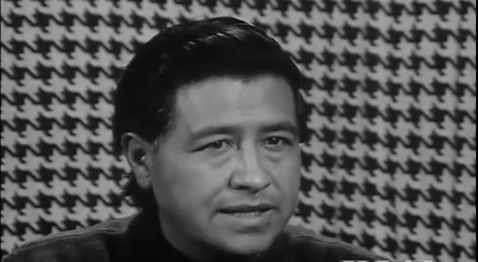
To quote César Chávez, “Together, all things are possible.” That spirit of solidarity must animate our movement to reclaim public education. Because liberty does not belong to those who shout the loudest or censor the most. It belongs to those who fight for every child’s right to learn, grow, and thrive—free from fear, full of possibility.
Please share this post widely.



 Cloaking Inequity
Leave a comment