
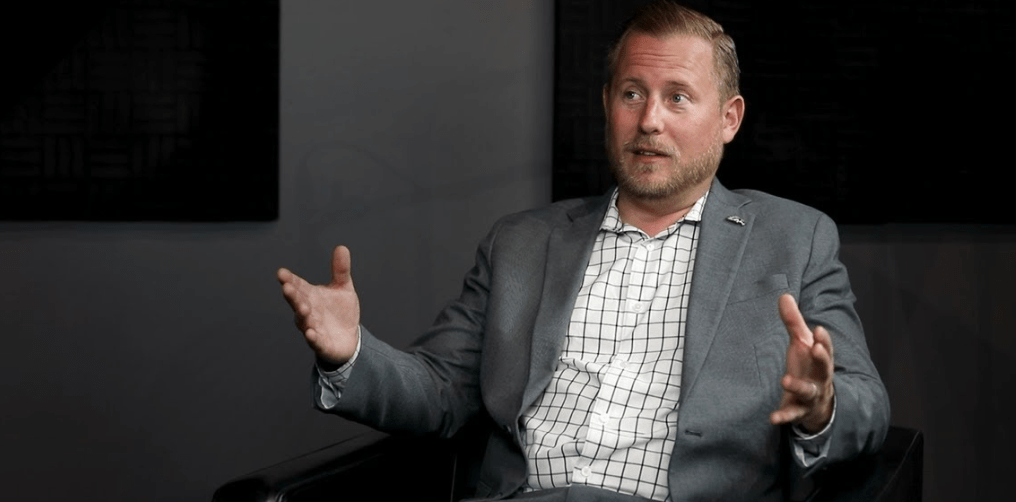
I’m thinking about someone I’ll call Pat Drek. That’s not his real name—but the feelings and contradictions he represents are very real. Pat failed out of college after his first year. Higher education didn’t work for him—or maybe it failed to work with him. And yet, he went on to build a highly successful career. Financially, professionally, even socially, he’s done well for himself. But despite that outward success, his resentment toward higher education never disappeared. In fact, it deepened.
Over the years, I’ve seen Pat grow increasingly vocal—on social media, in public conversations, and in private exchanges—about what he perceives as the hypocrisy, elitism, and irrelevance of academia. His criticisms aren’t mild. They are cutting, sometimes cruel, often dismissive of the very idea that college could be a place of empowerment or justice. I think to him, it’s a rigged game. A system that judged him too early and too harshly, then left him to figure out the world on his own.
And maybe he’s right—to a point. The system is exclusionary. It has failed millions of students, especially those who come in without privilege, connections, or cultural fluency in the hidden curriculum of higher education. But in Pat’s case, something else happened too: the wound of that failure never healed. His personal loss became a worldview. The rejection he felt as a 19-year-old calcified into a lifelong mission to discredit the very institution that once rejected him.
That’s what this post is really about. It’s not about Pat, specifically, but the Pat Dreks I’ve seen across this country—at school board meetings, in state legislatures, leading “parents’ rights” groups, lobbying against DEI. Many are successful. Many are angry. And many are still carrying a wound from school they’ve never named, much less resolved.
This isn’t just about politics or policy. It’s about pain—and how unhealed pain, when given a microphone and a mandate, becomes public policy. Hurt people hurt schools. And unless we recognize this dynamic and name it, we will forever be fighting symptoms while ignoring the root.
Wounds Masquerading as Policy
Let’s be clear: not every critic of public education is acting out trauma. But listen closely to many of the loudest voices in the current backlash, and a pattern begins to emerge. Their grievances are often rooted not in data, but in deeply personal stories—stories of being overlooked, misunderstood, or “left behind.” And while personal experience should inform public discourse, it should never become the sole compass for national policy.
Many of today’s anti-public education activists are not motivated by a desire to improve learning outcomes. They are motivated by a desire to restore a world they feel has moved on without them. Their resentment is not about what is being taught—it’s about who is now centered in the teaching. When they rage against “wokeness,” what they often mean is that they no longer recognize themselves as the only protagonist in America’s story.
It’s no coincidence that many of these figures focus obsessively on cultural representation. They are offended not because history is being “rewritten,” but because it is no longer being written exclusively from their perspective. In this light, we see attacks on inclusive curricula, anti-racist teaching, and LGBTQ+ representation for what they really are: efforts to reassert dominance in a narrative that is no longer solely theirs.
These wounded warriors of the culture war often project their personal disorientation onto an entire system. Instead of confronting their discomfort, they displace it—turning educators into villains and students into pawns. They pass laws banning books they’ve never read, defund schools they never visit, and slander teachers they’ve never met. All to satisfy a sense of grievance that policy alone can’t resolve.
And herein lies the danger: when policy becomes the vessel for personal pain, it stops being about what’s best for students. It becomes a form of institutional self-harm. Education is not the enemy of these people’s past. But they’ve been convinced that it is—and they’re determined to break it, rather than examine what’s broken inside themselves.
Misplaced Rage and Manufactured Enemies
The war on education didn’t emerge in a vacuum. It was cultivated by political strategists who recognized the emotional volatility of the electorate. They tapped into long-standing feelings of disempowerment, resentment, and identity loss, and channeled those emotions toward public schools. But instead of offering healing, they offered scapegoats: teachers, librarians, students, and “wokeness.”
When people don’t understand their pain—or aren’t allowed to express it in healthy ways—they look for someone to blame. That’s why today’s political discourse is flooded with absurd caricatures of educators as indoctrinators, school boards as Marxists, and students as radical ideologues. It’s not about truth. It’s about constructing villains to justify vengeance.
This strategy is not new. Authoritarian movements throughout history have always relied on manufactured enemies. Whether it’s accusing teachers of “grooming” or labeling diversity programs as “anti-white,” the goal is the same: to stoke fear, silence empathy, and justify repression. These narratives aren’t just incorrect—they’re dangerous.
The result is a cultural environment where empathy is a liability, and outrage is a currency. In such a climate, any educator who dares to affirm marginalized students becomes a threat. Any curriculum that reflects the diversity of the country becomes “divisive.” And any school that fosters critical thinking becomes an ideological battleground.
This constant vilification does more than demoralize educators—it deforms public discourse. It turns school board meetings into shouting matches. It turns education into a zero-sum game. And it turns the classroom, once a sanctuary, into a site of surveillance and suspicion. All because some have confused healing with control—and justice with domination.
Healing Can’t Be Legislated—But It Can Be Modeled
We cannot legislate emotional healing. There is no executive order that can make someone feel seen, valued, or whole. But we can model what healing looks like—especially in our schools. We can create environments where students of all backgrounds feel affirmed, where difficult histories are taught with honesty, and where difference is treated not as a threat, but as a strength.
Healing begins with acknowledging pain—not weaponizing it. For educators, this means creating spaces where students can process the world they live in and the histories they inherit. For communities, it means rejecting leaders who exploit fear and elevating those who foster compassion. For advocates, it means remembering that the fight for public education is not just a policy battle—it’s a moral one.
But modeling healing also requires boundaries. Compassion does not mean complicity. Understanding someone’s pain does not excuse their harm. We must still recall history, call out lies, challenge injustice, and hold systems accountable. We must still protect students from discriminatory policies and educators from political persecution. Empathy must always walk hand-in-hand with truth.
At the same time, we must resist the urge to only fight fire with fire. Rage is exhausting. Outrage has a half-life. If we want to sustain this work, we need something more enduring—something rooted in hope, connection, and a shared vision of what education can be. That’s why healing is not just a personal project—it’s a political one.
Public education, when done well, is itself a healing institution. It can disrupt cycles of poverty, challenge inherited bias, and plant the seeds of democratic citizenship. That’s why it’s so threatening to those who thrive on division. And that’s why we must fight not just to preserve it, but to transform it into the liberatory space it was always meant to be.
When Public Education Heals, It Also Threatens
The classroom is one of the few places in America where equity is not just preached—it is practiced. It’s a space where a child of farmworkers can learn alongside the child of physicians, where knowledge can transcend zip codes, and where liberation can be sparked by a single book or a single teacher. That kind of power is terrifying to those who fear change.
For the wounded and the power-hungry alike, the classroom becomes a battlefield—not because it is harmful, but because it holds the possibility of undoing harm. Public education threatens the status quo because it equips the next generation to question it. It nurtures students who ask why things are the way they are—and who dare to imagine something better.
And when students—especially those from historically marginalized communities—begin to see themselves as worthy of dignity, respect, and leadership, it disrupts the emotional hierarchy that many have long taken for granted. It reveals that opportunity is not a fixed pie, and that equality is not oppression. But that message is intolerable to those who see justice as a zero-sum game.
So, they retaliate. Because it’s succeeding in creating a more inclusive, more informed, and more empowered generation than the one before. And for those clinging to outdated notions of racial supremacy, that progress feels like a personal loss.
But we know the truth. When public education heals, it doesn’t subtract—it multiplies. It doesn’t erase—it expands. And it doesn’t divide—it builds bridges across difference, geography, and ideology. That is why we must defend it with everything we’ve got. Because in a nation reeling from division, our classrooms may be one of the last places capable of teaching us how to be whole.
Please share.


 Cloaking Inequity
Leave a comment