
Is resigning the right thing to do?
That’s the question I’ve been asking myself—and not just in quiet moments of reflection. It’s a question that people ask me in inbox threads, text messages, and hushed conversations in conference hallways. It’s no longer theoretical. It’s personal. It’s political. And in 2025, it feels like it’s urgent.
Consider this: James Ryan, president of the University of Virginia, has just announced he will step down—under pressure from the Trump administration. According to individuals familiar with the situation, the Department of Justice accused Ryan of negotiating in “bad faith” over efforts to dismantle UVA’s DEI programs. Though he had originally planned to stay through the next academic year, mounting federal pressure forced his early departure. A university spokesperson declined to comment—but the silence speaks volumes. Even presidents of flagship public institutions are now targets in a national campaign to purge higher education of equity-minded leadership.
So what do you do when doing your job courageously becomes the justification for losing it?
The Latest Tipping Point
Ryan’s resignation is not an isolated incident. It is part of a growing pattern—a strategy of fear and control. And it’s reaching every corner of public life.
Recently, the entire Fulbright Foreign Scholarship Board resigned. Every single member. They didn’t mince words—they cited their refusal to participate in the politicization of one of America’s most respected international programs. Rather than allow the Trump administration to convert Fulbright into an ideological weapon, they chose to walk away.
Meanwhile, at the Department of Justice, a quiet exodus is unfolding. Attorneys in Washington, D.C. and beyond have stepped down—refusing to carry out directives that target vulnerable communities and undermine the Constitution. These are seasoned lawyers—many of whom have spent their entire careers protecting the rights of the marginalized—now walking away rather than becoming tools of oppression. Their resignations are acts of conscience, signaling that justice can’t be twisted without consequence.
And in education? We’ve seen a torrent.
Dr. Claudine Gay, Harvard’s first Black president, was pushed out under a barrage of coordinated attacks funded by billionaires and right-wing ideologues looking to eliminate DEI and send a message to Black intellectuals in power: “You’re next.” Jason Glass, Kentucky’s Education Commissioner, resigned and came to Western Michigan University to our team for supporting policies that affirmed LGBTQ+ youth. (Best wishes as Superintendent in California, Jason!!!)
At the University of Colorado Denver’s School of Public Affairs, seven faculty members—70% of the department—resigned in protest in spring 2024. Their reason? Allegations that Callie Rennison, a sitting regent and former faculty member, created a toxic and retaliatory work environment after faculty raised concerns about racism within the school and against students.
And let’s not forget the wave of professors, deans, superintendents, and nonprofit leaders—many unnamed in national headlines—who’ve quietly exited stage left under partisan political pressure.
So we must ask: Are we being led by values—or by fear?
Because the truth is this: the attacks are coordinated. The stakes are rising. And the flame of courageous leadership, though under siege, is still burning.
The Politics of Resignation
There is a kind of dignity in resignation. You draw your line. You refuse to cross it. You say: “I won’t be complicit in harm.” And for many, that’s the most powerful option available. But there’s another side to that coin—and it’s darker. Sometimes, resignation is what they want. Because firing someone is messy. It comes with blowback. It risks headlines, lawsuits, donor concern, and community anger.
But when you “choose” to resign? That’s clean. Quiet. Convenient. The institution gets to say, “We wish them well in their future endeavors.” And that’s that.
But let’s be honest: the resignation is often coerced. The environment is made so hostile, the gaslighting so relentless, the culture so problematic, that resignation feels like the only escape. This is especially true for leaders of color, queer leaders, first-generation professionals, and anyone perceived as “different” or “committed.”
I’ve seen it. You are hired for your boldness—then punished for being bold. You are praised for your innovation—then reprimanded when that innovation challenges power. And suddenly, the applause fades, the support disappears, and the whisper campaign begins. So I ask again: Is resigning really the right thing to do?
Is It Braver to Be Fired?
Sometimes, yes. Sometimes being fired is the clearest protest you can make. It puts the spotlight back on the institution. It forces them to own their discomfort with your leadership. It says: “I didn’t walk away—you removed me for being too principled, too bold, too honest.”
There is power in refusing to give them the clean exit.
There is truth-telling in the headline: “University fires dean after record-breaking equity success and committing more student financial aid.”
There is accountability in the backlash that follows.
Think of the leaders who’ve become symbols of resistance precisely because they were pushed out, not because they stepped aside.
Martin Luther King Jr. didn’t resign from activism—he was jailed, surveilled, and assassinated.
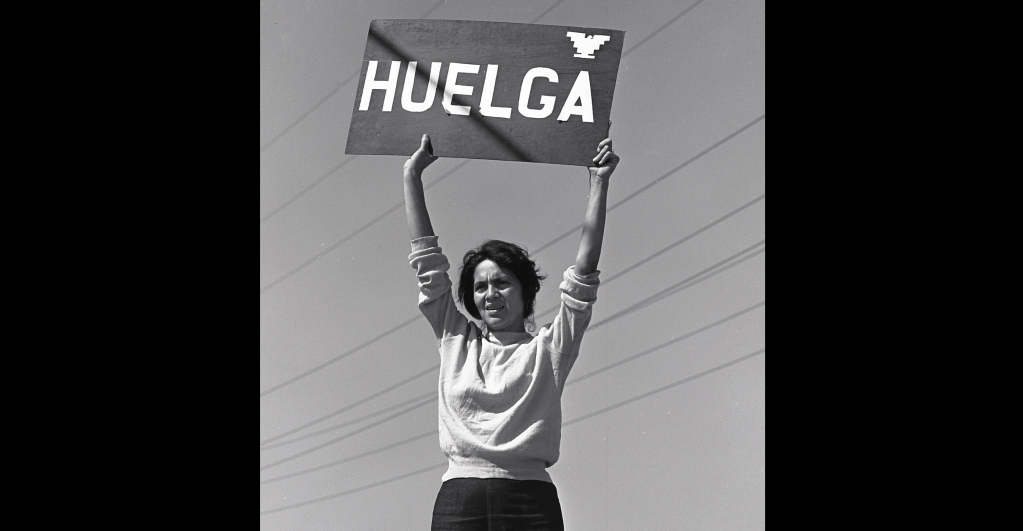
Dolores Huerta wasn’t asked politely to leave organizing—she was beaten by police.
Fannie Lou Hamer wasn’t allowed to resign—she was fired from her sharecropper job, attacked, and still testified before the DNC.
Their power didn’t come from staying. It came from refusing to be erased.
But I don’t romanticize being fired. It’s traumatizing. It leaves scars. For many of us—especially the so-called “uppity minorities,” the historical firsts who carry both the weight of expectations and the burden of being targeted—it is both financially risky and emotionally exhausting. And let’s be real: it can make your next role harder to find.
But sometimes, it is the only honest choice.
When the System Is Rigged, Is Any Choice Fair?
And so we’re stuck with the false binary: stay and suffocate, or leave and be labeled.
They design the system this way. They give you a seat at the table—but remove the oxygen from the room. And when you pass out, they say you couldn’t handle the pressure.
They stack the odds and say you failed to lead.
They weaponize “fit” and call it professionalism.
They applaud diversity, then punish inclusion.
They tell you to speak your truth—then mute your mic.
So here’s what I say:
To those who resign—thank you for your integrity.
To those who stay—thank you for your endurance.
To those who are fired—thank you for your courage.
We each resist in different ways. But make no mistake—resistance to the inequitable status quo is necessary.
The question we really need to ask isn’t: “Should I resign?”
It’s this: “How do I leave the toxity without leaving the fight for communities?”
Because the movement for justice is bigger than one job, one title, one paycheck, or one institution.
You can be pushed out of a presidency and still lead a revolution.
You can be stripped of your title and still raise up a movement.
You can be erased from the website and still be in the hearts of the people you served.
We need leaders who aren’t just willing to lead until it’s convenient—but who are willing to lead until it costs them something. Because that’s when leadership becomes legacy.
So What Do We Do?
We build coalitions.
We document the gaslighting. We speak up. We name names when it’s safe—and we protect each other when it’s not.
We remember that they fired your position—not your purpose.
We refuse to disappear. We write. We organize. We mentor. We win awards. We testify. We create. We plant. We water.
Because even if the system is trying to eject you, we are still growing justice and equitable practice.
The truth is, the strongest institutions will be the ones that learn to center principled disruption. The ones that make room for bold futuristic ideas, not just stop-gap ideas to stem decline. The ones that understand that a “courageous hire” who cannot challenge systems of inequity is just decoration—not transformation.
The Legacy of Refusal
When I look around, I see colleagues and comrades who were forced out, and yet are doing the most meaningful work of their lives.
Some started their own consulting firms to help schools and nonprofits build real equity. Others went into politics, education journalism, legal advocacy, or student organizing. Some started their own schools, community centers, or policy think tanks. Some simply went back to teaching because they loved it!
They are no longer “in the room” “at the table” or have a title—but they are changing the landscape more than most “leaders.”
So no—resignation is not the end of the story.
Being fired is not the end of your purpose.
Staying isn’t a betrayal if you’re still resisting from within.
But never forget this:
You are not the failure. The fragile institution that made you choose between your ethics and your employment is the failure.
They might strip your title. But they can’t silence your mic or take your impact—unless you let them.
Final Reflections
So: Stay. Go. Get fired. Rebuild. Speak. Shout. Write. Lead. Glow.
Whatever you do—don’t disappear. Because you weren’t born to lead safely.
We are tasked to lead in a world already on fire— and our ancestors are depending on us not to be afraid of the heat.
Edited 3pm EST 6.27.25 to include breaking news about President Ryan.




 Cloaking Inequity
Leave a comment