
“We didn’t kill enough Indians.” That’s not a historical quote; it’s what far-right commentator Ann Coulter said on Twitter, now X, last week. No apology. No context. Just the crude, genocidal sentiment that still echoes through American policy, culture, and politics. Native news outlets, tribal government leaders, community members, and allies alike have condemned Coulter’s cruel statement with resounding clarity: as hate speech.
It is often said as a slogan, painted on protest signs, chanted in marches, and scrawled across murals from Oakland to Oklahoma: No one is illegal on stolen land. But this is more than just a rallying cry. It’s a truth buried beneath centuries of conquest, colonization, and collective denial. It’s a confrontation with American mythology, a nation that built its borders with guns and its pride on broken treaties.
To say no one is illegal on stolen land is to expose the violent foundation of this nation, a foundation built on power, theft, murder, and genocide. It is to challenge the legitimacy of settler-colonial rule and confront the lie that legality and morality are the same. It forces the question: Who gets to decide who belongs, when the land itself was taken through blood and betrayal? This is not a provocation. It is a long-overdue reckoning with the truths America refuses to teach and the voices it still tries to silence.
Coercion Disguised as Consent
The theft of Indigenous land was not accidental, nor was it a moral gray area of a bygone era. It was a violent, murderous, and calculated campaign, backed by law, policy, and force. From the founding of the United States through the late 19th century, the federal government signed more than 370 treaties with Native nations—treaties that were supposed to represent solemn, legally binding agreements between sovereign peoples.
But these treaties were rarely honored. Many were signed under duress, false promises, or coercion. Tribal leaders were often pressured into signing through threats of violence, forced starvation, or the threat of total displacement. Some treaties were forged with individuals who had no legitimate authority to represent their nations. Others were written in English with no accurate translation provided. And even when treaties were ratified by Congress, the ink barely had time to dry before settlers violated their terms.
Take, for example, the Treaty of Fort Laramie (1868). It guaranteed the Lakota people ownership of the Black Hills, land sacred to their culture and survival. But when gold was discovered there, the U.S. government turned its back, allowing miners to invade and forcibly remove the Lakota from their land. More than a century later, the Supreme Court ruled that the land had indeed been taken illegally and awarded the tribe financial compensation. The Lakota refused the money. They want their land back.
Borders Built on Broken Promises
It is a cruel irony that a nation built on stolen land and murder has weaponized the concept of borders to criminalize those seeking refuge or return. The southwestern United States—California, Texas, New Mexico, and Arizona—is now where ICE operates most intensely. Yet these states were once part of Mexico. And long before that, they were home to the Apache, the Ute, the Yaqui, the Tohono O’odham, the Pueblo peoples, and many more.
Today, many of the migrants labeled “illegal” are Indigenous peoples from Central America and Mexico, fleeing poverty, violence, and climate catastrophe. Much of that suffering is rooted in U.S. economic exploitation and foreign policy. Many speak Indigenous languages like K’iche’ or Nahuatl. Most are descendants of those who lived here long before the concept of America existed.
What does it mean, then, to tell a Mayan mother fleeing violence that she is “illegal” for stepping onto a continent her ancestors once walked freely? It means erasing history. It means weaponizing law to uphold racial supremacy. It means pretending the land was always ours to begin with, and maintaining mass-scale collective amnesia.
Land-Grant Universities Were Funded by Native Land Sales
Here’s a truth even fewer people talk about: many of the United States’ public universities, including some of the most prestigious institutions, were funded directly through the sale of stolen Native land. The Morrill Act of 1862 gave states federal lands to fund the establishment of “land-grant” universities. This includes institutions like Michigan State, Penn State, and UC Berkeley.
But where did that land come from? It was taken, often by military force or through broken treaties, from more than 250 tribal nations. These lands were then sold, and the proceeds directly used to bankroll the very foundations of higher education in America. According to research from High Country News and the Land-Grab Universities project, millions of acres were expropriated from Native peoples to build the institutions that today pride themselves on knowledge, justice, and access. This isn’t just a historical footnote. It’s a debt—a literal, traceable, unpaid debt that continues to fund endowments, land holdings, and institutional reputations to this day.
So let’s be clear: offering free tuition to Native students is the bare minimum these institutions can do. But that’s just the beginning. With key input from Native scholars, institutions must also, at the very least, take the following actions:
- Return unused land currently under university stewardship to tribal nations.
- Create endowed faculty positions led by Indigenous scholars.
- Establish university, tribal governance councils with power and resources to influence, curricular, and research agendas.
- Engage in ongoing consultation with tribal nations on university initiatives across disciplines particularly in the ares of environmental studies, arts, science, business and public administration, and health.
- Consult with tribal governments or workforce development needs, internship for student employment opportunities.
- Return ancestral remains and funeral objects that the university has designated as “culturally unaffiliated” in order to return them to intertribal councils so that tribal nations can determine cultural affiliation.
- Move beyond land acknowledgments, and meaningfully recognize the people and thought systems where the university is located.
- Ensure that all students are educated on the legacy and impacts of indigenous boarding schools around the world.
- Reckon with systemic destruction of indigenous lives and languages and recognize the strength and resilience of indigenous families, communities, and nations who are still here
- Respect traditional ecological knowledge and Indigenous lifeways.
If universities are serious about justice, they must stop seeing Native peoples as “rare” on campus and symbolic footnotes and start honoring them as rightful partners and key stakeholders.
A Call for Real Return
To truly reckon with the theft of land, we must move beyond symbolic acknowledgment. Land Back is not a metaphor—it’s a movement rooted in justice. If the land was stolen, then the moral response is not a plaque, or a performative land acknowledgment before a university football game. The moral response is recommitment.
For example, Western Michigan University (WMU) and the Asylum Lake Policy and Management Council have an opportunity to lead by example.
The university currently oversees the Asylum Lake Preserve in Kalamazoo—nearly 300 acres of pristine forest, wetlands, and prairie nestled between urban corridors. This land was once part of the traditional territory of the Potawatomi nations who stewarded the land long before it became property of the state or university. As documented by one of the Potawatomi nations in the region, the Match-E-Be-Nash-She-Wish Band of Pottawatomi Indians (Gun Lake Tribe), the U.S. and the Pottawatomi Tribes signed the Treaty of St. Joseph in 1827. This followed the 1821 treaty, which designated a three-square-mile Kalamazoo Reservation for the local tribe. After six years, the U.S. took back the reservation land in Kalamazoo, Michigan. Neither payment nor land was ever provided to the Gun Lake Tribe and instead this began a period of constant movement north in an effort to avoid forced removal out west.
The last land cession treaty that ceded Pottawatomi lands in the Great Lakes to the United States was the Treaty of Chicago in 1833. After the Treaty, some Pottawatomi relocated to Iowa and Kansas, while some escaped northward to Canada to avoid removal west of the Mississippi River. From 1838 to 1842, U.S. government and military leaders and state and territory militia pursued several forced removals of the Pottawatomi living in present-day northern Indiana and southern Michigan, including the 1838 Trail of Death, which forced various Pottawatomi villages and bands to leave their homelands for lands west of the Mississippi River in Indian Territory. Several Pottawatomi Bands were able to avoid or escape the forced removals and remain near their historic village sites in their traditional territory in the Great Lakes region, including the Match-E-Be-Nash-She-Wish Band of Pottawatomi Indians. However, the Pottawatomi Bands who remained in southern Michigan were not federally recognized until the 1990s.
https://archives.gunlaketribe-nsn.gov/our-heritage
Today, WMU promotes the preserve as a hub for conservation and sustainability. But sustainability without justice is hollow. True stewardship is not just about protecting land—it’s about recognizing to whom that land truly belongs.
What if, instead of simply managing the land, the university returned Asylum Lake Preserve to the Potawatomi? What if WMU honored its presence on unceded territory by restoring control to those who maintained this region for generations?
Such a move would not just be ethically correct—it would be historically transformative.
And WMU wouldn’t be alone. Across the country, there is a growing precedent for returning stewarded land:
- In 2022, the University of Minnesota began negotiations to return parts of its Itasca Biological Station to the White Earth Nation.
- The City of Eureka, California, transferred over 200 acres to the Wiyot Tribe—some of it sacred ground desecrated by a massacre in 1860.
- In Massachusetts, a Christian church transferred land back to the Nipmuc Nation, recognizing its historical and cultural significance.
Each of these acts represents more than symbolism. They represent material justice. They answer the question that land acknowledgments dare not: What are you willing to do?
Performative Solidarity Isn’t Enough
Land acknowledgments have become standard fare at conferences, campuses, and cultural events. Yet without a commitment to restorative justice and concrete action, they risk becoming little more than scripted apologies to history—carefully crafted to avoid discomfort or disruption. You cannot declare land to be “unceded” while simultaneously engaging in practices that harm Native communities. And yet, that is precisely what is happening at many institutions, where recent events have laid bare the widening gap between rhetoric and reality.
I am aware of a story about a Vice President for Diversity and Inclusion—let’s call her “Dr. Andrea Whitaker” (not her real name). She has come under scrutiny for attacking Native American students and community members who had the courage continue their long held practice of acknowledgement of that land; and to use their own land acknowledgment statement—one that aligned with
tribal voices and aspirations, rather than the university’s pre-approved, performative version. Native students, faculty, staff and allies have taken steps to work directly with tribes to seek a more just and accurate state for the institution’s relationship to Indigenous lands—especially regarding the stewardship of properties with ancestral significance.
Rather than supporting these efforts or listening to the concerns raised, “Dr. Whitaker” has moved to suppress them, undermining tribal sovereignty and attempting to control the narrative around Indigenous presence on campus. This isn’t isolated behavior—it fits a broader pattern of her leadership to ensure institutional resistance to Indigenous self-determination.
According to Indigenous alumni and members of the community, “Dr. Whitaker” intentionally under-resourced the university’s Indigenous student organization that planned an annual powwow through a series of obstructionist tactics and quiet resistance. The powwow, an important cultural and gathering gathering that celebrates land, values, veterans, elders and youth , was hosted annually by Native students, faculty, staff, and local tribal communities for more than 30 years, and had long served as a symbol of visibility, celebration, and resilience. Its disappearance from campus programming reflects not only a a budget cut—but a betrayal of trust.
It is hard to imagine that this approach will go over well as more tribes become aware of Dr. Whitaker’s internal resistance to Indigenous
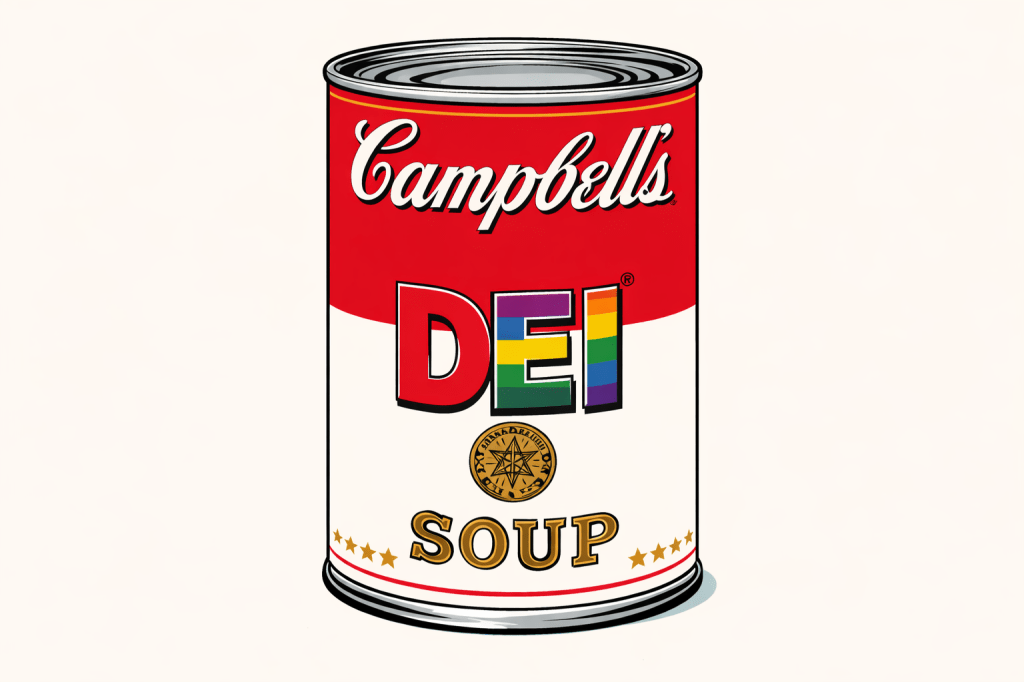
sovereignty—especially when it comes to land acknowledgments, truth-telling, and partnerships with local nations. Let’s be clear: you cannot both claim to support Indigenous students and attack them for working with their communities. You cannot lead DEI while standing in the way of justice. You cannot cancel powwows, silence student voices, and then post “Happy Indigenous Peoples’ Day” graphics once a year and expect no one to notice the contradiction.
If universities want to be taken seriously on issues of reconciliation, they must ensure that their diversity offices (if they still exist) are led by those willing to share power, honor tribal leadership, and amplify Indigenous voices—not silence them.
Rethinking Law, Legality, and Belonging
The phrase “illegal immigrant” is designed to dehumanize. It criminalizes existence and shifts the focus away from the root causes of displacement. But more importantly, it implies that the laws themselves are just. They’re not. Who wrote these laws? Who benefits from them? And who was systematically excluded from them?
From the Indian Removal Act of 1830 to the Chinese Exclusion Act of 1882 to Operation Wetback in 1954 to the escalating family separations in public perpetrated by ICE, U.S. immigration and land laws have always served to protect racial superiority, not justice. The system wasn’t broken. It was built this way.
If your laws are written on stolen land, grown by stolen labor, and used to punish those fleeing conditions you created—then maybe legality isn’t the moral compass you think it is.
The Land Remembers
History cannot be erased. The rivers remember. The mountains remember. The trees remember. The sacred bones buried under highways and shopping malls remember. And Indigenous peoples have never forgotten. To say no one is illegal on stolen land is not an act of rebellion—it is an act of remembering. It is a moral statement that cuts through centuries of propaganda. And it is a call to action:
- To universities like WMU: Return stewarded land. Begin with Asylum Lake.
- To land-grant institutions: Offer free tuition. Give back stewarded land.
- To educators: Teach the real history. Include the names, the nations, the treaties, and the betrayals. Practice cultural and intellectual humility.
- To activists and allies: Fight for immigration justice that acknowledges the full history—not just the border wall, but the Indian boarding schools, the trail of death and the trail of tears.
Conclusion
America must come to terms with the fact that the “rule of law” has often been the rule of theft. That border enforcement without truth is tyranny. That sustainability without Indigenous sovereignty is settler greenwashing. So the next time someone scoffs at the slogan no one is illegal on stolen land, ask them: Whose land are you on?
Please share.
I want to thank my Native and Indigenous colleagues providing feedback and wisdom for this post over the past month.
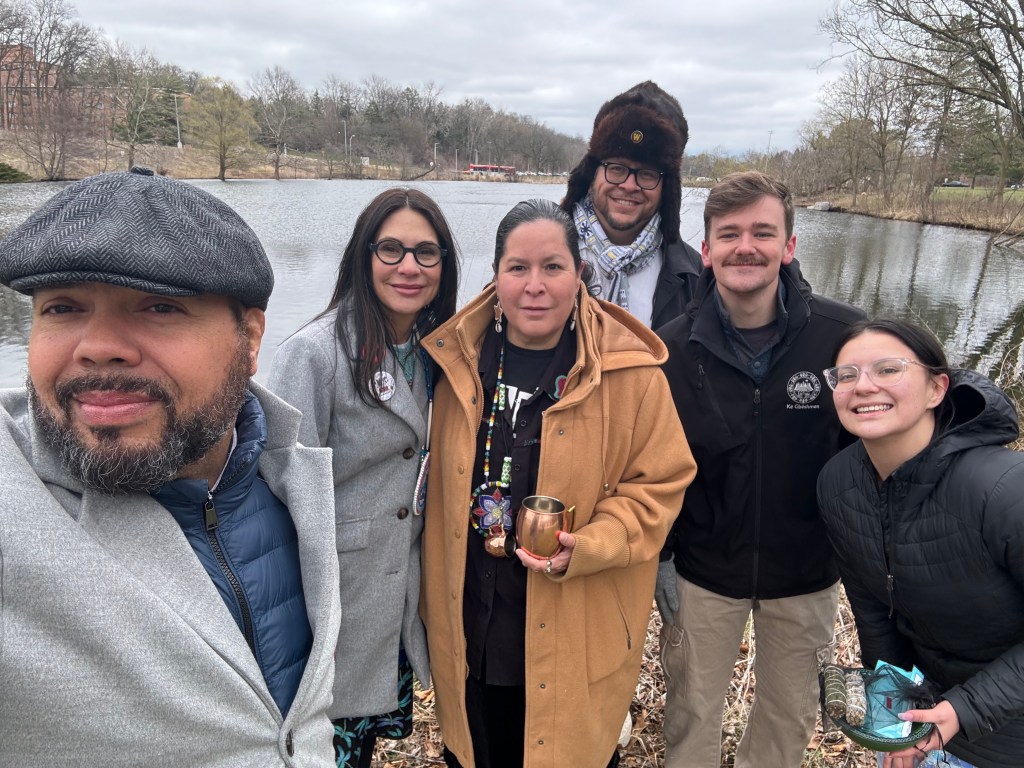
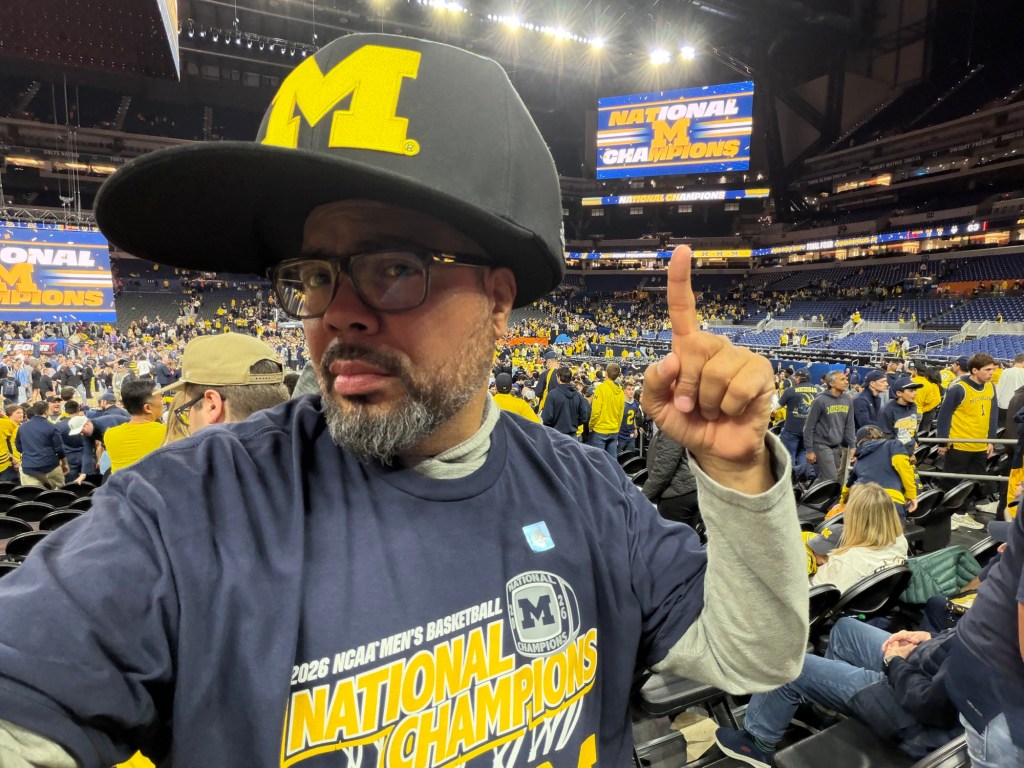
And now, some of my most cherished times and experiences with members of the Native and Indigenous community in Michigan. Know that you can always depend on me to fight with you and for you.









 Cloaking Inequity
Leave a reply to Weaponized Incompetence: “I Didn’t Vote for This” Is Not an Excuse – Cloaking Inequity Cancel reply