Let’s be clear: this moment is testing leaders across every sector—business, philanthropy, tech, government, education, and health.Whether you’re running a Fortune 500 company, managing a foundation, serving as an elected official, or leading a university, the question is the same: will you rise to meet this era, or will you retreat and hope no one notices?
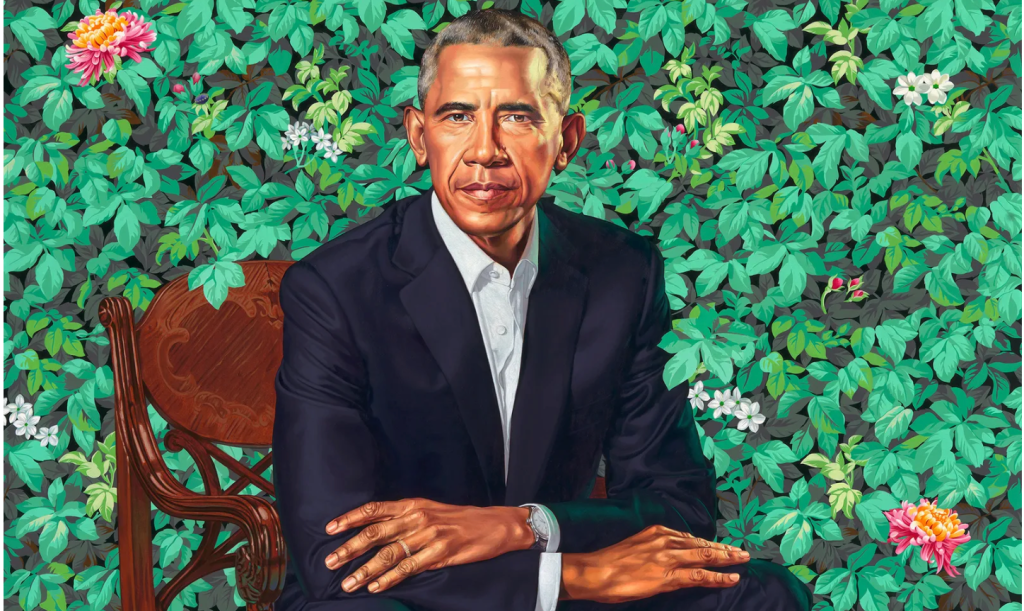
Former President Barack Obama recently put it bluntly. “It’s going to require a little less navel-gazing and a little less whining… It’s going to require [you] to toughen up.” That message wasn’t just for politicians. It was for anyone entrusted with responsibility in our democracy—including college presidents, provosts, chancellors, board chairs, superintendents, and commissioners of education. At every level, too many leaders have grown comfortable with staying silent when it matters most. Some want to win awards for neutrality. Others treat courage like a liability. Too many are trying to stay hidden, hoping to survive the current political era without becoming a target.
But in 2025, silence is not safety. It’s surrender.
Nowhere is that surrender more consequential than in education. We are facing a coordinated political campaign to turn America’s schools and colleges into ideological obedience academies. Through executive orders, funding threats, curriculum bans, DEI dismantling, surveillance, and censorship, the Trump administration has declared open war on critical thinking, equity, and the people who defend both. It’s a hostile takeover—masked as patriotism, enforced by fear. “It’s like 1984 had a campus tour,” I wrote recently in Diverse: Issues in Higher Education. “The same politicians who rail against ‘indoctrination’ in higher education are now trying to dictate exactly what can be taught, who can teach it, and which students are allowed to stay.”
And still, many leaders tasked with defending our institutions are choosing silence as their strategy. They avoid public comment. They issue watered-down statements. They cancel events, try to muzzle faculty, and remove inclusive language from their websites. Let’s call it what it is: cowardice cloaked in pragmatism.
Take, for example, Dr. Santa Ono’s presidency at the University of Michigan—one of the nation’s most important academic communities. I wrote in Diverse,
“Faced with attacks on diversity, equity, and inclusion (DEI); faculty speech; and academic freedom… Ono chose a strategy of avoidance… Rather than publicly defending the university’s values, he opted for a politics of minimization… That’s not presidential vision.”
Even more baffling, Ono then sought the presidency at the University of Florida—ground zero for Governor DeSantis’s culture war against higher education. In Florida, DEI is banned by law. Curricula are being rewritten by fiat. Trustees and presidents are being replaced by political loyalists. The idea that someone who once expressed support for DEI would pivot into that environment without a public stance is revealing. It signals not adaptation—but abdication. This is how retreat becomes policy. When leaders duck and cover, the forces attacking education don’t back down—they move in.
Now contrast that with the examples of bold, values-driven leadership we’ve seen elsewhere. “Consider the bold leadership at Harvard and Princeton,” I wrote in Diverse. “Princeton’s President Christopher Eisgruber, a constitutional law scholar, has consistently refused to bend to Trump-era political pressures… Harvard’s interim president, Dr. Alan Garber… has issued clear, unapologetic defenses of academic freedom and university independence… He reminds us that a president doesn’t need decades in office to lead; they just need a spine.”
These leaders have not chosen a path of safety. They’ve chosen a path of integrity. They have responded to political intimidation with legal strategy, public messaging, and solidarity with faculty and students. They’ve drawn lines. And when you draw lines, you build trust. You send a message that says: “We will not be bullied into abandoning our mission.” That kind of leadership is rare, and it’s not accidental in this historical moment. It comes from a clear sense of purpose. “The difference between these leaders and those who remain silent,” I wrote, “comes down to two words: personality and purpose.”
But let’s also be honest—our leadership hiring practices aren’t helping. I recently asked ChatGPT to scan 16 publicly posted presidential and chancellor job descriptions across the U.S. Only two mentioned courage. Most read like pre-2020 boilerplate: budget-balancer, community-builder, enrollment-maximizer. They’re written for primarily caretakers, not also fighters. For fundraisers, not also defenders.“This is a critical failure,” I wrote. “We are selecting for caretakers when we need advocates. We are rewarding neutrality when we should be demanding moral clarity.”
Courage absolutely exists—but in red states, it comes at a cost. University presidents often confront hostile legislatures, performative investigations, and targeted attacks on tenure, accreditation, funding, and even personal safety. I’ve personally received disturbing letters crafted from cut-out newspaper clippings—an unmistakable warning meant to intimidate. In those environments, speaking up can feel professionally suicidal. And yet some still do—quietly or defiantly. They bring lawsuits. They write editorials. They change from public to private institutions where they have more legal protection. They empower faculty and students to resist. Even when courage is costly, it still shows up.
But in blue states, where courts are more likely to protect academic freedom and public opinion more firmly supports equity, the bar is higher. There is no excuse for silence. No rationale for appeasement. And yet that’s exactly what too many leaders are offering: silence, in the hope that political storms will pass. But this isn’t a storm. It’s an authoritarian movement. And it won’t stop because you stayed quiet. We must redefine leadership in this moment.“In this era,” I argued, “we don’t just need administrators who can balance budgets, run capital campaigns, or secure accreditation. We need organizers, defenders, and coalition-builders… Because silence is not neutrality. It is surrender.”
So what should leadership look like in 2025? It should look like public advocacy—clear, consistent messages defending the right to teach, to protest, and to exist. It should look like legal resistance—joining coalitions that challenge censorship, repression, and retaliation. It should look like courage—not recklessness, but the principled, public defense of our values, even when it’s inconvenient.
We need presidents and chancellors who lead with their spines, not just their spreadsheets. We need superintendents and commissioners who don’t run from controversy but shape the narrative. We need board chairs who understand that governing with integrity requires engagement, not evasion. And we need to bake these expectations into the job—from search committee criteria to contract renewals. Courage must be a qualification—not a side benefit. Anything less is malpractice.
President Obama said it best:
“Don’t tell me you care about free speech and then you’re quiet.”
If you are a leader, and you haven’t found your voice yet, ask yourself why. If you’ve chosen to stay out of the fray, ask who benefits from your silence. If you think you can wait this out, ask what your organization will look like by the time the heat dies down. Because history won’t ask how comfortable you stayed. It will ask what side you were on. History is happening right now. So speak with clarity. And toughen up. Because democracy depends on it.



 Cloaking Inequity
Leave a comment