
The First Amendment is under siege, by those claiming to defend it. In one of the strangest political inversions of our time, the far right is now using the First Amendment to destroy the First Amendment. They claim to be defenders of liberty, free speech, and academic freedom. But their actions speak otherwise. What they really want is the ability to silence those who challenge their worldview while cloaking that silencing in the language of rights.
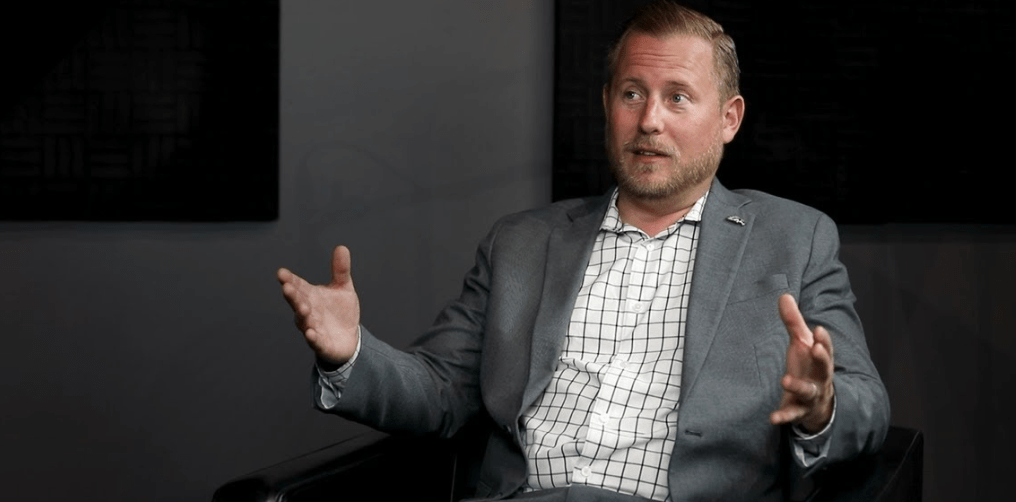
In a recent conversation on the Jubilee show, the mask slipped. One of the participants, a self-identified fascist, looked directly into the camera and calmly explained his vision for America: an autocracy led by those aligned with Catholic teachings, a government that disregards the Constitution if it stands in the way, and a public sphere where dissent is not just punished, but criminalized.
He openly admired Carl Schmitt, the Nazi legal theorist who argued that the sovereign should be above the law and who helped lay the legal foundations for Hitler’s rise. When asked whether he believed in democracy, he answered bluntly: “Absolutely not.” When asked if he considered himself a Nazi, he responded without hesitation: “I don’t care.” This was not a moment of satire or provocation. It was a deeply serious statement about where the far right wants to go next. This is not just rhetoric. It is a strategy. And it is already unfolding across the United States.
Take the current wave of legislation targeting diversity, equity, and inclusion programs in public education. In state after state, Republican lawmakers are banning campus centers that support marginalized students, censoring classroom content about race and gender, and even rewriting history curriculums to exclude inconvenient truths. They say it is about fairness. They say it is about protecting students. But in reality, it is about control.
They are using the language of individual liberty to erase collective memory and institutional accountability. It is not free speech to silence a professor for teaching about structural racism. It is not liberty to eliminate a cultural center that affirms Black or Indigenous identity. That is not the protection of rights. It is the elimination of them. And all of this is being done while the First Amendment is waved like a flag. The contradiction would be laughable if it weren’t so dangerous.
At the federal level, Project 2025—the conservative blueprint for a second Trump administration—goes even further. Written by the Heritage Foundation and affiliated organizations, it lays out a chilling plan to reshape American governance. It proposes defunding universities that offer so-called “woke” programming, firing federal employees who support racial equity, and centralizing control over education under the authority of the executive branch. It imagines a country where the government dictates what ideas can be taught, which histories can be remembered, and which people are allowed to speak. This is not a policy disagreement. It is an attack on the very idea of democratic pluralism.
The goal is not debate. It is domination. The tactics are not new. They have been used by authoritarian regimes throughout history: redefine liberty to mean obedience, redefine rights to mean privilege, and then criminalize all who dissent. This is the slow death of democracy, carried out in the name of preserving it.
The man on Jubilee, who proudly called himself a fascist, understood this well. He did not see the Constitution as a foundational document to be upheld. He saw it as a tool to be bent to serve power. He said it plainly: the Constitution should serve us. Not all of us. Just those who share his beliefs. He did not hide his disdain for civil liberties. He celebrated them only when they protected his right to speak. When others used those same rights to protest or critique his ideology, he advocated for their silence. He wanted the freedom to discriminate. And when he was later fired from his job, he complained of being discriminated against.
The irony could not be sharper. A man who demanded that others lose their rights the moment they disagree with him suddenly cries foul when consequences reach his own doorstep. But this is not hypocrisy. It is consistency. Authoritarianism always assumes it is immune to the rules it creates for others. It demands loyalty without accountability, speech without responsibility, and power without consequence.
We should not be surprised. These are not fringe ideas anymore. They are gaining traction in state legislatures, school boards, and even presidential campaigns. The threat is not just in the outrageous things a single individual might say on a YouTube show. The threat is that millions of people will listen, nod, and believe it represents a legitimate political future.
This is why we must be absolutely clear. The First Amendment is not a partisan tool. It is not a slogan. It is a fragile agreement among a diverse people to respect the rights of others to speak, to learn, to organize, and to believe differently. When that agreement is betrayed, when one side uses the rights of democracy to undermine democracy itself, it becomes our responsibility to respond.
Free speech does not mean speech without challenge. Academic freedom does not mean immunity from critique. But what it does mean is that the state should not be in the business of deciding which truths are acceptable. That is the road to totalitarianism. And we are already far too close.
We can see the consequences. Books are being pulled from classrooms and libraries because they depict the lives of queer youth or tell the story of slavery honestly. Teachers are being fired or investigated for using terms like systemic racism. College students who protest for Palestinian rights are being surveilled, suspended, or doxxed. Public officials who criticize these crackdowns are being censured or removed from leadership. And the very idea of academic scholarship is being twisted into a threat, a target, something to be eradicated rather than protected.
This is not liberty. This is repression in liberty’s clothing. And yet, amid all of this, we still have choices. We can fight for a public education system that reflects the full humanity of our students and communities. We can defend academic freedom not because it is perfect, but because without it, inquiry dies. We can insist that free speech means more than the right to speak—it means the right to be heard, to challenge, and to grow. And we can call out fascism and authoritarianism even when it is disguised as patriotism or cloaked in legalese.
That is the work ahead. Not just to protect the First Amendment, but to preserve the soul of a pluralistic democracy. That means refusing to allow the loudest voices of hate to redefine what freedom means in America. It means naming the danger when someone says, as that man on Jubilee did, that they would gladly throw out the Constitution to enforce their beliefs.
It also means remembering the lessons of history. Fascism does not begin with tanks in the streets. It begins with language. With laws. With declarations that some people’s rights are more important than others’. With attacks on education and memory. With leaders who say that disagreement is disloyalty and that truth must yield to power. And then it creeps forward, one institution at a time.
If we are serious about stopping it, we must act while we still have the tools of democracy available. We must use our classrooms, our pulpits, our libraries, and our town halls to speak the truth. We must defend the right to dissent not just for ourselves but for those we disagree with. Because if fascism takes root here, it will not be subtle. And by the time the people who thought they were immune realize what has been lost, it may already be too late.
The far right is not interested in the First Amendment. It is interested in power. And it is willing to use the language of rights to extinguish the reality of rights. That is the paradox of our moment. That is the battle we face. Not between right and left, but between those who believe in freedom for all, and those who will destroy it to rule alone.
The Constitution is not perfect. But it was never meant to serve only one ideology. It was meant to serve a nation. If we abandon it now, at the whim of those who seek only domination, we may never get it back. Let that be our warning. And let it be our call to action.
Please share.


 Cloaking Inequity
Leave a comment