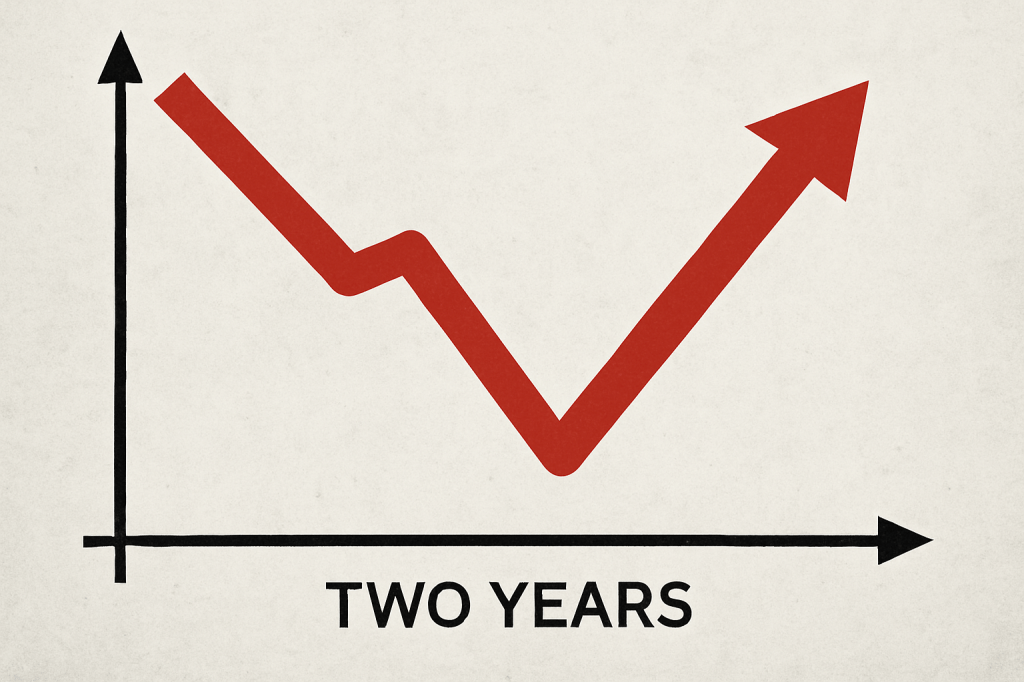
Decline is not destiny. That might sound like a slogan, but I have lived it. I have seen institutions that were written off as lost causes set new records in just two years. I have watched change arrive faster than anyone expected, not because of a miracle, but because a community decided to stop waiting and start building. The results were clear. The difference was leadership that supported and trusted people to rise.
At one university where I served as an executive leader, we were facing a full decade of declining enrollment. Graduation and retention rates were embarrassing. Public disinvestment, changing demographics, austerity, and reactive planning had chipped away at progress for years. The conversation had shifted from how to thrive to how to survive. But instead of settling for managed decline, our team dared to ask something more powerful: what would it take to turn this around?
In just two years, we answered that question. We set new records for retention. We reached new heights for graduation. We reversed a ten-year enrollment decline. These outcomes were not the result of luck or gimmicks. They were the product of coordinated effort, aligned values, and bold decisions made in partnership with those closest to the work.
This story is about higher education, yes. But the message is much broader. Whether you are a teacher, an organizer, a nurse, a CEO, or someone working the floor at a manufacturing plant, you know what it feels like to be inside a system that has forgotten how to believe in itself. Too often, leaders say that change is incremental. That bureaucracy is immovable. That institutions turn like ocean liners, requiring decades to shift course. There is some truth to the challenge—but I have also learned that change can happen fast when people want it, and when leaders are ready to back them.
This is not an abstraction. It is a pattern I have seen repeat in my leadership roles in California, Kentucky and Texas. Communities want to rise. But they need leaders who believe they can. They need systems that listen. And they need support structures that match the urgency of their hopes.
Our strategy was not magic. We built a coordinated, values-based plan rooted in listening. We chose not to retreat or defend turf. Instead, we aligned our work around mission-driven innovation and student success. We used powerful storytelling to help people believe in the institution’s future again. Most importantly, we trusted the faculty, staff, and students to lead the way. When people know they matter, they show up differently.
I believe that most of the best ideas already exist inside the institution. It is not that we lack creativity or wisdom. It is that our systems are not designed to hear and act on that wisdom. Leaders who truly listen can unlock the transformative power of the people they serve. That is our job—not to impose a vision, but to create the conditions for vision to emerge and thrive.
In two years, we fixed retention, graduation, and enrollment. Not in ten. Not in five. In two. Because we believed it could be done, and then we did the work.
Of course, not everyone will welcome that kind of change. Real transformation will always face resistance. People become attached to what they know, even when it is failing. Some will protect their corner of the status quo at any cost. Some will oppose your efforts because true equity threatens their unearned advantages. Others simply fear the discomfort of new terrain.
I have experienced that opposition firsthand. If you lead with courage—if you push for equity, accountability, and excellence, you will be attacked. Some will question your motives. Others will question your competence. But I have learned to expect the attacks, because they are a symptom of progress. When you confront deep problems, you stir deep fear. The question is not whether the attacks come. It is whether you are willing to stand anyway.
In my recent writing for Diverse Issues in Higher Education, I have said that bold leadership is not a luxury, it is a necessity. The world is changing too fast, and the stakes are too high, to lead with timidity or nostalgia. People are looking for courage, clarity, and direction. They are looking for leaders who listen with humility and act with purpose.
The future belongs to those who are willing to try something different.
That is why I lean into creativity. I generate ideas constantly. Some come from music, some from science, some from watching a community respond to challenge in unexpected ways. I have used poetry to teach policy, behavioral science to reframe student success, and visual storytelling to reshape public narratives. But I do not work alone. I rely on my team, on students, and on community members. Because creativity is not about ego. It is about listening for new ways to meet old needs.
We do not innovate just for the sake of it. We innovate to build equity, to restore trust, and to make meaning. We innovate because the old ways are no longer working, and pretending they are only deepens the harm.
And as artificial intelligence and robotics accelerates across sectors—from admissions to agriculture to military applications, we must lead with an ethical imagination. It is not enough to use new tools. We must ask what kind of world those tools are helping to create. We must teach students, employees, and citizens to ask the same. That requires leaders who are unafraid to speak the truth, even when it challenges popular narratives.
So whether you are leading a classroom, a business, a nonprofit, a research lab, a union local, or a public health team, here is what I hope you take from this: you are not powerless. Your community is not destined to decline. Your workplace does not have to settle for dysfunction. Change can happen fast when people believe it is possible, and when leadership does not get in the way.
You do not need to wait for a contract, a grant, a new initiative, or a headline to start building something better. You need clarity. You need collaboration. You need the courage to let go of old assumptions and try something new.
And you need support. Change cannot happen if leaders punish risk, silence dissent, or hoard decision-making. If we want transformation, we must create structures that let people experiment, fail, learn, and grow. We must lead by creating space, not just giving orders.
That is what we did in Michigan. That is what I have seen work in Texas, in Kentucky, and in California. That is what can work wherever you are.
Decline is not inevitable. But progress is not automatic. It must be chosen, built, and defended. It must be pursued with joy, with urgency, and with an unwavering belief in what people can do when they are trusted and supported.
So if you are in the middle of hard work, if you are fighting for change and wondering if it will ever come, hold on. The turning point may be closer than you think. What took a decade to decline may only take a brief time to rebuild.
Let us stop telling ourselves that transformation takes forever. Sometimes it just takes the right people, working together, refusing to quit.
Let that be the story we write next.



 Cloaking Inequity
Leave a comment