
There is a popular belief, repeated by cynics and strategists alike, that words no longer carry weight. That in a culture ruled by artificial intelligence, meme cycles, and vanishing attention spans, language has lost its ability to shift power or bend the arc toward justice. I disagree. Words still carry fire. Words still reveal. Words still wound. Words still heal. And when chosen with care and clarity, they still make the powerful pause.
Since stepping down from my role as provost, I have reclaimed a kind of freedom that leadership too often demands you suppress. Academic freedom. Moral clarity. The ability to speak with precision and principle, without filtering every word through a PR department or legal counsel. Over the past six months, I have used that freedom to speak more boldly. I have written about betrayal in leadership. I have written about the silencing of student protests. I have written about artificial intelligence and its complicity in historical erasure. As a tenured educational leadership and policy professor I have written about racism, complicity, false neutrality, and the ways institutions often choose comfort over conscience. I have written to expose, to protect, to reflect, and to guide.
And what I have learned through every private text message, every late-night email, every whispered thank you in a hallway is that the most dangerous thing you can do in this moment is speak clearly.
We live in a time when clarity is treated like confrontation. You are not punished for being wrong. You are punished for being right, too plainly, in front of too many people. Especially if the truth you tell threatens power. Especially if you speak without apology. Especially if you name the thing everyone else is pretending not to see. Especially if you bring receipts.
That is why so many leaders now speak in riddles. They trade clarity for complexity, truth for nuance. They hide behind process. They cloak injustice in polite language. Euphemisms have become a survival strategy. And in many institutions, it works. Until the building is burning and no one dares say the word smoke. Until harm becomes so normalized that calling it what it is sounds radical.
That is when the sword becomes necessary. But not as a weapon of destruction. As a tool of discernment.The verse does not say the sword is in your hand. It says it comes from your mouth. This is not about violence. This is about language. About precision. About the discipline of speaking clearly when clarity is dangerous. It is about using language to cut away infection, not to burn the whole body down. It is about calling out rot without destroying every structure we still have left to defend truth, public education, and justice.
This is not about rage for rage’s sake. It is not about performance. It is not about the loudest voice or the most viral takedown. It is about disciplined truth-telling. It is about saying, “This is racial supremacy hiding behind policy.” “This is betrayal, not leadership.” “This is manipulation, not dialogue.” “This is silence, not neutrality.”
And sometimes, it is not about others at all. It is about yourself. About naming the truth you have been avoiding. About facing your own compromises. About choosing principle when self-preservation whispers otherwise.
As I have spoken more openly, I have come to understand the cost more clearly. Once you turn your tongue into a sword, people will try to dull its edge. They will say you are too political. Too harsh. Too direct. Too uncompromising. And if you are a person of color, if you are a woman, if you come from a community long silenced, the blow will land faster and cut deeper.
But here is what I want university board members, CEOs, presidents, and other organizational leaders to understand. This clarity is not recklessness. It is not naivete. It is not emotionalism. It is strategic. It is informed by decades of experience navigating governance, managing labor and faculty priorities, building coalitions, negotiating with donors, and balancing the tension between institutional mission and external pressure. I know what keeps leaders up at night. I have sat at the table. And I know that sometimes the most strategic move you can make is to speak clearly when everyone else is speaking safely.
Because the people who depend on your leadership are watching. They are listening. And they are waiting to see if anyone in authority will name the harm that is going on in our society for what it is.
There are readers of my blogging, students, faculty, staff, organizers, and professionals outside the academy, who message me quietly. They say they are holding on by a thread. They say they feel gaslit by their organizations. They say they see what is wrong but do not know if anyone will back them if they speak. They are not looking for comfort. They are not asking for sympathy. They are looking for confirmation. That they are not imagining things. That truth still matters. That naming the harm is not the harm.
They are hoping for a sword. Not to cut others down. But to clear a path forward. To defend them when the lie grows louder than the law. When the organization forgets its values. When the truth becomes dangerous.
And here is the hardest truth of all: when you use that sword well, it will not just cut through injustice. It will cut you too. That is the double edge. You may lose proximity to power. You may lose speaking invitations. You may lose promotions. But you will gain something rarer than recognition. You will gain trust. Not the kind built on performance. The kind built on truth. The kind that says, “If you said it, I believe it.” The kind that says, “You are the person I want in the room when the stakes are highest.”
That is the kind of leadership we need in this moment. Not perfect leadership. Not polished leadership. Not leadership that speaks in code and calls it wisdom. But principled leadership. Strategic and courageous. Honest and clear. Grounded enough to understand the risk. Brave enough to take it anyway.
Your voice is a weapon. But not a reckless one. It can be used with discipline. It can be used to protect. It can be used to build. It can draw lines when compromise becomes complicity. It can re-center organizations when they lose their way. It can call leaders back to their purpose. And it can offer refuge for those who have been pushed to the margins.
So yes, I have made my academic work my sword. During this time, I have been able to expand my scholarship in educational leadership and policy not only through peer-reviewed research but through writing that challenges, questions, and reframes public discourse. I have moved beyond posting photos at events, meetings, and conferences. I have chosen to share more than curated moments. I have chosen clarity over caution. I have chosen to speak when others fall silent. I have chosen to defend those who have been erased. Not because I do not feel fear, but because I know what fear produces inside organizations. It produces decay. It produces delay. It produces managers of decline instead of architects of transformation.
You do not need a title to use your voice. You do not need permission. You do not need to wait for consensus or approval. You only need conviction. You only need the willingness to say what you see. To speak for those who have been told to stay quiet. To believe that your voice, wielded with clarity and courage, may be the very thing that gives someone else the strength to speak too.
They do not say it directly, but the message is everywhere: keep your head down. Do not make yourself a target. Stay quiet so no one notices you exist. Do not support tenure or academic freedom too loudly because it might upset the wrong donor or politician. Do not challenge false narratives because you might offend someone powerful. Do not make the institution look bad by telling the truth about what it is doing.
But here is what they never say out loud: silence will not save you. As Audre Lorde reminded us, your silence will not protect you. You can play the game. You can stick to branding language, deliver polished statements, and avoid controversy. But when the political tides shift, when a scapegoat is needed, or when courage becomes inconvenient, silence will not insulate you. It will only erase you more quietly.
The truth is that people have become fluent in euphemism. They have become masters at saying the right things without meaning any of them. Some are afraid. Others just do not care to be honest. But the end result is the same: a system that rewards obedience, punishes authenticity, and convinces everyone that the safest thing to do is to say nothing real at all.
But we need real. We need words that name what is happening. We need voices that can hold institutions accountable not just for what they say, but for what they do when no one is watching. Because those silent back rooms, the private meetings, the quiet smear campaigns, the slow marginalization of truth-tellers—those are the places where freedom dies.
Your voice matters. Not because it will always protect you. But because it might protect someone else. Because someone, somewhere, is waiting to hear someone say it first. And because once a lie becomes normal, only truth spoken clearly can shatter it.
So the next time someone tells you to watch your mouth, hear what they are really saying. They are watching you because they know. They know your words are not noise. They are not branding. They are not filler. They are fire. They are witness. They are the sharp edge of clarity.
In a political moment in the United States that rewards silence and punishes truth, your voice is more than an expression. It is a force. It can pierce deception. It can shield the vulnerable. It can call leaders back to their purpose and remind institutions of the values they claim to serve.
Silence will not save you. It will only make your absence easier to forget. But when you speak with clarity and courage, you do more than defend yourself. You light a path for others. You prove that truth can still be spoken. You give permission for it to be spoken again.
In the old stories, King Arthur did not keep Excalibur buried in its stone or hidden in a scabbard. He drew it in moments when his people’s future was on the line. He wielded it not for spectacle, but for justice, for protection, for the defense of what was right. Excalibur was more than a weapon — it was a symbol that truth and honor could still prevail against the forces that sought to bend the realm to fear.
We live in a political age that seeks to force quiet compliance, to convince you that keeping your head down is survival. But your voice is the sword truth now demands. It can cut through deception. It can shield the vulnerable. It can rally those who thought they were alone. Like Excalibur in the hands of a worthy bearer, it is not meant to gather dust.
Draw it. Wield it. Let it shine in the open air where others can see its edge and know that truth still stands.
Please share.
Julian Vasquez Heilig is a nationally recognized policy scholar, public intellectual, and civil rights advocate. A trusted voice in public policy, he has testified for state legislatures, the U.S. Congress, the United Nations, and the U.S. Commission on Civil Rights, while also advising presidential and gubernatorial campaigns. His work has been cited by major outlets including The New York Times, The Washington Post, and Los Angeles Times, and he has appeared on networks from MSNBC and PBS to NPR and DemocracyNow!. He is a recipient of more than 30 honors, including the 2025 NAACP Keeper of the Flame Award, Vasquez Heilig brings both scholarly rigor and grassroots commitment to the fight for equity and justice.


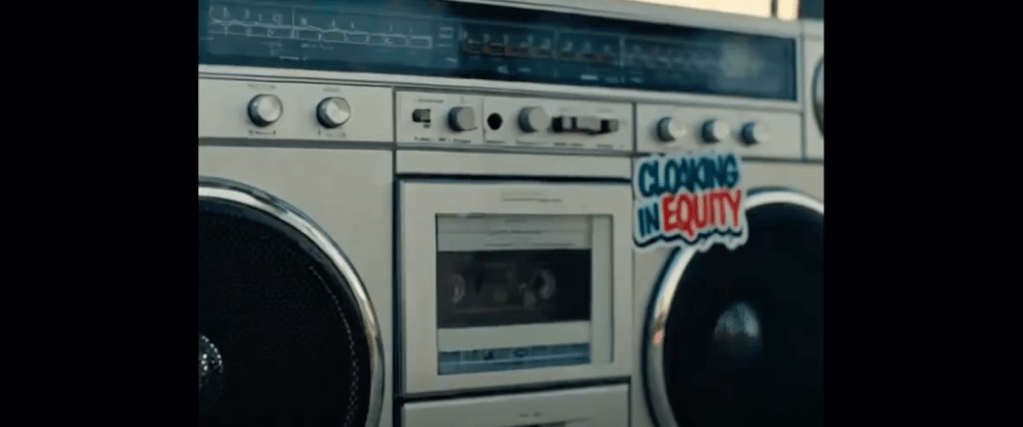


 Cloaking Inequity
Leave a comment