
Audiences can always sense when a speaker is recycling a talk or going through the motions. The slides look generic, the stories do not quite connect, and the message hovers above the realities of the room. That is why I never give the same keynote twice. Every audience, whether teachers in Santa Barbara, community advocates in Houston, students in Stockton, or higher education leaders in the Big 12, deserves a talk created for them, not borrowed from myself or someone else.
When I step onto a stage or to a podium or a Zoom window, I do not see myself as delivering a speech. A keynote, at its best, is an act of connection. It is about weaving together research, lived experience, good stories, jokes, maybe a poem or song and the specific challenges and triumphs of the community in front of me. That is why I custom-make every keynote I give.
Why I Custom-Make
The first reason is that audiences deserve it. Teachers, principals, students, parents, advocates, and business leaders are giving me their most valuable resource: their time. They do not need another recycled talk. They deserve a message that speaks directly to their work, their values, and their future.
The second reason is that no two communities are alike. What resonates in Detroit may not land in Santa Barbara. What inspires in Lansing may not be the right message for higher education leaders in the Big 12. Each district, university, or organization carries its own history, demographics, politics, and culture. To honor that, I need to do my homework.
The third reason is that transformation is personal. A keynote should not just inform, it should inspire and entertain. Inspiration comes when people hear their own story reflected back to them. It comes when a talk validates their struggles and amplifies their hopes. A generic talk rarely achieves that. A custom-made one often can.

How I Custom-Make
My process begins long before I walk onto the stage. I start by listening. I ask organizers what issues are pressing in their community. I ask about challenges, victories, and the emotions educators are carrying into the event. Then I research. I look at district data, university demographics, local news coverage, and recent headlines. I want to know the context in which I will be speaking.
Next, I design. I create a structure that balances insight with interaction. I want the keynote to feel like a shared experience rather than a one-way speech. I design slides, examples, and activities that connect to the people in front of me. Sometimes I even sing. Finally, I deliver with authenticity. I bring my own experiences, but always framed in ways that allow the audience to see themselves. I use storytelling, scholarship, humor and energy to create a collective moment that feels designed for them, because it is.
The Santa Barbara Story of Success
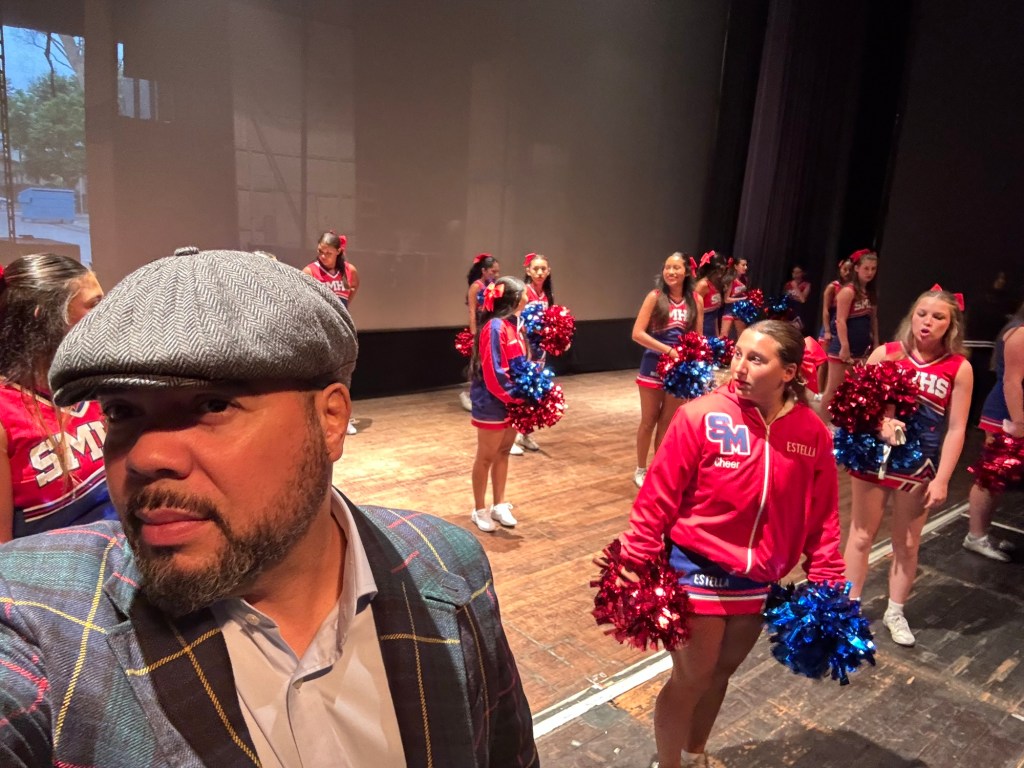
A perfect example of this approach came last week when I was invited to keynote Santa Barbara Unified School District’s back-to-school kickoff at the historic Arlington Theatre.
The event began with Superintendent Hilda Maldonado celebrating progress. Reading scores had climbed above 50 percent, math scores increased by 5 percent, and some schools posted dramatic double-digit gains. Cleveland Elementary saw a 30 percent jump in literacy scores for sixth graders. Washington Elementary reported a 42 percent increase in fourth grade literacy. Franklin Elementary posted a 29 percent increase in fourth grade math. At the high school level, Santa Barbara High rose 9 percent in literacy, San Marcos 7 percent, and Dos Pueblos 2 percent.
The superintendent framed these numbers as proof that when educators believe in students and work together, transformation happens. Yet she also acknowledged ongoing challenges, especially for immigrant families who faced heightened fear after a summer of federal raids. State Senator Monique Limón encouraged educators to carry hope, reminding them that students bring both fear and joy into classrooms each fall.
After the luminaries I stepped onto the stage, the room had already been primed with celebration and reflection. My role was to connect those elements to a deeper call. My talk was titled “Every Child, Every Chance, Every Day: Our Power to Lead, Teach, and Transform.”
I set the tone with Bill Withers’ Lovely Day as entry music. I greeted the crowd with energy: “Hello Santa Barbara! It is a lovely day!” Then I told them we were not going to spend 45 minutes with me talking at them. Instead, we would move in a rhythm of insight and interaction. I would share a core idea, then invite them to reflect with one another.
Culture Lives in Us
We began with culture. Too often, people assume culture is the posters on walls or slogans in hallways. I told them: “The system does not create the culture. We do.” Real culture lives in the choices people make when no one is watching: a hallway greeting, a bus driver remembering names, a custodian making every child feel seen.
Educators reflected on a moment when their school’s culture helped a student feel they belonged. The buzz of conversation in the theater was evidence that they understood how important a strong culture was in their school.
Support Leads to Equity
We shifted to support systems. I reminded them that Santa Barbara had spent years building systems rooted in equity. I emphasized that support is not just academic; it includes emotional safety, mental health, and belonging. When we support students well, equity becomes real.
Educators shared with neighbors how their roles supported students, especially those most in need. It was a reminder that equity is collective work.
Results as Mirror and Map
Next, I turned to results. Results matter, not as tools for blame, but as a mirror and a map. Results tell us where we are and where we need to go. I introduced Results-Based Leadership, urging educators to ask what their results said about them as a system, not just as individuals.
I asked the audience to stand if they believed their results should reflect their values. Thousands of people rose together, committing publicly to align words with outcomes.
The Iceberg of Systems Thinking
We dove beneath the surface using the iceberg metaphor. Above the water are incidents and achievement. Beneath are patterns, structures, and mental models that drive visible outcomes.
I asked groups to reflect on repeated challenges and the structures or beliefs beneath them. By surfacing these underlying issues, we moved from treating symptoms to addressing causes.
Moral Courage
Finally, we talked about courage. Public education is under coordinated attack on curriculum, equity, and democracy itself. I told the audience: “Courage is no longer optional. We need courage in classrooms, in boardrooms, and in staff lounges. Courage that is clear, steady, and grounded in values.”
The educators were again invited to stand to recognize moments when they had chosen what was right over what was easy. The sight of thousands standing together was powerful.
Poetic Closing
We closed with an original poem, read over the instrumental of Andra Day’s Rise Up:
“This year, we will let love ring louder than fear.
We will make care our curriculum.
We will measure progress by the depth of our connection.
We will not shrink, we will not hide, we will not wait for someone else to be brave.
And still, Santa Barbara, we rise. We educate. We lift. Together.”
The moment felt less like a speech to me and more like a collective recommitment to purpose.
Why Custom Matters
That keynote worked because it was built for Santa Barbara. It drew on their progress, their political realities, their district culture, and their hopes for the year ahead. It was not a talk that would have fit Detroit or Lansing or the Big 12. It was theirs.
Custom-making talks transforms keynotes from performances into shared experiences. Audiences leave not just inspired but engaged. They carry the message because it was built with them in mind.
Looking Ahead
In the coming months, I will keynote three very different events. In Lansing, I will join a conference to speak about expanding pathways to higher education for students across the state. In Stockton, I will partner with the NAACP to meet with community members on Friday and young people on Saturday, focusing on equity, justice, and student opportunity. And with higher education leaders from the Big 12, I will engage in conversations about courage in leadership, institutional equity, and the role of universities in a polarized nation.
Each of these talks will be different. Each will be custom-made. Lansing requires one set of examples, Stockton another, and the Big 12 yet another. What they will share in common is a commitment to being designed for the audience that is present, not for the last one or the next one.
Closing
Audiences deserve more than inspiration. They deserve a talk that speaks to their context, their challenges, and their aspirations. That is why I never give the same keynote twice. When a talk is custom-made for community, it becomes more than a speech. It becomes our shared act of reflection, courage, and possibility.
Julian Vasquez Heilig is a nationally recognized keynote speaker, policy scholar, and public intellectual who has delivered more than 150 invited talks in eight countries, engaging audiences from classroom teachers and community activists to legislators, university leaders, and global policymakers. Known for custom-making each keynote to reflect the unique context of his audience, he blends scholarship, storytelling, and interactive engagement to inspire transformation in education and society. Heilig has testified for the U.S. Congress, the United Nations, the U.S. Commission on Civil Rights, and multiple state legislatures, while also serving as a trusted advisor to presidential and gubernatorial campaigns. His expertise has been featured in outlets such as The New York Times, The Washington Post, Los Angeles Times, MSNBC, PBS, NPR, and Democracy Now!



 Cloaking Inequity
Leave a comment