
I have been in enough rooms with executives and managers to know what is really said when the microphones are off and the doors are closed. I have heard leaders mock unions. I have heard workers described as lazy (e.g. faculty and staff). I have watched decision-makers joke about “screwing over” union leaders or laugh about how they had outmaneuvered unions. I have seen the strange public-private split, where some leaders will stand at a podium and claim to come from “union families,” only to be the most aggressive in undermining labor when no one is watching.
These are not isolated incidents. They are part of a broader culture of leadership in many sectors that prioritizes confrontation over collaboration. And the consequences are predictable. Leaders who demean and undermine unions are the very same leaders whose first instinct, when their poor decision-making leads to financial crisis, is to propose mass layoffs. They are the ones who insist on cuts, furloughs, and salary freezes, all while protecting executive perks and unnecessary management.
I saw this dynamic firsthand as a provost. A senior administrator who reported to me once came into my office and asked for a large raise, well above market benchmarks. My response was simple: I told them I would not even consider their request until we had settled our negotiations with faculty. He was not happy about that. But to me, it was a matter of principle. How could I justify enriching one administrator while faculty were still fighting for fair treatment at the bargaining table? Leadership is about priorities, and mine have always been clear: workers come first.
It is not a coincidence why leaders regularly face votes of no confidence from workers and communities. When you run an organization like a disposable razor, when you treat labor as expendable rather than as the heart of the enterprise, you will eventually lose the long-term trust that makes institutions, and companies, vibrant and sustainable.
A Different Path at Kentucky
My time as dean at the University of Kentucky reinforced this lesson for me. We were not unionized, but we still had a strong sense of community responsibility. When COVID hit, we were told that the administration had already approved mass layoffs if we wanted to move in that direction. Many colleges at the university did just that. They used the pandemic as cover to slash staff, eliminate positions, and shift costs.
But in our college, we made a different choice. We sat down together, faculty, staff, students, and chartered a collective course through the crisis. We chose not to scapegoat employees for a crisis they didn’t create. We chose not to wield layoffs as the first and easiest tool. Instead, we listened, collaborated, and worked to share the burdens fairly.
That experience taught me something essential: even without a union contract— which is preferable— a spirit of solidarity can chart a more humane and sustainable path. And it reinforced why strong unions matter, because they guarantee that collaborative spirit has institutional power behind it.
Why We Keep Choosing the Wrong Leaders
So why do boards of trustees and hiring committees so often pick leaders who do the opposite, the ones who attack labor, scapegoat workers, and dismantle trust? The answer, I think, lies in misplaced priorities.
Let me shift metaphors for a moment. Choosing leaders in higher education is a lot like dating. People often choose partners based on the wrong criteria. They get dazzled by surface-level traits: appearance, pedigree, wealth, or status. They equate being loud with being strong. They mistake confidence for commitment.
Too often, people end up in relationships with partners who belittle them, take them for granted, or undermine their dreams. And then they wonder why they are unhappy. The same thing happens when humans hire. They chase after the candidate with the glossy résumé, the one who projects toughness, the one who promises to “handle” the unions or “streamline” the faculty. They prioritize charisma and aggressiveness over empathy and collaboration. And then they are surprised when morale craters, when no-confidence votes pile up, and when labor is forced into open confrontation just to defend basic dignity.
The Human Cost of Union-Busting
In Higher Education, the impact of union-busting leadership is not abstract. It is felt in the lives of graduate students forced to strike because their health care was slashed. It is felt in the adjunct who juggles three classes at poverty wages while administrators opine about “tightening the belt.” It is felt in the staff member who is laid off in the name of “budget discipline,” even while the president’s cabinet gets raises.
When leaders prioritize confrontation with labor, they are really choosing to erode the foundation of their own institutions. Because universities are not buildings or brands. They are people. Faculty who teach. Staff who support. Graduate students who research. Adjuncts who often shoulder the heaviest teaching loads. Without those people, there is no university.
A Life of Union Commitment
That is why labor has always been central in my life. My grandfathers, who moved to Michigan in the 1950s, were proud United Auto Workers members. Their union wages and protections made it possible for my family to rise. The mother handled grievances for the Michigan Nurses Association for two decades.
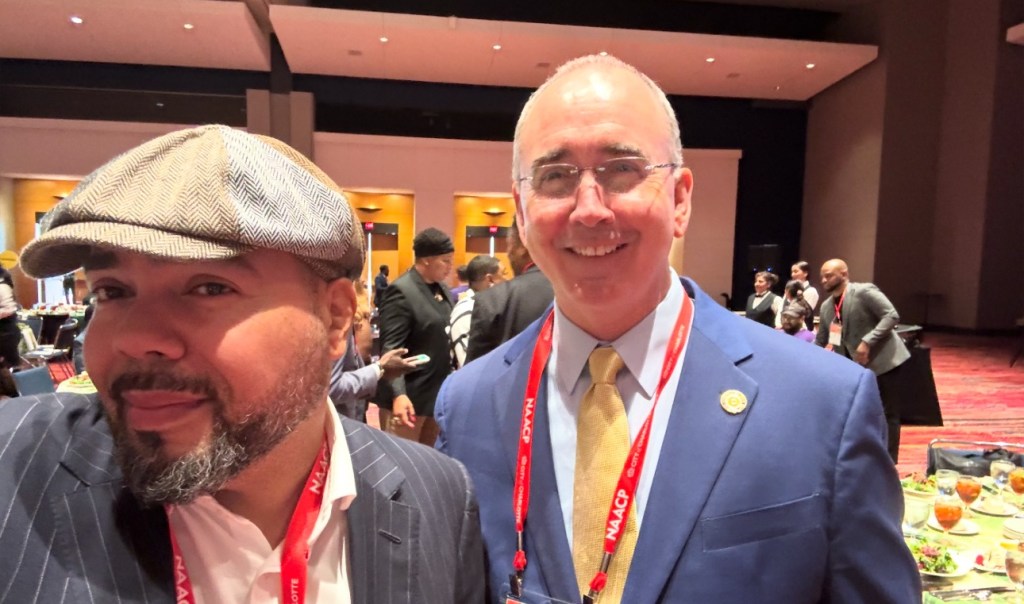
In my professional life, I have tried to honor that legacy. I served on the NEA Foundation Governing Board, where I worked to strengthen public education across the country. I was honored to be named a Global Learning Fellow, advocating for global perspectives in K–12 education. With the American Federation of Teachers’ New Teacher Research Group, I contributed to understanding how to better support beginning teachers.
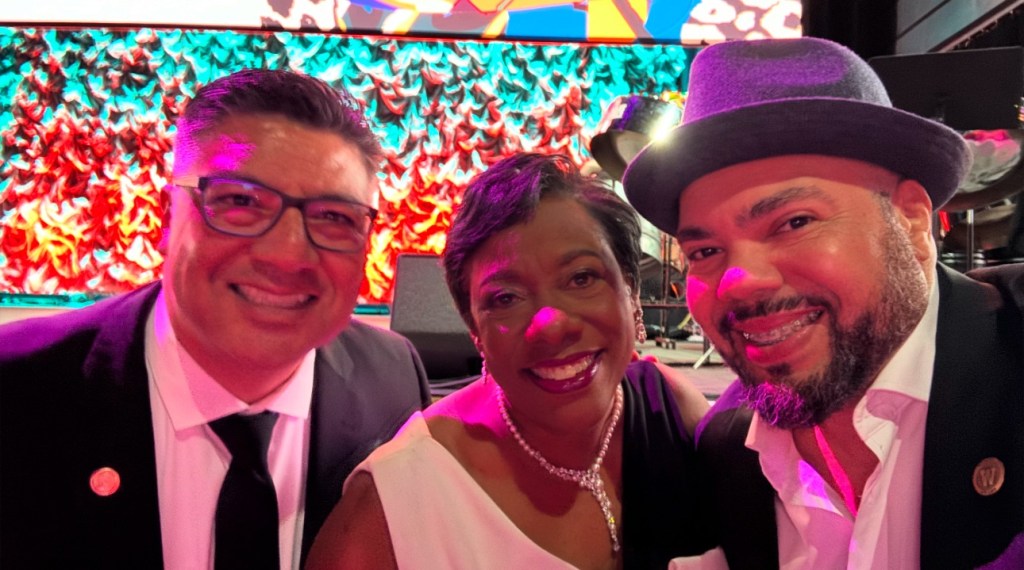
I participated in NEA task forces on community schools and charter schools, helping shape debates on equity and innovation. I represented the California Faculty Association as a US delegate at the Education International World Congress in Thailand, where educators from across the globe gathered to strategize for dignity at work. And I have keynoted and spoken at countless union events, from NEA minority and women’s leadership trainings to state and local caucuses.
For me, unions are not an interest group. They are the living legacy of my family and the ongoing engine of justice in higher education.
Labor Day’s History and Meaning
That is why Labor Day matters. This holiday was NOT born out of a desire for an end-of-summer sale. It emerged from workers in the late nineteenth century who demanded recognition of their dignity. The first Labor Day was celebrated in 1882 in New York City, organized by labor unions that marched proudly to claim their place in American democracy. It became a federal holiday in 1894, after years of organizing and strikes that often met with violent repression.
Labor Day is a reminder that every gain we now take for granted, the eight-hour day, weekends, safer workplaces, was won because workers organized, stood together, and refused to accept exploitation as normal. We now take these things for granted.
And yet, today, we still face leaders who seem to have forgotten these lessons. Leaders who attack unions as obstacles rather than partners. Leaders whose first instinct in a crisis is to cut jobs rather than cut their own perks. Leaders who do not understand that the strength of an organization lies in its people, not in its branding and marketing campaigns.
My Work Today
Since stepping down from my role as provost, I have leaned into this advocacy. I was recently selected to join an AAUP workshop on writing op-eds, sharpening my public voice. I have been submitting regularly, and I am grateful that Diverse Issues in Higher Education published one of my pieces about courage being in the job description for hiring university presidents. I am eager to publish more, and if you know outlets that are open to thoughtful voices on labor, equity, and education, I welcome your connections.
I am also becoming involved with Michigan Higher Education Labor United (MHELU). This coalition brings together faculty and staff to strategize for stronger public higher education in Michigan. We are planning actions, advancing policy proposals, and building solidarity across institutions. It is, in many ways, the natural extension of the work my grandparents began on the factory floor, ensuring that dignity at work is not a privilege but a right.
A Call for Different Priorities
So this Labor Day, I want to return to the dating metaphor. Too many boards, trustees, and hiring committees keep choosing the wrong partners. They are dazzled by the résumé, the charisma, the tough talk. They are impressed by the ability to project certainty, to promise “discipline,” or to pledge that they can “handle” workers. They prioritize the wrong things.
What would it look like if, instead, boards and hiring committees prioritized how a candidate has treated unions and workers? What if the first questions in every interview were not about revenue or efficiency, but about labor and dignity? How do you view the role of unions? How have you worked collaboratively with employees in the past? Will you respect workers at every level — from frontline staff to contractors — as essential contributors?
What if we chose leaders not for their bravado, but for their ability to build trust? Not for their willingness to fight labor, but for their commitment to honor it? What if we rewarded the quiet strength of someone who can listen, empathize, and negotiate in good faith, rather than the flashy executive who boasts about “cutting fat” while protecting their own perks?
Because organizations are not machines to be run through layoffs and intimidation. They are communities, whether a university, a hospital, a nonprofit, or a manufacturing plant. And communities thrive when their leaders prioritize collaboration, respect, and solidarity. A company or institution that values its people is one that will innovate, endure, and serve. One that treats its people as disposable is one that will eventually collapse under the weight of its own cynicism.
Closing
I have heard the laughter behind closed doors. I have watched the contempt with which some leaders treat labor. We know the devastation that flows from those priorities: careers cut short, families destabilized, and institutions hollowed out. But I have also seen what is possible when we choose a different path. At Kentucky, we faced a crisis together without mass layoffs. We charted our own course with integrity and solidarity, proving that dignity and fiscal responsibility are not mutually exclusive.
This Labor Day, let’s stop choosing the wrong partners. Let’s demand leaders who understand that workers are not an expense to be managed, but the foundation on which every successful enterprise is built. Let’s remember the history of this holiday, born from struggle and solidarity, when working people refused to be silent and demanded respect. And let’s recommit ourselves to building institutions and companies that honor labor, not undermine it.
Because in the end, leadership comes down to priorities. If we want a healthy relationship, we have to choose the partner who treats us with respect. And if we want thriving institutions — in education, health care, technology, or any other sector — we must choose leaders who treat unions not as enemies, but as allies in the shared work of building a just and sustainable future.
Julian Vasquez Heilig is a nationally recognized policy scholar, public intellectual, and civil rights advocate. A trusted voice in public policy, he has testified for state legislatures, the U.S. Congress, the United Nations, and the U.S. Commission on Civil Rights, while also advising presidential and gubernatorial campaigns. His work has been cited by major outlets including The New York Times, The Washington Post, and Los Angeles Times, and he has appeared on networks from MSNBC and PBS to NPR and DemocracyNow!. He is a recipient of more than 30 honors, including the 2025 NAACP Keeper of the Flame Award, Vasquez Heilig brings both scholarly rigor and grassroots commitment to the fight for equity and justice.






 Cloaking Inequity
Leave a comment