Is Stockton a national leader in public policy innovation? I argue they are. Stockton has long stood out in California’s public policy landscape. For example, it was the first major city in the nation to test a universal basic income program under then-Mayor Michael Tubbs, sparking national conversations about guaranteed income as a strategy to reduce poverty. Stockton has also piloted innovative violence reduction initiatives, invested in youth leadership programs, and embraced some bold ideas for educational equity that many cities are only beginning to consider. It is a place that has never been afraid to try innovating, even while grappling with very real challenges of poverty, housing insecurity, and racial inequity. Stockton’s policy choices have made it a bellwether city, one that embodies the struggles and the promise of America.
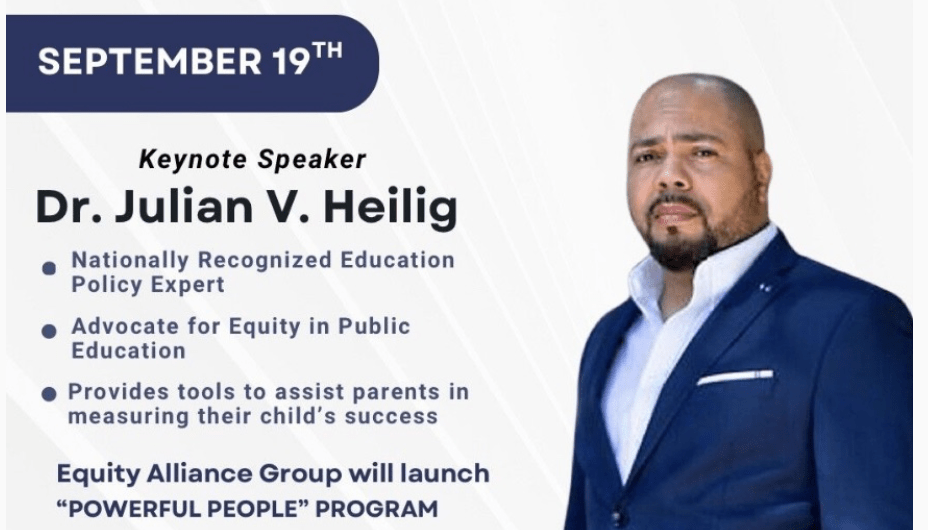
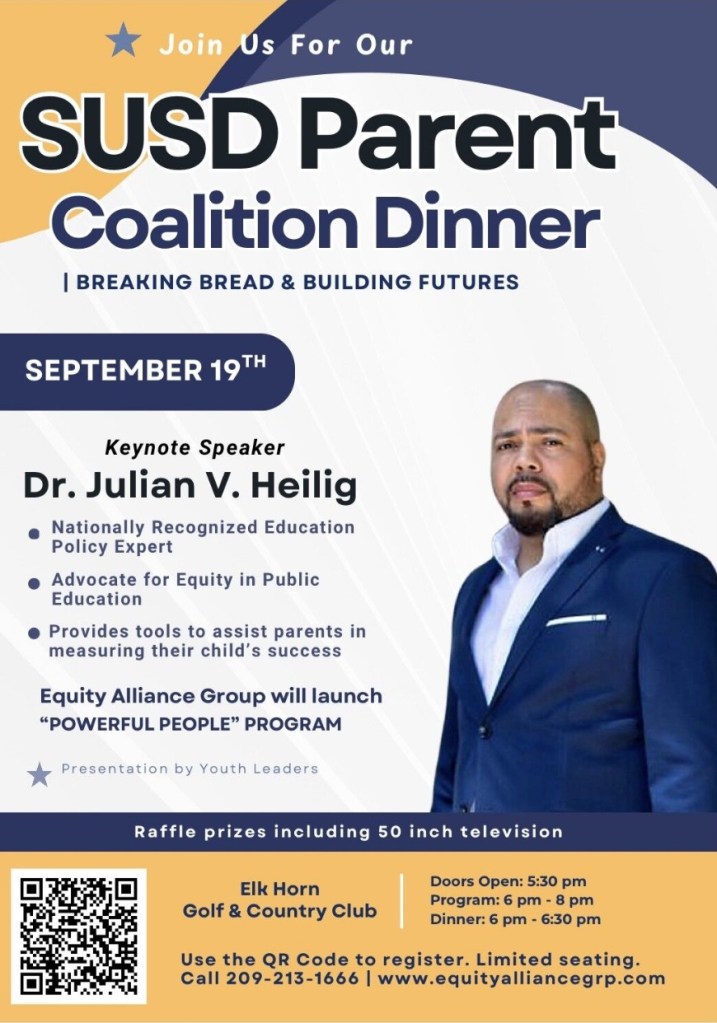
This Friday, September 19, I will return to California, for an evening in Stockton that promises to be equal parts celebration, reflection, and action. From 6:00–8:00 PM, the Stockton Unified Parent Coalition and the Equity Alliance Group will host a dinner at the Elk Horn Golf & Country Club. I have the honor of serving as the keynote speaker, but the real stars of the evening will be the families, educators, youth, and community leaders who are gathering to dream bigger for Stockton’s students.
The Bivens
My connection to Stockton is personal as well as professional. When I was living in Sacramento and teaching at California State University, I would sometimes drive down to Stockton just to share Mexican food with Bobby and LaJuana Bivens. The food was always spicy, but what I remember most is the seasoned conversation, the laughter, and the wisdom that poured forth around those tables. Those meals were a reminder that fellowship is as much a part of the civil rights struggle as marches and speeches. The Bivens are not just colleagues in the fight for equity. They are friends, confidants, and elders whose presence has shaped my own journey in this work.
We were reunited most recently this past summer at the NAACP National Convention in Charlotte. Seeing them there, still tirelessly leading, still inspiring others, reminded me of how important our elders are in the civil rights movement. Movements are often fueled by youthful energy, but they are sustained by elders who hold memory, history, and continuity. The Bivens represent that bridge. They have trained up generations of youth leaders in Stockton and beyond, ensuring that each new wave of young people carries forward the struggle for equity and justice. Their impact is so far reaching that it is impossible to measure in full.
When I served as Education Chair for the California NAACP from 2015-2019, I had the privilege of working closely with youth across the state. The young people from Stockton, trained and nurtured by Bobby and LaJuana, consistently stood out. They were the showcase of the civil rights work we were doing in California. Their presence, their leadership, and their vision reminded us all that Stockton was not just a place where policy experiments were happening. It was a place where generations of leaders were being raised up to carry the struggle forward. That is the Bivens’ legacy: a living network of empowered young people whose voices and actions ripple far beyond Stockton.
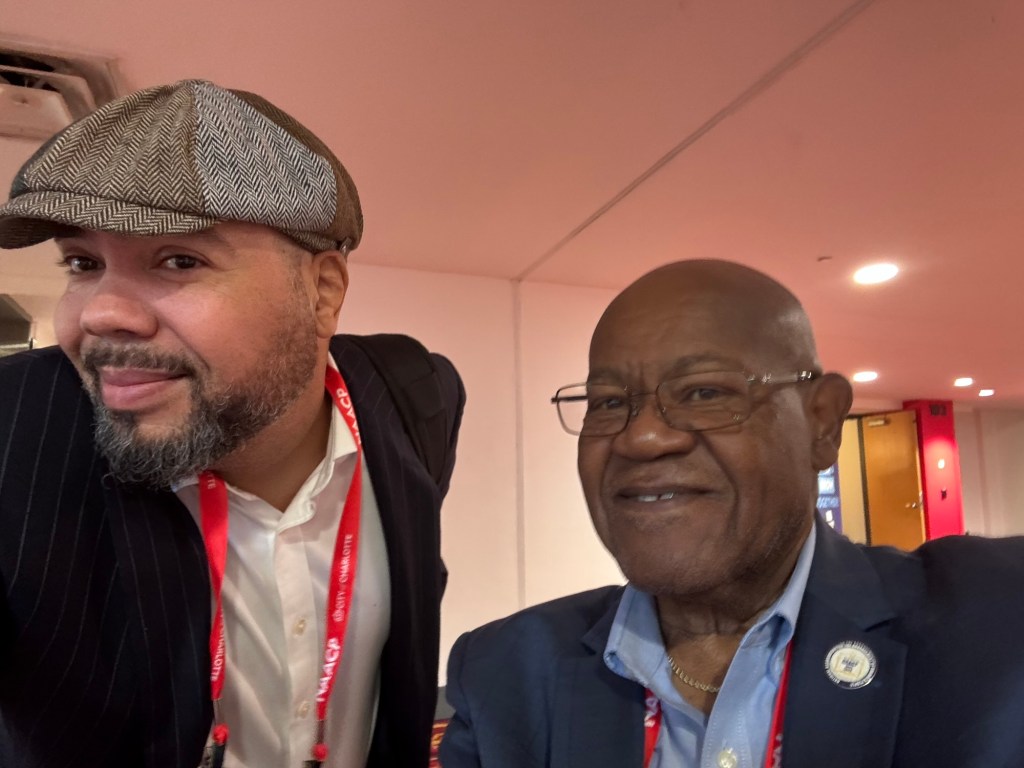
Bobby Bivens has been a cornerstone of civil rights leadership in Stockton for decades. Last year he received the NAACP Keeper of the Flame Award, a fitting recognition of someone who has carried forward the work of those who came before him. His leadership has touched education, housing, health, and voting rights. LaJuana Bivens, a member of the NAACP National Board of Directors and CEO of the Equity Alliance Group, has built an extraordinary career in government service, organizational leadership, and community empowerment. For over a decade, I have had the privilege of calling her not just a colleague but a friend. When she calls, you know the work is meaningful.
Centering Youth and Parents
The dinner this Friday will also launch the Equity Alliance’s “Powerful People” program, a bold initiative that places youth at the center of the conversation. Too often, young people are told they are the leaders of tomorrow. Stockton is declaring they are the leaders of today. By preparing and giving young people a platform, the Equity Alliance is affirming that equity is not just about resources or remediation. It is about power: the power to define success, the power to shape institutions, and the power to demand justice now.
I will also be sharing a framework for conducting an Equity Audit rooted in 25 years of NAACP education resolutions. These audits are designed to evaluate how schools and districts are truly aligning with the NAACP’s long-standing commitments to justice: access to certified teachers, culturally relevant curriculum, safe and inclusive learning environments, fair discipline, and equitable resource allocation. The point of these audits is not to celebrate or decry test scores, but to ensure that the conditions for producing outcomes are equitable, sustainable, and accountable to the community. When parents, educators, and advocates conduct equity audits, they arm themselves with data and civil rights principles that can not only expose inequities but also transform them into enforceable strategies for change.
The Keynote
In my keynote, I will invite parents to expand how they think about student success. Academic performance is important, but test scores alone do not capture the full story. Parents should also be asking: Is my child curious? Do they feel supported? Are they developing resilience? Do they know how to work with others to solve problems? These are the skills that will carry them into adulthood and civic life. These are the markers of true success.
There is also something deeply powerful about the format of this gathering. Breaking bread together is one of the oldest and most human ways of building trust. At the Elk Horn Golf & Country Club, Stockton parents, educators, and community leaders will share food, stories, and commitments with the local district. The research is clear: when schools and families build strong relationships, students thrive. But those relationships require intentional spaces where people can connect not just as stakeholders but as neighbors and community members. This dinner will be one of those spaces.
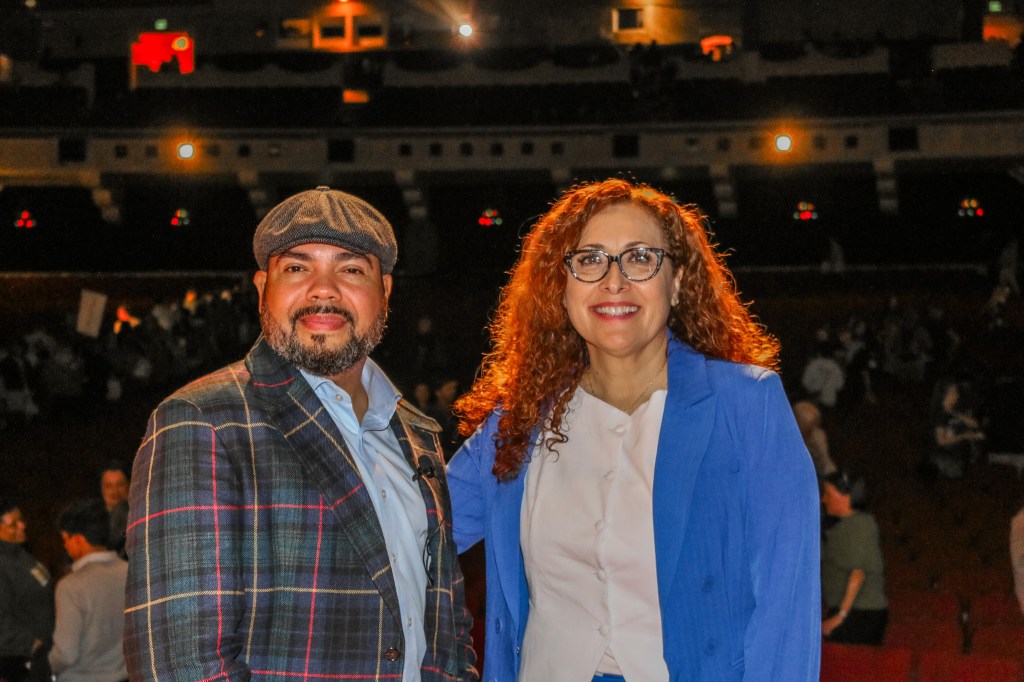
One of the things I enjoy most about my current work is the chance to travel and meet communities across the nation. Each visit offers new insights into how people are putting equity into practice. Just a few weeks ago, I had the privilege of opening the school year with Superintendent Maldonado in Santa Barbara. That experience was energizing because it reminded me of the creativity and determination that educators, parents, and students bring when they are given the chance to imagine schools differently. Stockton will no doubt offer that same energy, shaped by its own history and led by people who refuse to accept inequity as inevitable. I’d love to come visit with your community.
When I think about the work of the NAACP, the Equity Alliance, and the SUSD Parent Coalition, I am reminded that equity is not just a slogan or a special program, it is also a daily practice. It is the parent who shows up after work to advocate for their child. It is the elder who keeps leading long after retirement. It is the young person who steps up and claims their voice. Equity is what happens when communities refuse to give up on their children or on one another.
Conclusion
Stockton has its challenges, but it also has remarkable strengths: its diversity, its community pride, its willingness to innovate, and its legacy of civil rights leadership. By convening this dinner, Stockton is offering a model for the nation. It shows what can happen when parents, youth, educators, and civil rights leaders align around a shared vision: that every child deserves not only to survive but to thrive.
I am deeply grateful to Bobby and LaJuana Bivens for their invitation, their leadership, and their friendship. I am proud to stand with the Stockton NAACP and the Equity Alliance as they launch the “Powerful People” program and continue the struggle for educational equity. I cannot wait to listen, learn, and build alongside the parents, students, and leaders who will fill that room on Friday night. Because in the end, this is not just about Stockton. It is about the future of public education and the ongoing struggle for civil rights in America. And it starts, as it always has, with people willing to gather, to organize, and to lead.
Julian Vasquez Heilig is a civil rights advocate, scholar, and internationally recognized keynote speaker. He has served as Education Chair for both the NAACP California State Conference and the NAACP Kentucky State Conference, advancing equity for students and communities. Over the past decade, he has delivered more than 150 talks across eight countries, seeking to inspire audiences from universities to national organizations with research, strategy, and lived experience that move people from comfort to conviction and into action.






 Cloaking Inequity
Leave a reply to gruntinthetrenches Cancel reply