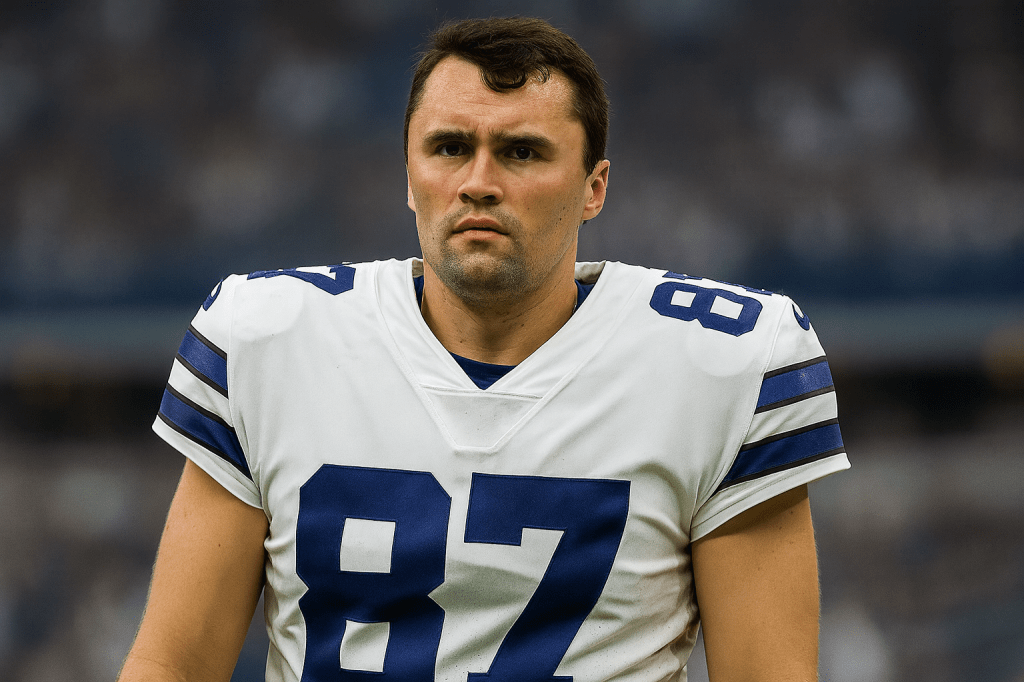
Historians have long asked a haunting question about the rise of authoritarian regimes: How did the “good Germans” let it happen? How did ordinary people who loved their families, went to work each day, and saw themselves as decent and moral allow their country to descend into cruelty and authoritarinism? It is a question that has echoed for generations because it points not only to the choices of fanatical leaders but to the silences and compromises of millions of ordinary citizens who allowed those leaders to consolidate power. That question is not confined to the past. It is alive in our own moment as America wrestles with new threats to democracy and new justifications for repression. The shooting of Charlie Kirk has been seized upon by some in the right as proof that dissenters are too dangerous to tolerate.
Rather than seeing the event as a tragedy in a society already overwhelmed by political violence, powerful voices have transformed it into a rallying cry. The Vice President of the United States went so far as to declare that Americans who criticize Kirk or the right more broadly should be disciplined or even fired. The FCC threatened ABC about Jimmy Kimmel comments and then they suspended him. And for maybe the first time in history I agree with Ted Cruz who today said the FCC threats to ABC are “dangerous as hell” and are “mob” tactics, one of the strongest GOP denunciations to come so far.
At the same time, Donald Trump has openly declared his intent to target “radical left” political organizations, and—as I noted in yesterday’s post—he’s starting by trying to classify “Antifa” as a terrorist group. That’s a fraught move: Antifa does not exist as a unified organization, so what does this mean in practice? Would anyone who opposes fascism now be treated as a terrorist? This effort would do far more than criminalize a loose, ill-defined label; it would place millions of ordinary Americans—students, union members, civil-rights advocates, and immigrant-rights organizers—under a cloud of suspicion simply for organizing against the right. This isn’t mere rhetoric. It is the deliberate construction of an authoritarian playbook that treats critics as existential threats to the nation.
We’ve seen this script before. Dictators such as Augusto Pinochet in Chile branded opponents as terrorists to justify mass arrests and disappearances. More recently, the Ch___in___e___se government has routinely labeled student activists, religious minorities, and labor organizers as “extremists” to silence dissent. Once political opposition is redefined as terrorism, no dissent is safe—repression moves from the possible to the institutionalized.
This is not simply a response to violence. It is the unprecedented use of an isolated violent act as a weapon against political opponents, paired with the promise of new designations and crackdowns to further silence dissent. That is what makes the comparison to the Reichstag fire of 1933 so disturbing. Just as Hitler’s party exploited a crisis to suspend liberties and consolidate power, today’s leaders are exploiting Kirk’s shooting and floating terrorist labels in order to expand the category of “enemy” until it includes anyone who disagrees.
In Germany, the fire that consumed the parliament building did not on its own establish dictatorship. What mattered was how Hitler and his allies used the fire to justify extraordinary repression. Civil liberties were suspended, opposition parties were silenced, and power was consolidated in the name of national security. The fire became an excuse, a pretext, and a turning point. The Kirk shooting, if exploited in the same way, may serve a similar function. Already we see how a man who built a career attacking Muslims, immigrants, people of color, LGBTQ+ citizens, educators, and even Dallas Cowboys fans is being rebranded as the ultimate victim. His years of mocking and vilifying others are ignored while his critics are treated as threats to the nation.
The irony is stunning. Kirk has spent his career weaponizing speech against those with less power. He has portrayed immigrants as invaders, Muslims as enemies, and people of color as unworthy of equal treatment (If you doubt this, simply Google). He has mocked diversity as weakness and treated the very idea of inclusion as a joke. He has taken aim at students and teachers who challenge his views, branding them radicals or indoctrinators. Even something as trivial as football fandom became grist for his culture war when he decided to demonize Dallas Cowboys fans (even though the celebrated him at their most recent game) in racialized terms.
The Cowboys are so easy to hate. Why is every Cowboys fan like a 5 foot 6 Mexican with long jean shorts? Charlie Kirk
As a Detroit Lions fan still mad about a 2015 playoff loss to the Cowboys, I can get on board with teasing Dallas fans, but does it have to be with a racial trope?
All the while, Kirk has claimed that free speech in America is under relentless attack, pointing to protests and criticism of his appearances as proof of supposed censorship. Yet the reality is that countless universities gave him platforms to speak freely, providing auditoriums and other venues for his events. His MAGA followers, who denounce critics as enemies of liberty, fill those forums with chants and applause, showing that his message is anything but silenced. To portray himself as a victim of repression while making $12,000,000 by age 31 and enjoying widespread access to institutions, megaphones, and audiences is not only hypocritical but deeply cynical. Now this same man is being wrapped in the language of free speech martyrdom by leaders who insist that even criticizing him should carry consequences.
This is authoritarian logic at work. It is the same pattern historians have described in regime after regime. Leaders exploit crises to demand conformity and silence opponents. Institutions that are supposed to serve as guardrails bend or break under pressure. Ordinary citizens adjust to each new step, telling themselves it is humorous, temporary, or exaggerated or none of their business. Before long, what once seemed outrageous becomes normalized. This is how democracies unravel. Not in a single dramatic coup but in increments, with silence and complicity doing as much damage as aggression.
The danger is compounded by the weakness of our institutions. Americans like to imagine that the Constitution’s system of checks and balances makes authoritarianism impossible. We grow up learning that the separation of powers is unshakable, that no leader is above the law, and that our democracy is self-correcting. But institutions are not self-executing. They are only as strong as the people entrusted to defend them. Too often in recent years, those entrusted have chosen loyalty to tribe over loyalty to principle.
We have watched Congress treat oversight as partisan theater rather than solemn duty. We have watched the Supreme Court discard precedent when ideology demanded it, signaling that principle can be sacrificed for politics. We have watched governors and legislatures pass laws that punish educators for teaching uncomfortable truths, turning classrooms into battlegrounds for censorship. Now we are watching as a Vice President declares that criticizing Charlie Kirk is unacceptable, as if one man’s feelings are more sacred than the First Amendment. These are not the actions of strong guardrails. They are the habits of a system that is already eroding.
The question of the “good Germans” is therefore not only a historical puzzle. It is a moral mirror held up to us today. How did ordinary Germans allow their country to slip into cruelty? By convincing themselves that each new step was temporary or exaggerated or none of their business. By rationalizing that protecting their own family or career mattered more than speaking up. By adjusting to new realities until concentration camps, censorship, and violence became background noise. Some whispered disapproval in private but stayed silent in public. Others told themselves they were powerless. Most went along.
The lesson is not that Germans were uniquely cowardly. It is that human beings anywhere can fall into the same habits of avoidance and justification. The “good Germans” are a cautionary tale precisely because they were not so different from us. They were ordinary people who wanted stability, comfort, and safety. They told themselves that silence was prudence and that dissent was dangerous. Staying quiet and neutral was the best strategy. That psychology can repeat itself in any society if vigilance lapses. And for those Germans who did not follow this playbook of silence, who chose instead to resist, speak out, or organize against the regime, the consequences were swift and brutal. Many were among the first prisoners sent to Dachau, where political dissidents were beaten, starved, and worked to death as a warning to anyone else who dared to defy the system. The terror was not only in the camps themselves but in the knowledge that they stood ready for anyone unwilling to play the role of the “good German.”
So what does complicity look like in our own time? It looks like shrugging at corruption because “both sides do it.” It looks like refusing to participate in politics because it feels too messy. It looks like laughing off bigoted jokes about Muslims, immigrants, or people of color rather than confronting them. It looks like saying nothing when an educators is fired for a social media post or public speech. It looks like tolerating a political culture in which free speech is defined as the right to praise Charlie Kirk but not the right to criticize him.
We imagine that when a decisive moment comes, we will rise with clarity and courage. History suggests otherwise. Most people do not recognize decisive moments until they are past. Most go along. Honestly, I have been there myself. That is the danger of the current moment. The decisive moment may not look like a march of soldiers or a coup in the streets. It may look like a slow redefinition of speech, where dissent becomes forbidden and loyalty to one man or one party becomes mandatory. The Reichstag fire was not just about flames. It was about the story told afterward. The Kirk shooting is already being used to tell a story in which dissent itself is dangerous.
America is not 1930s Germany. We have a longer democratic tradition, a more diverse society, and a history of grassroots movements that have pushed back against injustice. We have journalists, educators, activists, and communities who continue to resist. But difference is not immunity. The same temptations exist: fatigue, cynicism, fear, and the urge to protect one’s own comfort rather than speak out. Those were enough to paralyze millions of Germans. They can paralyze millions of Americans too if we are not vigilant.
This is happening on our watch. The erosion of democracy, if it comes, will not be something our grandchildren read about as distant history. It will be something they live because of what we failed to do. We still have choices. We can demand accountability from elected officials. We can insist that courts follow principle rather than politics. We can support educators, journalists, and community leaders who continue to tell the truth even when power demands silence. We can call out hypocrisy when those who attack free speech suddenly claim it only for themselves. And we can refuse to normalize the idea that criticizing Charlie Kirk or any other public figure should be punished.
The end of democracy is not inevitable. It is a possibility, shaped by choices. And those choices are not only made by demagogues. They are made by the rest of us. Every time we shrug at a lie, every time we stay silent in the face of repression, every time we tell ourselves that nothing we do will matter, we contribute to the erosion. But every time we speak, resist, and defend the principles of equality and freedom, we strengthen the possibility of renewal.
The “good Germans” of history were judged not because they lacked humanity but because they chose silence when it mattered most. Our test is unfolding in real time. The question is not whether Charlie Kirk deserves criticism, he does, given his record of demonizing entire communities, but its up to us whether we will allow his unfortunate assassination to be transformed into a weapon against democratic dissent. If we do, we will have become the good Germans of our own time.
History is not inevitable. It is something we create through our actions and inactions. Right now, on our watch, the choice is before us. Will we be the people who refused to speak until it was too late? Or will we be the ones who refused to become good Germans, who recognized a Reichstag fire moment for what it was, and who stood for democracy when it mattered most?
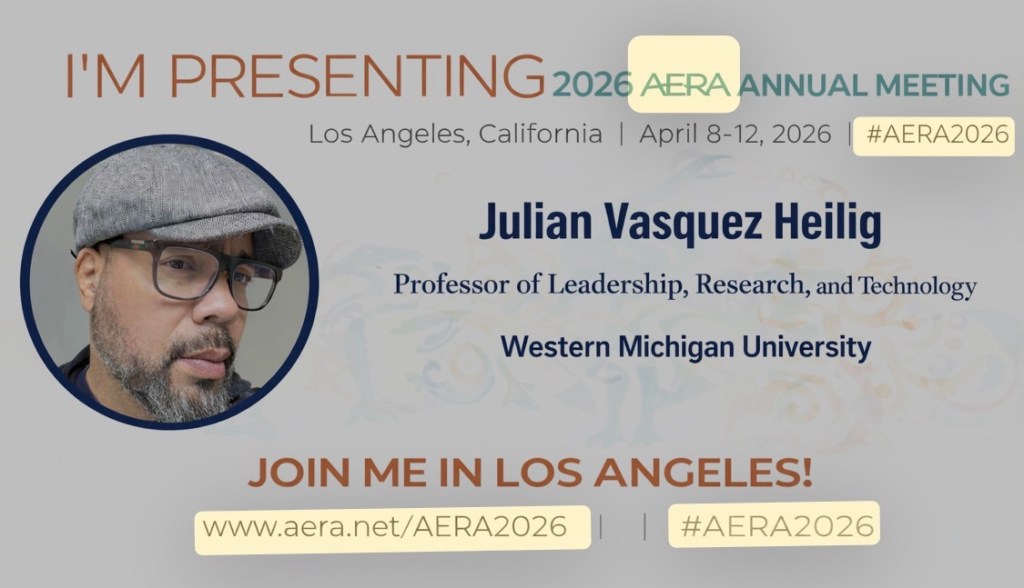
Julian Vasquez Heilig is a civil rights advocate, scholar, and internationally recognized keynote speaker. He has served as Education Chair for both the NAACP California State Conference and the NAACP Kentucky State Conference, advancing equity for students and communities. Over the past decade, he has delivered more than 150 talks across eight countries, seeking to inspire audiences from universities to national organizations with research, strategy, and lived experience that move people from comfort to conviction and into action.




 Cloaking Inequity
Leave a comment