
Across the United States, from California to Michigan, lawmakers are debating budgets that could slash investments in public education. These debates are not confined to one state, they are national. Whether you live in a large urban center, a rural community, or a mid-sized town, chances are your local schools and universities are facing the same pressures: rising costs, stagnant state support, and calls for austerity in the name of fiscal responsibility.
But education is not an expense to be trimmed when times get tough. It is the foundation of democracy, prosperity, and opportunity. Budgets are moral documents, and how we choose to fund education reveals what we truly value.
This week, I had the privilege of joining colleagues at the Michigan Capitol to advocate for protecting education funding. What I experienced there is a story with lessons far beyond Lansing. It is a reminder that the future of America’s children is too important to be left vulnerable to partisan battles and budget brinkmanship.
A Capitol Visit with Family
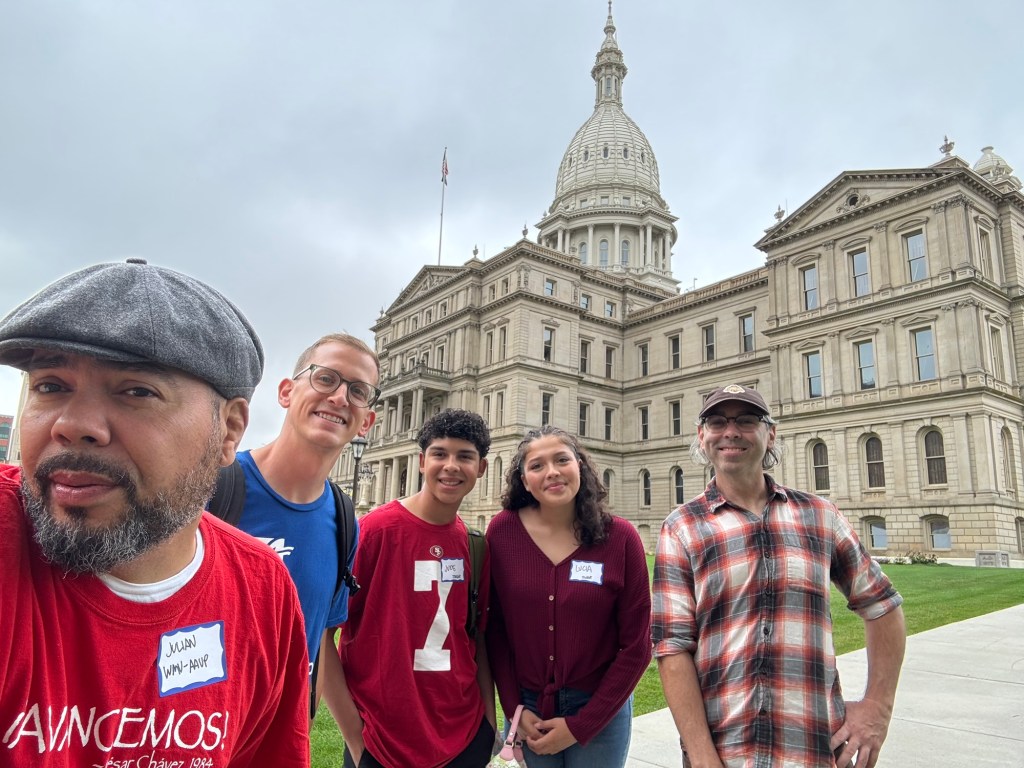
Walking into the Capitol with my children, I was struck by how symbolic the moment felt. These ornate halls echo with debates that will shape their generation’s future. They are the ones who will bear the consequences of underfunded classrooms, rising tuition, and weakened universities.
I stopped by the office of my state representative, Matt Hall, who also serves as Speaker of the Michigan House of Representatives. He was unavailable, but I spoke briefly with a staffer and later sent a note to follow up.
That exchange reaffirmed something I believe deeply: legislators need to hear directly from ordinary citizens. Policy should not be shaped solely by special interests and lobbyists. It should reflect the voices of parents, educators, and students who live with the consequences of those decisions every single day.
The Letter I Sent
Here is a concise version of the note I sent Representative Hall after my visit:
Dear Representative Hall,
I stopped by your office at the Capitol today with my children, but you were unavailable to meet. I wanted to follow up by sharing my concerns directly with you.
I believe it is very important for the legislature and the Governor to come to an agreement on the budget, but not at the expense of higher education and K–12 education funding. After years of minor increases that have not kept up with costs, none of our Michigan public institutions can afford cuts.
In particular, I urge you to:
- Fund all of Michigan’s struggling regional institutions, not only those in certain districts.
- Avoid taking money for higher education from the School Aid Fund—our students need strong public education at every level.
- Emphasize the real impact on Michigan students, especially when it comes to the affordability of a college degree and the long-term career value of postsecondary education. These issues matter deeply to the voting public.
As someone who has dedicated my career to education, I see every day how these investments shape the future of our students, families, and communities. Ensuring that education remains both strong and affordable is not just a fairness issue—it is vital to Michigan’s economic future.
Sincerely,
Julian Vasquez Heilig
The note is brief, but the message is urgent: Michigan cannot afford to balance its budget on the backs of students.
Why This Fight Matters Everywhere
The crisis facing Michigan is not unique. In state after state, lawmakers are considering budgets that fail to meet the needs of students. Even in California, which is often seen as a leader in education policy, funding shortfalls have led to painful cuts at the K–12 and higher education levels. Rural districts are closing schools, urban districts are eliminating programs, and universities are passing more costs onto students and families.
The pattern is clear: states are shifting the burden of funding onto students, families, and local communities. This undermines not only access to education, but also the long-term economic health of entire regions.
Education is not just another government service, it is the backbone of democracy and opportunity. Cutting education funding is like eating your seed corn: it may seem like a short-term fix, but it destroys the future harvest.
The False Choice of Austerity
Too often, legislators frame the budget as a zero-sum game. They argue that tough times require tough cuts, and education funding is put on the chopping block. But this is a false choice. Fiscal responsibility does not mean starving our schools and universities. True responsibility means investing in the very institutions that create long-term prosperity.
Every study shows that investments in education pay off many times over. Students who graduate from strong schools are more likely to succeed in college, secure good jobs, and contribute to their communities. Universities that receive adequate funding are able to keep tuition affordable, attract talented faculty, and drive innovation that benefits entire states. Cuts may balance a budget in the short term, but they cost us dearly in the long term.
The Human Impact
Behind every budget line are real people. A third grader in Flint struggling to read. A high school student in Detroit wondering if she can afford college. A first-generation student at Western Michigan University balancing two jobs to stay enrolled.
Then there are the educators. Teachers who already dig into their own pockets for supplies. Professors whose workloads grow while salaries stagnate. Counselors stretched too thin to serve the students who need them. These are not statistics, they are the human face of budget decisions. When education funding is cut, opportunities vanish, futures are derailed, and communities lose their vibrancy.
A Call to Leadership
As Speaker of the House, Representative Hall has a pivotal role in shaping Michigan’s budget. My appeal to him is the same one I would make to leaders in every state: do not sacrifice education for the sake of short-term political wins. Show courage by protecting the very institutions that sustain our democracy and economy.
Michigan does not need a shutdown, and neither does any other state or the federal government. So I’m glad that the legislators and the governor have reached a tentative deal. I look forward to seeing the details. What we need are policymakers and budgets that reflect our values, protect our children, and invest in our shared future.
Lessons from the Capitol
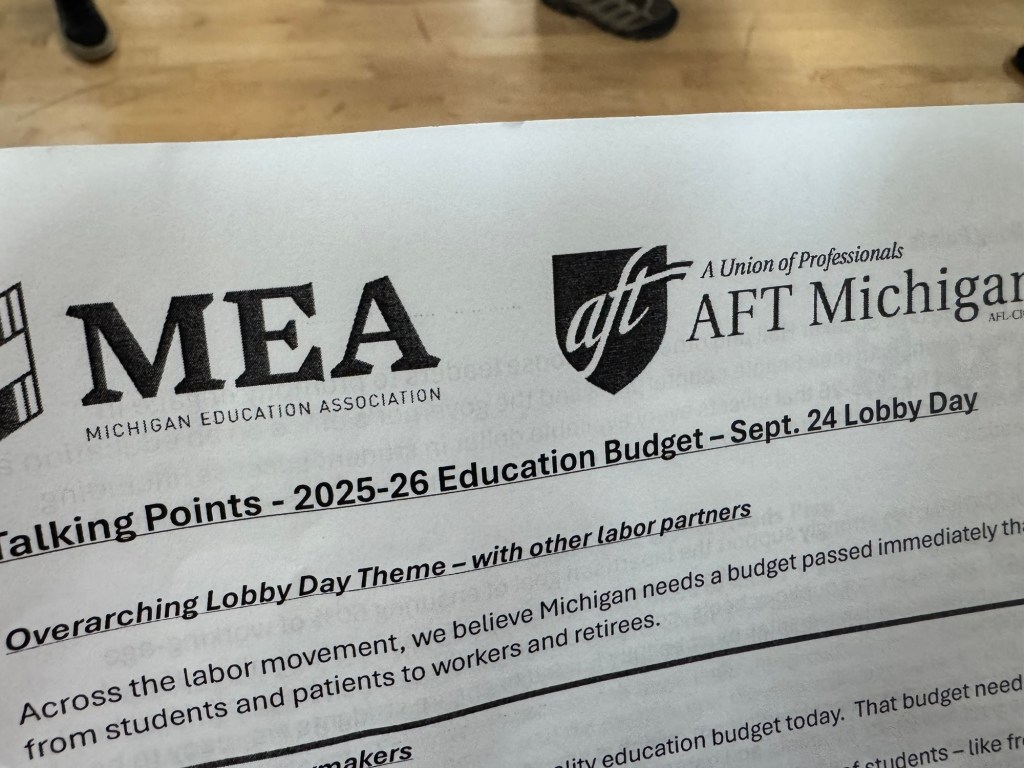
What inspired me most about this week’s visit was seeing the solidarity among educators across sectors. Members of MEA, AFT, AAUP, and HELU stood shoulder to shoulder, reminding legislators that this fight is not just about K–12 or higher education. It is about the entire system that nurtures young people from early childhood through adulthood.
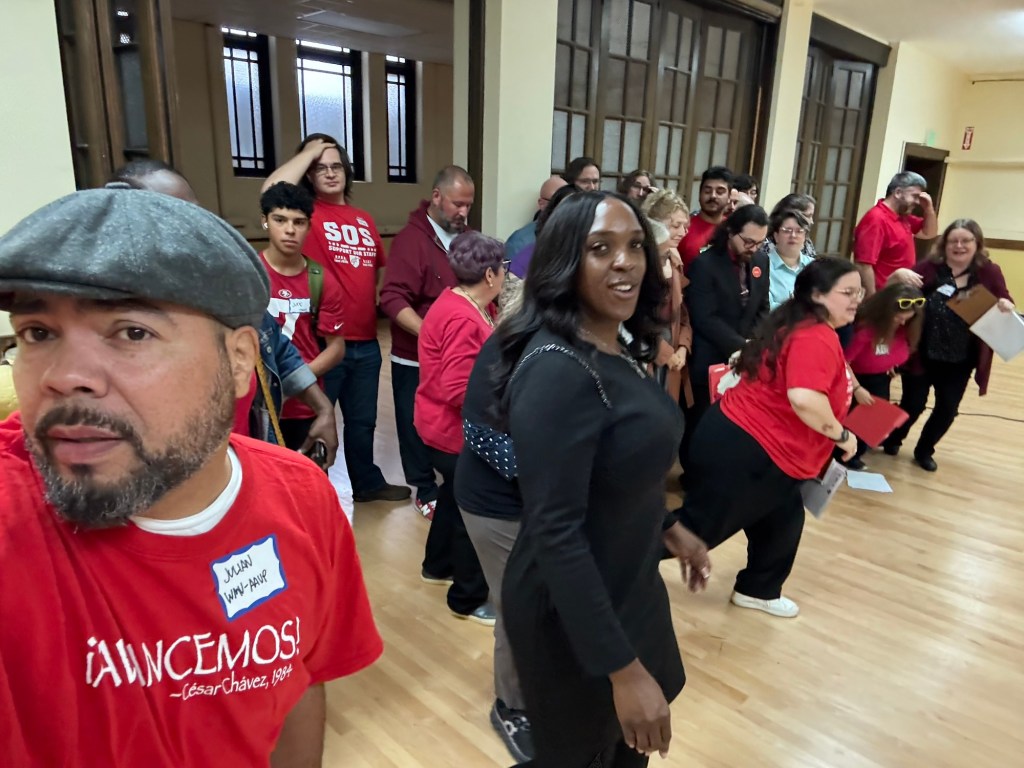
That kind of unity is powerful, and it is necessary. Education advocates must link arms across states and across institutions. Parents, teachers, students, and citizens must remind legislators everywhere that education is non-negotiable.
Looking Ahead
In the coming days, Michigan’s leaders will release a budget that protects education or risk a shutdown that puts students and educators in jeopardy. But this moment is bigger than Michigan. It is a test of our national priorities.
Will we choose austerity, starving our schools and colleges in the name of balancing the books? Or will we choose investment, recognizing that education is the surest path to a stronger economy and a more vibrant democracy?
Budgets are moral documents. They reveal who we value and what we hope for the future. My hope is that lawmakers in Michigan, and in every state, will recognize that protecting education is not a partisan issue. It is a generational responsibility.
When I walked through the Capitol with my children, I thought about how they will remember this moment. Will they recall a time when leaders failed to act, leaving their schools underfunded and their futures uncertain? Or will they remember it as a moment when the people of Michigan, and people across the United States, rose up to say: we will not balance budgets on the backs of our students.
The answer will depend on what we do now.
Julian Vasquez Heilig is a civil rights advocate, scholar, and internationally recognized keynote speaker. He has served as Education Chair for both the NAACP California State Conference and the NAACP Kentucky State Conference, advancing equity for students and communities. Over the past decade, he has delivered more than 150 talks across eight countries, seeking to inspire audiences from universities to national organizations with research, strategy, and lived experience that move people from comfort to conviction and into action.


 Cloaking Inequity
Leave a comment