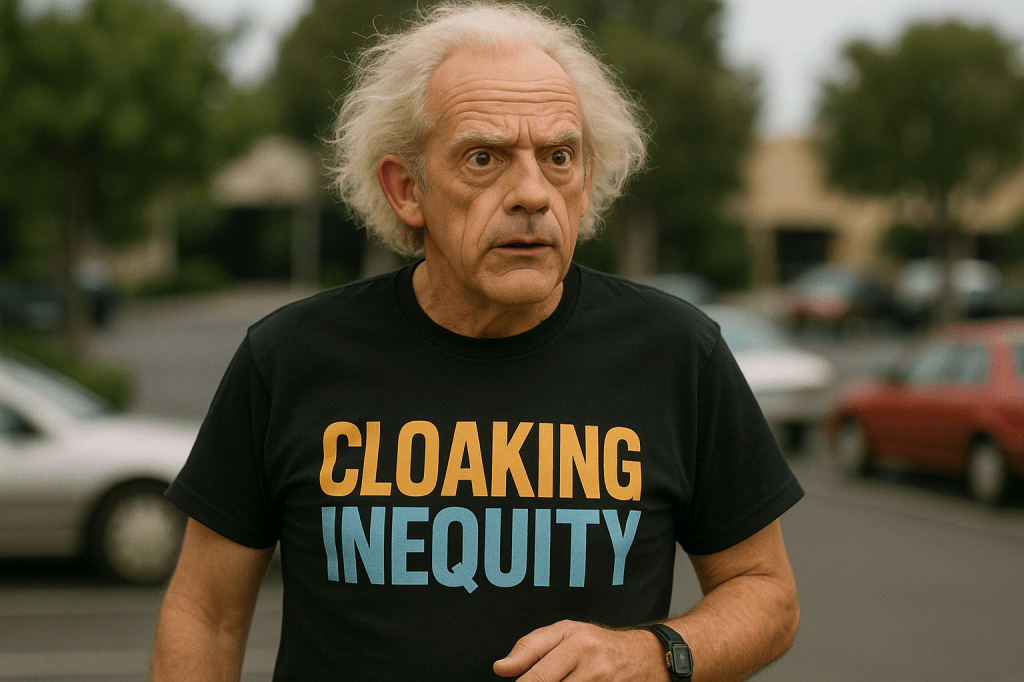
If you have ever worked with someone like Doc Brown from Back to the Future, you already know the thrill and exhaustion that comes with proximity to brilliance. The brilliant, unpredictable mind who sees things no one else sees, solves problems no one else can, and sometimes drives everyone else just a little bit crazy in the process. These are not just inventors in white lab coats but thinkers, educators, and creators who live one idea ahead of everyone else. They may not build a time-traveling DeLorean, but they can transform a classroom, a lab, or an entire institution when given the space to follow their unconventional instincts.
In every organization, there are a few of these wild-minded innovators. They are the faculty member who builds a world-class program out of duct tape and inspiration. They are the artist who turns a dry meeting agenda into a moment of revelation. The crazy geniuses are both the spark that ignites progress and the gust that nearly blows it out. They are, depending on the day, your greatest asset.
Yet if we are serious about innovation, we cannot build anything meaningful without them. Genius is disruptive by nature. It unsettles norms and demands courage from those around it. The paradox is that the very qualities that make these people difficult also make them indispensable. Without the Doc Browns of the world, our institutions risk becoming museums of caution instead of laboratories of possibility.
The Double-Edged Sword of Brilliance
Working with a genius, or as I prefer to call them, a volatile visionary, is both a privilege and a test. These are the people who stretch institutions beyond their comfort zones and force us to question long-standing assumptions. They think in diagonals while everyone else is stuck in grids. They see patterns no one else can because they are willing to look where others do not. Doc Brown did not invent the flux capacitor by attending a committee meeting, and the innovators we work with will not create the next breakthrough by sticking to the manual.
But brilliance rarely travels alone. It often arrives tangled with contradiction. The same creative fire that fuels groundbreaking work can also burn through routines, rules, and relationships. The genius who revolutionizes your approach to teaching or research may also miss deadlines, dismiss processes, or unintentionally alienate colleagues who do not share their intensity. This duality is the challenge of leadership: how to embrace the light of innovation without getting scorched by its heat.
The key is not to tame brilliance but to understand it. When we stop trying to domesticate genius and instead learn to navigate its orbit, we create room for authentic collaboration. The goal is not control, but balance. A steady leader provides the grounding that allows creative volatility to flourish without consuming the system. Like Marty McFly grounding Doc Brown’s unfiltered energy, leaders can become the necessary stabilizers who turn erratic sparks into sustained illumination.
Recognize the Source of the Chaos
The first step in managing a crazy genius is empathy. Chaos often emerges from a mind that refuses to settle for easy answers. To the crazy genius, the ordinary feels suffocating. Bureaucracy looks like a threat, mediocrity like a mortal enemy. Their energy is fueled by possibility rather than predictability. Doc Brown’s lab was a mess of wires, smoke, and experiments that looked like disasters waiting to happen, but it was also a sanctuary of ideas that could not exist anywhere else.
Understanding this mindset does not excuse unique behavior, but it explains the drive beneath it. Visionaries live at the intersection of inspiration and frustration. They see what could be, and that vision makes the current reality intolerable. When you realize their resistance is philosophical, not personal, you can stop reacting to the turbulence and start managing it with purpose. You begin to see that their chaos is not random, it is often the cost of originality.
The practical question is: what problem are they really trying to solve beneath the noise? When you ask that question with curiosity rather than judgment, you shift from conflict to collaboration. More often than not, there is a profound insight hidden inside the storm. The challenge for leaders is to listen closely enough to find it without getting lost in the whirlwind.
Anchor Vision to Values
The most effective way to work with visionary minds is to tether them to shared values rather than rigid rules. Geniuses will always resist control, but they will align with purpose. When I have led teams of high-velocity thinkers in universities, policy settings, and community projects, I learned that consensus on the “why” creates stability even when the “how” is chaotic. Doc Brown never cared about schedules, but he cared deeply about discovery and truth. Purpose is the only compass that truly guides the creative mind.
You do not need to cage brilliance. You just need to point it toward a meaningful goal. When creative people feel aligned with something larger than themselves, they become less reactive and more generative. They begin to see discipline not as confinement but as the structure that allows their ideas to flourish. The leader’s job is to translate abstract purpose into practical direction without dampening the spark that drives the genius forward.
Think of yourself as a conductor in an orchestra full of virtuosos. Each player is exceptional, but harmony requires coordination. The crazy genius may be the lead violinist who wants to solo through every piece, but the music only soars when everyone plays in time. Leadership in this context is less about control and more about balance, making sure that innovation amplifies collective excellence rather than eclipsing it.
Create Psychological Safety for Everyone
As the old saying goes, you do not wrestle with a tornado; you build a windmill. Let the storm’s power work for you rather than against you. The energy that seems uncontrollable can become a source of progress if you redirect it thoughtfully. The goal is not to win debates but to preserve momentum toward what truly matters.
Creating psychological safety around brilliance means striking a careful balance. You must affirm the creative genius’s gifts while protecting others from dominance. Clear expectations about respect and collaboration are essential. The best crazy geniuses actually thrive under strong but fair leadership because they sense that their creativity is valued but not unchecked. Boundaries communicate respect when they are grounded in shared purpose, not control.
Think of it as mutual calibration. The genius needs freedom; the team needs fairness. Both can coexist when you lead with transparency and consistency. When people know they will be heard, even disagreement becomes productive. In those spaces, innovation becomes a collective endeavor rather than a competition for intellectual territory.
Learn From Them
The hardest truth is that crazy geniuses are usually right, at least about something. Their ability to see the invisible, challenge the obvious, and leapfrog convention is what makes them so indispensable. Every time I have worked with someone who drove change, I also walked away changed. Their creativity and chaos stretched my imagination. Their impatience with mediocrity forced me to sharpen my own leadership instincts.
Their intensity teaches endurance. It shows that passion, when directed with clarity, can move entire institutions forward. Working alongside them often reveals how much potential we waste by clinging to comfort. Their energy, though overwhelming, is a living reminder that the extraordinary rarely happens within the boundaries of the ordinary.
Sometimes genius is a mirror that shows us our own limitations. It exposes how often we settle for safe choices when boldness is required. To lead them well, you must be willing to let them change you. They are not just challenges to manage, they are teachers in disguise.
Closing Reflections
Working with creative genius can be exhilarating, but it is also demanding. Their energy is a storm, and without grounding, you can be swept away. Set boundaries. Build quiet into your schedule. Surround yourself with steady people who remind you that progress does not have to be noisy to be real. You can appreciate genius without becoming its casualty.
Steve Jobs once said, “Here’s to the crazy ones, the misfits, the rebels, the troublemakers, the ones who see things differently.” He was right. Institutions without these people stagnate. They push us toward discomfort because they know comfort kills curiosity. Yet the part we often forget is that the crazy ones need us too. They need partners who can turn brilliance into sustainable change, who can remind them that imagination still requires empathy.
If you are lucky, or unlucky, enough to work with a Doc Brown in your world, do not run from them. Learn from them. Collaborate when you can, contain when you must, and always find the beauty in the chaos. Because when a visionary and a steady leader find rhythm, innovation stops being an accident. It becomes culture.
Julian Vasquez Heilig is a professor, education leader, and public intellectual who writes about innovation, leadership, and justice in education. A lifelong fan of Back to the Future, which he’s watched at least thirty times, he draws inspiration from Doc Brown’s mix of chaos and genius to explore how bold ideas and grounded leadership can shape better institutions and a more equitable world.






 Cloaking Inequity
Leave a comment