When I was in elementary school, I would often ask myself in quiet moments, What am I doing right now to be great and make an impact on the world? At the time, maybe I didn’t fully understand what that question meant. I thought greatness was something you chased like a finish line, something you arrived at once you collected enough achievements. But in hindsight, I can see that the question itself was already preparing me. It was shaping how I thought about my choices, how I defined success, and how I measured progress. While other kids might have asked, What will make me popular? or What will get me praise? I was already wrestling with something deeper: What will matter? Those quiet reflections weren’t just childhood curiosity, they were practice runs in aligning my actions with a larger sense of purpose.
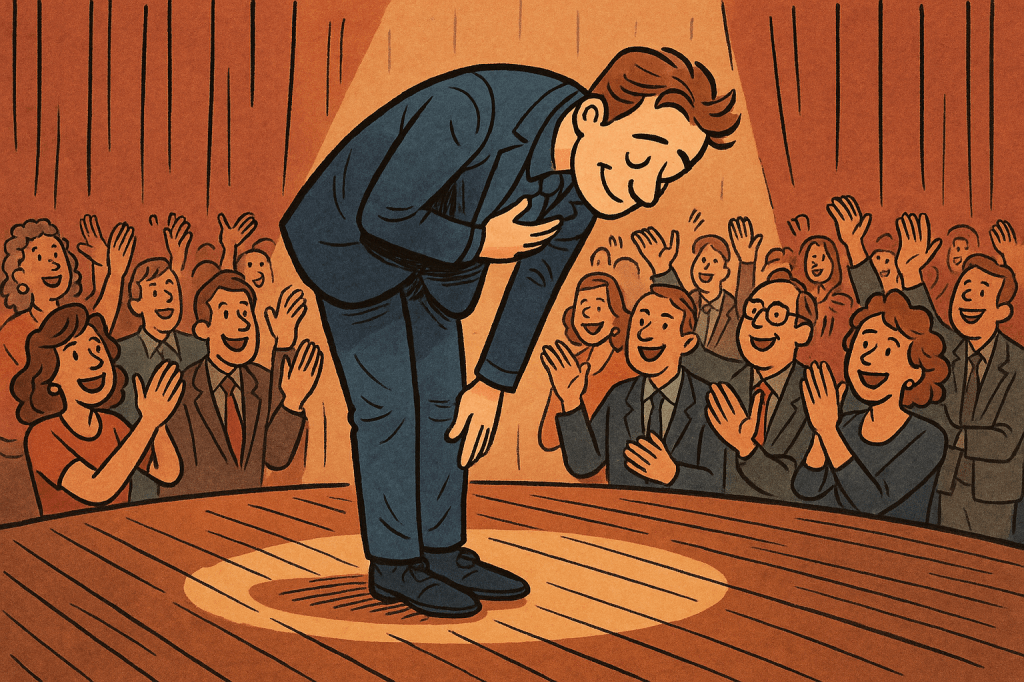
“Chasing greatness” is one of those phrases that gets thrown around a lot by athletes. We also see it splashed across motivational posters, in Instagram captions, and in the slogans of exercise regimens. It sounds inspiring, even glamorous. Who wouldn’t want to chase greatness? Who wouldn’t want to improve their life and work to make an impact? But here’s the truth that often gets buried under the slogans: greatness is not about the pursuit of applause or the accumulation of trophies and awards. It’s not about standing on a stage while people clap for you, or about watching your name trend online. Those moments quickly come and go and are fleeting. Greatness is about substance, not surface. And the path to it is much harder, lonelier, and less glamorous than most people admit.
Why External Validation Is Not Enough
Most of us begin our journeys motivated by external validation. We want to make our parents or caretakers proud, impress our teachers, earn praise from mentors, or win recognition from peers. That validation feels good, it feeds our drive, fuels our confidence, and gives us proof that we’re on the right track. But here’s the trap: external validation is fickle. One day you are the hero; the next you’re forgotten or criticized as the villain. If your sense of progress depends solely on applause, you’ll be crushed when the applause dies down. Worse, you might be asked to compromise your values just to keep it going.
External praise also sets a dangerously low bar. It tells you only that you are better than someone else thought you’d be, not whether you’ve reached your true potential or left a lasting impact. Chasing greatness means refusing to settle for someone else’s expectations. It means asking questions applause can’t answer: Did I dig deep enough? Did I take the risk that mattered? Did I hold myself accountable to my highest standards? That’s why external validation can never be enough. Greatness requires a different fuel source: the relentless honesty of self-critique.
The Discipline of Being Your Own Critic
Being your greatest critic does not mean beating yourself up or living in constant self-doubt. It means disciplined reflection, the kind that sharpens rather than shames. Think of Michael Jordan in his prime. He wasn’t simply satisfied with highlight reels. After games, he poured over film, not to admire the dunks the crowd had cheered but to study the missed passes, the mistimed shots, the moments where his defense lagged. He famously reminded people that he had missed more than 9,000 shots in his career and 26 potential game-winning shots. Rather than hide from those failures, he dissected them. He turned critique into fuel, transforming flaws into strengths until his game reshaped what basketball could be.
The same posture of relentless self-assessment has guided great artists. Maya Angelou rewrote her manuscripts again and again. She once said she would tinker with her words until every sentence carried the precise weight she intended, even if it meant throwing away entire drafts. She was never content with applause alone, her measure of success was whether the work lived up to her vision and left the reader changed.
Entrepreneurs, too, embody this practice. Steve Jobs became legendary for rejecting prototypes that others thought were good enough. His colleagues often grumbled when he sent them back to the drawing board, but Jobs insisted that the design had not yet reached the level of simplicity and elegance that would truly change how people lived. He refused to confuse “impressive” with “impactful.”
What connects Jordan, Angelou, and Jobs is not perfection but the discipline of critique. They didn’t just celebrate what worked; they relentlessly examined what didn’t, believing that only through honest revision could their work rise to the level of greatness.
Pride vs. Purpose
One of the biggest obstacles to becoming your own critic is pride. Pride whispers that “good enough” is enough. It tells you that your critics don’t understand and that your supporters prove you’ve already arrived. But pride is the enemy of purpose. Nelson Mandela understood this deeply. After 27 years in prison, he emerged not with pride that he had survived, but with humility and a renewed sense of purpose. He critiqued even his own impulses for anger and revenge, knowing they would derail the greater mission of reconciliation. His greatness was not just in enduring hardship but in critiquing his own heart so he could lead South Africa toward healing.
Purpose asks more of us than pride ever will. It demands the courage to confront flaws without excuses and the resilience to refine and rebuild until our work aligns with the vision we serve. The paradox of chasing greatness is that you must live in tension: proud of what you’ve accomplished, yet never satisfied until it leaves the world better than you found it.
Why Self-Critique Builds Resilience
Another gift of becoming your own critic is resilience. When you have already asked yourself the hardest questions, outside criticism loses its sting. Abraham Lincoln embodied this quality. Throughout his presidency, he faced brutal public criticism, personal attacks, and crushing setbacks in the Civil War. But Lincoln had come from humble beginnings and had already interrogated his own decisions with an honesty that left little room for ego. When advisors and rivals challenged him, he often replied with calm acknowledgment, sometimes even incorporating their points, because he had already wrestled with the same doubts in solitude. His resilience grew from the discipline of self-critique.
Compare that to leaders who rely only on external validation. For them, criticism feels like an attack on their identity. They scramble to protect their image instead of focusing on the work. The difference is profound: those who critique themselves become resilient because their confidence is not built on pretending to be flawless, but on knowing they are constantly improving.
Self-Critique Without Self-Destruction
Of course, there is a danger. Self-critique can tip into self-destruction if it is rooted in shame or perfectionism. But when it is rooted in purpose, it is life-giving. Kobe Bryant embodied this tension throughout his career. He was infamously hard on himself, replaying mistakes in his mind long after the game was over. Teammates would talk about how he would be in the gym at dawn the next morning, shooting the same shots he had missed the night before hundreds of times over. Losses and missed opportunities cut him deeply, but he never let them define his worth. Instead, he treated them as raw material for growth, using his self-critique to refine his game and fuel what became known as the “Mamba Mentality.”
This is the crucial distinction: if critique comes from shame, it suffocates. If critique comes from purpose, it liberates. Kobe’s greatness wasn’t built on avoiding mistakes but on confronting them with an honesty so relentless that it forced him to improve. Being your own greatest critic is not about hating yourself, it is about loving your mission enough to demand your best.
Conclusion: Leaving the World Better
At the end of the day, chasing greatness is not about applause, fame, or being remembered. It is about leaving the world better than you found it. And the way you do that is by becoming your own greatest critic. Self-critique frees you from the tyranny of other people’s opinions. It keeps you from settling into complacency. It shifts your focus from the illusion of having “arrived” to the ongoing cycle of reflection, revision, and growth. Greatness, properly understood, is not a destination, it is a process of holding yourself accountable to the impact you want to create.
The people who change the world—Jordan and Kobe on the court, Angelou on the page, Jobs in design, Mandela in reconciliation, Lincoln in leadership—did not chase recognition as their destination. They anchored themselves in purpose. Their lives show that true greatness is measured by the depth of one’s commitment to a mission, not the volume of applause. They embraced critique not as punishment but as the discipline required to stay aligned with that mission.
So if you want to chase greatness, don’t measure your progress by how loudly the world cheers. Measure it instead by how faithfully you serve your purpose. Ask yourself the harder questions. Keep climbing. And remember: greatness is not about the world believing in you—it is about believing in your purpose so deeply that you refuse to settle, until your work leaves the world better than you found it.
Julian Vasquez Heilig is a nationally recognized policy scholar, public intellectual, and civil rights advocate. A trusted voice in public policy, he has testified for state legislatures, the U.S. Congress, the United Nations, and the U.S. Commission on Civil Rights, while also advising presidential and gubernatorial campaigns. His work has been cited by major outlets including The New York Times, The Washington Post, and Los Angeles Times, and he has appeared on networks from MSNBC and PBS to NPR and DemocracyNow!. He is a recipient of more than 30 honors, including the 2025 NAACP Keeper of the Flame Award, Vasquez Heilig brings both scholarly rigor and grassroots commitment to the fight for equity and justice.






 Cloaking Inequity
Leave a comment