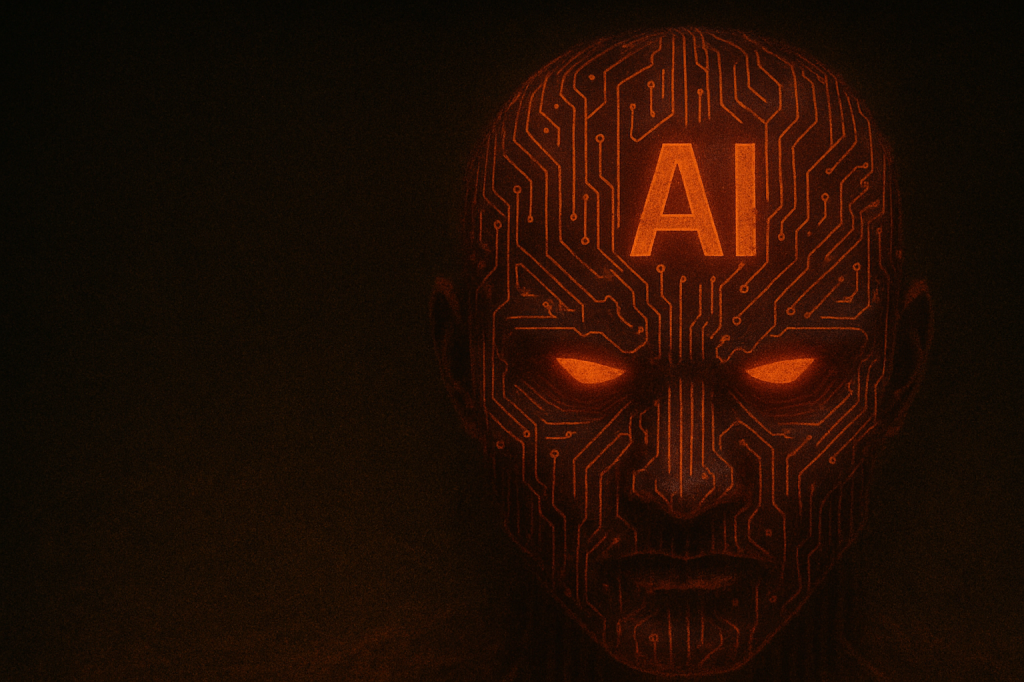
We live in a world that worships smartness. Smart phones. Smart cars. Smart policies. Smart people. The word itself is a magic spell, used to make anything sound advanced, modern, or right. But here is the uncomfortable truth: smart is not the same as correct. A lot of what we call smart today is just old information running on new technology. The result is that we are surrounded by confidence without accuracy.
The real crisis is not that we are drowning in information. It is that we have stopped questioning where it comes from and whether it still holds up. Knowledge, like milk, has an expiration date. What was true once can sour over time. The problem is that old knowledge does not come with warning labels. It stays online, in textbooks, in classrooms, and now inside artificial intelligence systems that repeat it without reflection.
Artificial intelligence has made this problem visible in new ways. Machines are now confidently generating answers based on piles of outdated or biased data. The danger is not that AI will outthink us, but that we will stop thinking because the machine sounds so sure. My AI Code Red series is about that moment. Today’s post is a warning that smartness alone will not save us if we do not learn how to stay curious, careful, and human.
The Myth of “Smart”
In every field, from education to health to finance, we have been trained to trust whatever looks intelligent. The person who talks fast in meetings is called sharp. The company that uses data analytics is called cutting edge. The app that recommends your next purchase is called smart. Yet none of these things guarantee wisdom. Real intelligence requires context, curiosity, and care.
The problem is that smartness has become a kind of performance. We reward confidence more than reflection. We believe the person with charts before the person with questions. The same mistake repeats in politics, business, and everyday life. People and platforms sound persuasive because they have learned how to imitate certainty. But imitation is not understanding.
When we stop asking where ideas come from, we start mistaking noise for knowledge. “Smart” systems and “smart” policies can easily turn into tools for error. They can look modern while recycling the same old mistakes. That is how we end up believing test scores reveal the breadth of learning, algorithms reveal fairness based on interest, and social media likes reveal truth. In reality, those are just mirrors reflecting our own assumptions back at us.
When Data Tell the Wrong Story
Years ago, my colleagues and I published a study that explored how data about American Indian and Alaska Native students were being used in national education reports. On the surface, it looked like a “smart” study. It was large-scale, full of statistics, and backed by federal research. Many assumed it could help guide better policy. But when we examined it closely, something was wrong.
The questions used to collect the data were written from a narrow, mainstream perspective. They asked Indigenous students to define their cultural experiences in ways that fit the assumptions of people who had never lived those experiences. When we analyzed the results with HLM, we realized that the data could easily be used to draw damaging conclusions, suggesting that cultural identity was a barrier to achievement. In reality, the flaw was not in the students. It was in the system that defined the rules for what data should be collected and counted.
That study taught me a lifelong lesson: data are not neutral. They reflect the values and blind spots of the people who created and curated them. Even information that looks objective can mislead if it lacks cultural understanding. The same logic applies to all of us. Whether we are reading headlines, checking social media, or using AI, we are interacting with information that has been shaped by someone else’s worldview. If we do not question how it was built, we risk letting it build us.
This is one reason why Democrats and Republicans now live in two different worlds. They are not just divided by opinion. They are divided by information. Each group is fed a steady diet of stories, statistics, and images chosen to confirm its worldview. The same event can appear heroic in one feed and criminal in another. Over time, people stop seeing disagreement as a normal part of democracy and start seeing it as a threat to their identity. The result is not just political polarization but epistemic separation, a split reality held together by incompatible truths.
These separate ecosystems are not accidents. They are the product of algorithms designed to maximize outrage and attention, not understanding. Media companies and social platforms profit when we stay angry and loyal to our chosen narrative. That is why information today behaves like a mirror maze. Every path reflects our own beliefs back at us until we can no longer tell the difference between truth and familiarity. The lesson from our research on data applies here too: when information systems reward certainty instead of curiosity, society loses its shared foundation for truth.
When Machines Copy Our Mistakes
Artificial intelligence now multiplies this problem. AI systems are trained on the history of human thought, but that history is full of bias and error. The machines do not know the difference between insight and repetition. They simply learn whatever appears most often. The more something is repeated, true or false, the more likely it becomes part of the machine’s output. That is how misinformation becomes automation.
When you ask a chatbot for advice, it might sound confident, but it is drawing from a mix of outdated ideas, partial truths, and cultural assumptions that have been baked into its data. It does not understand what it is saying; it only knows what has been said before. The same principle applies to predictive algorithms that decide who gets hired, who gets a loan, or which neighborhood is labeled “high risk.” The results feel efficient, but efficiency without understanding is just speed without direction.
The most dangerous part is how normal it feels. We have grown comfortable letting machines summarize, decide, and remember for us. But intelligence without reflection is not progress. It is automation of the past. Every time we accept an answer without checking its source and veracity, we give away a piece of our agency. True smartness begins not when we get a quick answer, but when we stop and ask the next question using our Human Intelligence, our HI.
The Courage to Update
Being smart used to mean being right. Today, it should mean being willing to change. Knowledge evolves. Context shifts. What was true ten years ago may be wrong now. Yet many institutions, leaders, and even families struggle to let go of old beliefs. Updating feels uncomfortable because it means admitting that we have outgrown our certainty.
But growth requires revision. The best thinkers are not the ones who are always correct; they are the ones who correct themselves. The same is true for technology. A responsible AI system would not only learn new information but also unlearn harmful patterns. If we cannot admit when we are wrong, we become prisoners of our own past.
Courage, in this sense, is not about defending what we know. It is about staying open to what we might still need to learn. Updating is not a weakness. It is a form of strength that keeps truth alive. The same way that my greenhouse needs pruning and care, knowledge needs maintenance. Otherwise, even our smartest tools will grow wild with weeds and bugs.
How to Stay Truly Smart
We do not need to become data scientists to think critically. We just need habits that keep our minds in motion. The first is to triangulate—to compare multiple sources before deciding what to believe. The second is to update—to replace old information with new evidence when it becomes available. The third is to innovate—to ask new questions instead of repeating old answers. Together, these three habits protect us from the illusion of certainty.
Every person can practice this. Students can check who funds the research they read. Professionals can verify data before using it to make decisions. Parents can teach children that curiosity is stronger than confidence. Citizens can read beyond headlines and ask how algorithms shape what they see. These are not academic skills. They are survival skills for the information age.
When we stop practicing them, our world starts to run on autopilot. We begin to mistake convenience for clarity and speed for truth. Real intelligence, the kind that makes life better, requires effort. It requires us to think before we share, check before we trust, and listen before we judge. In a world of infinite answers, wisdom comes from the questions we refuse to stop asking.
Redefining “Smartness” for Everyone
Maybe it is time to redefine what smart means. Instead of knowledge accumulation, let it mean knowledge adaptation. Instead of authority, let it mean awareness. Instead of winning arguments, let it mean understanding more deeply— yes, this thought is for me too. The smartest people are not the ones who know the most, but the ones who stay willing to learn.
The real test of smartness is no longer how many facts we can memorize, as it might have seemed in my introductory history classes at the University of Michigan in the 1990s. Every fact we once worked hard to retain now sits at our fingertips. The test today is how deeply we can understand which facts are truly meaningful, which reflect enduring truths, and why they matter. Knowledge is no longer about recall. It is about discernment. It is about learning to distinguish information that genuinely informs from information that merely distracts. In an age when machines can retrieve every fact but few people stop to ask what those facts mean, the real intelligence we need is not artificial. It is moral. It is human.
Julian Vasquez Heilig is a nationally recognized policy scholar, public intellectual, and civil rights advocate. A trusted voice in public policy, he has testified for state legislatures, the U.S. Congress, the United Nations, and the U.S. Commission on Civil Rights, while also advising presidential and gubernatorial campaigns. His work has been cited by major outlets including The New York Times, The Washington Post, and Los Angeles Times, and he has appeared on networks from MSNBC and PBS to NPR and DemocracyNow!. He is a recipient of more than 30 honors, including the 2025 NAACP Keeper of the Flame Award, Vasquez Heilig brings both scholarly rigor and grassroots commitment to the fight for equity and justice.




 Cloaking Inequity
Leave a comment