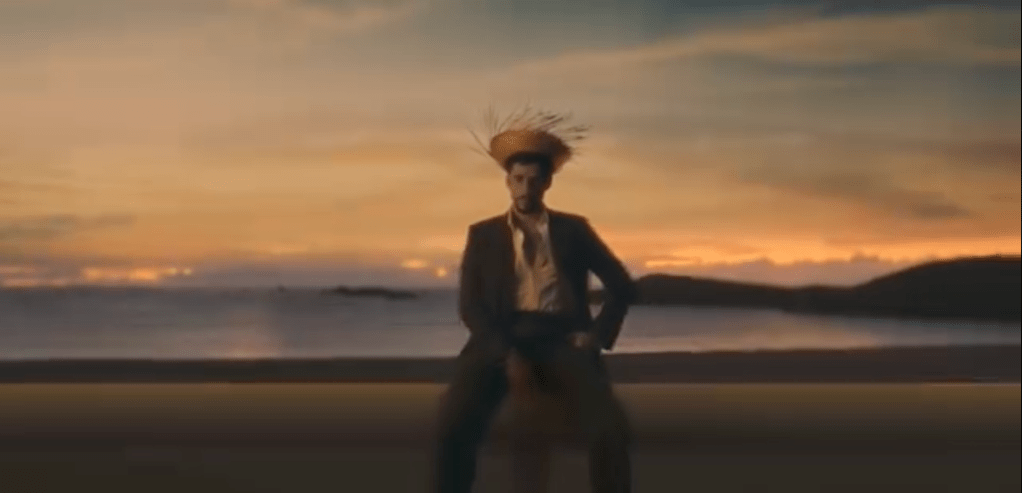
Most people in the continental United States do not understand why coloniality remains an urgent issue in Puerto Rico. They recognize the island through images of beaches and Bad Bunny, but they rarely understand its political reality. What is colonially? Puerto Rico remains an unincorporated territory of the United States, a status created by early twentieth century Supreme Court decisions. These decisions placed Puerto Rico in a category that allowed federal control without granting full rights to the people who live there.
People born in Puerto Rico are United States citizens, yet they cannot vote for the president unless they leave the island. They also have no voting representation in Congress, although Congress has unilateral power over Puerto Rico’s laws, economy, and governance. Federal agencies and congressional bodies can impose decisions that reshape every public institution on the island. This includes education, where policy decisions frequently arrive without local electoral accountability.
This political structure reveals why coloniality is not a metaphor in Puerto Rico. It defines the island’s daily reality. The absence of democratic representation means that Puerto Rican communities do not have full control over their island. Decisions are often dictated rather than deliberated, which purposefully places enormous strain on its residents. These realities formed the foundation of Patricia Virella’s 2025 Mistifer Lecture and shaped the urgency of her message.
Opening the Conversation
The 2025 Mistifer Lecture, delivered in San Juan by Dr. Patricia Virella of Montclair State University, was one of the most historically grounded and future oriented presentations I have heard in many years. The lecture insisted that education cannot be understood apart from the political structures that control it. Virella opened by reminding the audience that schools are not isolated from systems of power. They reflect the ideologies and histories that surround them.
She asked a set of questions that framed the emotional and intellectual trajectory of her talk. She asked the audience what they would have done if they lived during historical periods of explicit colonial brutality. She asked whether they would have resisted or remained silent. Virella drew the audience in by refusing to allow distance between past and present. She invited everyone to consider courage not as an abstract concept but as something that reveals itself through daily decisions. The questions created a moral framework that guided the rest of the lecture. They reminded the audience that historical analysis is incomplete without present day context.

Puerto Rico as Case and Mirror
Virella emphasized that Puerto Rico is both a case study and a mirror. She explained that Puerto Rico’s educational history is inseparable from the broader history of colonial administration in the United States. The island’s schools were used to impose cultural, linguistic, and political assimilation beginning in the early twentieth century. These practices were not accidental or misguided. They were intentional efforts to restructure identity and align communities with external American authority.
She challenged the audience to see Puerto Rico not as an exception but as a site where the true nature of American governance becomes visible. The island reveals how the United States has historically exercised power over populations without granting full democratic rights. This reality creates a mirror that reflects patterns still present in the mainland. It forces educators to confront the possibility that colonial logic appears everywhere in the democratic project.
Her framing made the room eerily quiet because it revealed the stakes of education. She explained that schools do not merely reproduce knowledge. They reproduce systems of power unless leaders make intentional choices to disrupt that cycle. Puerto Rico became a lens for understanding how power shapes schooling in ways that are both explicit and subtle.
Education as Freedom Work
Virella opened her slides with Monique Morris’s declaration that “Education is freedom work.” She explained that this statement carries significant weight in Puerto Rico because public schooling has long been used to shape political identity. She reminded the audience that when schooling is used to impose identity, it becomes an instrument of control rather than liberation. That tension has defined Puerto Rican education for more than one hundred years.
She displayed a 1902 Puerto Rico Herald headline that described the U.S. Commissioner of Education as the “absolute king” of the island’s schools. The article listed practices designed to break cultural continuity, including military style marching and forced recitation of patriotic songs. The policy also encouraged teachers to degrade the Spanish language in order to elevate English. These practices were not hidden or subtle. They were publicly declared objectives of the colonial administration.
The room grew tense as Virella explained that these policies were part of a larger strategy to reshape Puerto Rican identity through schooling. The audience confronted evidence that coloniality within education has always been deliberate in the United States. Virella’s point became unmistakably clear. Education may be freedom work, but only when communities have authority over their own stories.
Coloniality as a Living Structure
Virella repeated that coloniality is not an artifact. It is a living structure that continues to shape schools today. She described coloniality as a system of governance that creates dependence on external authorities while undermining local capacity. She showed how this structure appears in curriculum mandates, school closures, teacher evaluation systems, and policy reforms imposed from outside of communities. These patterns reveal how control operates through institutions rather than only through overt political statements.
She explained that contemporary reforms in Puerto Rico must be understood within this historical context. Policies framed as modernization often reproduce long standing beliefs about Puerto Rican incapacity. These policies assume that communities cannot govern themselves and therefore require external intervention. Virella made clear that such assumptions are rooted in colonial logic that treats Puerto Ricans as subjects rather than citizens.
From Colonialism to Community Power
Virella presented a framework that moves from colonialism to community power. She explained that this movement requires leaders to realign their practices with the needs, histories, and values of the communities they serve. She illustrated this shift with stories of families who resisted displacement despite overwhelming structural pressure. These families demonstrated forms of power that institutions often fail to recognize.
She asked the audience a question: “Can I commit to community voice.” This question demanded more than sympathy. It required scholars to examine their decisions, their loyalties, and their willingness to stand with communities (including protesting students) even when institutions do not reward that stance. Virella explained that commitment is revealed through daily actions that affirm dignity rather than compliance.
Bad Bunny’s lyric from “Andrea” captured this sense of yearning for autonomy. He sings, “Ella quiere ser libre,” which translates to “She wants to be free.” I use this line to illustrate the desire for freedom that animates Puerto Rican communities. Virella argued that leaders must understand this desire not as sentiment but as a historical and political demand rooted in generations of resistance.
The Forgotten Indigenous Story
One of the most powerful moments in the lecture occurred when Virella displayed photographs labeled “The Taínos of the Carlisle School.” She explained that while many Americans know about the forced assimilation of Indigenous children on the mainland, very few know that Puerto Rican Indigenous children were also sent to federal boarding schools in Pennsylvania. These schools sought to erase cultural identity and impose obedience to a foreign government.
She described how these children were removed from their families and forcibly relocated. They were subjected to the same assimilationist practices that targeted Native nations across the continent. Their names were changed, their languages were forbidden, and their cultural practices were prohibited. The images forced the audience to confront a truth that has been hidden from public awareness.
Bad Bunny’s lyric “Aquí vive gente y no los quieren sacar,” meaning “People live here and they do not want them to be removed,” resonated deeply in that moment. Although he was referring to gentrification in contemporary Puerto Rico, the lyric reflected a historical pattern of removal that spans generations. Virella’s presentation made clear that these histories must be acknowledged to understand the present.
Coloniality in Contemporary Reform
Virella shifted to the present with a clarity that made historical continuity unavoidable. She explained that contemporary school closures, fiscal oversight, and externally imposed reforms in Puerto Rico are not neutral interventions. They are manifestations of the same political logic that once justified taking Indigenous children from their homes. These reforms claim to promote modernization, but they draw from longstanding beliefs about who is worthy of autonomy and who requires control. The continuity across time reveals a structure rather than a series of isolated events.
She described how the PROMESA oversight board controls Puerto Rico’s budget without democratic accountability. She explained how post-Maria charter expansion was implemented through legislation that bypassed local educators and communities. She noted that policies like Act 122 centralize decision making in ways that treat public schools as administrative problems rather than community anchors. These reforms arrive under the language of improvement, yet they often restrict the very people they claim to serve.
Bad Bunny underscored this reality in “Estamos Bien” when he sang, “Aunque el gobierno no quiera, estamos bien,” translated as “Even if the government does not want it, we are fine.” Virella explained that this line is not a declaration of denial. It is a statement of defiance against external authorities that undervalue Puerto Rican life. The lyric embodies a collective insistence on dignity and agency even under oppressive structures. Virella positioned this insistence as essential to education.
Courage as a Practice
Virella then addressed the audience directly and challenged that courage must be practiced through concrete choices rather than admired in theory. She emphasized that educators who rely on compliance reinforce colonial structures because compliance maintains hierarchical power. She described the difference between leading through community alignment and leading through institutional loyalty. She argued that leaders must choose whom they serve and that this choice becomes visible in every decision they make. This explanation reframed courage as an active discipline rather than a personal attribute.
Bad Bunny’s lyric from “Tití Me Preguntó” captured this sense of responsibility. He sings, “La familia no la dejo,” which translates to “I do not leave my family.” Virella used this line as an example of relational loyalty that informs courageous leadership. The lyric reflects a commitment to community that does not waver under pressure. Leaders who embody this commitment demonstrate courage through their daily alignment with the people they serve.
The Three Questions
The emotional heart of the lecture emerged when three questions appeared on the screen. They asked, “What would you have done. Would you have resisted. Do you have that courage now.” Virella explained that these questions are intended to challenge historical self deception. People often imagine themselves on the right side of history, but imagination does not reveal truth. Present day choices reveal truth. These questions demanded a reckoning with one’s moral alignment.
She explained that courage reveals itself through choices made in silence rather than public declarations. She described how communities respond when students are criminalized, when parents are excluded from decision making, and when policies harm those they claim to serve. She explained that these responses reveal the depth of one’s commitment. Those who prioritize comfort over human dignity answer the questions through avoidance. Those who act with integrity answer through resistance. This distinction aligned closely with the trajectory of her lecture.
Bad Bunny’s lyric from “El Apagón” provided added weight to this conversation. He sings, “Esta es mi playa y no la voy a vender,” translated as “This is my beach and I am not going to sell it.” The line represents a refusal to surrender what belongs to the people. This refusal is at the heart of resistance. Her three questions asked whether educators would choose to protect the communities they serve or relinquish them to policies designed to fragment and control.
Story, Family, and Community Power
Virella then turned to story as a site of liberation. She explained that stories hold memory, identity, and collective wisdom. She emphasized that Puerto Rican families have preserved stories that schools attempted to erase. These stories provide the foundation for cultural survival. Schools who ignore these stories disconnect themselves from the communities they are tasked with serving. Leaders who learn from these stories expand their capacity to act with integrity.
She presented two questions that formed the center of this section: “What is story,” and “What is family power.” She explained that story is not merely narrative. It is a method of survival that preserves knowledge across generations. Family power emerges when people refuse to forget who they are, even when institutions attempt to define them. Virella described family power as an anchor that strengthens communities during crises. She urged leaders to honor this power rather than override it through policy.
Bad Bunny’s music illustrated this concept through everyday acts of solidarity. In the “El Apagón” short film, an elder stands at a counter unable to afford a meal. A younger Puerto Rican steps forward to pay for him without hesitation. The gesture is grounded in shared identity and memory. Bad Bunny reinforces this ethic in the lyric “Aquí vive gente,” translated as “People live here.” Leadership must align with this ethic of care. Story and family power shape the path toward community liberation.
Coloniality as Prophecy and Test
Virella advanced one of her most striking arguments in this section. She explained that what has happened in Puerto Rico is not an accident or anomaly. She described it as a prophecy and a test. It reveals the deeper logics of the American democratic project. Coloniality shapes citizenship, belonging, and institutional governance. Puerto Rico exposes these truths because its political structure removes democratic rights while enforcing compliance. The island becomes a testing ground for policies later applied on the mainland.
She explained that the Insular Cases, which established Puerto Rico’s political status, created a legal framework that normalized racialized governance. These decisions defined Puerto Ricans as subjects rather than participants in democracy. Virella argued that this framework continues to influence how policymaking occurs across the United States. She insisted that leaders must understand this political reality to engage in authentic educational transformation. Without this understanding, leadership risks replicating oppressive structures.
Colonial Patterns Across the United States
Virella made it clear that colonial logic appears across the mainland. I see that as important and relevant for the takeover of Houston ISD replaced democratically elected leaders with state appointed managers. This intervention reflects a belief that communities of color cannot govern themselves. The takeover was presented as a strategy for improvement, yet it removed local voice. This removal mirrored earlier patterns of governance applied in Puerto Rico.
Fort Worth faces a similar state intervention. The state claims that external management is necessary to correct local governance, but the underlying assumption is that certain communities are unfit for self determination. We can point to the expansion of corporate run charter schools that operate with private boards funded by public dollars. These schools remove decision making from the public sphere and concentrate power in private institutions. We should linked these developments to vouchers that redirect public money into private systems that serve more privileged populations. These policies weaken public institutions and erode democratic participation.
Bad Bunny addressed this transfer of power in “El Apagón” when he sings, “Lo que era de nosotros se lo quedan ellos,” translated as “What was ours is kept by them.” Virella explained that this lyric captures the essence of policy decisions that extract resources from communities. She argued that such policies reflect a form of coloniality that operates through contemporary educational systems. Leaders must identify and challenge these patterns rather than treat them as isolated decisions.
The Call Before Us
Virella concluded her lecture with a call to action grounded in hope. She explained that hope emerges when communities transform their circumstances despite structural barriers. She noted that Puerto Rican communities have survived political and economic forces designed to undermine them. This survival reflects a tradition of resistance rooted in dignity. She argued that educators must draw from this tradition to guide their practice.
She emphasized that hope requires confronting fear. Colonizers have historically used fear to maintain control, and institutions often reproduce this tactic. Leaders must move beyond fear by aligning with community values and challenging policies that harm students. She argued that hope is a responsibility because it shapes how leaders respond to injustice. She urged the audience to cultivate hopefulness through disciplined practice rather than passive optimism.
Bad Bunny’s lyric from “Andrea” offered a final illustration. He sings, “Ella no quiere ser princesa, quiere ser la reina,” translated as “She does not want to be a princess, she wants to be the queen.” Virella used this line to describe communities that refuse symbolic recognition without real power. She argued that leaders must support communities in claiming actual authority rather than settling for symbolic gestures.
Choosing Courage
As the room emptied, I remained seated and reflected on the three questions Virella posed. The questions asked what we would have done during historical moments of injustice. They asked whether we would have resisted. They asked whether we possess that courage now. These questions do not allow avoidance or abstraction. They require honest confrontation with our choices.
The lecture demanded responsibility rather than passive reflection. Virella argued that educational leadership requires courage in every context where justice is at stake. She explained that leaders must act even when institutions prefer silence or compliance. She insisted that courage must be chosen every day. It cannot be reserved for dramatic moments. It must appear in daily decisions that affirm humanity.
Julian Vasquez Heilig is a nationally recognized policy scholar, public intellectual, and civil rights advocate whose testimony has informed state legislatures, the U.S. Congress, the United Nations, and the U.S. Commission on Civil Rights, and whose expertise has guided both presidential and gubernatorial campaigns. His work has been cited by major outlets including The New York Times, The Washington Post, and the Los Angeles Times, and he has appeared on MSNBC, PBS, NPR, and DemocracyNow!. Over the past six years, he has served as both dean and provost, making history as the first provost of color at Western Michigan University. In 2025 he was selected as a semifinalist for President of the University of Puerto Rico, a dream that reflected his admiration of the island. Although he had to decline continuing in the search due to logistical considerations, he still sometimes wonders what might have been.



 Cloaking Inequity
Leave a comment