Rick Hess recently published a satirical post about education, schools, and teachers that quickly circulated through policy and media circles. The piece featured a recognizable figure and advanced well-worn critiques: a caricatured dean and a vision of education heavy on jargon, light on evidence, and seemingly more committed to political ideology than better outcomes for students. It was sharp, confident, and designed to entertain. It was also revealing. I’ll take the bait and respond.
For those unfamiliar, Hess is a longtime education policy advocate at the American Enterprise Institute and one of the most visible conservative voices shaping national conversations about K–12 and higher education reform. Through Old School with Rick Hess at Education Next, he has built an influential platform critiquing education, accountability, and governance. When Hess writes, people pay attention. That makes how he frames the debate matter.
Satire can play a useful role in public discourse, but only when it clarifies reality rather than substitutes for it. In this case, the post did more redirecting than diagnosing. The issue is not that Hess raises concerns about education. Many of us working inside universities have raised similar concerns for years. I served as Dean of the College of Education at the University of Kentucky for nearly four years. The problem is how those concerns are framed. By flattening complexity and relying on caricature, the argument erases evidence and ultimately lets policymakers off the hook for the structural conditions that actually shape educational outcomes.
One of Hess’s main critiques is the insinuation that schools of education function primarily as ideological factories producing “social justice–minded widgets” rather than serious professionals. That framing ignores the empirical reality of teacher preparation today.Our programs operate under extensive regulatory oversight, accreditation requirements, licensure standards, and state accountability systems. Faculty are evaluated on peer-reviewed scholarship, grant activity, and program outcomes. Teacher candidates are assessed on content knowledge, clinical practice, and professional competence. None of this disappears because faculty also take opportunity, inclusion, race, or democracy seriously.
The satire also sidesteps a basic historical truth. Educators did not invent debates about race, inequality, or social justice. These debates were imposed by history itself by segregation, disinvestment, exclusionary policies, and unequal opportunity structures that policymakers either tolerated or actively produced. Treating engagement with these realities as a partisan indulgence rather than a professional responsibility confuses discomfort with ideology and history.
Also, Hess’s treatment of literacy and NAEP scores is particularly revealing. Declines in achievement are real and deeply concerning. But suggesting that educators are singularly responsible for national trends ignores decades of peer reviewed research demonstrating the influence of poverty, health access, housing instability, funding inequities, and policy churn. Teacher preparation matters, but it is one variable within a far more complex system. Serious analysis does not isolate one institution and declare it the unanimous villain.
Equally troubling is the false dichotomy Hess constructs between “science” and “justice,” as if attention to equity somehow negates evidence-based practice. The strongest educator programs integrate both. They ground future teachers in cognitive science, literacy development, and instructional design while also preparing them to teach in classrooms shaped by linguistic diversity, disability, and unequal social conditions. This is not radical or unusual. It is professional.
What is largely absent from Hess’s simple satirical account is accountability for policy choices. States that disinvest in K-12 and higher education, weaken labor protections, and churn standards every election cycle undermine teacher preparation and retention in predictably problematic ways. Legislatures that politicize curriculum and ban critical thinking about race and gender while underfunding schools create instability no education dean or educator can resolve through rhetoric or reform alone. Satire aimed at educators’ academic freedom becomes a convenient substitute for confronting these policy failures.
The preparation of teachers is not beyond critique. But critique should be grounded in evidence rather than caricature. It should distinguish between excess and necessity, rhetoric and practice, individual missteps and structural constraints. Otherwise, we are not improving teacher preparation. We are rehearsing political and personal grievance.
If the goal is stronger schools, better teaching, and improved student outcomes, the conversation must move beyond mockery and toward shared responsibility. That requires policymakers, think tanks, and educators alike to engage honestly with evidence, history, and power. Satire may entertain. It cannot substitute for seriousness or honesty.
“(Dis)course or Dat Course”
As a result, I have provided a more serious and accurate conversation for Hess in my version of his “(Dis)course or Dat Course” below. I do change one character and left Hess as is. He calls the dean “Snidely” and I’ll go with “Smartly” instead.
Ima Fuller-Schlitz: Dr. Smartly, you’re widely recognized as one of the nation’s leading voices in education. You’re cited across the political spectrum. How have you managed that?
Dr. Smartly: I try to start with evidence and history rather than ideology. Education is inherently shaped by policy choices, whether we acknowledge that or not. My goal is to be transparent about values while remaining accountable to data, outcomes, and public responsibility.
Fuller-Schlitz: That’s refreshing. What concerns you most right now?
Smartly: The disconnect between rhetoric and reality. We talk about teacher shortages, learning loss, and student well-being, but we often ignore the policy environments that produce those conditions: unstable funding, political interference, and constant churn in standards and accountability.
Fuller-Schlitz: We’re joined today by Rick Hess. Rick, care to respond?
Rick Hess: Well, for starters, I think schools of education need to focus more on measurable outcomes—literacy, numeracy, instructional coherence—
Smartly: I don’t disagree that outcomes matter. Where I part ways is with the idea that teacher preparation exists in a vacuum. You can prepare excellent teachers and still see uneven results when schools are underfunded, class sizes are unmanageable, or curriculum policy is politicized every election cycle.
Fuller-Schlitz: That’s a fair pushback. Dr. Smartly, you’ve also written about student workload and well-being.
Smartly: Yes. Rigor matters. But rigor without support is not excellence; it’s attrition. We can maintain high academic expectations while also being honest about how stress, debt, and insecurity affect learning. That’s not coddling. It’s basic organizational leadership.
Fuller-Schlitz: You recently published Pay, Meme, Cognicize. Tell us the idea behind it.
Smartly: The title is playful, but the argument is serious. Students are navigating an AI-mediated world. We need to prepare them to think critically, collaborate effectively, and apply knowledge in complex environments. That doesn’t mean abandoning reading or evidence. It means integrating cognitive science with real-world problem solving.
Hess: But given long-term NAEP declines, shouldn’t literacy fundamentals be the priority?
Smartly: Absolutely. The evidence on early literacy is strong. Where I get concerned is when “science of reading” becomes a slogan rather than a disciplined implementation effort. Good policy requires investment in professional development, curriculum alignment, and time, not just mandates.
Fuller-Schlitz: You’ve been criticized for focusing too much on equity. How do you respond?
Smartly: Equity is not a substitute for quality. It’s a condition for it. Ignoring race, language, disability, and poverty doesn’t make instruction neutral; it makes it less effective. The research is clear on this.
Fuller-Schlitz: And your school’s mission?
Smartly: We prepare educators who are intellectually rigorous, professionally competent, and publicly accountable. That means content knowledge, clinical practice, and ethical responsibility. Our graduates work across diverse contexts, and we track their outcomes.
Hess: Tuition is still a concern, though.
Smartly: It should be. Higher education affordability is a policy failure, not a faculty preference. States disinvest, costs shift to students, and then institutions get blamed for responding to fiscal reality. We should be honest about that.
Fuller-Schlitz: Final thoughts?
Smartly: If we want better schools, we need fewer caricatures and more shared responsibility. Teacher preparation matters. So do funding formulas, labor conditions, health care, and housing. Serious reform requires confronting all of it.
Fuller-Schlitz: On that note, thank you both for a substantive conversation.
Conclusion
So there you go, Rick Hess. I fixed “(Dis)course or Dat Course” for you. Same concerns, fewer caricatures, and a conversation worthy of the stakes.
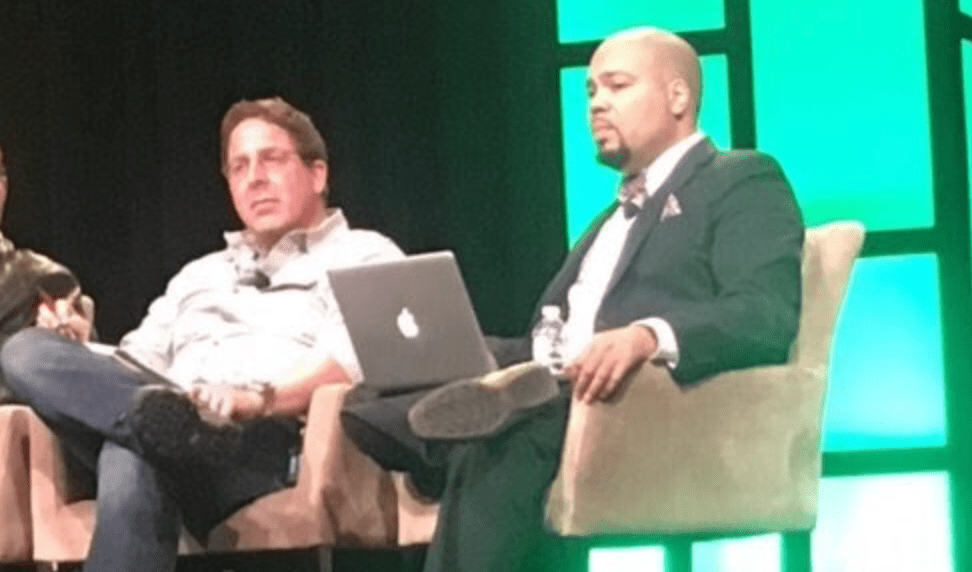
I’ve valued our exchanges over the years, even when they’ve been tense. I’ve invited you into AERA presidential sessions (pictured) because I believe serious debates require serious interlocutors. We’ve also had moments where engagement stopped—when I pushed back publicly on AEI’s ideas and symbolism, when my perspectives were uninvited, when you chose not to go back and forth with me on teacher’s unions in print. That’s your prerogative.
But the debate doesn’t disappear because one venue closes. It just moves. So I’m continuing it here, in good faith, without straw people, and with the respect that comes from taking your arguments seriously enough to improve them.
Julian Vasquez Heilig is a nationally recognized policy scholar, public intellectual, and civil rights advocate. A trusted voice in public policy, he has testified for state legislatures, the U.S. Congress, the United Nations, and the U.S. Commission on Civil Rights, while also advising presidential and gubernatorial campaigns. His work has been cited by major outlets including The New York Times, The Washington Post, and Los Angeles Times, and he has appeared on networks from MSNBC and PBS to NPR and DemocracyNow!. He is a recipient of more than 30 honors, including the 2025 NAACP Keeper of the Flame Award, Vasquez Heilig brings both scholarly rigor and grassroots commitment to the fight for equity and justice.




 Cloaking Inequity
Leave a comment