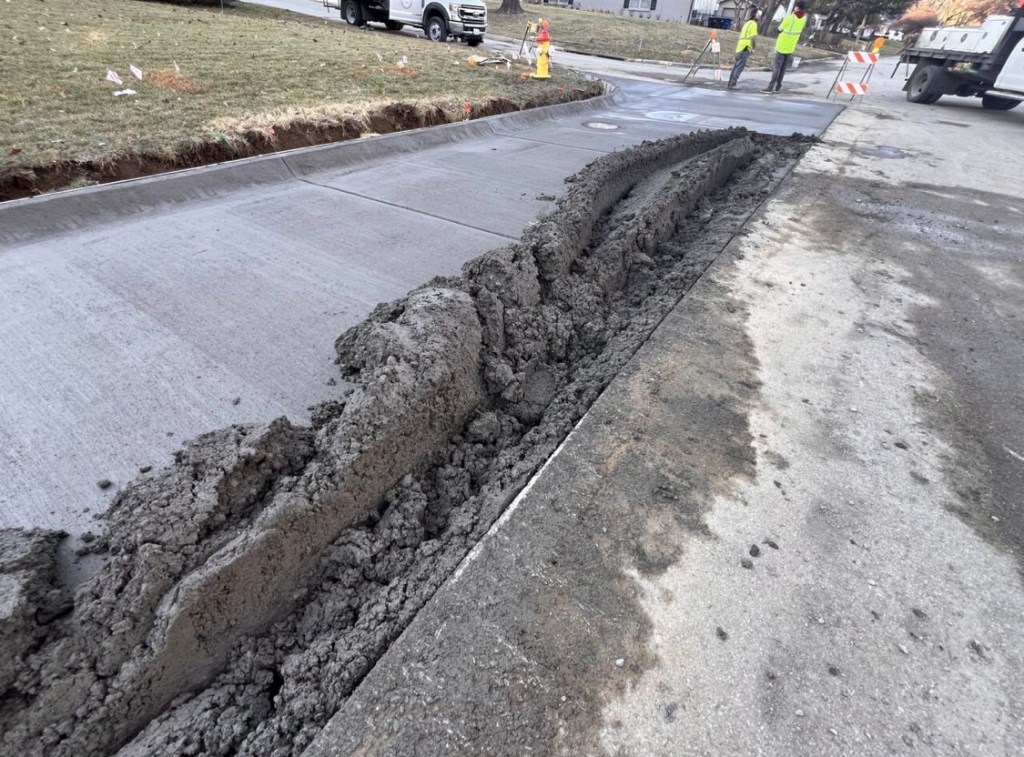
An F-150 drove through progress and ruined the new road, and the response from the city was a familiar one. Stay calm. Be patient. Trust the process. No one ever says it quite that bluntly, but that is what waiting often feels like when momentum is flattened without apology. Something carefully built is damaged in seconds, and the burden of composure immediately shifts to those who were already doing the waiting. It is the same logic that followed the killing of Renee Nicole Good. The harm is treated as incidental, procedural, manageable, while the people absorbing it are expected to regulate themselves and move on.
Let’s Talk about Waiting
You are told to trust the process, to understand that these things take time, even as plans sit gutted next to the road. Waiting is rarely clean or noble in real life. It is not a calm pause between meaningful actions. It is a low-grade tension that hums beneath everything else you do, shaping decisions even when you try not to let it. You adapt around the inconvenience. You tell yourself not to complain. You quietly absorb the cost. You reorganize schedules, temper expectations, and manage emotions so others are not burdened by your uncertainty. What makes waiting especially hard is not only the delay, but the expectation that you remain composed, productive, and grateful while forward motion is suspended. You are asked to perform calm while pressure builds underneath. Over time, that tension leaves marks, shaping how people experience leadership, institutions, and systems that control the pace of progress. Waiting may look passive from the outside, but lived from the inside, it is anything but.
Time passes this way. Ordinary days filled with errands, deadlines, and small routines that all have to bend around the unresolved thing. You reroute, reschedule, and explain the situation to people who are only half listening. You develop a thin patience that works most days but frays at the edges. The delay becomes part of the landscape, so familiar that you almost stop noticing how much space it occupies. This is why patience is so often mischaracterized. It is not passive acceptance or emotional stillness. It is endurance under conditions you did not choose. It requires discipline to keep caring without letting frustration harden into resentment. And when the work finally begins, it feels less like relief and more like cautious permission to hope.
When Progress Finally Shows Up
The moment progress appears is usually quieter than we expect. There is often no announcement that says, “Your waiting was justified.” Instead, there are small signs that something is finally moving. A work crew arrives. Barriers shift and flashing signs go up to avoid people working and this newly created project. Fresh concrete is poured with careful precision. The thing that felt abstract and distant suddenly becomes physical and visible.
From the photo, imagine the road when it still looked smooth, clean, and deliberate. The lines are straight, the surface evenly finished, and the edges carefully shaped. It carries the unmistakable look of something new that has been handled with intention. This is the moment where patience feels temporarily rewarded, even if no one says so out loud. But this stage is delicate…. new work has not yet been tested by use or protected by time. Its condition depends on everyone else noticing that something has changed and adjusting their behavior accordingly. Progress at this point is real, but it is also exposed.
Completion Is Not Protection
Completion is often mistaken for durability. We assume that once something is finished, it is safe. The photo dramatically tells a different story. The concrete is visibly torn open, not by erosion or neglect, but by weight and pressure applied at the wrong moment. The damage is not subtle. It is deep, unmistakable, and immediate.
The tire tracks are not just marks on the surface. They are a reminder that timing matters as much as effort. The road was not ready to bear that load, no matter how well it was poured. Months of waiting and careful work were undone in seconds, not because the work was flawed, but because it was vulnerable to carelessness or intent.
This is how progress often fails. Often through sabotage or hostility, but also through human momentum that does not slow down to notice change. But the truck did not need to be malicious to cause harm. It only needed to keep moving forward as if nothing new that mattered had been built in its path.
Unfettered Power Rarely Cares What It Breaks
There is an imbalance embedded in this moment that is hard to ignore. The people who waited for the road to be constructed had already paid the cost of delay. They adjusted their routines and absorbed inconvenience without choice. The person driving the truck likely did not share that experience, nor did they need to understand it to cause damage.
Unfettered power often looks like size, speed, or the ability to proceed without interruption. It moves forward without needing to ask permission or take account of what is newly fragile. It can inflict harm by casually executing speedboat passengers, shooting a mom in the face, or raising everyday prices through tariffs. When it disrupts something, the consequences fall on those who were already waiting, not on those who were just passing through with some other purpose in mind. This is not a moral or political judgment so much as a structural and asymmetrical reality.
The photo captures this status clearly. The concrete bears the imprint of weight, while the truck moved on out of frame. Responsibility for repair returns to the same system that was already strained. Progress is delayed again, and patience is demanded once more.
Fragility Does Not Have to Mean Failure
It is tempting to read this moment as proof that effort was wasted. That interpretation is understandable but incomplete. The road mattered before it was damaged, and it still matters now. The work was not meaningless simply because it was tested too soon. Fragility does not negate value. In many ways, this is also how American democracy has always functioned, not as something invulnerable, but as something worth tending even when it shows signs of intense strain.
New things are always fragile at first. They require care, attention, and protection to become durable. American democracy, especially in this moment, has repeatedly revealed this same vulnerability at 250 years. The damage does not erase the intention behind the work or the need it was meant to meet. It simply reveals how exposed progress can be when systems are not aligned or when those with power move at the margins in ways than the governance structures meant to limit, but haven’t.
This is an uncomfortable truth because it asks more of us, not less. It suggests that building something, whether a road or a democratic norm, is only part of the responsibility. Sustaining it requires awareness, coordination, and restraint from those with the greatest ability to cause harm. American democracy has endured not because it is immune to damage, but because generations have chosen, again and again, to repair what is fragile rather than sabotage it.
After the Truck Drives Through
The image does not shout, but it speaks clearly. It shows how long it takes to create something functional and how little time it takes to disrupt it. It shows that progress enters the world before the world is ready for it. It also shows that repair is often cyclical rather than final.
The road will be fixed again. More time will pass. More people will wait. The work will continue, because it has to. And the photo will remain as a reminder that progress does not end when something is finished. That is often when the next responsibility begins. What happens after the damage matters more than the damage itself. Cynicism is an easy response, especially after long waiting. It is tempting to decide that effort is pointless when it can be undone so quickly. But that conclusion only protects us from disappointment, not from reality.
The road still needs to exist. The repair still needs to happen. The waiting, frustrating as it is, does not lose its meaning simply because it must be repeated. If anything, repetition clarifies what is at stake. The photo asks a quiet but serious question. Will we continue to build knowing how fragile progress can be? Or will we stop because we cannot guarantee protection? Every functioning system, institution, and community answers that question through action rather than words.
Holding Patience Without Surrender
What is most dangerous in this moment is not the overt extremism, but arguments that sound reasonable while quietly supporting contempt for societal and legal norms. They arrive with calm voices and lamb-like confident logic, yet carry the heat of dragon’s breath. Their power lies in making norm-breaking and illegality feel justified rather than alarming. This kind of rhetoric attempts to lowers the temperature of outrage while raising the temperature of harm, and in doing so it corrodes democratic life more effectively than Jan6-style actions ever could.
We see this dynamic in moments when calm authority is used to obscure violence. An ICE officer tells a doctor on sidewalk that he cannot provide aid to a woman who has just been shot three times and instructs him to calm down, framing the encounter as a matter of procedure and order. The doctor responds that his neighbor has just been murdered on the street and that he has no intention of “calming down.” The contrast is stark. One voice invokes restraint to maintain control, while the other insists on naming the human cost that restraint is being used to suppress. The danger is not the doctor’s anger. The danger is the use of calm language to normalize irreversible and illegal harm.
American democracy is especially vulnerable to this pattern because it had depended not only on laws, but on shared norms of care, accountability, and restraint. When contempt for those norms is packaged as legal or realism or efficiency, damage spreads quietly. The harm does not immediately appear as a dramatic rupture. It’s a steady erosion, delay, exhaustion, and a growing sense of acceptance in some quarters that cruelty and death can be wantonly administered by the government in the street or oceans politely and therefore accepted.
This is why patience cannot mean disengagement. Waiting, when paired with vigilance, becomes civic labor and moral witness. The fragility of this moment does not signal failure. It signals life, possibility, and responsibility. The work of this unprecedented moment is to reject soothing political language that excuses damage, disguises cruelty as order, demands Greenland, and shifts blame onto those already harmed. It is to remain present in discomfort, to name what is happening plainly, and to choose action over surrender again and again. Democracy endures not because it is spared harm, but because enough people refuse to let calm, false rhetoric replace courage, accountability, and moral responsibility.
This post is dedicated to Renee Nicole Good, a loving mother of three, a singer, a poet, and a partner whose life was cut short in an act of violence. Her loss is a profound reminder that the costs of harm are borne by real people with families, dreams, and stories that matter deeply. May her memory strengthen our commitment to justice, accountability, and the work of protecting human dignity.
Julian Vasquez Heilig is a nationally recognized policy scholar, public intellectual, and civil rights advocate. A trusted voice in public policy, he has testified for state legislatures, the U.S. Congress, the United Nations, and the U.S. Commission on Civil Rights, while also advising presidential and gubernatorial campaigns. His work has been cited by major outlets including The New York Times, The Washington Post, and Los Angeles Times, and he has appeared on networks from MSNBC and PBS to NPR and DemocracyNow!. He is a recipient of more than 30 honors, including the 2025 NAACP Keeper of the Flame Award, Vasquez Heilig brings both scholarly rigor and grassroots commitment to the fight for equity and justice.
**This reflection was inspired by a LinkedIn post from Erin Owens, who named the quiet strain of waiting in a way that felt immediately familiar.


 Cloaking Inequity
Leave a comment