
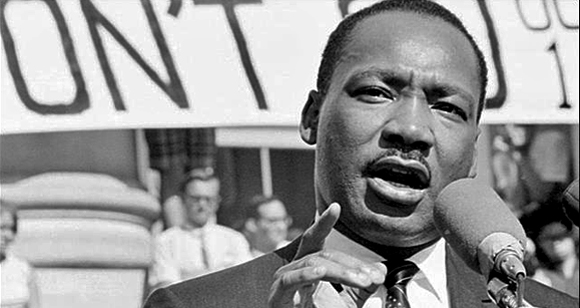
In the final months of his life, Martin Luther King Jr. spoke with a clarity that sounded like resolve rather than hope. He had received countless death threats, survived attacks, and watched violence follow him from city to city. He was no longer speaking as someone who believed safety was possible. He was speaking as someone who understood the cost and had already accepted it. That kind of clarity does not emerge from optimism. It emerges when illusion has been stripped away and responsibility outweighs reassurance.
In his final speeches, King spoke openly about death without melodrama or panic. In Memphis, just days before he was assassinated, he told the audience that he had seen the promised land but might not get there with them. He acknowledged the threats on his life without asking for protection or retreat. “Like anybody, I would like to live a long life,” he said, before adding that longevity was no longer his concern. What mattered was doing what was right. Courage, in that moment, was not the absence of fear. It was the refusal to let fear dictate silence, even when the consequences were no longer theoretical.
King understood that speaking for civil rights carried risk, and he chose to speak anyway. He did not soften his message to preserve his safety. He did not dilute his demands for justice to make himself less threatening to power. He did not postpone his speeches until conditions felt safer or consensus appeared. He believed that there comes a point when knowing the danger clarifies responsibility rather than excuses retreat. His courage was not dramatic bravado. It was disciplined persistence in the face of real consequences.
That knowledge of danger frames everything King said about courage. When he warned that silence becomes betrayal, he was not speaking abstractly. When he insisted that justice delayed is justice denied, he was not insulated from the cost of urgency. He spoke as someone who knew that courage might shorten his life. Yet he spoke anyway, because truth mattered more than survival, and because leadership without risk is often indistinguishable from management of the status quo.
The Measure of Courage
Can you look in the mirror and honestly say that you do not lack the kind of courage Martin Luther King Jr. demanded? Values feel sturdy when they have never been tested by extreme loss, conflict, or social cost. King understood that moral certainty often survives unchallenged until a situation requires sacrifice, accountability, or discomfort. After nearly twenty years serving in academic leadership across Michigan, Kentucky, Texas, and California, including six years as a dean and provost, I have learned that this truth applies far beyond historic movements. It applies inside educational institutions that pride themselves on neutrality, professionalism, and deliberation. It applies when leaders are asked to choose between protecting people and administrator convenience.
King cautioned against mistaking intention for action or belief for behavior. He insisted that courage is not proven by how we describe ourselves or by the ideals we claim to admire. It is proven by what we choose when integrity carries a cost. He wrote that the ultimate measure of a person is revealed not in moments of comfort, but in “moments of challenge and controversy.” That measure applies not only to famous speeches and marches, but to meetings, professional discussions, and governance decisions where silence feels safer than honesty.
Moral failure rarely arrives as a sudden collapse. It unfolds slowly, shaped by small decisions that lean toward safety and self-protection. Each moment of hesitation feels reasonable when viewed in isolation. Each delay can be justified as patience, prudence, or institutional responsibility. Over time, these choices form patterns that are difficult to reverse. What once felt temporary begins to harden into personal identity.
King rejected the idea that waiting is morally neutral. He insisted that delay often functions as quiet consent. Justice, he argued, does not emerge on its own through the passage of time: “Human progress does not roll in on wheels of inevitability.” Without deliberate effort, time becomes an ally of stagnation rather than change. Courage that is postponed does not remain intact. It weakens through disuse and begins to feel unnecessary.
Cowardice often disguises itself as calm maturity. It presents silence as wisdom and distance as discernment. King criticized this posture directly when he wrote about those who preferred a negative peace over the presence of justice. He saw how restraint could become an excuse for withdrawal. By the time someone realizes they have abandoned their values, the damage has already taken root. Harm does not require noise to spread. It only requires permission.
The Silence That Shapes Everyday Life
Everyday life includes people who openly cause harm. They act unfairly, speak harshly, or disregard others without apology. These individuals are easier to recognize and easier to guard against. What is harder to confront are those who believe they are harmless because they avoid direct engagement and stay hidden. These are the people who witness or plan harm and remain quiet.
In institutional leadership, I have seen this repeatedly. Silence appears when harm is acknowledged privately but never addressed publicly. It appears when leaders defer to process even when process has become a shield for inequity. It appears when people with authority convince themselves that staying neutral is the same as staying ethical.
This silence appears in familiar moments. It appears when humiliation or harm unfolds and no one intervenes or stands up. It appears when gossip circulates and no one interrupts it. It appears when inequity is visible and leaders wait for someone else to act first. Each choice is defended as keeping peace or avoiding disruption. Each choice quietly reinforces harm.
King warned that silence is never neutral. He believed neutrality sides with existing power. He wrote that people would remember the “silence of their friends more than the words of their enemies.” Avoiding the moment does not protect the vulnerable or honor complexity. It protects the comfort of the person who chooses not to act. Over time, silence becomes participation.
Why do communities disengage from those who purport to lead them? People withdraw when they feel unseen, unheard, or unprotected. They pull back when concerns are acknowledged but not acted upon. In these cases, harm occurs not through aggression but through absence. King understood this abandonment deeply and profoundly. The choice to do nothing often becomes the choice that wounds most.
The Masks Cowardice Prefers
Cowardice is rarely dramatic. It is subtle, composed, and socially acceptable. It hides behind language that sounds responsible and measured. In friendships, it is framed as avoiding drama. In families, it is framed as keeping peace. In institutions, it is framed as neutrality. These masks are convincing because they are rewarded. Calmness is praised. Quiet is mistaken for wisdom. Over time, these traits begin to feel indistinguishable from virtue, even when courage is absent.
King encountered these masks repeatedly. He saw how respectability and popularity could become refuges for inaction. He refused to accept patience as a substitute for justice. “Justice too long delayed,” he argued, is “justice denied.” Calmness without courage allowed harm to persist. Silence dressed as civility protected inequity from scrutiny. The appearance of order often concealed moral retreat.
Eventually, a lack of courage and silence stops feeling like a decision. It begins to feel like identity. King warned that this kind of moral sleep was dangerous. He urged people to remain awake and responsive to injustice. Cowardice thrives when stillness is mistaken for wisdom. Inaction becomes routine rather than troubling. He did not see cowardice as destiny. He saw it as unused opportunity. But he warned that silence, left unchecked, becomes betrayal.
Choosing Courage When the Cost Is Real
After six years as a dean and provost, charged with the safety, dignity, and well-being of students, staff, and faculty, I know that courage looks different when you are responsible for others. It means speaking up in a university cabinet meeting when silence would be safer. It means refusing to normalize community harm simply because it has become familiar. It means recognizing that legality, morality, and legitimacy are not always aligned. That is why, before speaking about progress or inevitability, it is necessary to honor those who are living courage right now in the streets.
Peaceful, yet opinionated, protestors across this country are being arrested, blinded, shot, hospitalized, disappeared, kidnapped, dragged from their cars, kicked out miles away without explanation, and terrorized for exercising constitutional rights. Babies have been flash-banged in minivans. People have been grabbed from sidewalks and vehicles without cause. These are not isolated incidents. They are patterns.
A federal judge in Minnesota has temporarily paused some of this unconstitutional conduct, recognizing its illegality. But the fact that it required judicial intervention at all should alarm anyone who claims to value the rule of law and constitutional governance. The harm has gone on for far too long. It is indefensible. And it reveals what happens when federal power operates without accountability, when silence is mistaken for order, and when people argue illegality is “what they voted for.”
King understood this distinction. He understood that law without justice and virtue is not neutral. He understood that order without accountability becomes oppression. He understood that waiting for the right time often means surrendering responsibility to those who benefit from delay. The peaceful and vociferous protestors in the streets of Minneapolis are not waiting for inevitability. They are refusing silence at great personal cost. Their presence exposes the price of our hesitation. Their vulnerability reveals the hollowness of our excuses.
I also want to acknowledge the extraordinary bravery of the people in Iran who continue to protest under conditions most of us can barely imagine. These demonstrations are not symbolic or performative; they carry real and often lethal consequences. Reports indicate that more than 20,000 people have been killed in recent weeks, a scale of violence that demands attention, not silence. To speak, to gather, to resist in Iran is to do so knowing the risks, and yet people persist. Their courage is a reminder that the pursuit of dignity and freedom is not abstract. It is lived, embodied, and paid for dearly. I hold deep respect for those who continue to stand, and deep sorrow for the lives already lost.
Human progress does not arrive on the wheels of inevitability. It is shaped by the tireless efforts of people who refuse to wait for history to bend on its own. Without deliberate action, time becomes an ally of complacency and stagnation. Time itself is neutral. It takes its meaning from what we choose to do with it, and whether we are willing to act with courage when the cost is known. As King reminded us, and as those risking their bodies for constitutional rights demonstrate every day, “the time is always right to do what is right.”
Julian Vasquez Heilig is a civil rights advocate, scholar, and internationally recognized keynote speaker. He has served as Education Chair for both the NAACP California State Conference and the NAACP Kentucky State Conference, advancing equity for students and communities. Over the past decade, he has delivered more than 150 talks across eight countries, seeking to inspire audiences from universities to national organizations with research, strategy, and lived experience that move people from comfort to conviction and into action.



 Cloaking Inequity
Leave a comment