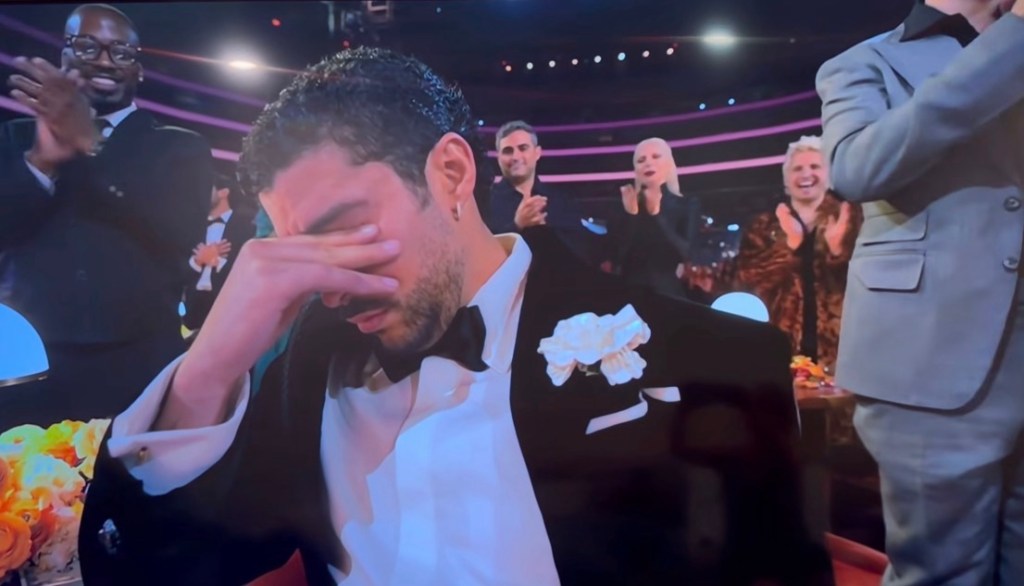
When Bad Bunny won Album of the Year at the 2026 Grammy Awards, the moment felt much heavier than celebration. It carried Puerto Rican culture, history, and people into the American space that has not always welcomed them fully. I watched him sit still in his seat as the applause filled the room and time seemed to slow to a crawl. Then he covered his face with his hands and cried a little. Those tears told a story of endurance, responsibility, and memory that could not be rushed.
That moment immediately brought the poetry of Martín Espada to mind. Espada is a Puerto Rican poet, essayist, and public intellectual whose work centers dignity, labor, immigration, and the lived experience of communities too often rendered invisible. For decades, his poetry has named the weight people carry as they move through systems that deny their humanity. He writes about work, memory, and survival with moral clarity, insisting that we must tell the truth about power and people. His voice belongs in moments like this because it speaks directly to the connection between culture, justice, and the endurance of community.
Bad Bunny was not only receiving recognition for an album. He was standing with Puerto Rico, a US territory that has often been pushed to the margins. He was standing with Latinos that have been told to assimilate and soften themselves to be acceptable (Read the story of Rita Hayworth). He was standing with people of color who rarely see themselves centered during moments of national celebration. That choice mattered because it affirmed humanity rather than negotiating for it. It said clearly that belonging does not require permission.
Espada has written that art and performance is where we say what we are not supposed to say. That truth lived in Bad Bunny’s presence Grammys night. His music has always said what dominant narratives prefer to ignore. It names Latino/a joy without apology and pain without erasure. It speaks from community rather than distance. That honesty is what made his moment and that award resonate far beyond the music industry.
The recent and vociferous reaction to Bad Bunny’s upcoming Super Bowl halftime performance revealed even more about the stakes of this moment. Opposition surfaced quickly and loudly from the right wing. They wanted someone “American.” That resistance did not diminish the meaning of his presence. It clarified it. Visibility unsettles those invested in exclusion, and Bad Bunny did not retreat in response. He continued forward with clarity, joy, and purpose intact. Btw, the halftime show is all American.
At the Grammy Awards, he also used his platform to speak directly to humanity. Accepting the award for Album of the Year, he declared, “We are not savage. We are not animals. We are not aliens. We are humans, and we are Americans.” Those words were not incidental. They were intentional and necessary. He followed them with a call rooted in love rather than fear, demanding “ICE out” and affirming the dignity and legal treatment of immigrants. His speech mattered because it refused dehumanization in plain language. It did not hide behind metaphor or caution. It named people as human rather than alien in a cultural moment that too often denies that basic truth.
Bad Bunny’s influence extends beyond awards and performances because he understands that platforms carry responsibility. He has chosen to use visibility for community rather than retreating into wealth and comfort. He has shown that joy and conscience and success can exist together. He has demonstrated that communities can speak back to power. That choice is what makes his work resonate so deeply.
Watching that moment caused me to reflect on the weight of responsibility in public life more broadly. When people step into visible roles, they rarely stand alone. They carry the hopes of students, families, artists, and communities who are watching closely on their back. That weight is felt in moments of success and maybe more sharply in moments of disappointment. Sometimes it presses quietly. Sometimes it arrives all at once.
I felt that weight when I resigned as provost. I was the first provost of color in the 122 year history of Western Michigan University. That reality carried meaning far beyond a title. It represented possibility for people who had never, I repeat never, seen themselves reflected at that level before. When circumstances unfolded differently than many hoped, the pain for me came from community rather than position. There was no scandal in that chapter. What I was navigating was extreme politics, which has become part of institutional life in this political moment. Many of my provost peers across the country faced similar pressures while serving in senior academic roles. This reality does not erase the difficulty of those experiences. It places them within a broader context of service under strain.
That sense of responsibility surfaced again during the public presidential search at the University of Hawaiʻi. Hawaiʻi had not had a president of color since the 1970s. During my visits, I heard directly from community members who longed to see someone of color serving in that role. When I was not selected, the disappointment stayed with me because it was rooted in responsibility to community rather than ambition. It reinforced how deeply representation matters and how personally its absence can be felt on your heart.
A similar gravity accompanied my experience as a public semi-finalist for the presidency of the University of Puerto Rico system. Puerto Rico is not simply an institution or a system. It is history, struggle, resilience, and identity bound together and limited by American austerity. Being considered for that role meant carrying the hopes of Boricua communities shaped by colonial legacies and economic control. Even entering into that stage of the search made me feel, in my body, the full weight of what that moment represented.
Espada’s work helps make sense of moments like these in my past. His poetry speaks to labor, endurance, and the quiet courage of people who keep moving even when success is uncertain. He does not promise ease or resolution. He promises truth. He reminds us that carrying community is heavy, but it is also sacred.
Bad Bunny’s journey reflects that same truth. His Grammy win was not an endpoint. It was an affirmation that presence matters. His Super Bowl performance this weekend will carry that presence into homes across the country. Millions of people will see Puerto Rican culture, humanity, and the Spanish language centered without apology. That visibility opens imagination and affirms belonging. I can’t wait!
Weeks like this remind us that equality does not move forward by accident. It moves forward because people choose to bring their full selves into public spaces. Artists choose to speak. Educators choose to remain engaged. Communities choose love over fear. These choices accumulate into change that cannot be easily undone not matter how hard someone tries.
Bad Bunny is inspiring because he understands that the weight of community on your back is not something to avoid. It is something to honor. He is going to do so much more, and his work will continue to open space for others to stand fully in who they are. I will continue to do more through service, teaching, and commitment to communities that believe dignity and knowledge belong together. And you are going to do so much more for humans in the spaces where your presence matters.
Going back to where we started this piece… after the Album of the Year award was announced, Bad Bunny gathered himself in the moment. He placed his hands over his face and I believe he allowed the weight of history, responsibility, and gratitude to pass through him. In that pause, I could see community, memory, and purpose moving together. Then he stood up, knowing this was not the end. He stood knowing it was the beginning of even more special moments still waiting to unfold.
Julian Vasquez Heilig is a Bad Bunny fan who believes that music is one of the most powerful archives of social truth. A nationally recognized policy scholar and civil rights advocate, he examines culture not as entertainment alone but as a lens through which people understand belonging, resistance, and possibility. From his first encounter with “Vete” in a late-night Puerto Rican club to researching crowd energy at a Mexico City arena, he approaches Bad Bunny’s work with the same curiosity he brings to public policy: What does this moment reveal about who we are and who we are becoming?





 Cloaking Inequity
Leave a comment