Most leadership does not happen in grand announcements or strategic retreats. It unfolds in ordinary moments that rarely feel historic while they are happening. It appears in how a supervisor responds to a mistake, how a teacher frames expectations on the first day of class, how a manager defines success in a performance review, and how a community leader decides whose voice carries weight in a meeting. These moments may seem small, but they shape culture more powerfully than mission statements ever will. Leadership is embedded in daily choices that signal what matters and who belongs.
In these situations, what I have seen in seven academic leaders roles over 20 years is that humans typically default to problem solving. When something is not working, the process is adjusted, the rule is clarified, or the standard is reinforced. These responses are not inherently flawed, and in many cases they are necessary. However, they operate within a given traditional frame and assume that the underlying logic of the system is sound. The focus remains on improving performance within previously established boundaries rather than examining whether those boundaries still truly serve their purpose.
Organizational theorists have long described this pattern as single-loop learning. When outcomes fall short, individuals and institutions correct errors using existing rules and goals. They refine strategy, tighten execution, and attempt to return to the intended path. This approach improves efficiency and restores order, but it rarely questions whether the original path remains appropriate. The emphasis is on correction rather than reflection.
What I am calling double-loop leading begins when a leader pauses and asks a deeper question. It extends beyond correcting error within established norms and instead examines the assumptions, goals, and decision-making rules that produced the situation. In single-loop thinking, the first loop uses the goals as fixed reference points. In double-loop thinking, the second loop allows those goals to be questioned and, if necessary, revised. Leadership shifts from maintaining systems to evaluating their relevance.
This shift transforms leadership from management to meaning making. Instead of asking how to run faster on the same track, double-loop leading asks whether the track itself still makes sense. It recognizes that the way a problem is defined may be contributing to the problem’s persistence. The central concern becomes alignment between values, context, and action rather than simple efficiency.
In practice, this means acknowledging that framing shapes outcomes. If declining morale is defined as a motivation problem, leaders may introduce incentives or impose stricter oversight. If it is defined as a design problem, they may examine workload distribution, communication norms, or clarity of purpose. The difference is not effort but interpretation. Leaders who shift the frame expand the range of possible solutions.
Double-loop leading matters because most systems are not failing due to insufficient effort. They struggle because they faithfully execute assumptions that no longer align with current realities. Over time, goals, metrics, and norms that once made sense harden into tradition. Familiarity breeds comfort, and comfort discourages examination. Leaders become adept at optimizing processes that may no longer reflect the institution’s mission or environment.
This distinction became clear to me during my tenure as provost. I was asked to sign off on the closure of our gender studies program after the faculty senate had reviewed the proposal and recommended against closure. I was repeatedly asked whether I would authorize the decision despite that recommendation. On the surface, the issue had been treated as procedural. Enrollment numbers were reviewed, budget implications analyzed, and directives followed. This response reflected single-loop thinking and was primarily focused on implementation.
Double-loop leading required a different posture. It required examining the assumptions beneath the proposal. What counts as value in a university? Who determines which disciplines are essential? Are enrollment and revenue the only meaningful indicators of success, or does intellectual diversity and democratic engagement also matter? The deeper issue was not simply program viability but institutional identity.
Many of our most talented American thinkers have emerged from the humanities, including ethnic studies and gender studies. These disciplines cultivate analytical rigor, historical consciousness, ethical reasoning, and the capacity to interrogate power and identity. They challenge students to think critically about society and institutions. When right wing governments or political movements target such programs, it often reflects discomfort with critical inquiry rather than academic deficiency. Reducing these fields to enrollment data misunderstands their broader contribution to public life.
The recently announced closure and forced combination of ethnic studies and gender studies programs at the University of Texas at Austin was particularly troubling to me. I held a joint appointment in both Mexican American and African American Studies at UT Austin from 2007 to 2014. During that time, I witnessed firsthand the intellectual vibrancy and community impact of those programs. I also engaged in public debates in the Texas Senate and House with legislators who were openly hostile to academic freedom and free speech. The tension was not about academic rigor; it was about the willingness of these fields to challenge dominant narratives.
In 2014, I left the University of Texas at Austin for California State University in part because I recognized the trajectory of political pressure on critical fields of study. The environment signaled a narrowing conception of what knowledge deserved institutional protection. So, when I later encountered a similar request at WMU to close our gender studies program, the pattern felt familiar. The issue was not administrative efficiency but a broader drift in assumptions about the purpose of higher education.
I refused to sign.

That refusal was not an act of insubordination but an act of reflection. If leadership is reduced to execution, then compliance becomes the primary measure of effectiveness. If leadership is stewardship, then interrogating assumptions becomes essential. Double-loop leading insists that leaders examine the logic beneath their actions rather than simply refining their procedures.
At its core, double-loop leading is about learning at a deeper level. Single-loop leadership focuses on correction and adjustment within existing goals. Double-loop leadership asks whether those goals remain appropriate. It surfaces assumptions that shape definitions of excellence, evaluation practices, and resource allocation. Many of these assumptions were formed under different social or economic conditions and have become normalized over time. Leaders who engage in double-loop reflection understand that invisibility does not equal validity.
This deeper learning has practical implications across contexts. Everyday leaders, not just those with formal authority, shape culture through daily interactions. A team leader who determines whose ideas receive attention influences norms long before policy is written. A coach who frames failure as growth rather than weakness shapes how individuals interpret setbacks. An administrative professional who defines progress expansively can influence expectations across an entire unit. These everyday leaders are often closest to friction points where inherited rules clash with lived realities.
Redefining excellence is one of the most powerful expressions of double-loop leading. Across sectors, excellence is frequently measured through narrow indicators that privilege speed, visibility, or conformity. These measures may once have been useful, but they can exclude essential contributions such as collaboration, adaptability, and care. Leaders who revisit inherited definitions of excellence expand opportunity and strengthen systems. By broadening what is valued, they cultivate resilience rather than homogeneity.
Inclusion offers another example. Many organizations treat inclusion as an initiative rather than an assumption. It becomes an add-on rather than a design principle. Double-loop leading challenges this separation by asking whether everyday practices presume a narrow standard of belonging. Leaders who notice patterns of exclusion in scheduling, communication, or expectations begin to redesign rather than merely accommodate. Inclusion becomes embedded in structure rather than layered onto it.
Aligning values with daily decisions is perhaps the most visible test of double-loop leadership. Organizations frequently articulate aspirational values, yet those values are undermined by everyday practices. The gap between rhetoric and experience erodes trust in communities. Leaders who examine how workload distribution, evaluation criteria, and transparency reflect stated priorities close this gap. They build credibility through coherence and commitment rather than perfection.
Change across sectors continues to accelerate in an unprecedented economic and political era, intensifying the temptation to act quickly. Double-loop leading offers a necessary counterbalance. It encourages leaders to slow down enough to examine direction as well as speed. Adaptability requires more than new tools; it requires updated assumptions and avoidance of political pre-compliance. Leaders who remain open to revising their own beliefs model the very learning they expect from others.
Double-loop leading is not dramatic. It does not rely solely on charisma or spectacle or economic efficiency. It depends on reflection, integrity, and the willingness to question inherited norms. It asks leaders to confront the possibility that long-standing practices and boundaries may no longer serve their intended purpose. In doing so, it transforms leadership from maintenance of the past into stewardship of the future for our descendants.
Conclusion
In the end, leadership unfolds in ordinary decisions. The tone of an email, the framing of feedback, the metrics chosen in a meeting, and the approvals granted or withheld all signal underlying values. These daily choices quietly communicate what an organization truly stands for, often more clearly than any strategic plan. They reveal whether leaders are protecting comfort or advancing purpose. Over time, these small signals accumulate into culture.
In each moment, leaders face a choice between adjustment and examination. Adjustment keeps the machinery running, often efficiently and predictably. Examination asks whether the machinery itself reflects our deepest commitments, values, and aspirations. The difference between those two responses determines whether a community declines, or merely endures or genuinely evolves and prospers. Double-loop leading begins when communities choose to question assumptions rather than simply refine procedures.
Martin Luther King Jr. reminded us that “the time is always right to do what is right.” That insight speaks directly to the quiet nature of double-loop leading. Doing what is right rarely arrives as a dramatic crossroads. It arrives as an email draft, a vote, a signature, or a question left unasked. When leaders align everyday decisions with enduring values, they move institutions closer to justice and integrity.
Double-loop leading is ultimately about moral clarity expressed through ordinary action. It is the willingness to pause, to reflect, and to ensure that efficiency never replaces purpose. When I refused to close the gender studies program, that was a moment of clarity for me. The decision was not about procedure or compliance; it was about alignment with values I believed a university should uphold. It affirmed that leadership requires more than managing outcomes, it requires protecting meaning. This is how humans transform maintenance into stewardship and routine into responsibility. The future of any organization is shaped not by isolated speeches, but by these daily acts of alignment. Double-loop leading begins with the choice to let values, not traditions, guide the next decision.
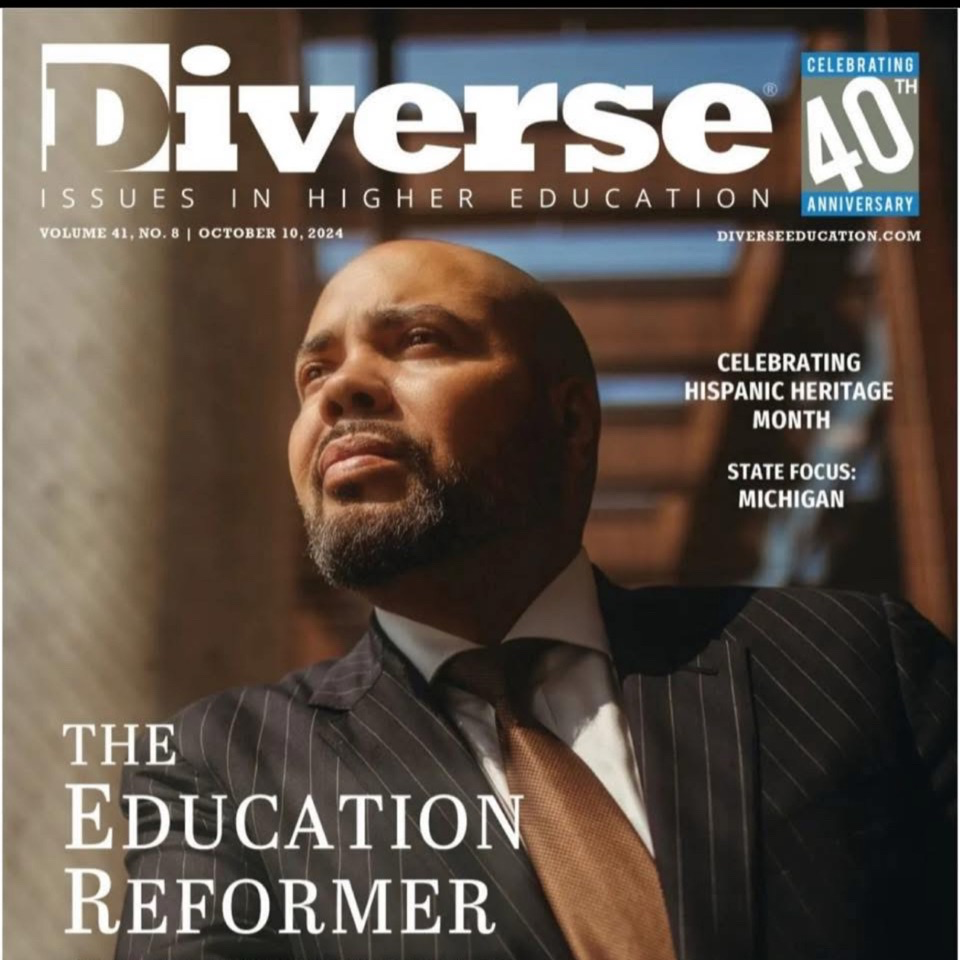
Julian Vasquez Heilig is a nationally recognized policy scholar, public intellectual, and civil rights advocate. He is a recipient of more than 30 honors, including the 2025 NAACP Keeper of the Flame Award, Vasquez Heilig brings both scholarly rigor and grassroots commitment to the fight for equity and justice.



 Cloaking Inequity
Leave a comment