
Sometimes inspiration arrives quietly. It does not announce itself with applause or headlines. It arrives in an unexpected moment when reflection meets memory and responsibility. Sometimes inspiration brings tears.
Last week I traveled across Southern California and Nevada on a journey that at first seemed like a typical speaking trip. The path took me from Santa Ana to Oxnard, then to Venice and West Covina, to Big Bear, across the desert to Las Vegas, and finally to Palm Springs. Like many trips that involve long drives, the hours on the highway created space for reflection. The landscape shifts slowly across Southern California. Urban neighborhoods give way to coastal air, and then the terrain gives way to snow filled mountains then opens into the vast quiet of the desert. Those miles provided time to think about the state of our democracy, about the communities that shape it, and about the responsibilities citizens carry in moments of uncertainty.
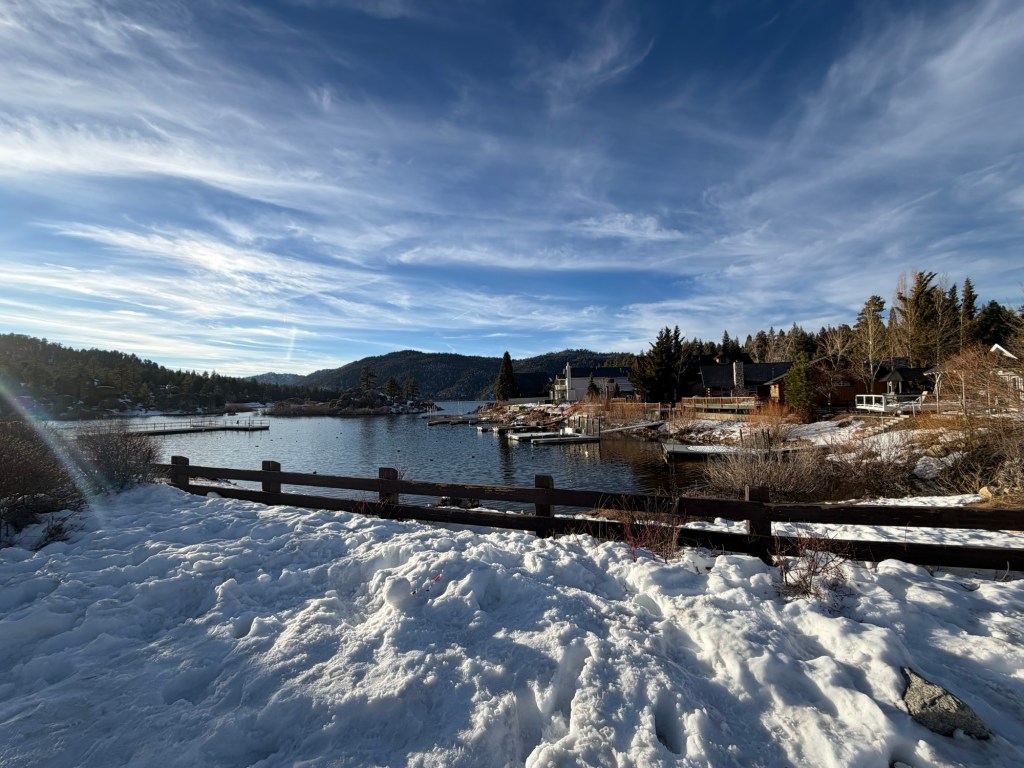
Each place held its own rhythm and character. Santa Ana reflected the vibrancy of communities built by working families and immigrants who have shaped California for generations. Oxnard carried the memory of agricultural labor and the people whose work has fed the nation. Venice felt like a place where art and public expression collide with everyday life. West Covina offered the steady sense of neighborhoods where families have built lives over decades. Big Bear was a crowded island of solitude. Moving through these places reminded me that democracy is never abstract. It is lived in communities where people build schools, raise children, share meals, and imagine futures together.
What I did not anticipate was how emotional the journey would become by the time it ended. At the beginning it looked like a sequence of destinations and events. But as the road trip unfolded it became clear that the most meaningful parts of the experience were not the places themselves. The most powerful moments came from people. Conversations, food, relationships, and unexpected exchanges revealed something deeper about why the work of democracy matters.
By the time I reached Palm Springs, the journey had become something different from what I expected. It had become a reflection on connection, civic responsibility, and the quiet ways democratic values are carried forward.
The Most Important Part of Life
One of the most meaningful stops along the journey took place in Las Vegas. I drove there specifically for dinner with Dean Kimberly White-Smith and a group of friends and colleagues who had invited me. The drive stretched across the desert, miles of open land in every direction. The distance might seem unusual for something as simple as dinner. Yet the reason for making the trip was clear. Humans are the most important part of life.
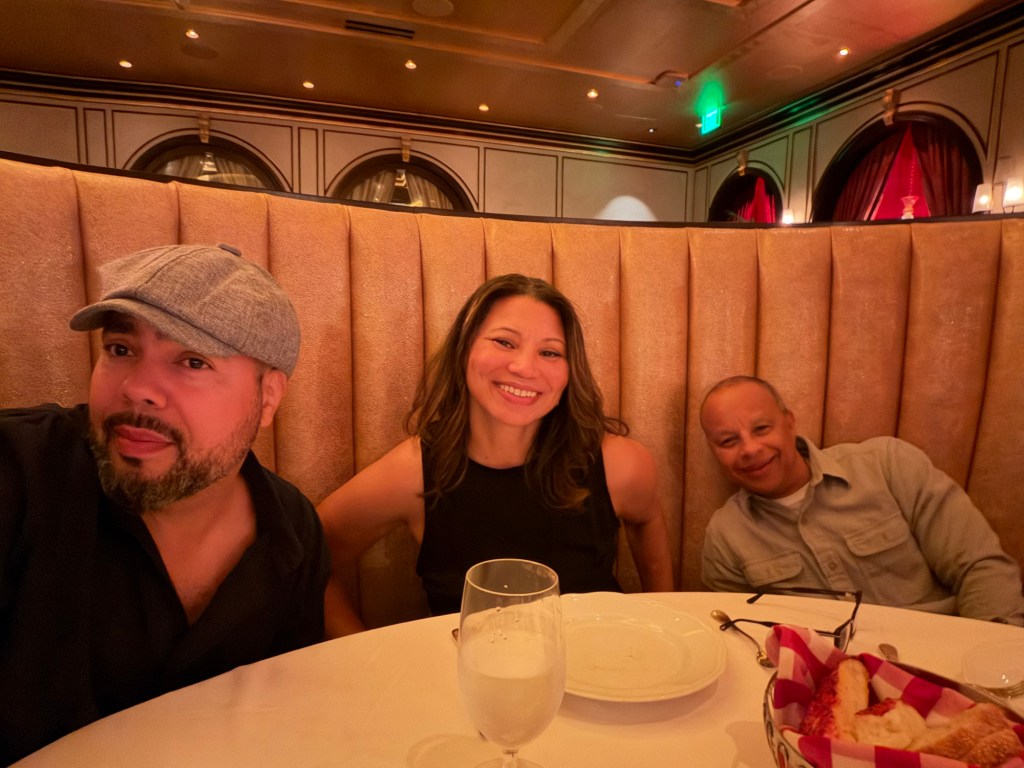
Dinner conversations have a way of grounding us in what truly matters. The evening unfolded around a table where conversation flowed easily from education to politics to the everyday realities of life. These kinds of discussions rarely appear on formal schedules. They are not listed on event programs or conference agendas. Yet they often carry more meaning than any official meeting. When people gather and speak honestly about the world they share, something powerful happens. Community and solidarity is built through those conversations.
Driving hours across the desert for a meal might appear inefficient from a logistical perspective. But life is not organized around efficiency alone. Relationships are built through presence. They are strengthened when people show up for each other without calculating convenience. That dinner in Vegas reminded me of a truth that becomes clearer with time. Professional accomplishments fade quickly, but the moments spent with people who matter remain.
As I left Las Vegas and continued toward Palm Springs, that realization stayed with me. The road trip was beginning to feel less like a professional obligation and more like a reflection on the importance of human connection. I did not yet know how powerfully that lesson would appear again the next day.
Democracy at the Crossroads
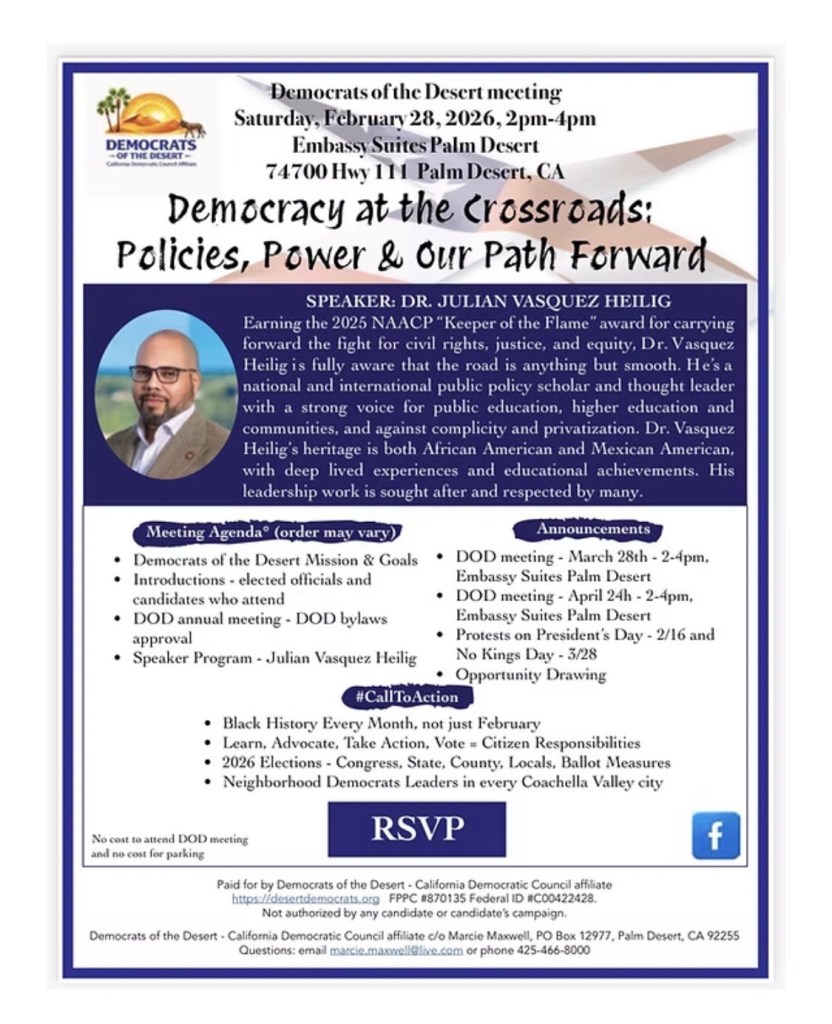
The next stop on the journey was Palm Desert, where I had been invited to deliver a keynote address at the monthly meeting of the Democrats of the Desert. The talk was titled Democracy at the Crossroads: Policies, Power, and Our Path Forward. The room was filled with people who had gathered on a weekend to talk about democracy and civic responsibility. Their presence alone reflected a powerful truth. Democracy survives because citizens care enough to show up.
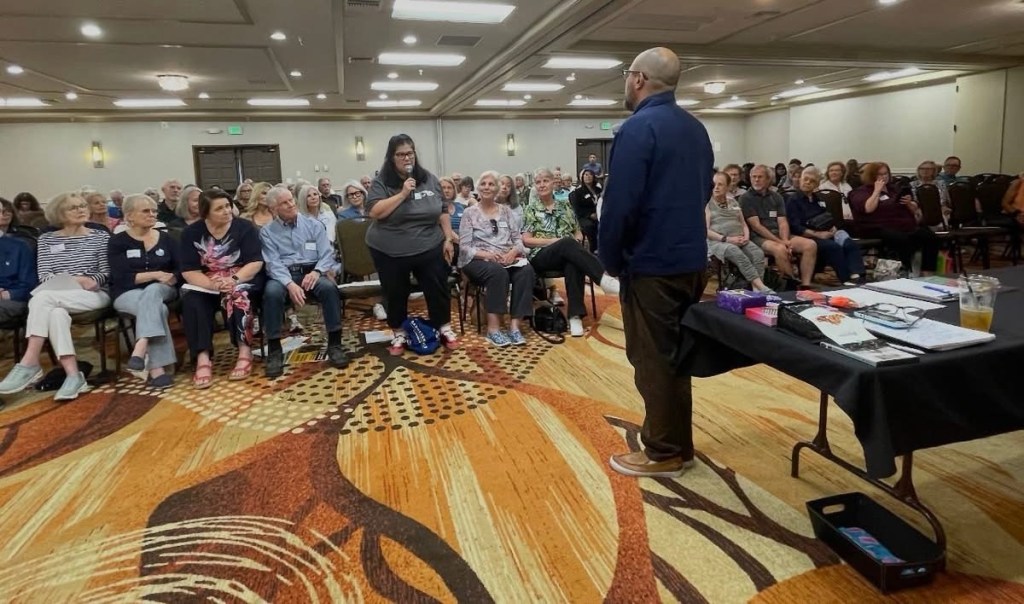
During the keynote I spoke about what it means for a society to stand at a crossroads. A crossroads is not a sign that democracy is ending. It is a moment when citizens must decide which direction their institutions will move. Democracies face crossroads repeatedly throughout history. The decisions made during those moments determine whether systems expand participation or restrict it.
I told the audience that democratic institutions are only as strong as the people willing to defend them. Rights and norms do not protect themselves automatically. They endure when citizens practice them and insist that they remain meaningful. When people assume someone else will protect democracy, they create space for erosion.
Another theme of the talk centered on values and culture. Institutions are shaped by the values of the people who lead them and the citizens who participate in them. When leaders speak clearly about equity, participation, and dignity, those values shape public life. When leaders retreat into silence, the absence of moral clarity becomes its own form of decision.
I also emphasized that culture plays a powerful role in shaping civic imagination. Art, music, storytelling, and public expression influence how communities see themselves. Culture can expand our sense of possibility or narrow it. When culture celebrates participation and human dignity (e.g. Bad Bunny at the Super Bowl), democracy becomes stronger.
Watching John Lewis: Good Trouble
Later that evening I helped host a private screening of the documentary John Lewis: Good Trouble at a local Palm Springs theater. Before the film began I offered remarks to the audience about why the story of John Lewis remains so important today. I explained that the documentary is more than a historical narrative. It is a civic meditation on courage, discipline, and democratic responsibility.
In my remarks I told the audience that Lewis believed citizenship required action. Democracy is not something citizens inherit permanently. It must be practiced and defended across generations. Lewis often reminded people that rights secured in one era can be weakened or lost in another if citizens stop paying attention.
I will post a review later, but the film itself captures powerful moments from the civil rights movement. One of the most striking scenes recounts Lewis approaching the Edmund Pettus Bridge in Selma during the voting rights march. He describes seeing what he called a sea of police officers waiting for the peaceful demonstrators. The marchers were told to disperse and return home. Instead they continued forward, knowing the danger that awaited them.
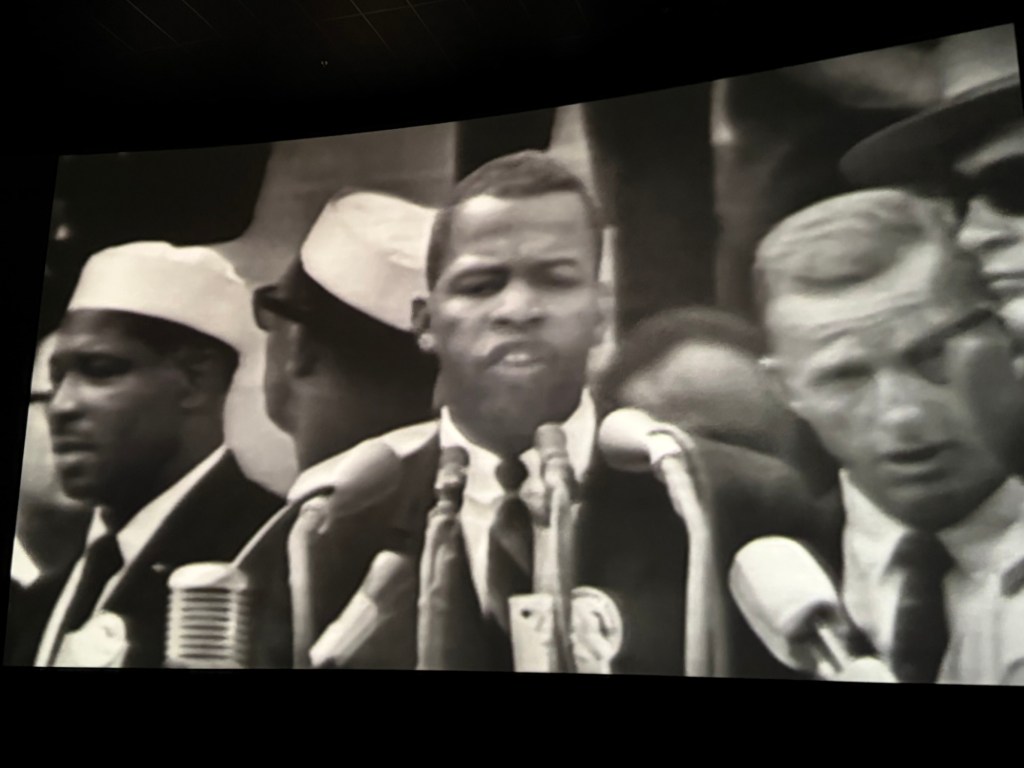
The violence that followed became one of the defining images of the civil rights era. Lewis and other protesters were beaten for demanding access to the ballot. Watching those scenes today remains difficult. Yet the documentary also reveals the extraordinary discipline behind the movement. Students trained extensively in nonviolence before participating in protests. They practiced maintaining composure while being insulted or shoved because they understood that their restraint would expose the moral bankruptcy of the system they confronted.
The film reminds viewers that protest was never meant to create chaos. It was meant to correct injustice within democratic systems. Lewis later described this responsibility as getting into good trouble. Necessary trouble.
A Father and a Daughter
Some of the most powerful moments of the evening occurred not on the screen but in the seat beside me. I was seated next to Congressman Raul Ruiz, M.D., who represents the region and grew up in the nearby community of Coachella. His parents were farmworkers who built their lives through perseverance and sacrifice. Their story reflects the democratic promise that Lewis spent his life defending.
Congressman Ruiz attended the screening with his daughters and wife. During several moments in the documentary he leaned over and spoke quietly to his eldest daughter. He was explaining parts of the story unfolding on the screen. At one point he mentioned a moment he was with John Lewis in the film. He spoke softly about the importance of that moment for voting rights and about the dangers of voter suppression.
The conversation was quiet and personal. It was not intended for an audience. It was simply a father helping his daughter understand the meaning of what she was watching. Yet the significance of the moment was profound.
Listening to that exchange felt deeply emotional. The story of the civil rights movement was unfolding on the screen, while beside me the lessons of that movement were being passed directly to the next generation. Democracy was being taught in real time through conversation and example.
In that moment I experienced that the most important civic education often happens outside classrooms or political institutions. It happens when parents explain to their children why participation matters. It happens when stories of struggle and courage are shared across generations.
That quiet conversation became the highlight of my entire trip.
The Work Continues
As the evening ended and people began gathering their belongings, the conversations in the theater continued. Small groups lingered to reflect on what they had just watched. Some spoke about the civil rights movement and the courage it demanded because they had lived it. Others discussed the responsibilities citizens carry in today’s political climate. The atmosphere felt less like the conclusion of a film and more like the continuation of a shared commitment.
Later that day I drove away from Palm Desert through the hot desert air. The mountains were set against a clear blue sky and the roads stretched forward into the distance. I thought about the journey that had carried me across Southern California and Nevada.
Dinner in Las Vegas reminded me that relationships are the most meaningful part of life. The keynote and screening in Palm Desert reminded me that democracy is sustained through an engaged grassroots and critical conversation. The quiet exchange between Congressman Ruiz and his daughter showed how the lessons of history become responsibilities for the future.
John Lewis often spoke about hope, but his hope was never passive. It was grounded in the belief that ordinary citizens possess the power to shape the future. Democracy survives when people show up, speak honestly, and refuse to surrender to cynicism. It survives when parents teach their children why participation matters.
Those realizations brought some unexpected tears waiting for my return flight at LAX. The challenges ahead are large for our democracy, but we can see our role in the possibility that exists if we look. Each generation receives democracy as both an inheritance and a responsibility. We are asked to protect it, strengthen it, and pass it forward in better condition than we found it.
As long as communities continue to teach the meaning of democracy to the next generation, the story John Lewis helped write will continue to unfold. Democracy is not preserved by memory alone. It is preserved by people who carry its lessons forward with courage and conviction. It continues wherever citizens believe that justice, dignity, and participation are worth fighting for.
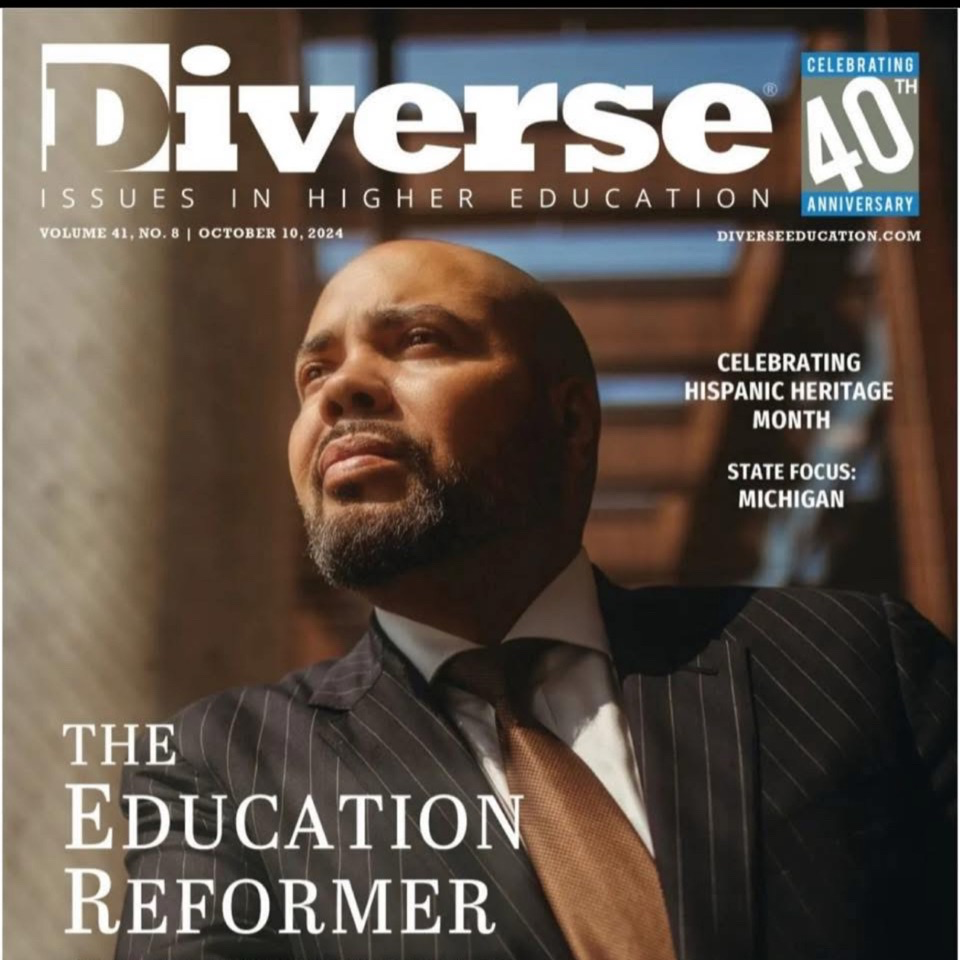
Julian Vasquez Heilig is a nationally recognized policy scholar, public intellectual, and civil rights advocate. He is a recipient of more than 30 honors, including the 2025 NAACP Keeper of the Flame Award, Vasquez Heilig brings both scholarly rigor and grassroots commitment to the fight for equity and justice.



 Cloaking Inequity
Leave a comment