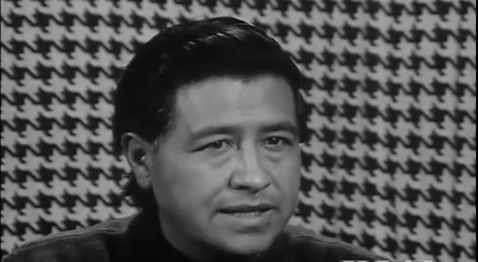
I am thinking in the middle of the night because of my sincere concerns about the possibilities surrounding an unusual and troubling potential development last evening involving the legacy of César Chávez.
For many Americans, Chávez represents one of the defining figures of the civil rights era. His work organizing farmworkers and leading national boycotts helped transform how the country understood labor rights, dignity in agricultural work, and the moral power of collective action. When news emerged last evening that a major annual celebration of Chávez’s life in San Antonio had been abruptly canceled because of a “sensitive matter,” it immediately raised questions.
In the afternoon and evening of March 6, 2026, reports began circulating that the César E. Chávez March for Justice in San Antonio had been canceled. Since 1997, the march has been one of the most visible commemorations of Chávez in the United States. Each year thousands of participants gather on San Antonio’s historic West Side, where churches, labor organizations, students, elected officials, and families walk together in a public expression of memory and solidarity honoring the late farmworker leader.
According to reporting by the San Antonio Express-News, the cancellation was communicated to city officials through a memo sent to members of the San Antonio City Council by Deputy City Manager Maria Villagómez. The memo explained that organizers had canceled the event because of a “sensitive matter” involving possible upcoming disclosures about Chávez’s past. The memo also stated that leaders connected to the California-based César Chávez Foundation had warned organizers that negative information about Chávez could soon appear in a national publication. Organizers reportedly believed that if those revelations were published near the date of the march, the event could become overshadowed by controversy (San Antonio Express-News, March 6, 2026).
At the moment, however, the publication referenced in the memo has not been identified, and no new allegations or revelations about Chávez have actually been published. The public explanation remains limited to the language described in the city memo.
Additional reporting by KSAT-12, the San Antonio ABC affiliate, confirmed several details about the cancellation and the logistics surrounding the event. According to KSAT, the organization responsible for coordinating the march is the César E. Chávez Legacy and Educational Foundation (CECLEF). The foundation acknowledged the cancellation and issued a statement apologizing to participants and community members for the disruption but declined to provide additional details about the “sensitive matter” (KSAT-12 News, March 6, 2026).
KSAT also reported that the City of San Antonio typically allocates approximately $200,000 annually to support the march and related programming associated with César Chávez Day. According to the memo referenced by the station, about $60,000 had already been spent preparing for the 2026 event before the cancellation was announced. Organizers indicated that those funds would be returned to the city after the decision to cancel the march (KSAT-12 News).
The march had been scheduled to take place on March 28, 2026, and this year would have marked the 30th anniversary of the event. The annual march is traditionally held near March 31, the birthday of César Chávez, which is commemorated in many cities and states as César Chávez Day. Despite the cancellation of the march itself, city officials indicated that San Antonio still plans to observe César Chávez Day on March 31. According to KSAT reporting, city officials also noted that the city may revisit how it commemorates the holiday during future budget discussions this summer.
For a civic tradition that has endured for nearly three decades, canceling the event weeks before it occurs is an extraordinary step. The march has historically served not only as a remembrance of Chávez but also as a gathering point for labor organizations, immigrant rights advocates, students, and community leaders.
Chávez and the Farmworker Movement
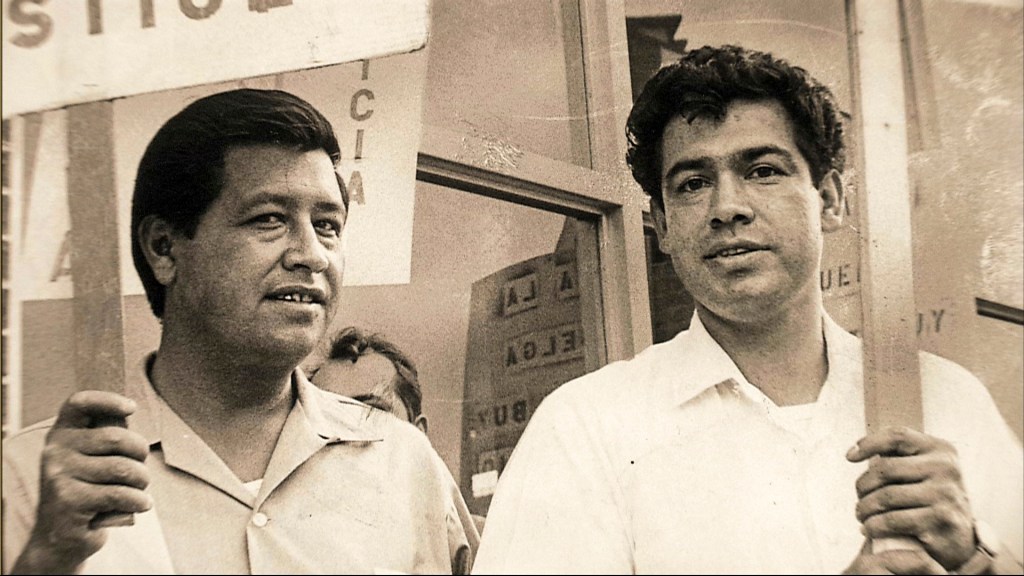
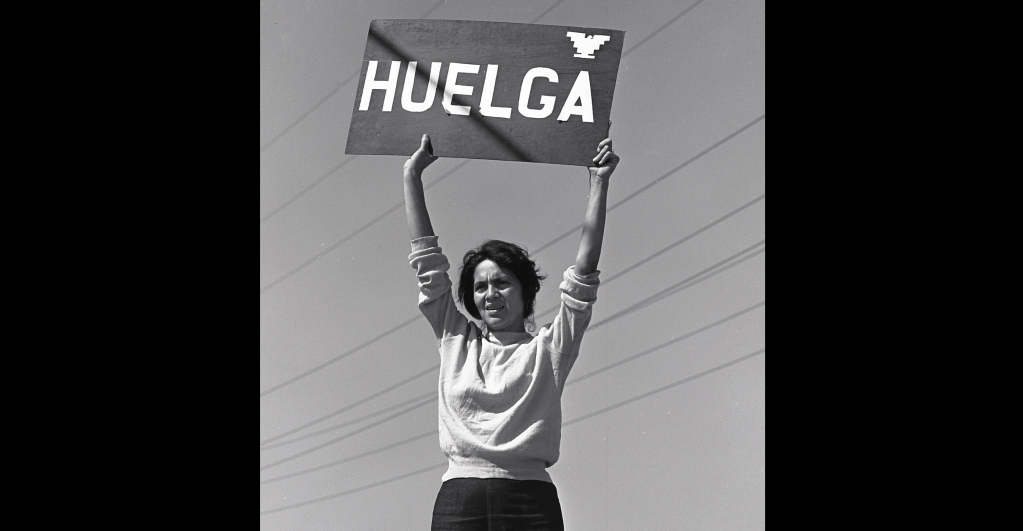
César Chávez rose to national prominence during the 1960s as the co-founder of the United Farm Workers (UFW), the labor organization that sought to unionize agricultural workers in California and across the Southwest. Chávez worked closely with Dolores Huerta, who co-founded the union with him in 1962.
The movement gained national attention during the Delano grape strike, which began in 1965 when Filipino farmworkers organized by the Agricultural Workers Organizing Committee (AWOC) walked off the job in Delano, California. The United Farm Workers joined the strike soon afterward, and the campaign expanded into a nationwide boycott of table grapes. The boycott mobilized consumers, labor unions, churches, and student groups across the United States.

Through marches, boycotts, and grassroots organizing, farmworkers drew national attention to issues such as wages, pesticide exposure, and working conditions in agricultural labor. Chávez also used public fasts, including a well-known fast in 1968, as a form of moral protest and a reaffirmation of the movement’s commitment to nonviolence.
For many Americans, Chávez became a symbol of ethical leadership within labor activism. His approach to organizing drew inspiration from earlier civil rights leaders, particularly Martin Luther King Jr., whose philosophy of nonviolent resistance shaped much of the broader civil rights movement of the 1960s.
Waiting for What Comes Next
At present, the central facts surrounding the cancellation of the San Antonio march remain limited to the information contained in the memo reported by local media. I also checked with a well-placed source in San Antonio who is closely connected to the civic and community networks. The source indicated they were not aware of any additional details about what the “sensitive matter” might involve. In other words, even among individuals who are typically well informed, there appears to be little clarity about the situation beyond what has already been reported publicly.
Here is what I believe is known from public reporting on this:
• The César E. Chávez March for Justice, held annually in San Antonio since 1997, has been canceled for 2026.
• The decision was communicated to city officials through a memo from Deputy City Manager Maria Villagómez.
• Organizers cited a “sensitive matter” involving potential upcoming disclosures about Chávez’s past.
• The memo indicated that negative information might appear in a national publication.
• The publication has not been identified, and no new claims have yet been publicly released.
• Approximately $60,000 had already been spent preparing for the event, which is normally supported by about $200,000 in city funding annually.
• The city still plans to observe César Chávez Day on March 31.
For now, the cancellation leaves many questions unanswered. It also highlights how public memory and historical scholarship often intersect in complicated ways. The figures whose lives are commemorated through marches, holidays, and monuments remain part of ongoing historical conversations and investigations.
The cancellation of the San Antonio march does not yet tell us what new information may emerge. But it serves as a reminder that history is continually revisited and reinterpreted as new research appears and as communities reflect on the legacies of influential leaders. For Latino communities across the United States, César Chávez has represented far more than a historical figure. His name has been tied to struggles for dignity, labor rights, civic participation, and the visibility of farmworkers whose lives and labor were often ignored by the broader society. Streets, schools, scholarships, and civic traditions bear his name because generations of families saw in his story a symbol of possibility and collective power.
That is why moments like this carry real emotional weight. For many people, Chávez is not simply a figure in a textbook but part of family memory and community identity. Marches, service days, and educational programs built around his legacy have helped young people learn about organizing, solidarity, and the long fight for justice in agricultural labor. If new revelations about his past do emerge, they will not only affect historical debates among scholars. They will reverberate within communities that have looked to his life as a source of pride and inspiration.
And perhaps that is why this story felt important enough to sit down in the middle of the night and try to make sense of it. If something significant is about to surface, Latino communities and others will likely find themselves wrestling with how to reconcile complicated truths with a movement that helped transform labor rights and civic participation in the United States. That process may be painful, but it is also part of how communities protect the deeper values that struggles for justice brought into public life: dignity for workers, solidarity across communities, and the belief that organized people can shape the future. After all, in a country where many still defend monuments to slaveholders and wave Confederate flags in the name of “heritage,” confronting the complexities of one’s own history is not weakness. It is historical honesty and the courage to face the discomfort that often comes with telling the full story of our American past.
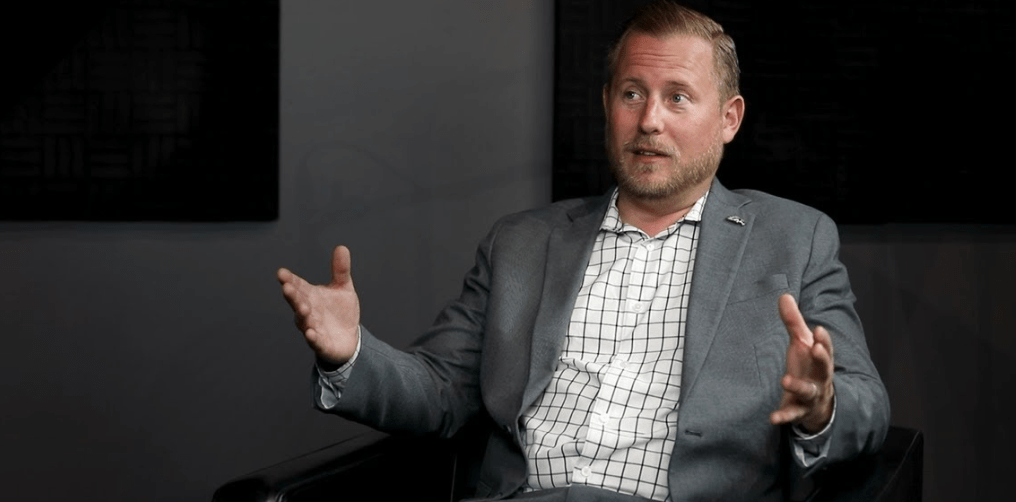
Julian Vasquez Heilig is a nationally recognized policy scholar, public intellectual, and civil rights advocate. A trusted voice in public policy, he has testified for state legislatures, the U.S. Congress, the United Nations, and the U.S. Commission on Civil Rights, while also advising presidential and gubernatorial campaigns. His work has been cited by major outlets including The New York Times, The Washington Post, and Los Angeles Times, and he has appeared on networks from MSNBC and PBS to NPR and DemocracyNow!. He is a recipient of more than 30 honors, including the 2025 NAACP Keeper of the Flame Award, Vasquez Heilig brings both scholarly rigor and grassroots commitment to the fight for equity and justice.
Sources
San Antonio Express-News. “San Antonio’s César Chávez March for Justice canceled due to ‘sensitive matter.’” March 6, 2026.
KSAT-12 News. “2026 César E. Chávez March for Justice canceled due to ‘sensitive matter,’ officials say.” March 6, 2026.
Pawel, Miriam. The Crusades of Cesar Chavez: A Biography. Bloomsbury Press, 2014.
Bardacke, Frank. Trampling Out the Vintage: Cesar Chavez and the Two Souls of the United Farm Workers. Verso, 2011.




 Cloaking Inequity
Leave a comment