
Did you ever play the if I win the lottery game? When I was young, Saturday nights often ended with a long drive home from my grandmother’s house. The sky was dark, but I-75 was alive with the steady stream of cars heading north from Detroit and southeast Michigan. Long lines of headlights stretched into the distance as families made their way up north for the weekend, and the highway seemed to run endlessly through the Michigan night. My parents had a game they liked to play during those drives. They would imagine what they would do if they won the lottery. None of us in the car expected the Lotto fantasy to become real. It was simply a way to dream about possibilities while the miles of pavement passed beneath the car.
We talked about helping family members and paying off bills that weighed on people. Sometimes we’d imagined traveling to a wedding that we couldn’t afford to attend or buying a house for a family member in need. Listening from the back seat, I experienced adults imagining a future where resources could potentially create opportunity. Those conversations were not about luxury or status. They were about responsibility and generosity. Even as a child I sensed that money could matter because of what it allowed people to build.
Of course we never actually won the lottery. The game repeated itself many times over the years, always ending with the same laughter when the conversation turned back to reality. Still, the exercise left an impression that stayed with me long after those drives ended. It planted a question that would return later in life in more serious ways. What would you actually do if you suddenly had the resources to shape the world around you.
Today that question still matters. If someone sent me a confidential email and offered me ten million dollars tomorrow and said to use it to strengthen democracy, I would not start by renting office space or funding something that many people are already doing. I would begin with something much more fundamental. I would invest in strengthening how people think about information, evidence, and truth in public life. Democracies depend on citizens who can evaluate claims, examine evidence, and reason carefully about complicated issues.
The Crisis of Public Thinking
One of the greatest challenges facing democratic societies today is not simply disagreement. Democracies have always contained competing ideas, competing interests, and political conflict. Debate and disagreement are essential to freedom. The deeper challenge emerging today is that the modern information environment often discourages careful thinking. The pace of information rewards reaction instead of reflection.
Social media platforms intensify this dynamic. Facebook, Instagram, TikTok and more are designed to reward engagement, and engagement usually comes from emotional reactions rather than careful reasoning. Content that provokes outrage or confirms existing beliefs spreads quickly and goes “viral.” Posts that challenge assumptions or encourage thoughtful reflection travel much more slowly and are not prioritized by corporate algorithms. In this environment the loudest or most inaccurate claim can easily overshadow the most accurate one.
Another challenge is that many students and adults have never been formally taught how to evaluate information. Schools often emphasize memorizing facts or completing assignments rather than examining how knowledge itself is produced. Students learn what to think about particular topics but rarely learn how to evaluate competing and convincing claims in our new AI dominated world. In this rapidly evolving digital information environment, those analytical skills are essential.
The consequences extend far beyond online conversations. Public policy debates become distorted when evidence is misunderstood or ignored or hidden. Our nation is struggling to solve problems because discussions rely on slogans and memes instead of analysis. Democratic societies require disagreement, but they also require a shared commitment to examining evidence honestly without false alternative facts. Strengthening that capacity is one of the most important investments any society can make.
When citizens can examine claims carefully, they become harder to manipulate and easier to engage in meaningful dialogue. When communities learn to reason together, disagreement becomes productive rather than destructive. Democracies flourish when people believe that truth can be pursued collectively through evidence and dialogue. Improving public thinking is therefore not simply an educational challenge. It is a democratic imperative.
The CRAAP Test and the Discipline of Evidence
For example, in my classes I teach students a simple but powerful framework used to evaluate information called the CRAAP test. The name is memorable, which helps students remember the method long after the course ends. Yes, they laugh when I say it in class. The framework encourages readers to slow down and examine information through five questions. These questions focus on currency, relevance, authority, accuracy, and purpose. The goal is to replace instinctive reaction with disciplined evaluation.
Currency asks whether the information is recent enough to reflect the current state of knowledge. Research evolves and evidence changes over time, so outdated information can easily mislead readers. Relevance asks whether the information actually addresses the question under discussion. Something may be technically true while still being unrelated to the issue at hand. Authority encourages students to examine who produced the information and what expertise supports their claims.
Accuracy asks whether claims are supported by verifiable evidence and whether sources are cited transparently. Students learn to look for original data, credible research, and independent verification. Purpose asks why the information was created and what the author hopes the reader will believe or do after encountering it. These five questions encourage intellectual patience and skepticism.
When students begin applying the CRAAP test, something remarkable happens in their writing and understanding. They tell me that claims that initially sounded convincing sometimes collapse under closer examination. They noticed the that viral statistics may originate from outdated studies. Articles that appear authoritative may rely on weak or selective evidence. Students begin to see that evaluating information requires more than simply trusting confidence or popularity.
The CRAAP framework does not tell people what to believe. Instead it gives them tools to think independently. It cultivates intellectual humility and curiosity. Students begin to recognize that truth requires investigation and that responsible citizenship requires examining evidence carefully. In a democracy these habits of mind are invaluable.
What Public Debates Reveal
Watching viral public debates online has reinforced how urgently these skills are needed. I have spent time observing discussions where commentators such as Charlie Kirk engage with young people in public forums. I have also watched episodes of the YouTube series produced by Jubilee Media where participants with different viewpoints sit down to discuss controversial issues. These exchanges are fascinating because they reveal how people reason about public questions in real time.
What quickly becomes clear is how often participants rely on claims they have never examined closely. Statistics are repeated because they sound persuasive rather than because they have been verified. Participants often rely on fragments of information encountered online without understanding the evidence behind them. Confidence sometimes substitutes for knowledge.
Another pattern appears when discussions shift away from evidence toward rhetorical framing. Participants sometimes rely on emotional narratives or personal anecdotes rather than examining the research behind their claims. These stories may be powerful, but they can also obscure the broader evidence needed to understand complex issues.
Watching these viral debates and conversations highlights a central challenge for our nation. We must learn not only facts but also how misinformation and deception operate. Selective statistics, misleading charts, and authoritative sounding language can distort understanding. Without training in how to recognize these patterns, even well meaning citizens can spread inaccurate information.
At the same time these debates and my experiences teaching my leadership courses reveal something hopeful. Many young people are eager to engage with difficult questions. They want to understand issues that shape their lives. When they are given tools to examine evidence carefully, their conversations become more thoughtful and constructive. We have the power to transform public discourse.
A Four Year Summer Pathway for Critical Thinkers ($5,000,000)
So, if I had ten million dollars to invest in democratic life, one initiative would be a four year pathway of summer programs and civic competitions for high school students focused on critical thinking and civic reasoning. Too often summer programs exist as isolated experiences and serve primarily as revenue generating centers for universities and their external partners. Programs at institutions such as Stanford, Columbia, Harvard, and Yale often cost thousands of dollars and largely provide opportunities for students who already have significant financial advantages. Even when students attend these programs for a few weeks, they frequently return to school without a clear pathway for continued intellectual development. A structured four year pathway focused on critical thinking for democracy, and designed to be freely accessible, would allow students to develop these skills steadily over several years rather than through brief, disconnected experiences.
We also need more civic competitions modeled on efforts such as the America 250 essay initiatives that encourage young people to reflect on the meaning of democracy and citizenship. These kinds of competitions can be powerful opportunities for civic growth, but they should not simply reward students who already have strong preparation or access to private coaching. Instead, educational programs should prepare students to participate meaningfully in these opportunities. Students should be trained to research history carefully, evaluate sources, construct arguments grounded in evidence, and write clearly about democratic ideals and challenges. When preparation becomes part of the educational pathway rather than an advantage reserved for a few, competitions can become powerful catalysts for civic learning and intellectual development.
The four year pathway would allow students to build these skills step by step. In ninth grade, students would explore how information moves through digital networks and how misinformation spreads. They would analyze news coverage, examine viral claims in social media, and practice evaluating sources using frameworks such as the CRAAP test. These early experiences would help students develop habits of intellectual discipline and curiosity. Students would begin to see themselves not simply as consumers of information but as investigators seeking evidence and understanding.
During tenth grade the focus would shift toward evidence and argumentation. Students would learn how to gather data, construct persuasive arguments, and evaluate competing claims. Competitions during this stage could challenge students to develop policy briefs addressing issues affecting their communities. Panels of educators and civic leaders could evaluate the reasoning behind each proposal. Through this process students would learn that persuasive arguments depend not on confidence or rhetoric alone, but on evidence, clarity, and intellectual honesty.
In eleventh grade students would move into research and public scholarship. Guided by mentors, they would investigate issues affecting their communities and develop original research projects. Summer institutes could resemble academic conferences where students present their findings and respond to questions from peers and mentors. These experiences would demonstrate that knowledge is something students can produce rather than merely consume. Students would begin to see themselves as contributors to public understanding.
By twelfth grade students would engage in leadership projects addressing real community challenges. Teams could collaborate with local organizations to analyze problems and propose evidence based solutions. These capstone experiences would connect research, communication, and civic engagement. Students would graduate not only with stronger analytical skills but with experience applying evidence and reasoning to real issues facing their communities. Over time, a pathway like this could help cultivate a generation of citizens prepared to participate thoughtfully and responsibly in democratic life.
Designing Your Life and Civic Agency ($2,500,000)
Another investment would expand work already underway with students at Western International High School in Detroit Public Schools. I currently serve as a senior advisor to the Michigan Hispanic Collaborative (MIHC) and have helped develop curriculum that integrates design thinking, identity exploration, and civic reasoning. This work draws inspiration from the Stanford Life Design framework developed at Stanford University. The framework encourages students to see their futures not as fixed paths but as questions that can be explored thoughtfully.
Students begin by examining their identities, values, and interests. Through activities such as identity mapping they explore the experiences and relationships that shaped them. They reflect on family histories, community influences, and cultural traditions that inform their aspirations. These exercises help students recognize that their lives already contain valuable knowledge and perspective. When students understand their own stories more clearly, they also become better listeners to the stories of others.
Design thinking teaches students to approach uncertainty with curiosity rather than fear. At Western in Detroit, they learn how to frame problems, test ideas, and revise assumptions when evidence changes. Informational interviews and exploratory experiences allow students to gather information about possible futures. Instead of waiting for a perfect plan, students experiment with possibilities and reflect on what they learn. This mindset encourages resilience and thoughtful decision making.
The connection between life design and democratic citizenship is powerful. Students who see themselves as designers of their futures begin to recognize their ability to influence institutions around them. They become more comfortable asking questions about policies that affect their communities. They begin to see leadership as something grounded in responsibility and participation rather than status.
Expanding MIHC’s life design work in Detroit that current serves every freshman and senior at Western would empower young people develop the intellectual confidence needed for civic life. Programs that connect personal development with democratic reasoning help students see that their futures and their communities are interconnected. Education becomes a pathway toward agency rather than simply a requirement to complete.
Lessons from the Ford Fellowship Community and Teach For America ($2,500,000)
It was heartbreaking when the Ford Foundation ended its long running Ford Fellowship Program. For decades, the fellowship supported thousands of scholars from historically underrepresented communities pursuing academic careers. I was fortunate to be part of that community as a 2004 Ford Fellow, and the program shaped my life in profound ways. It created a network of scholars committed to research, teaching, and public engagement. The fellowship helped open doors for people who might otherwise have faced barriers entering academic life. It also cultivated a sense of responsibility among fellows to contribute knowledge that serves the public good.
The fellowship did far more than provide financial support. It created a community of scholars prepared to serve the world. Fellows entered universities, conducted research, mentored students, and helped expand the intellectual life of institutions across the country. Many fellows became professors, administrators, policy advisors, and public intellectuals. They are training a new generations of students and helped broaden the questions that universities ask about equity and opportunity. The ripple effects of that investment continue to shape higher education and public life today.
At the same time, the fellowship largely focused on creating scholars rather than activating them collectively in public life. Thousands of Ford Fellows now work in universities, research institutes, and public institutions across the United States and around the world. We were trained, supported, and connected, but there was never a sustained effort to mobilize that network toward deeper engagement in democratic life. With the intellectual preparation and national network already in place, fellows were uniquely positioned to contribute to democratic dialogue, policy development, and public scholarship on a larger scale. That next step is something I have often wished the Ford Foundation had explored more intentionally.
One lesson comes from an organization I have often viewed critically in the education policy world, Teach For America. I did not think it was wise for Teach For America to frame itself primarily as a leadership organization rather than as a teaching organization. That shift, in my view, weakened its long term credibility among educators and may have ultimately undermined its core mission leading to its current decline. Yet even while I disagreed with that strategic choice, there is something important to acknowledge about how the organization operated. Teach For America became very effective at organizing its participants and building networks that encouraged alumni to remain engaged in public life.
Through programs such as Leadership for Educational Equity and other professional networks, Teach For America created pathways that helped its alumni develop a public voice and step into positions of influence in education and policy. Participants were not simply trained and then dispersed. They remained connected through mentorship, professional development opportunities, and encouragement to participate in civic leadership. Leadership was treated as a pathway that required support, preparation, and community.
The Ford Foundation succeeded in organizing its fellows into a powerful intellectual community. Scholars from across disciplines were brought together through conferences, mentorship, and a shared commitment to scholarship and equity. For many of us, those gatherings were formative spaces where ideas were exchanged, collaborations were born, and a sense of collective purpose began to take shape. At the same time, the annual conference was usually limited to the newest fellows and returning speakers. In hindsight, expanding those opportunities for the broader community might have strengthened the network even further and deepened the sense of shared mission across generations of fellows.
Even so, the community that the fellowship created did not disappear when the formal program ended. The relationships and intellectual commitments built through the fellowship continue to live on through informal networks such as the Senior Ford Fellows, collaborations, and ongoing conversations among fellows around the world. What is missing is a structured effort to activate this extraordinary community toward broader engagement in democratic leadership and public dialogue. The potential remains enormous. Across the country and around the world, Ford Fellows are uniquely positioned to bring scholarship, evidence, and thoughtful analysis into public life. If connected more intentionally, this network of scholars could become one of the most powerful intellectual resources available for strengthening democratic institutions and civic discourse.
The opportunity that remains is not simply to remember what the fellowship built, but to build upon it. By connecting scholars, supporting collaboration, and encouraging public engagement, the Ford Fellows network could become a living force for democratic renewal. When scholarship, expertise, and public responsibility come together, they help ensure that evidence, thoughtful reasoning, and ethical leadership continue to guide our shared future.
Returning to the Saturday Night Conversation
When I think back to those long drives across Michigan in the 1980s, I realize that the game my parents played was never really about winning money. It was about imagination and responsibility. It was about asking what we would do if we had the chance to shape the world around us. On those busy stretches of highway between Saginaw and Lansing, my parents were teaching something far more meaningful than financial dreaming. They were teaching that resources matter most when they are used to lift others and strengthen the communities we share.
Today my answer to that childhood question is clearer than it was when I sat in the back seat of that car watching the headlights pass by in the darkness. If I ever had the opportunity to direct significant resources, I would invest in strengthening the habits of mind that sustain democratic life. Citizens who can evaluate evidence, question assumptions, and reason together are the foundation of self government. Democracies do not survive because people agree on everything. They endure because people remain committed to searching for truth together, even when that search is difficult.
Communities become stronger when people understand how information works and how deception can occur. Students who learn to evaluate evidence grow into adults who can participate thoughtfully in public life. They become citizens who ask better questions, listen with humility, and make decisions grounded in knowledge rather than impulse. The ability to think critically about information may be one of the most powerful democratic skills any citizen can possess. When young people develop those habits early, they carry them into every part of their lives.
If ten million dollars ever arrived without instructions, I would invest in building the intellectual and civic infrastructure our nation that helps young people grow into thoughtful citizens. I would support a four year summer pathway that teaches students how to analyze information, evaluate evidence, and engage in meaningful civic debate. I would expand life design work in schools like Western International High School so that students see themselves as agents capable of shaping both their futures and their communities. And I would help activate networks of scholars, educators, and mentors so that knowledge and experience are more directly connected to public life. Together, these investments would help cultivate a generation of citizens who do more than inherit democracy. They would understand how it works, recognize when it is threatened, and possess the courage and intellectual tools to strengthen it for the generations that follow.
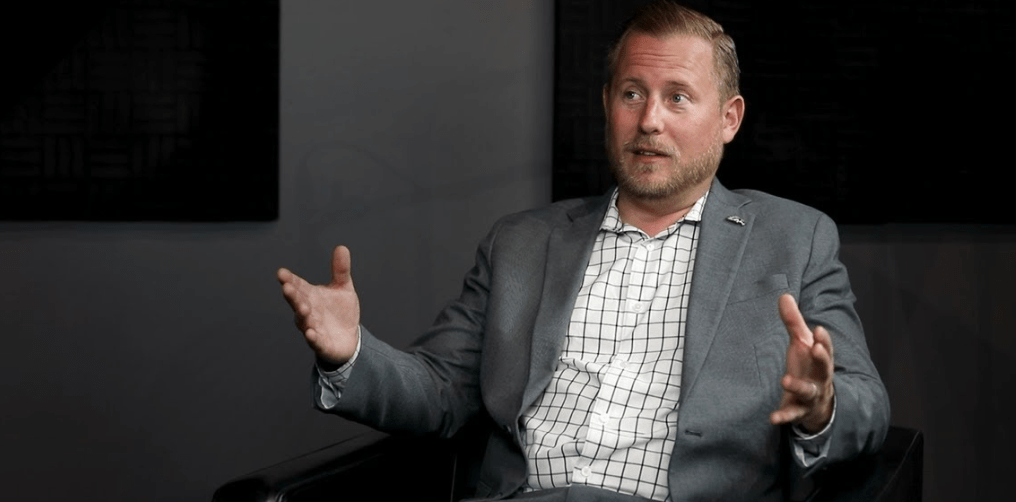
Julian Vasquez Heilig is a professor of Educational Leadership, Research, and Technology at Western Michigan University whose work focuses on strengthening democratic institutions through education, research, and public engagement. His scholarship examines how education policy and leadership shape opportunity for students and communities that have historically been underserved. Beyond the university, he works directly with schools and educators to develop programs that help students evaluate information, examine evidence, and use their public voice responsibly, including serving as a special advisor to the Michigan Hispanic Collaborative. He is the recipient of more than thirty honors for his scholarship and public engagement, including the 2025 NAACP Keeper of the Flame Award.



 Cloaking Inequity
Leave a comment