You know it when you see it. Every once in a while, you do not just meet someone with potential. You meet someone who operates at a completely different level. It is not about charisma alone, and it is not about how well someone performs in a meeting. It is about clarity, discipline, and a rare ability to turn ideas into outcomes consistently. That level of performance is unmistakable once you have seen it up close. It creates a reference point that permanently changes how you evaluate leadership. Once you recognize it, you start to see its absence just as clearly in other spaces. They just have that “it,” and it shows up when it matters most.
A-level talent has a presence that is difficult to ignore. They do not need to dominate the room to lead it. Their thinking is sharper, their decisions are more grounded, and their actions tend to move things forward while others are still in analysis paralysis. You recognize A-level talent quickly because it creates contrast. It resets your understanding of what effective leadership actually looks like. It also exposes how often organizations reward activity instead of impact. That contrast can be both inspiring and unsettling at the same time, because it raises the standard whether people are ready or not.
The Provost Council Moment
I remember inviting Dan Bartholomae to speak to the Provost Council when I was serving as provost at Western Michigan University. These meetings were spaces where senior leaders came together to discuss institutional priorities, strategy, and the direction of the university. Over time, we hosted a number of cabinet guests. They all had experience and credentials. They offered perspectives and shared insights from their respective areas. Those sessions were informative but generally stayed within familiar boundaries of leadership talk. They rarely pushed the room into new territory. Most discussions reinforced what we already knew rather than expanding how we thought.
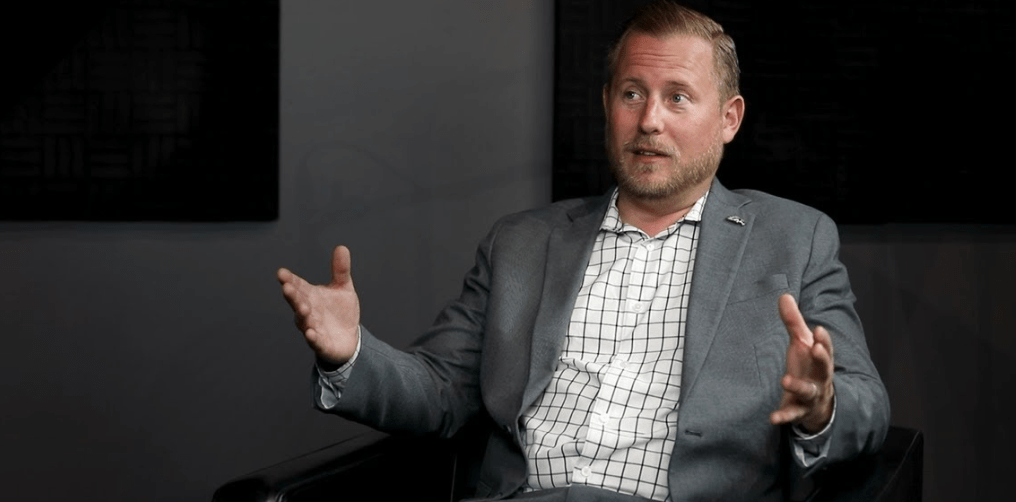
But when Dan spoke, something different happened. The tone shifted almost immediately. The conversation moved beyond surface-level observations into something much more substantive. It became clear that this was not going to be a typical powerpoint presentation. You could sense that the room was about to be challenged. There was a level of precision that demanded attention. It was the kind of moment where you realized you were learning something applicable, not just interesting. It was also the kind of moment that raises your expectations for what leadership conversations should be.
He did not just talk about athletics as a silo within the university. He talked about strategy, culture, and winning in a way that translated across the entire institution. I could feel the shift in the room almost immediately. People leaned in. The conversation moved from generalities to specifics. The level of thinking was elevated in a way that stood apart from anything we had experienced with previous cabinet speakers. It was one of those moments where you knew you were seeing something different, and that you were in the presence of someone who knew how to build and deliver.
Strategy, Not Slogans
What made that moment stand out was not just what Dan said, but how he said it. He did not rely on vague language or overused leadership phrases. He broke down the Athletics Department’s strategy into actionable programs and components that could be understood and applied. It was practical in a way that most leadership conversations are not. Most importantly, he connected all of it to results. He made it clear that outcomes are the ultimate measure of leadership. There was no ambiguity about what success meant. It was defined, measurable, and expected. That clarity eliminates confusion within organizations and aligns people toward a shared goal.
Too often, leaders speak about vision without grounding it in execution. They describe where they want to go but cannot articulate how to get there. Dan did the opposite. He made it clear that strategy is not about aspiration. It is about building the culture that make success repeatable. That distinction is what separates strong leaders from average ones. It also determines whether organizations actually move forward. That level of clarity is rare. It requires both deep understanding and real-world experience. It cannot be faked or improvised. It comes from doing the work at a high level over time and staying disciplined when others lose focus.
A-Level Talent Versus the Rest
That experience reinforced something I have observed throughout my career. There is a meaningful difference between A-level talent and everyone else. A-level talent understands complexity but does not get stuck in it. They can break down problems quickly and identify the levers that matter most. They do not confuse activity with progress, and they do not allow process to replace outcomes. They understand the problem being solved and focus on what actually drives impact. They prioritize effectiveness over busyness. That focus allows them to move faster and more decisively, even in complex environments.
This is also where tension can emerge. B-level talent often feels threatened by A-level performance. Not because they are told to feel that way, but because the contrast is undeniable. It exposes gaps that were easier to ignore before. It forces comparisons that people may not want made. That tension can shape how people respond, and it often reveals who is committed to growth and who is committed to comfort.
The challenge with being A-level talent is that B-level talent will come for you because you make them look bad. That pressure can be subtle or direct, but it is real in many organizations. It shows up in resistance, second-guessing, or attempts to slow progress. It is one of the hidden costs of operating at a high level. It also requires resilience, clarity, and a deep sense of purpose to stay focused on the work rather than the noise.
Results That Speak for Themselves
The clearest evidence of A-level leadership is results. Not isolated wins, but sustained success across multiple areas. That is exactly what we have seen with Dan’s leadership at Western Michigan University. The outcomes tell a consistent story. They reflect intentional leadership over time. They demonstrate what is possible with the right approach.
The hockey program winning an NCAA national championship is a significant achievement. The football team winning the MAC for the first time in a long time is another. These are not just wins. They are signals of culture, alignment, and execution. They show what happens when leadership is intentional and systems are built to perform.

At the same time, real leadership is not defined by success alone. There have been moments that required adjustment, including challenges around how to better support and compensate critical staff like athletic trainers. Those are not small issues. Athletic trainers are essential to student-athlete health, performance, and safety, and when systems do not fully recognize their value, it demands leadership attention.
What stands out is not the existence of those challenges, but how they are approached. A-level leaders do not avoid hard problems or defend the status quo. They lean into them. They listen, they reassess, and they work to build better systems that reflect both performance and people. That willingness to confront reality and improve conditions is what sustains excellence over time.
A-level talent delivers. That is the simplest and most accurate way to describe them. In environments where many people talk about progress, they produce it. In systems where others debate direction, they move the work forward. That consistency builds credibility. It also builds trust within the organization. People begin to believe in what is possible, and that belief becomes a force multiplier.
We All Need a Dan
Most organizations do not struggle because they lack strategy. They struggle because they lack execution. They struggle because they do not have enough people who can translate vision into action and sustain that action over time. That gap is where progress stalls. It is where momentum is lost. It is where opportunities fade. B-level talent often fills that space because it feels safe and predictable, and people naturally gravitate toward what feels comfortable. But it is exactly where A-level talent makes the difference by refusing to let success lie beyond the horizon and by pushing organizations past what feels easy into what is necessary.
Dan Bartholomae being named a national finalist for Sports Business Journal’s Athletic Director of the Year is a well-deserved recognition. It reflects the impact of his leadership and the results that have been achieved under his direction. It aligns with what those around him have already seen. It validates the work that has been done. It also highlights the broader significance of his approach. It reminds us that excellence is visible when it is sustained over time and that results eventually cut through noise and doubt.
Reflecting on my time working alongside Dan, one thing remains clear. Leaders like him are not common. They represent a level of talent and execution that is difficult to replicate. Their impact extends beyond their immediate role. It influences the entire organization. It shapes how others lead. It leaves a standard behind that does not easily fade and becomes a reference point for what leadership should look like.
But they are also essential. Organizations that want to move forward, that want to achieve meaningful results, need A-level talent who can operate at that pace. They need individuals who are not satisfied with maintaining the status quo. They need leaders who are willing to build, align, and execute. They need people who can navigate resistance. They need everyday leaders who can deliver. They need people at the grasstops who raise the ceiling for everyone around them and refuse to let comfort define the limits of possibility.
We all need Dans on our team. Not just because of the wins, but because of what those wins make visible. They show what is possible when strategy is clear, leadership is disciplined, and execution is relentless. They raise the standard in a way that reshapes how everyone else sees the work. They remind us that excellence is not an accident, it is a choice made daily and delivered consistently. As Yogi Berra once said, “If you don’t know where you are going, you’ll end up someplace else.”
A-level humans embody the clarity of direction and the courage to perform at a level that cannot be ignored, even when it creates discomfort. They are not always the easiest to be around because they challenge assumptions and disrupt routines, but they are the ones who ultimately move us forward. B-level talent may feel safer for some, but A-level talent is what changes us for the better. And once you have witnessed that level of performance up close, you cannot unsee it. You begin to expect more, demand more, and believe more is possible.

Julian Vasquez Heilig is a nationally recognized public scholar, commentator, and civil rights advocate. He has appeared on major national platforms including Democracy Now!, MSNBC, Al Jazeera, NBC News, PBS, and Univision. His media work reflects a longstanding commitment to making complex policy issues accessible, urgent, and meaningful for the public.





 Cloaking Inequity
Leave a comment