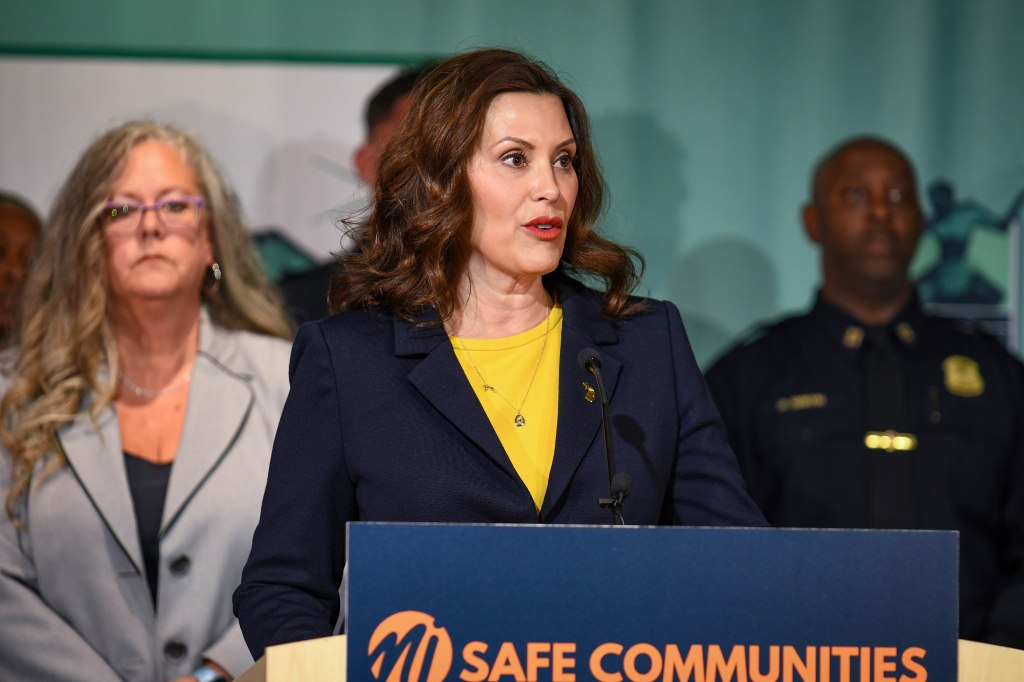
Dear Governor Whitmer,
I urge you not to opt Michigan into the federal school voucher program created under the One Big Beautiful Bill Act. My research, along with a substantial body of national and international evidence, shows that voucher programs drain public resources, weaken civil rights protections, and destabilize the public education systems that serve the vast majority of students.
Over the past two decades, I have studied school choice, privatization, and accountability systems, and the evidence is clear. Voucher programs do not consistently improve academic outcomes and, in many cases, lead to declines in student achievement. In “Remarkable or Poppycock? Lessons from School Voucher Research and Data” (Vasquez Heilig et al., 2014), we found that voucher programs frequently fail to deliver promised gains while increasing stratification. Similarly, in “Are Vouchers a Panacea? Data from International Implementation” (Vasquez Heilig & Portales, 2012), we documented how large-scale voucher systems have produced greater segregation and uneven quality rather than systemic improvement. These findings are consistent with research across multiple states where voucher expansion has resulted in negative or neutral academic effects.
I have also examined how market-based reforms shape access and equity. The evidence shows that when public dollars are redirected into private systems, students are not treated equally. In “Separate and Unequal? The Problematic Segregation of Special Populations in Charter Schools Relative to Traditional Public Schools” (Vasquez Heilig et al., 2016), we found that school choice systems can exacerbate exclusion for students with disabilities, multilingual learners, and other historically marginalized groups. Likewise, “The Politics of Market-Based School Choice Research: A Comingling of Ideology, Methods and Funding” (Vasquez Heilig, Brewer, & Adamson, 2019) highlights how privatization policies often prioritize ideology over equitable outcomes. Private institutions receiving public funds are not bound by the same civil rights protections, transparency requirements, or accountability structures as public schools.
There are also well-documented concerns about fraud, waste, and misuse of public funds. Weak oversight has been a persistent feature of voucher programs. In my review of privatization claims in “Bigger Bang, Fewer Bucks?” (Vasquez Heilig, 2018), I found that promised efficiencies often fail to materialize, while public dollars are redirected without sufficient accountability or public benefit.
The federal voucher proposal raises an additional concern. Because it relies on tax credits for private donations, it reduces federal revenue that supports essential programs such as Title I and IDEA. This creates a long-term disinvestment in public education while subsidizing private institutions that are not required to serve all students. As I have argued throughout my scholarship, education policy is never neutral; it reflects decisions about who is included and who is excluded from opportunity .
This is not simply a question of school choice. It is a question of public responsibility. Public schools are the only institutions legally required to educate every child. Voucher programs shift public dollars into systems that can and do exclude, stratify, and segment students along lines of race, class, disability, and language.
Several states, including New Mexico and Oregon, have already declined participation after reviewing the risks. Michigan should do the same. Opting into this program would commit the state to a model that weakens public education while offering no clear evidence of improved outcomes.
Michigan has made meaningful progress in strengthening its public schools and expanding opportunity. Participation in a federal voucher program would undermine that progress. The research is clear: vouchers are not a pathway to equity or excellence. They are a shift away from the public systems that anchor democratic opportunity.
Public funds belong in public schools. I respectfully urge you to reject participation in the federal voucher program and continue investing in the students and communities that depend on Michigan’s public education system.
Sincerely,
Julian Vasquez Heilig
Professor of Educational Leadership, Research, and Technology
Send your own letter here: https://actionnetwork.org/letters/urgent-action-tell-gov-whitmer-to-oppose-trump-voucher-scheme?source=direct_link&
References
Vasquez Heilig, J. (2018). NEPC review: Bigger bang, fewer bucks? National Education Policy Center.
Vasquez Heilig, J., Jez, S., LeClair, A. V., & McMurrey, A. (2014). Remarkable or poppycock? Lessons from school voucher research and data. Texas Center for Education Policy, University of Texas at Austin.
Vasquez Heilig, J., & Portales, J. (2012). Are vouchers a panacea? Data from international implementation. Institute for Urban Policy Research and Analysis, University of Texas at Austin.
Vasquez Heilig, J., Holme, J., LeClair, A. V., Redd, L., & Ward, D. (2016). Separate and unequal? The problematic segregation of special populations in charter schools relative to traditional public schools. Stanford Law & Policy Review, 27(2), 251–293.
Vasquez Heilig, J., Brewer, T. J., & Adamson, F. (2019). The politics of market-based school choice research: A comingling of ideology, methods and funding. In M. Berends, A. Primus, & M. Springer (Eds.), Handbook of research on school choice (2nd ed., pp. 335–350). Routledge.
Julian Vasquez Heilig is a Professor of Educational Leadership, Research, and Technology at Western Michigan University and a scholar of education policy, equity, and democratic governance. His research examines how school choice, privatization, and accountability policies shape access and opportunity across race, class, and language. Drawing on two decades of empirical and community-engaged scholarship, his work challenges market-based reforms that reproduce inequality and advances community-based accountability as a more democratic alternative. He writes frequently about the civil rights implications of school vouchers and charter expansion, arguing that public education remains a cornerstone of equitable opportunity and democratic society.


 Cloaking Inequity
Leave a comment