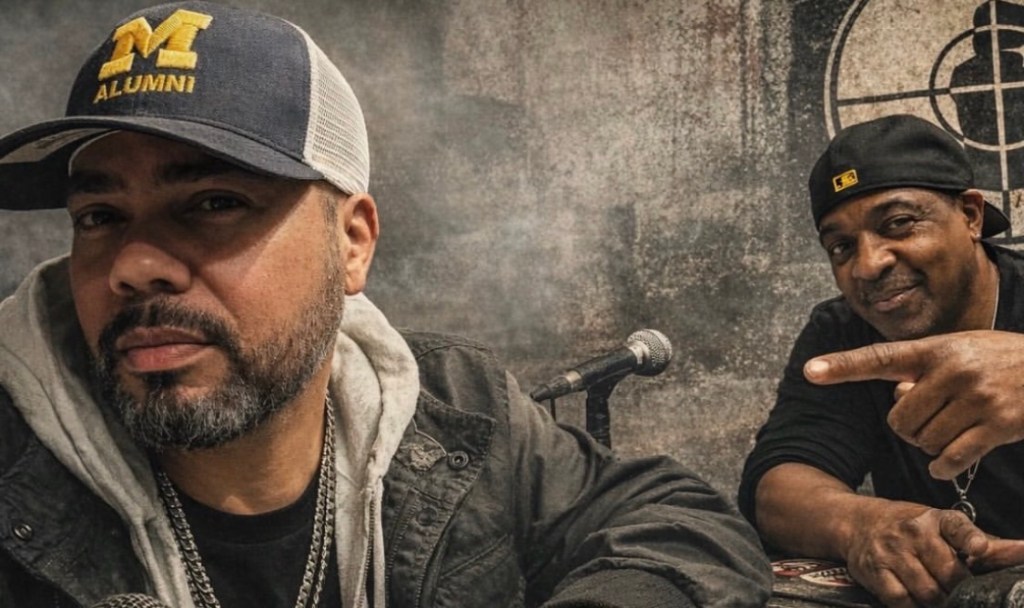
I still remember the car ride. We were in high school, not thinking about theory, policy, or epistemology. Just driving, talking, and listening to music. Then Kermith Scarlett put on Public Enemy. The sound was different, but it was the message that hit first. It was sharp, direct, and impossible to ignore. In that moment, something shifted. It was not just music playing in the background. It was an introduction to a way of seeing the world.
Kermith, a son of Jamaican immigrants, was one of my closest childhood friends, and his passing recently has stayed with me in a deep and personal way. That car ride feels even more significant now. At the time, I did not have the language for what I was experiencing. I did not yet understand that the music I was encountering a different way of knowing, one rooted in lived experience, resistance, and clarity. But I knew it mattered. I knew it was real.
Public Enemy made that reality unavoidable. “Don’t believe the hype” was not just a lyric. It was a warning. It was an invitation to question what I had been taught to accept without reflection. Soon after, “Fight the power” was not just something to repeat. It became a lens. It made me think differently about systems, authority, and voice. That car ride did not just introduce me to music. It introduced me to a framework that I am still carrying today.
Epistemic Change and the Rupture of Hip Hop
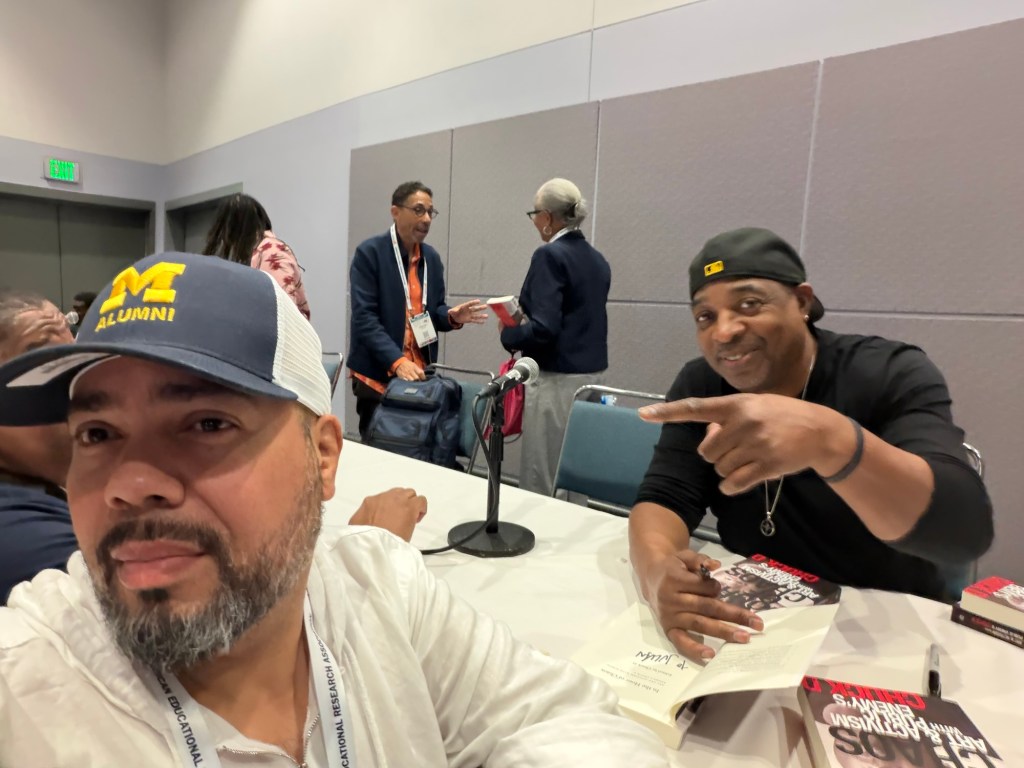
Yesterday at American Educational Research Association Conference (AERA) in Los Angeles, I found myself thinking about that same car ride. I attended a session titled In the Hour of Chaos: Hip Hop Art and Activism with Chuck D of Public Enemy et al. What struck me most was how the ideas I first encountered as a teenager were now being articulated with clarity and urgency in an academic space.
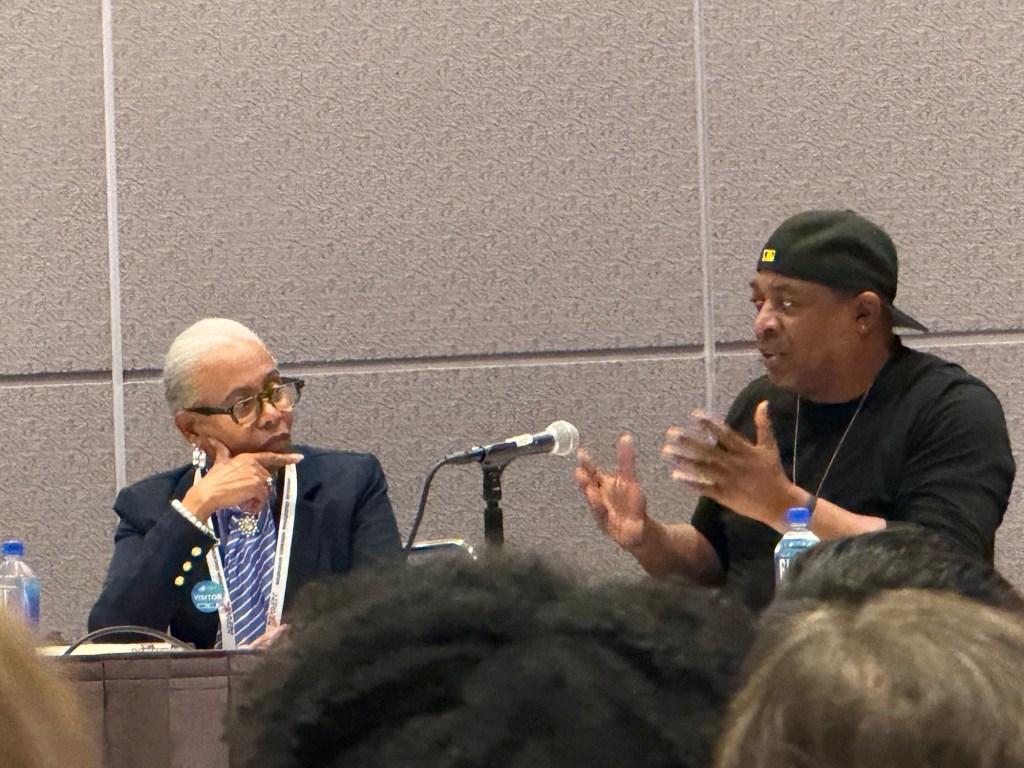
Gloria Ladson-Billings put it plainly during the session. “Epistemic changes are dangerous.” She followed that with a deeper insight that stayed with me. Hip Hop has created a rupture in traditional culture. That statement named something I had felt years ago but could not yet explain. This was not just about music. It was about knowledge, power, and who gets to define both.
Hip Hop is not simply expression. It is a way of knowing. It challenges who is authorized to speak, whose experiences are validated, and what is accepted as truth. As Chuck D writes in In the Hour of Chaos, a book that he edited, “Hip Hop is a culture that speaks to the conditions of the people.” That grounding in lived reality is exactly what gives Hip Hop its epistemic force.
Public Enemy has always pushed that challenge forward. “Elvis was a hero to most, but he never meant shit to me” was not just a provocative line. It was a rejection of dominant cultural hierarchies and an insistence that value and meaning must be re-examined. It was a reminder that knowledge is never neutral. It is shaped by power, history, and perspective.
When Chuck D said yesterday that “Hip Hop disrupted everything,” it becomes clear why epistemic change is perceived as dangerous. It shifts authority. It redistributes voice. It unsettles what has long been taken for granted. It forces institutions, including K-12 schools and universities, to confront whose knowledge they center and whose they marginalize.
That is where the challenge for educators becomes unavoidable. The work is not to interpret young people from a distance. It is to listen to them. It is to recognize that they are producing knowledge, not simply reacting to it. They are telling us something about the present and shaping what comes next.
Hip Hop, Power, and the Work of Staying Engaged
Hip Hop has always insisted that knowledge is lived before it is theorized. It emerges from experience, from struggle, and from the need to make meaning in real time. That refusal to separate knowledge from life is what makes it powerful. It is also what makes it uncomfortable for systems that depend on controlled definitions of expertise.
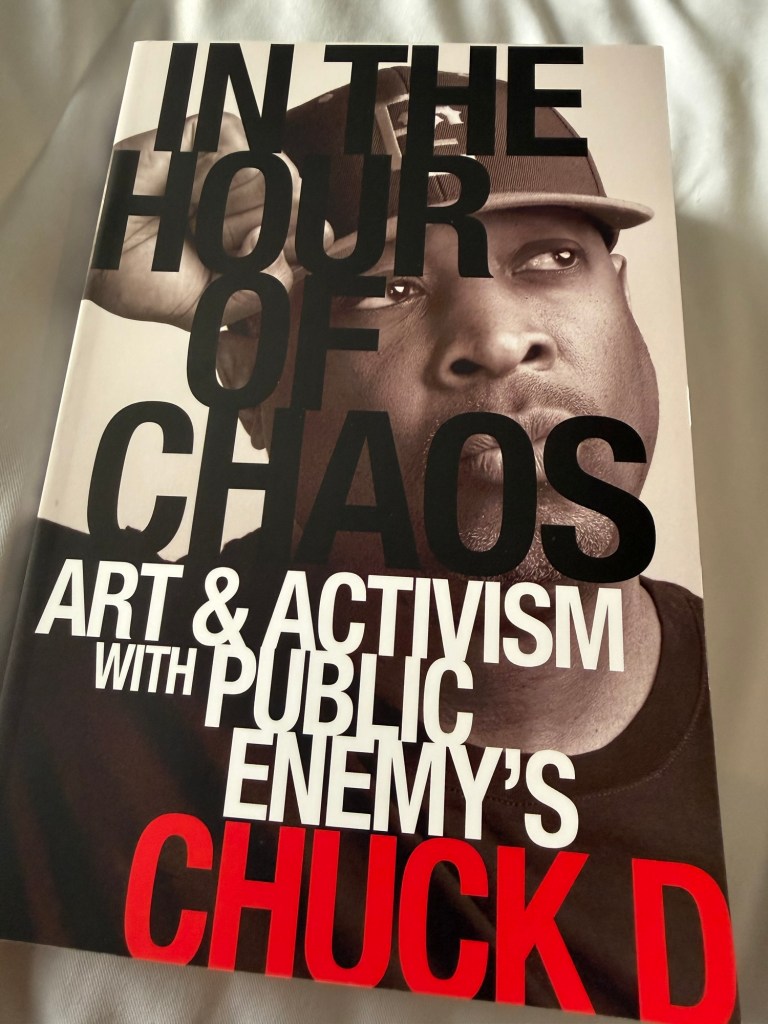
As Chuck D writes in the book, “You have to control your narrative.” That statement captures the essence of epistemic change. When people define their own stories, they shift the boundaries of what counts as truth. Control over narrative becomes a form of power, and reclaiming that power becomes an act of resistance.
Public Enemy made that call unmistakable. “Fight the power” is not symbolic. It is instructional. It asks us to engage critically with the systems we move through, to question assumptions, and to act with intention rather than passivity. With AI, Chuck D mentioned in his presentation this is more important than ever before.
Making a difference in difficult times does not require certainty. It requires alignment. It requires choosing to act in ways that reflect what we value, even when the outcome is unclear. Too often, people wait for clarity before taking action. But clarity is often the result of action, not the starting point.
There is also a tendency to measure impact by visibility, scale, and speed. Those measures can be misleading. Influence is often personal and cumulative. It shows up in relationships, in trust, and in moments where people feel seen and supported. These moments may not be widely recognized, but they matter.
Full Circle: From a Car Ride to AERA
Sitting in that room at AERA, listening to Chuck D speak, felt like everything had come full circle. The ideas that shaped me as a teenager were present, still urgent, and still necessary. What began as a moment in a car in high school had become something much larger. It had become a way of understanding the world.
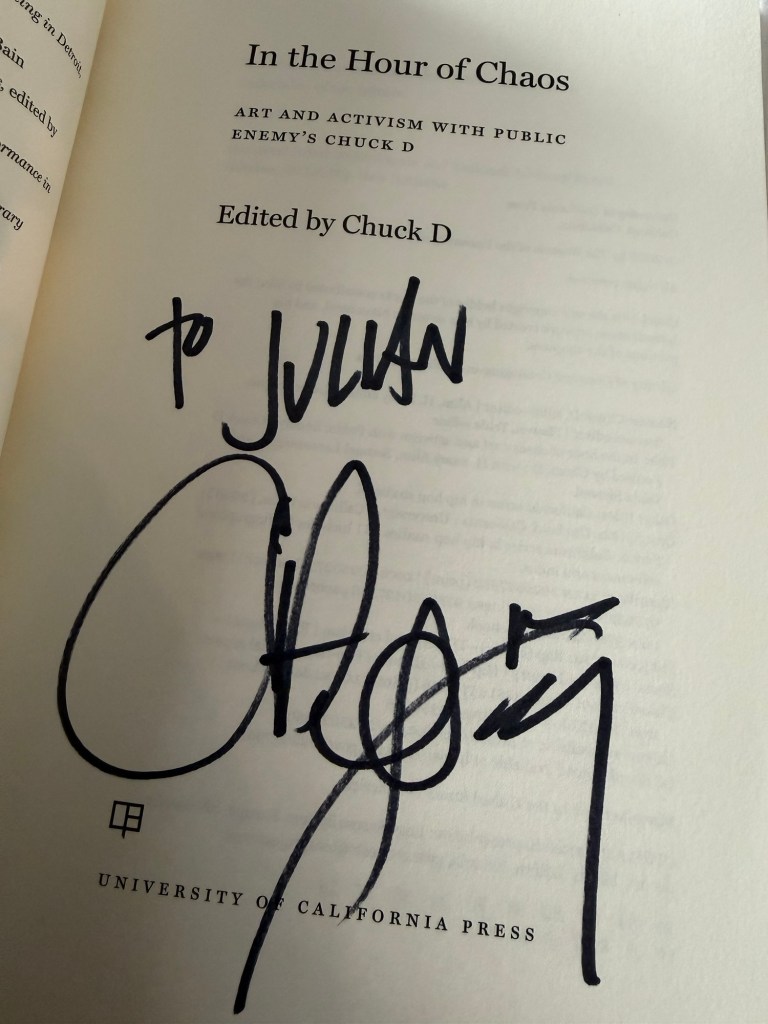
I was also honored that Chuck D signed my copy of In the Hour of Chaos. That moment meant more than I expected. It was not just about the book. It was about connection across time. From that car ride with Kermit to an academic conference in Los Angeles, the throughline became so clear! The music, the message, and the knowledge had stayed with me to fight.
What Kermith and Public Enemy gave me in that car ride was more than an introduction to music. They gave me a way of seeing. They showed me that knowledge does not only come from formal spaces. It comes from culture, from lived experience, and from the willingness to question what we are told.
As the book In the Hour of Chaos reminds us, “Art is a reflection of reality.” When we listen to what people are creating, we begin to understand what they are living. Ignoring that is not neutrality. It is disconnection.
As the notorious GLB said, epistemic change is dangerous because it shifts power. It redistributes voice. It challenges systems that rely on stability and control. But it is also necessary. Without it, we remain tied to ways of thinking that no longer serve us.
Hip Hop did not wait for permission. It emerged from the street, it spoke, and it reshaped culture. It continues to do that work every day through the voices of young people who are creating, questioning, and redefining what matters.
The question is whether we are willing to listen, especially when what we hear challenges what we thought we knew. Listening is not passive. It asks something of us. It asks us to grow, to reconsider, and to move differently in the world. The answer to that question will shape not only how we understand the present, but who we become within it. Change is not a single moment. It is built through the choices we make every day to remain engaged, to care, and to keep going even when it is hard. That choice, made again and again, is how change becomes movement, and how movement becomes transformation.
Julian Vasquez Heilig is a scholar, educator, and public intellectual whose relationship with music is both personal and intellectual. His first live experience with the culture came at Hill Auditorium in Ann Arbor, where he saw Digable Planets, an early moment that revealed Hip Hop as both art and meaning in motion. His widely read reflection on Kendrick Lamar’s Super Bowl performance brought him back to blogging regularly, where he writes about culture, education, and justice.



 Cloaking Inequity
Leave a comment