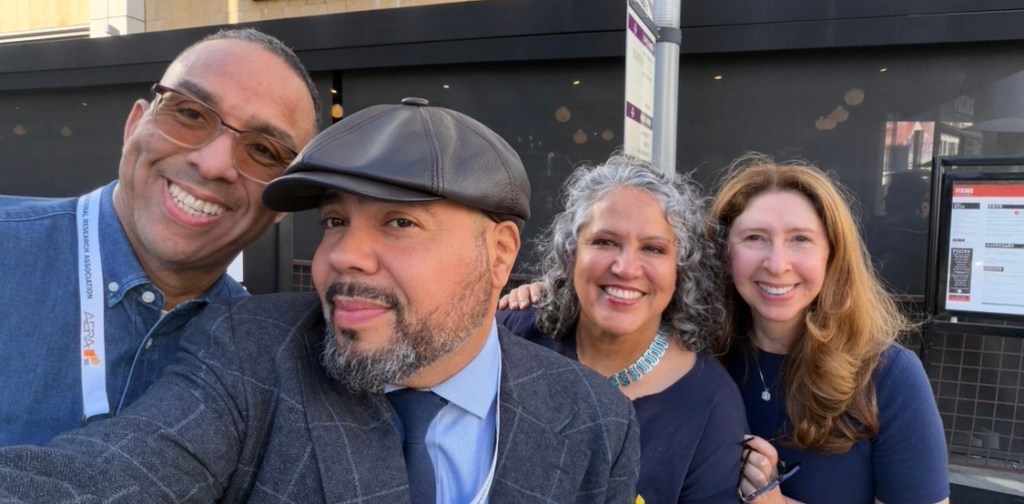
Every year, the American Educational Research Association (AERA) Annual Meeting feels like coming home. This year in Los Angeles marked my 23rd AERA, and I am reminded again why this gathering continues to matter so deeply in my life and work and the field of education.
The AERA Annual Meeting is the largest national conference dedicated to education research, bringing together tens of thousands of scholars, practitioners, policymakers, and students from across the country and around the world. It is a space where research, policy, and practice intersect—where new knowledge is shared, debated, and refined, and where the direction of the field is often shaped in real time. Across divisions, SIGs, and sessions, it reflects both the complexity of education systems and the urgency of the challenges we face.
Over the years, AERA has been more than a conference for me. It has been a community. It is where I have learned from some of the most brilliant minds in education, been challenged by new ideas, and pushed to think more critically about the systems we study and seek to transform. It is also where I have been mentored by scholars who invested in me early on, and where I now have the responsibility and privilege to mentor the next generation coming behind us.
There is something powerful about being in rooms filled with people who are committed to equity, justice, and the future of education. The conversations in hallways, the energy in sessions, and the connections that continue long after the conference ends all remind me that this work is collective. We are building knowledge together, across institutions, disciplines, and generations.
After 25 years of attending, I can say without hesitation that it remains one of the best times of the year. A space to learn. A space to grow. A space to reconnect and reimagine what is possible. Grateful for the people, the ideas, and the continued opportunity to be in this community.
Before closing, I also want to recognize the strong presence of Western Michigan University at this year’s meeting. Walking through the Los Angeles Convention Center, it was clear that the 40 WMU scholars, students, and collaborators were not just attending, but contributing in meaningful ways across the conference. From presidential sessions to paper sessions to roundtables, posters, workshops, and professional development courses, the breadth of work reflected a deep commitment to advancing knowledge and addressing some of the most pressing issues in education today. What stood out was not just the volume of participation, but the range of topics, perspectives, and collaborations represented. Even when individuals were not physically present, their work and ideas were carried forward through co-authors and partnerships. That kind of collective presence speaks to the strength of a community committed to scholarship, mentorship, and impact. Already looking forward to next year.
I leave California reminded that none of my work happens in isolation. It is often built through relationships, through conversations that start in AERA sessions and continue in hallways, and through connections that grow over time. Many of the ideas I have pursued, including my book projects, have roots in this space. For example, Equity & Access: An Analysis of Educational Leadership Preparation, Policy, & Practice, our first edited book is out, a second book with the British Psychological Society is in development, and I may have just said yes to a third here over dinner in Los Angeles. Stay tuned.
Grateful for our community that continues to push, support, and inspire. If I didn’t see you at AERA this year, I hope to see you there next year.
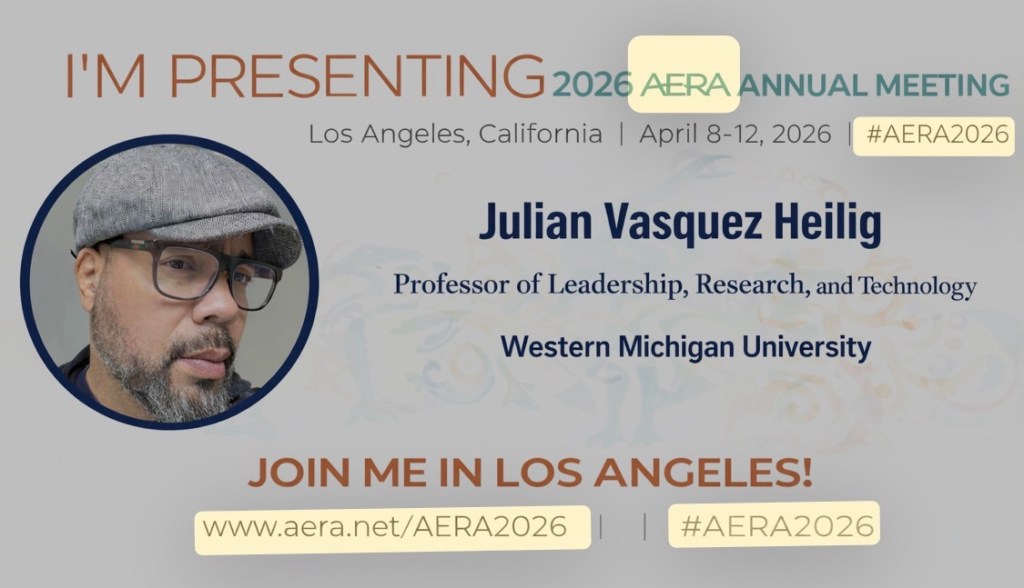
Julian Vasquez Heilig has been an active member of the American Educational Research Association for more than two decades, attending 23 AERA Annual Meetings since 2001 and contributing extensively to the organization’s scholarly and service mission. His leadership roles include serving as Chair of AERA Division L Section 5 (Accountability), Chair of AERA Division A Section 2 (School Organization and Effects), and Chair of the AERA E.F. Lindquist Award Committee, as well as membership on major committees such as the Relating Research to Practice Award Committee and the Outstanding Policy Report Award Committee. He has also been a consistent contributor as a presenter, panelist, and discussant in refereed sessions, Presidential panels, and town halls, while providing service as a peer reviewer across multiple AERA divisions (A, G, L, and Scholars of Color in Education).


 Cloaking Inequity
Leave a comment