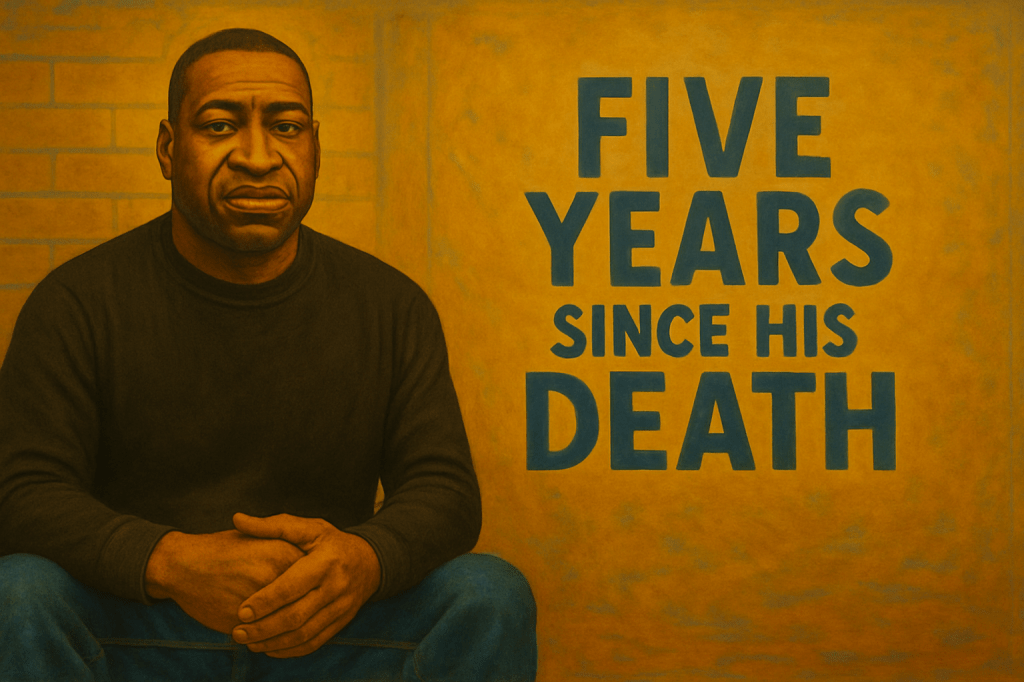
Five years ago today, the world witnessed a modern-day lynching. On May 25, 2020, George Floyd—a 46-year-old father, brother, and Black man—was murdered by a Minneapolis police officer who knelt on his neck for nine minutes and 29 seconds. Floyd pleaded for his life. He called out for his mother. He said the words that still haunt us: “I can’t breathe.”
People of all races and backgrounds filled the streets in one of the largest global protest movements in history. We saw signs from South Central to South Africa, murals from Brooklyn to Berlin. In that moment, it seemed the world might finally be ready to confront the racism deeply embedded in law enforcement—and in every other American institution.
But five years later, the question we must ask ourselves is: What did we actually change?
All Marginalized Communities Are at Risk
Let’s start with the facts. The brutality that took George Floyd’s life is not unique. It is part of a larger system of over-policing and racialized violence that affects all historically marginalized communities—Black, Native, Latino, immigrant, queer, and disabled alike.
But the data is starkest for Black and Indigenous people. According to a New York Times analysis, Native Americans and Black Americans are more likely than any other racial groups to be killed by police. The violence is systemic, not incidental. And the patterns are national—not limited to “bad apples” or “bad departments.”
George Floyd was one man. But his story represents generations of systemic disregard for the humanity of marginalized people.
From Awakening to Backlash
In the immediate aftermath of George Floyd’s death, it felt like something was shifting. Books about racial justice were flying off the shelves. School districts pledged to revisit curricula. Elected officials took a knee—literally and metaphorically—promising a “racial reckoning.”
But reckoning quickly turned to retrenchment.
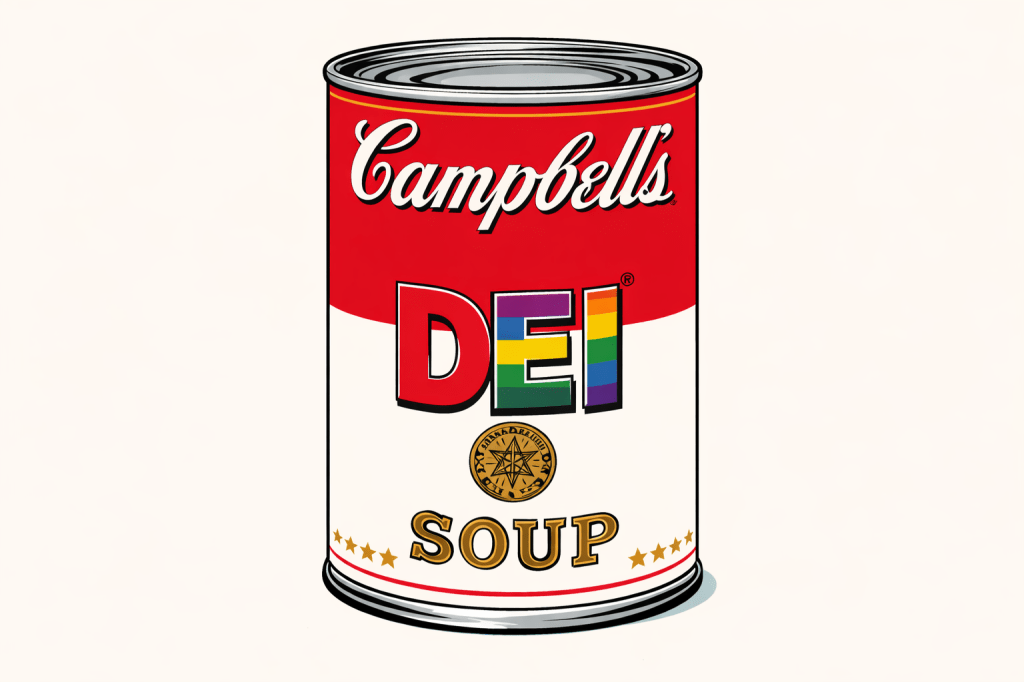
Today, those same forces that promised equity are gutting DEI programs. Politicians are banning books about race, gender, and identity. State legislatures are censoring curricula that tell the truth about our nation’s history of enslavement, segregation, and police violence. They’re even targeting teaching materials that mention George Floyd’s name.
And corporate America? Many of the companies that promised solidarity and social impact in 2020 are now quietly reversing course. Target, headquartered just miles from where Floyd was killed, once pledged to advance racial equity—but recently pulled back its DEI commitments amid pressure from right-wing agitators. That’s not a pivot. That’s a betrayal.
It’s why calls to boycott companies like Target and others who profited from Black pain but abandoned their promises are gaining traction. If your allyship expires when the political winds shift, you were never really in the fight to begin with.
Rumors of a Pardon: The Ultimate Disrespect
And now, there are disturbing reports circulating that Donald Trump may consider pardoning the officers convicted in George Floyd’s murder.
Let that sink in.
Derek Chauvin, a man convicted of kneeling on another man’s neck until he died—on camera—might be rewarded, not punished. That’s not just a policy position. It’s a message. A message that says Black lives do not matter. That police brutality is not only tolerated but endorsed.
If Trump does pardon those officers, it would be a direct assault on every protester who marched, every child who learned Floyd’s name, and every American who believed in the possibility of justice.
It would also serve as a warning: no act of brutality is too vile if it serves the right political narrative.
However, even if Trump were to exercise his power to pardon Chauvin’s federal conviction. Chauvin is serving two concurrent sentences, one federal and one state, for the murder of George Floyd, and a federal pardon would not affect his state sentence.
Schools: Ground Zero in the Fight for Justice
Let’s not pretend this is just about policing. Schools are battlegrounds too.
We can’t talk about George Floyd without talking about the school-to-prison pipeline. We can’t honor his memory without confronting how public schools discipline Black and Brown children at wildly disproportionate rates, funneling them into the criminal legal system.
Cole, H. & Vasquez Heilig, J. (2011). Developing a school-based youth court: A potential alternative to the school to prison pipeline. Journal of Law and Education, 4(2), 1-17.
Cole, H., Vasquez Heilig, J., Fernandez, T., Clifford, M., & Garcia, R. (2015). Social Justice in action: Urban school leaders address the school to prison pipeline via a youth court. In M. Khalifa, C. Grant, N.W. Arnold and A. Osanloo (Eds.), Handbook of Urban Educational Leadership (pp. 320-328). New York, NY: Rowman and Littlefield.
If we are serious about justice, then we must fund counselors, not campus cops.
We must teach truth, not sanitized patriotism.
We must cultivate critical thinking, not obedience.
As educators, we have a responsibility to ensure that our classrooms are places of liberation, not indoctrination.
The Role of Silence
If you’re in a position of influence—whether in a classroom, boardroom, or cabinet room—you don’t get to sit this out.
You can’t claim to care about George Floyd’s legacy while remaining silent as anti-DEI laws are passed, history is rewritten, and Black voices are erased from policy tables.
As Dr. Martin Luther King Jr. said: “In the end, we will remember not the words of our enemies, but the silence of our friends.” Or in this case—our colleagues.
Middle leadership is never neutral. And silence in the face of injustice is a form of complicity.
What We Owe George Floyd
We owe George Floyd more than hashtags, murals, or annual reflections. We owe him—and the countless others whose names never trended—justice.
That justice is not found in a single conviction. It is found in the transformation of systems.
We must change laws. Change funding priorities. Change the very culture that allows ICE, police departments, and school systems to treat Black and Brown people as disposable.
We must resist the temptation to move on. Because George Floyd didn’t get to move on.
A Five-Year Checkpoint
Five years later, we are at a crossroads.
Will we let the backlash erase the progress we made? Will we allow history to be rewritten by those who want us silent, segregated, or surveilled?
Or will we fight back—with policy, pedagogy, protest, and power?
George Floyd’s death was a moment. But his life was a movement. One that must continue. One that we must protect, expand, and deepen.
This is not just remembrance. It’s resistance.
We’re still marching. Still teaching. Still organizing. Still breathing—for those who no longer can.
Please share.
Dr. Julian Vasquez Heilig is Professor of Educational Leadership, Research and Technology and Editor of Cloaking Inequity blog. He has served as a dean, provost, policy advisor, social media influencer and civil rights leader focused on education justice and institutional transformation.




 Cloaking Inequity
Leave a reply to Dawn Minott Cancel reply