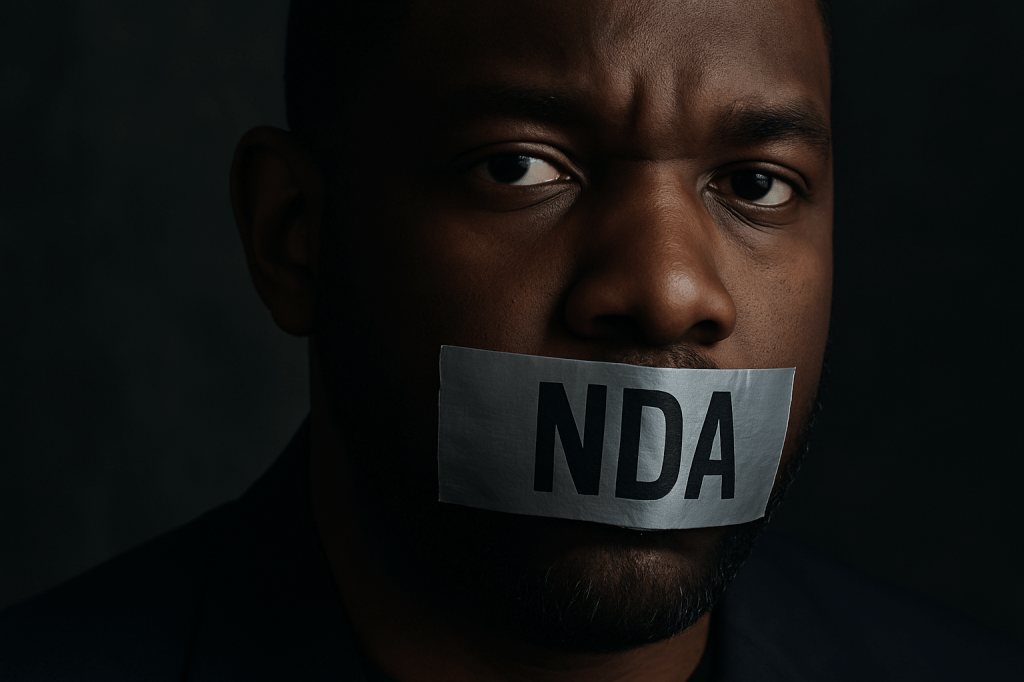
Let’s tell more truth today: NDAs are the duct tape of dysfunction. When a organization feels threatened by dissent, exposure, or accountability, the quickest fix isn’t change—it’s silence. Enter the Non-Disclosure Agreement. Once a tool for protecting intellectual property or trade secrets in the corporate world, NDAs have morphed into a powerful muzzle for equity advocates, whistleblowers, and wronged employees.
But here’s the question we must confront: If your organization has nothing to hide, why silence those who leave?
The Rise of Gagging
In recent years, NDAs have proliferated across fields, quietly becoming standard practice in settlements, resignations, and terminations. Employees, and even students are increasingly pressured to sign agreements that prevent them from discussing what happened behind closed doors—even when those experiences involve racial discrimination, retaliation, sexual harassment, financial mismanagement, or other forms of institutional harm.
It’s no accident that this rise aligns with a broader political movement to chill DEI efforts, restrict academic freedom, and punish protest. We now live in a moment when some public institutions are being reshaped by ideologies that prize obedience over justice. NDAs are a perfect tool for this era: legal, quiet, and devastating.
NDAs: A Tool to Cloak Inequity
Let’s be clear: NDAs are not neutral legal instruments. They disproportionately harm marginalized people who speak up. They deny communities the opportunity to learn from institutional mistakes, and they allow organizations to maintain the illusion of equity while continuing harmful practices behind closed doors.
In fact, NDAs are the legal embodiment of this blog’s title. Cloaking inequity means concealing injustice with PR spin, polished statements, and tightly worded legalese. NDAs aren’t about protecting reputations—they’re about protecting systems.
- Pepper-spray victims at UC Davis silenced post-protest In 2011, UC Davis police famously pepper-sprayed seated Occupy demonstrators. While not an NDA in itself, the settlement that followed included confidentiality provisions prompted by the university’s use of substantial PR resources to “control the narrative”—demonstrating how institutions use legal and public relations tools to suppress dissenting voices and obscure systemic wrongdoing.
- Howard University student protesters bound by confidentiality During the 2021 “Blackburn Takeover” protests, leaders at Howard University signed confidentiality agreements as part of a settlement with the university. According to student news, these NDAs prohibited them from revealing the terms of their resolution—effectively silencing their voices to protect the institution’s public image.
- Campus sexual assault victims gagged through NDAs Investigations by Prism and The Texas Tribune revealed that multiple U.S. universities—and one high school—required survivors of campus sexual violence to sign NDAs to access Title IX protections. These agreements prevent victims from speaking out, shielding institutional failures behind a legal veil.
That’s not professionalism. That’s repression.
The Price of Silence
Too often, education leaders tell those harmed, “Just take the payout and move on.” But what are we really losing?
- We lose the truth. NDAs bury the lived experiences of those who challenge institutional harm.
- We lose patterns. When each case is hidden, no one sees the systemic rot.
- We lose accountability. Leadership gets to point to a “clean record” while rotating through a cycle of silenced victims and leaders.
- We lose trust. Communities feel when voices are being muzzled—and they disengage.
In short, we lose democracy within our institutions. When education leaders use private-sector legal tools to suppress public scrutiny, we’re not educating—we’re managing liability.
A Note on Enforceability
This is not legal advice, but here’s something important to consider:
If you were pressured to sign an NDA but never accepted the settlement money or other “consideration,” that agreement may not be legally enforceable. Without a tangible benefit exchanged, a contract like an NDA often lacks the basic legal foundation—what lawyers call “consideration”—required to be binding.
Again, everyone’s situation is different, and you should seek qualified legal guidance before acting. But it’s worth asking: If the institution didn’t pay to silence you, did they succeed in silencing you at all?
When Leaders Choose Courage Instead
Thankfully, there are leaders who refuse to participate in this culture of silence. Some refuse to sign. Some speak out anyway. These individuals understand that leadership isn’t about protecting an institution’s image—it’s about protecting your soul.
In 2025, I’ve written extensively the last six months on the new morality of leadership—a language that prioritizes courage, clarity, and collective accountability. That new moral framework has no room for contracts designed to disappear truth. If you’re a leader requiring NDAs to make equity problems vanish, you’re not leading—you’re laundering harm.
We must normalize refusing silence. We must build institutional cultures where truth-telling is rewarded, not punished.
Five Steps Toward Transparency
Let’s turn moral clarity into action. Here are five necessary steps:
- Ban NDAs in school districts and public universities in cases involving discrimination, harassment, or retaliation.
- Support legislative reform to limit or void NDAs when they block public accountability in public institutions.
- Provide legal and emotional support for whistleblowers and staff who want to tell their stories.
- Mandate transparent leadership transitions, with publicly accessible exit interview findings.
- Refuse to require silence—and refuse to be silenced.
NDAs thrive in darkness. Our job is to bring the light.
You Are Not Alone in the Hidden Ledger of Courage
NDAs are designed to make you forget what happened. To erase the witness. To let the institution reset the story on its terms.
But justice has a memory. And justice has a voice.
To those who signed to protect your career, your family, your mental health: You are part of a vast, hidden ledger of courage. You deserve better than institutional silence. And you are not alone.
To those considering requiring one in case involving discrimination, harassment, or retaliation: Ask yourself what kind of institution you are building—and for whom.
And to the rest of us? Let’s build a world where NDAs have no power—because truth is protected by culture, not by contract.



 Cloaking Inequity
Leave a reply to The Uppity Minority: Igniting a Commune of Courage – Cloaking Inequity Cancel reply