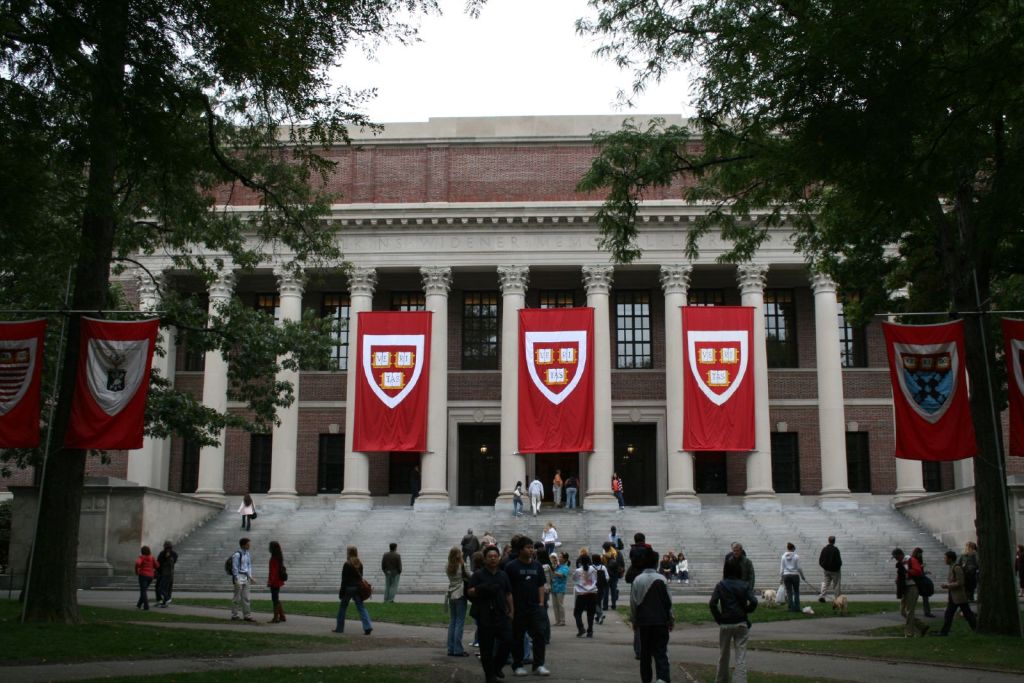
The Harvard Educational Review’s decision to cancel its special issue on education and Palestine is not just an internal editorial dispute or a routine publication delay. It is a stark example of institutional censorship and a direct attack on academic freedom at one of the most respected education journals in the country.
The issue had been planned for over a year, carefully curated and edited by a board of the Harvard Educational Review, and had moved through peer review with scholarly rigor. According to a report from The Guardian, it included articles from respected researchers and educators documenting everything from the destruction of Gaza’s education system to the pedagogical challenges of teaching about Palestinian history and identity in U.S. classrooms. These were not hastily written opinion pieces. They were evidence-based, peer-reviewed contributions grounded in oral history, ethnography, and critical educational theory. The issue had even been previewed on the back cover of a prior HER edition, signaling to the field that this important work was coming soon. Authors had signed contracts. The editorial process was complete. And yet, with no credible scholarly justification, the publisher pulled the entire issue, effectively erasing a year’s worth of labor, collaboration, and truth-telling.
See also The Killing of Gaza’s University Presidents and the Destruction of Palestinian Academia
I have not read every article in the canceled issue, so I cannot say whether I agree with every perspective or conclusion. But that is beside the point. Academic publishing is not supposed to be a mirror of our personal comfort. Knowledge production demands difficult conversations. It requires us to confront ideas we might resist and listen deeply even when we disagree. That is the very purpose of peer review and editorial independence.
When I learned of the cancellation, I could not help but reflect on my own experience publishing in the Harvard Educational Review. Years ago, I co-authored The Illusion of Inclusion with Keffrelyn Brown and Anthony Brown. In that article, we used Critical Race Theory as our conceptual framework to analyze how the Texas social studies standards created the appearance of addressing race while avoiding meaningful engagement with racism and structural inequality. We revealed how curriculum could function not only as a reflection of racial normativity, but also as a mechanism for maintaining it. In essence, the language of inclusion, we argued, was often a smokescreen for erasure.
I do not think I have ever told this story publicly, but we did have our own drama publishing that paper. Another scholar, someone with stature in the field, did not like what we wrote and complained to the editors. There was back and forth, pushback and pressure. The editors asked for clarification and dialogue. In the end, after a direct exchange with the scholar, the article was published. HER stood by its commitment to rigorous peer review and intellectual courage. And that mattered. It gave our work a platform and sent a signal to the field that justice-focused scholarship would not be silenced just because it made some readers uncomfortable.
At the time, it felt like HER was one of the few major academic journals truly willing to support bold, unapologetically critical work. That is why this moment hurts. Because I cannot help but imagine what would have happened if The Illusion of Inclusion had been submitted in today’s political climate. If it had been pulled before publication. If our use of Critical Race Theory had made it too controversial for a university press under fire. If we had been silenced like these authors are being silenced now.
We were fortunate. Our article, The Illusion of Inclusion, is now approaching 500 academic citations. It has been used by teachers, scholars, and advocates across the country to decode how curriculum standards obscure systemic racism while claiming neutrality. It has done what academic work is meant to do: challenge assumptions, offer tools for action, and circulate ideas that help build a more just educational future.
But what if we had been told to wait? What if someone in legal or public relations decided the political climate was too risky? What if the publisher had pulled the issue after the complaints?
That is not a hypothetical for the authors of the Palestine special issue. It is their reality. According to reports, their work was stopped not because it lacked scholarly merit, but because it challenged the wrong power structures at the wrong time. The decision to cancel the Palestine issue came after months of behind-the-scenes pressure, legal vetting, and what appeared to be a growing fear that publishing this work would provoke additional political backlash beyond what Harvard is already facing from the Trump regime. Again, according to reports from The Guardian, the Harvard Education Publishing Group, which oversees HER, quietly began requiring legal review of all articles late in the process. Then, without warning or credible scholarly rationale, the entire issue was pulled.
The publisher claimed the issue had not undergone an adequate editorial review and cited concerns over copyediting and internal misalignment. But those explanations do not hold up under scrutiny. The editorial board strongly disputed these claims and said they had been sidelined in the final decision. Multiple authors and editors confirmed that the publisher’s sudden demand for legal review of all articles, a move prompted by fear of backlash over potential accusations of antisemitism, was unprecedented and deeply political.
This is how censorship operates in higher education. It does not always come in the form of overt bans or gag orders. Sometimes it arrives quietly, cloaked in procedural language, framed as a matter of editorial caution or legal risk. But the effect is the same. A set of scholars, many of them Palestinian or writing in solidarity with Palestinians, were silenced. Not because their work lacked rigor. Not because it failed peer review. But because it told an inconvenient truth at a politically dangerous time.
According to reports, the authors who contributed to the canceled issue were writing under extraordinary circumstances. Some were scholars based in Gaza, working in bombed-out universities while mourning the loss of their colleagues and students. Others were documenting state-sponsored erasure and censorship in their own classrooms in the United States. One author, Rabea Eghbariah, wrote about denialism and the institutional refusal to recognize Palestinian history. There are rhyming echoes here with our own analysis of the Texas social studies standards in The Illusion of Inclusion. Just as the standards we studied performed diversity while reinforcing sanitized, state-approved narratives of U.S. history, Eghbariah documents how institutions perform neutrality while actively erasing Palestinian memory. Both cases reveal how systems disguise suppression as objectivity, and how omission becomes a strategic tool for preserving dominant power. His article described the suppression of truth—and that truth was suppressed. First by Harvard Law Review. Now again by HER. The irony is not just bitter. It is structural.
I want to speak directly to those authors. Your work matters. It is not lost. You are not alone. And this moment will not define your scholarship. The academic community sees what happened, and many of us refuse to be silent. We are with you, and we will help ensure your voices are heard elsewhere. The attempt to cancel your work has only underscored its importance.
To those who care about academic freedom and justice in education, this is a moment of decision. Will we accept this erosion of scholarly independence, or will we push back? Will we allow publishers to rewrite the rules when they are afraid, or will we insist on integrity even when it is uncomfortable? Will we let Palestine be the exception, or will we confront the full implications of what it means to teach and publish in solidarity?
The editors of the special issue took risks. The authors took risks. That is the work of justice. But the publisher chose safety. And in doing so, they betrayed the values that HER once stood for. As someone who published in its pages and believed in its mission, I say this with sorrow and urgency: do not let this become the new normal.
Truth-telling is not always easy, but it is essential. The students who study in our classrooms, the communities who rely on our research, and the future of democratic education all depend on our willingness to name injustice, even when it is unpopular. HER failed this test. But the rest of us still have a choice.
Do we publish only what is palatable, or do we stand up for what is right? Do we retreat when the pressure builds, or do we press forward with clarity and courage? The answers to those questions will shape the future of academic freedom, the integrity of our field, and our democracy.
Please share.



Leave a comment