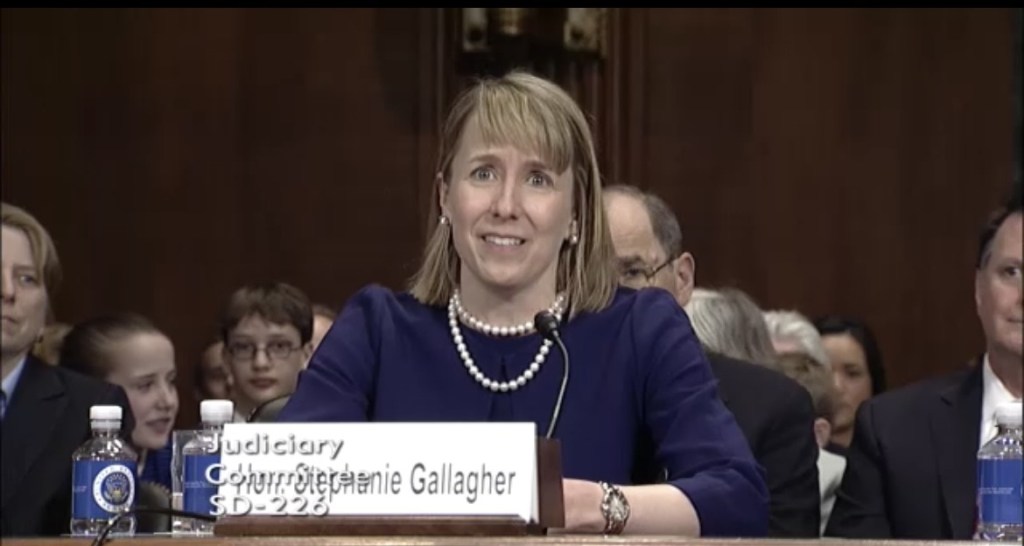
By now, most people have heard the news. U.S. District Judge Stephanie Gallagher, herself a Trump appointee, ruled that the Department of Education acted unlawfully when it issued two guidance documents directing colleges to dismantle their diversity, equity, and inclusion (DEI) programs or risk losing federal funding.
“The government cannot proclaim that it ‘will no longer tolerate’ speech it dislikes because of its ‘motivating ideology’—that is a ‘blatant’ and ‘egregious’ violation of the First Amendment.” Stephanie Gallagher
The ruling is a critical rebuke of the administration’s attempt to govern higher education through fiat rather than legislation. It is also a striking reminder of how fragile equity work has become under authoritarian politics. The decision sends an important message: agencies cannot rewrite civil rights law through guidance documents. But it also raises a sobering question: what happens now, given the chilling effect that swept across campuses in the weeks after the guidance was issued? See the post U.S. Department of Education’s 14-Day Ultimatum on Equal Opportunity: Will Universities Surrender or Resist?
The speed of institutional compliance should give us pause. Colleges across the country rushed to cancel scholarships, scrub job postings, and pull down DEI statements before the ink on the guidance was even dry. Administrators feared the loss of federal student aid dollars and research funding if they resisted. For students and faculty, the effect was immediate. Mentorship programs designed to support first-generation students were frozen. Faculty search committees were told to strip language about inclusive hiring. Campus cultural centers saw their budgets suspended. Even though the guidance lacked the force of law, it carried the weight of political intimidation. Institutions that were already risk-averse capitulated quickly, signaling just how vulnerable DEI work is to partisan attack.
Judge Gallagher’s ruling is important not only for what it says about this particular case but also for what it reveals about the limits of executive overreach. The Department of Education tried to bypass Congress and decades of settled civil rights law by threatening colleges with financial ruin. The court rejected this maneuver, clarifying that guidance documents cannot unilaterally redefine Title VI or Title IX. For equity advocates, this is a necessary victory. It draws a line against authoritarian attempts to use bureaucratic instruments to erase the progress of decades. Yet, while the ruling halts enforcement, it does not immediately restore the programs that colleges gutted under pressure. The damage has already been done to students who lost scholarships, faculty who had offers rescinded, and campus communities that saw trust eroded.
We need to be clear about what the Trump administration was trying to accomplish. The attack on DEI is not about lawfulness or fairness. It is about ideology. The administration framed DEI initiatives as “illegal racial preferences” that discriminate against white and Asian students, despite the lack of evidence that programs such as mentoring, cultural centers, or targeted scholarships constitute unlawful discrimination. This framing weaponizes the language of civil rights against the very communities civil rights law was designed to protect. It turns the promise of equal opportunity into a tool for dismantling equity. The result is not neutrality, as the administration claims, but a re-entrenchment of privilege.
The episode also highlights the role of fear in governing higher education. Authoritarian tactics often rely less on actual enforcement than on the chilling effect of threats. By issuing guidance that carried the possibility of defunding, the administration triggered self-censorship and preemptive compliance. Colleges did not wait to be investigated. They dismantled programs voluntarily in order to avoid conflict. This pattern mirrors what has happened in other domains, from book bans in K–12 schools to state-level restrictions on what teachers can say about race or gender. The mere specter of punishment is enough to reshape institutional behavior. That is the real danger of authoritarianism: it does not always need laws to achieve its goals. It only needs fear.
So what should colleges do now? The ruling currently provides legal cover to restore DEI initiatives, but will administrators have the courage to act? Many institutions may hesitate, worried about likely appeals or provoking further political attacks. Others may quietly rebrand their efforts under different names, substituting terms like “student success” or “belonging” for diversity and equity. While reframing may protect programs in the short term, it also risks diluting the clarity of their mission. The fight for equity requires honesty about the structural barriers students face. Euphemisms cannot replace a direct commitment to racial justice, gender equity, and inclusion. If institutions retreat into coded language, they will cede the moral high ground to those who argue that DEI was nothing more than political branding.
The ruling also presents an opportunity for faculty, students, and community members to push their institutions to be bold. Courts have now clarified that colleges are not legally bound to follow the Trump administration’s anti-DEI guidance. I believe that can mean campuses have the space to reinstate scholarships, reopen cultural centers, and recommit to inclusive hiring practices. The question is whether they will use that space. Grassroots organizing will be crucial. Faculty senates, student governments, and alumni networks should demand transparency about what programs were cut and what will be restored. Silence will only invite further erosion of equity commitments.
Beyond individual campuses, the current situation underscores the need for a broader strategy. DEI cannot remain a patchwork of voluntary initiatives vulnerable to the political winds of each incoming administration. There must be stronger statutory protections for programs that promote access and equity in higher education. This could take the form of federal legislation that explicitly authorizes universities to pursue targeted academic supports for underrepresented students. It could also involve state-level commitments to fund equity programs regardless of federal policy shifts. Without structural protections, DEI will always be at the mercy of the next mood, guidance memo, or executive order.
The ruling also raises questions about the judiciary’s role. Judge Gallagher is a Trump appointee, yet she ruled against the Trump administration’s overreach. This highlights a paradox. Even in a judiciary reshaped by partisan appointments, there are limits to how far executive power can stretch. Courts can serve as a check when administrative agencies attempt to rewrite law through “guidance.” However, advocates should not overestimate the judiciary as a consistent safeguard. The same courts that strike down one overreach may uphold others, depending on the ideological leanings of the judges involved. Reliance on litigation is not a sustainable defense for equity. Structural reforms are necessary to make DEI less vulnerable to political gamesmanship.
At the heart of this moment is a deeper question: what do we believe higher education is for? If colleges exist merely to credential individuals for the labor market, then equity may be treated as optional. But if higher education is understood as a public good, then diversity, equity, and inclusion are essential to its mission. They ensure that opportunity is not limited to those already privileged. They create conditions for genuine intellectual exchange by bringing multiple perspectives into the classroom. And they prepare students to participate in a multiracial democracy. When DEI is attacked, it is not just programs that are at stake. It is the very purpose of higher education.
The ruling that struck down Trump’s anti-DEI guidance is a necessary corrective, but it should not lull us into complacency. Authoritarian politics thrive on attrition. Even when they lose in court, they succeed if they leave institutions weakened and fearful. Higher Education must resist that attrition by not only restoring what was lost but by expanding their commitments to equity. Students, faculty, and communities must hold them accountable. And policymakers must build stronger protections so that the next administration cannot once again dismantle equity programs through bureaucratic maneuvering.
Now that the legal dust has settled for now, the choice is ours. Will colleges quietly maintain the DEI cuts they made out of fear, or will they seize this moment to reaffirm their role as engines of equity and democracy? The ruling gives them permission to choose justice. The rest of us must insist that they do.
Julian Vasquez Heilig is a nationally recognized policy scholar, public intellectual, and civil rights advocate. A trusted voice in public policy, he has testified for state legislatures, the U.S. Congress, the United Nations, and the U.S. Commission on Civil Rights, while also advising presidential and gubernatorial campaigns. His work has been cited by major outlets including The New York Times, The Washington Post, and Los Angeles Times, and he has appeared on networks from MSNBC and PBS to NPR and DemocracyNow!. He is a recipient of more than 30 honors, including the 2025 NAACP Keeper of the Flame Award, Vasquez Heilig brings both scholarly rigor and grassroots commitment to the fight for equity and justice.





 Cloaking Inequity
Leave a comment