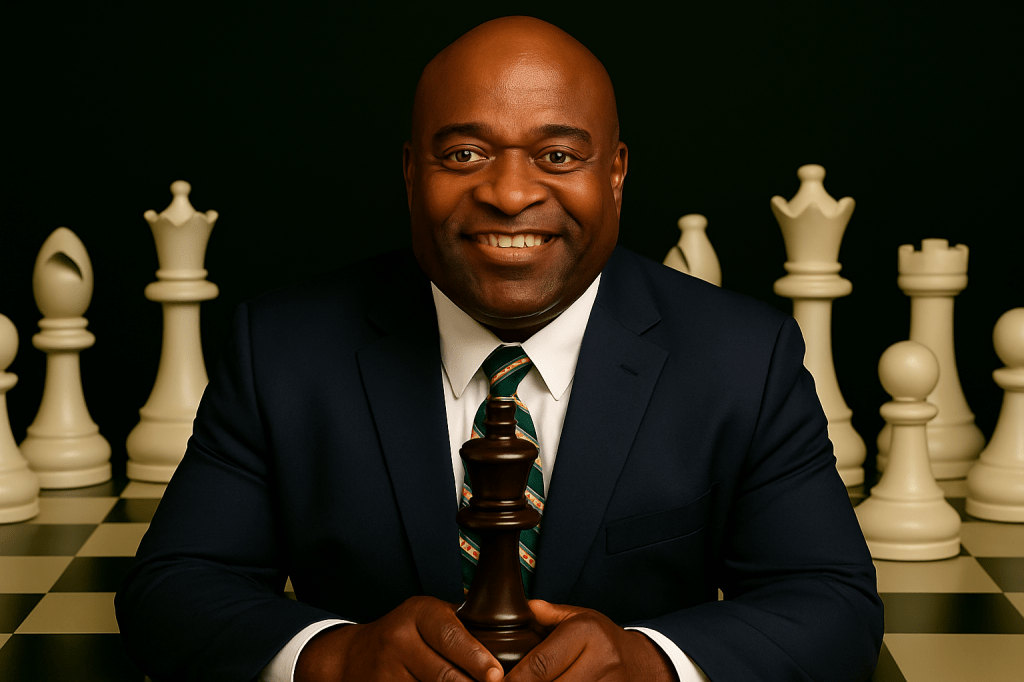
In August 2025, George Mason University’s first Black president, Gregory Washington, faced a demand that speaks volumes about race, power, and leadership in higher education. The U.S. Department of Education’s Office for Civil Rights wrongly concluded that GMU’s faculty diversity practices violated Title VI of the Civil Rights Act. As part of a proposed resolution, OCR tried to require Washington to issue a public apology, distribute it to the entire campus, and eliminate what it called discriminatory practices in hiring and promotion.
Washington refused. Instead he spoke out and defended his leadership publicly. His attorney, Douglas Gansler, also called the demand “absurd,” arguing that investigators distorted his statements, ignored crucial context, and failed to identify any actual victims. Forcing Washington to apologize would amount to a false confession, one that delegitimizes diversity and signals to leaders of color that inclusion itself is a crime.
I first discussed the GMU situation in the post DOJ’s Political Attack on George Mason’s Educators is a Threat to Us All
This is why the President Washington story belongs in the Uppity Minority Series. For centuries, when people of color and equity-focused advocates have insisted on justice, they have been branded as defiant, disruptive, or uppity. Demanding an apology from Gregory Washington is part of that same tradition of disciplining leaders of color and other equity-focused advocates who dare to lead boldly.
And I know something about this myself. I was the first and only provost from a historically underrepresented group in the entire history of Western Michigan University. So I will not be apologizing to the U.S. Department of Education’s Office of Civil Rights for equity work either. I have seen what intentional leadership and teamwork can achieve in rapid fashion— in just two years. Equity efforts are not distractions from excellence. They are the very drivers of growth, retention, graduation, faculty innovation, and community partnership.
What I Will Not Be Apologizing For
We grew enrollment while expanding opportunity. At Western Michigan, during my tenure, overall enrollment increased for only the third time in a decade. Graduate enrollment rose by 7.2 percent, the largest increase in 30 years. The College of Education and Human Development recorded a 30 percent graduate enrollment surge through partnerships with Michigan school districts. Black first-year enrollment grew 26.7 percent in one year. Latinx enrollment climbed nearly 9 percent over two years. These results show that equity-focused strategies strengthen institutions rather than weaken them.
We were retaining more students than ever before. In fall 2024, Western Michigan achieved its highest first-to-second-year retention rate in its history at 81.1 percent, a 4.6 point increase in two years. Retention rates for Black, Latinx, and multiracial students also rose, with Latinx students improving more than six points. Initiatives such as the Empowering Futures Gift and the Student Success Hub intiative provided students with navigators, advisors, mentors, and proactive supports. That is what the Western Michigan motto “So that ALL may learn” truly means.
We also raised graduation rates and were closing equity gaps. Four-year graduation rates rose, including gains of 3.1 points for first-generation students and 4.8 points for Latinx students. The six-year graduation rate for Black students improved by 6.1 points in just two years. Pell-eligible students also saw increases. The six-year equity gap for underrepresented minority students narrowed by 4.6 points. Equity work translated directly into completion gains.
We elevated our national reputation through inclusion. Western Michigan’s online undergraduate programs climbed 32 places in the U.S. News rankings, entering the Top 100 nationally. Graduate education programs ranked 71st overall and in the Top 12 for student excellence. These gains were tied to outcomes that centered inclusion and student success. Prestige followed equity.
We prioritized faculty diversity and innovation. At both Western Michigan and the University of Kentucky, we recruited diverse faculty, introduced spousal hiring at Western Michigan to attract talent, and invested in AI and data innovation. At Kentucky, faculty of color increased nearly 20 percent and we made progress towards eliminating gender wage disparities across ranks. A diverse faculty is a stronger faculty.
We focused on expanding pathways into teaching for students of color. At the University of Kentucky, students of color in teacher preparation grew by 350 percent in three years. The freshman class doubled its African American admits and increased diversity by 150 percent overall. By 2022, nearly one in four students in the UK College of Education were students of color. Representation matters at every level of education.
We prioritized building deep partnerships with communities. At Kentucky we led the campus with more than 70 community partnerships. At Western Michigan, we supported Grow-Your-Own collaborations with school districts. These partnerships built pipelines for teachers and students and made equity real at the community level.
We also use philanthropy to advance equity. At Kentucky, we doubled cash giving, and launched a Civil Rights and Education Initiative with the NAACP. At Western Michigan, we guided the $550 million Empowering Futures Gift toward priorities such as financial aid, faculty diversity, and student success. Philanthropy can and must be a vehicle for justice.
So no U.S. Department of Education Office of Civil Rights, I won’t be apologizing for any of it.
The Smaller Picture
I want to dedicate this post first to President Washington and second to Western Michigan’s Vice President for Diversity, who kindly sent me the following note today:
“I hope this email finds you well. I am not sure of your career aspirations but I know at one time you were interested in presidencies. I see that both the University of Louisville and West Virginia University are seeking a Provost…”
I deeply appreciate her thinking of me. But for the record—I will never serve as a Provost again. Too often, as many current and former Provosts will tell you, the role is defined by navigating the whims and caustic personalities of presidents and other VPs who resent an active and effective academic affairs. This is common knowledge among provost leadership circles, and one of the main reasons I stepped away from that path. I’ll share more about this in an upcoming blog.
What I can say now is this: having my independent voice back is liberating. It feels a bit like Stella Got Her Groove Back. And in a moment when Trump is openly pitching dictatorship, it is clear higher education actually needs leaders like Eisgruber at Princeton—advocates who are actually willing to push back and defend academic freedom and democratic values. We must continue this work Without Fear or Favor. That also happens to be the title of my new newsletter on LinkedIn.
The Bigger Picture
In conclusion, Gregory Washington’s refusal to apologize is a reminder that people of color and equity-focused advocates will constantly be pressured to justify themselves, to temper their vision, to shrink their courage. The demand for an apology is actually not about policy or the law. It is about power. It is a way of reminding people of color and equity-focused advocates of “their place.” But Washington’s stand and the fact that he is speaking out proves something else. That an apology is not inevitable. That leadership rooted in equity does not have to bend to intimidation. That progress can be defended, not only quietly but publicly.
This post belongs in the Uppity Minority Series (see all posts below) because it captures a truth: to lead as a person of color—or as any equity-focused leader in higher education—is to be called “uppity” whenever you refuse to retreat. But progress has never come from retreat. As the first and only Provost of color in Western Michigan’s history, I will not apologize for equity work or for the results we delivered. Thank you, President Washington, and the academic community standing with him, for refusing to apologize as well.
I will not apologize for growing enrollment and opportunity. I will not apologize for raising retention and graduation rates. I will not apologize for elevating our reputation through inclusion. I will not apologize for recruiting diverse faculty and staff. I will not apologize for building teacher pipelines. I will not apologize for forging community partnerships. And I will not apologize for fundraising for justice. Diversity, equity and inclusion work is not illegal. It is the mission. And for that, there will be no apology because we are Uppity Minorities.
Please share.
Julian Vasquez Heilig is a nationally recognized education leader, scholar, and advocate for equity whose career spans seven senior leadership roles in higher education, including dean and provost. Known for driving innovation and measurable results, he has led institutional transformations that strengthened academic programs, advanced diversity and inclusion, expanded community partnerships, and elevated national rankings. His leadership is grounded in the belief that true progress requires both bold vision and fearless action.
For more in the Uppity Minority series see:
The Uppity Minority: From Pet to Threat, the Cost of Leading Boldly
The Uppity Minority: The Politics of Hiring and the Price of Courage
The Uppity Minority: Stephen Colbert and Joy Reid—Fired, Freed, and Unleashed
The Uppity Minority: Executive Leadership, Power, and the Price of Speaking Up
The Uppity Minority: How They Will Come for You, Be Ready
The Uppity Minority: Radioactive or Ready?
The Uppity Minority: Is Resigning the Right Thing to Do?
The Uppity Minority: When the White Ally Isn’t
The Uppity Minority: Hunted, Surveilled and Secretly Recorded
The Uppity Minority: When the Betrayal Comes From Inside the House





 Cloaking Inequity
Leave a reply to gruntinthetrenches Cancel reply