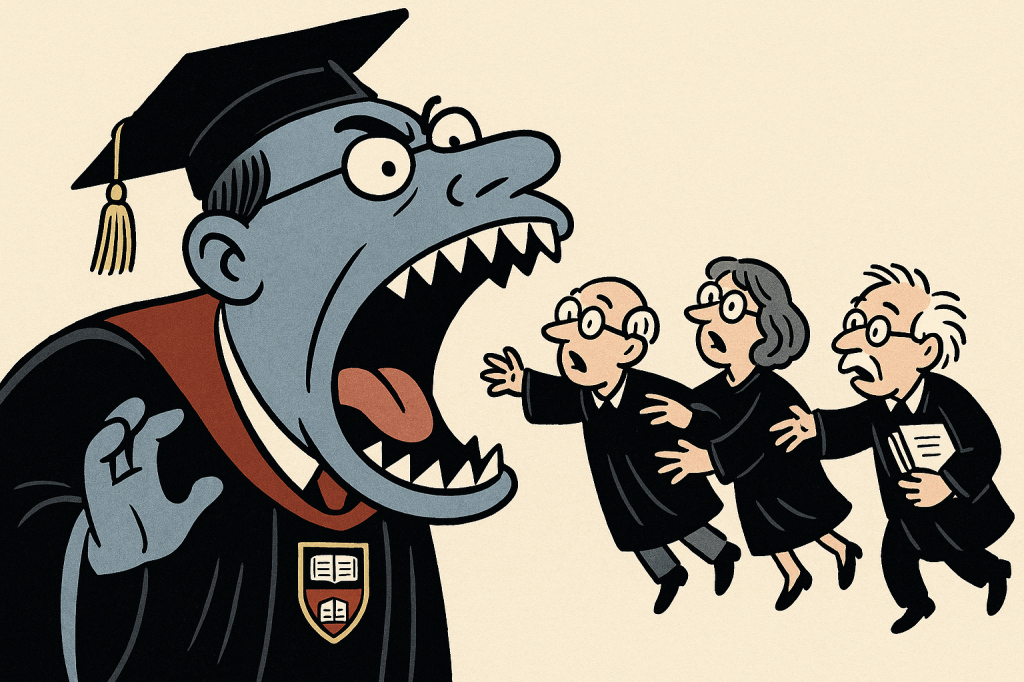
Tariffs have triggered splits between the UAW and Canada’s Unifor, while former President Trump has increasingly pitted police unions and Teamsters against teachers’ unions and federal government unions. These dynamics are a textbook example of the divide-and-conquer strategy: breaking groups into smaller, more manageable pieces, addressing each piece individually, and leveraging that fragmentation to achieve political or organizational objectives. Divide and conquer is not new; it has been used historically by leaders to weaken coalitions, manipulate conflicts, or manage competing interests. Divide-and-conquer works in three steps: divide—splitting the issue or coalition; conquer—addressing each segment separately; and combine—reassembling solutions or outcomes to achieve a larger objective.
Historical Example: Julius Caesar and the Gallic Wars
The roots of divide-and-conquer strategy trace back to classical history. Julius Caesar applied it masterfully during the Gallic Wars (58–50 BCE), famously writing in his Commentarii de Bello Gallico, “Divide et impera,” or “Divide and rule.” By exploiting rivalries among Gallic tribes, he prevented a unified resistance, defeating each faction separately and consolidating Roman control. Caesar observed, “Experience shows that enemies divided among themselves are weaker than those united,” demonstrating the timeless logic of isolating opponents to neutralize collective power. This classical precedent illustrates how the same strategic principle can operate in politics, labor disputes, and institutional conflicts today.
The Atlantic recently published a revealing piece peeling back the curtain on a feud among the nation’s university presidents. At a panel this spring, Princeton President Christopher Eisgruber directly called out the heads of Vanderbilt University and Washington University in St. Louis for echoing political accusations that higher education has become too “illiberal” and disconnected from the mainstream. The Southern chancellors responded that Ivy League missteps were tarnishing the reputation of universities nationwide and that perhaps new voices, leaders like them, should represent the face of American higher education.
At first glance, this reads like palace intrigue. Presidents disagreeing publicly is unusual but hardly shocking. Yet beneath the spectacle lies a far more troubling dynamic: a modern divide-and-conquer scenario. The conflict exposes fissures in leadership at a time when political attacks on institutions—educational, nonprofit, philanthropic, corporate, and civic—are increasingly coordinated and dangerous. Leaders and communities must present a united front against those who would undermine the mission of their organizations. Fragmentation does more than bruise egos; it hands ammunition to actors seeking to curtail independence, diversity, and ethical responsibility.
History provides another cautionary tale. Authoritarian governments understand that the best way to weaken institutions is to divide them from within. Viktor Orbán’s Hungary is a case in point. Central European University (CEU) was forced out of Budapest after a sustained government campaign portraying it as elitist, liberal, and out of touch with Hungarian values. Step by step, Orbán’s administration undermined CEU’s legitimacy, sowed division, and tightened control until the university had no choice but to relocate to Vienna. Divide-and-conquer tactics were implicit in the strategy: isolate factions, weaken their cooperation, and prevent a collective response.
The parallels to today’s U.S. landscape are unmistakable. Across higher education, business, nonprofits, philanthropy, and civic organizations, leaders face attacks on autonomy, legitimacy, and public trust. Politicians increasingly target institutions that challenge narrow ideologies, champion social justice, or innovate outside established norms. When educational communities quarrel publicly, whether over strategy, prestige, or personal rivalries, they mirror the same logic Julius Caesar exploited and Orbán institutionalized: fractured leadership allows powerful actors to dominate. Tariffs splitting UAW and Unifor, or Trump-era political maneuvers pitting police unions and Teamsters against teachers’ unions, illustrate this dynamic in domestic labor and political contexts.
This dynamic is not limited to universities. Corporations navigating regulation and political pressure face similar threats. Nonprofits advocating for marginalized communities or public policy reforms are vulnerable to legislative interference and funding threats. Philanthropic organizations can find themselves under scrutiny for their grantmaking choices or advocacy initiatives. Civic organizations attempting to address social inequities or public health crises can be politicized or defunded. In all these sectors, division among leaders and communities—whether driven by ego, competition, or differing visions—amplifies vulnerability. Authoritarian actors, whether domestic or international, rely on fractured leadership to achieve their aims.
The stakes are profound. Reports abound of nonprofit funding withheld based on political alignment, corporate boards facing regulatory challenges when acting counter to dominant political narratives, and philanthropic foundations demonized for promoting equity or climate action. Civic organizations attempting to address social disparities are painted as partisan or illegitimate. If leaders and communities appear fragmented and self-interested, these attacks are far easier to justify.
Solidarity among leaders and communities is not optional; it is essential. Divide-and-conquer strategies succeed when isolation reigns. Leaders across nonprofits, businesses, philanthropy, higher education, and civic institutions are vulnerable when they act in isolation. Solidarity requires humility: no single organization, sector, or individual should claim to represent the whole. It requires courage: leaders must speak openly about threats, resist self-censorship, and support one another even when unpopular. And it requires clarity: the attacks are not isolated controversies; they are part of a coordinated effort to weaken institutions that serve as pillars of democracy, social progress, and economic stability.
Solidarity also addresses the profound isolation leaders feel. Advocacy and ethical leadership can be lonely. Executives, directors, administrators, and community organizers often face criticism for championing equity, innovation, or public interest over profit, politics, or prestige. Many are told to choose between personal ambition and organizational values. But leadership in isolation is fragile. The antidote is connection, cross-sector alliances, inter-institutional partnerships, and shared platforms for defending core missions. Solidarity transforms vulnerability into collective strength.
The lesson is clear. Whether in universities, corporations, nonprofits, philanthropic organizations, or civic groups, leaders and communities must see themselves as part of a larger ecosystem under siege by coordinated political and authoritarian pressures. The strength of institutions does not rest on individual prominence or wealth; it rests on the ability of leaders and communities to align, speak with one voice, and defend autonomy and ethical integrity together. CEU’s exile demonstrates what happens when leaders fail to unite. American institutions have not reached that point yet, but the warning is urgent: division invites domination, and fragmentation undermines mission.
Solidarity is not simple. It requires setting aside pride, navigating sectoral rivalries, and embracing shared responsibility beyond institutional silos. But it is the only way to protect independence, innovation, and democratic purpose. Leaders and communities who unite can resist undue political influence, defend ethical standards, and preserve the mission of institutions that educate, empower, and serve communities. When leaders fracture, authoritarian narratives gain ground, and public trust erodes. Across all fields, the challenge is the same: how do leaders and communities act collectively to defend the values of their organizations and society at large in this unprecedented political moment?
History, experience, and ethics converge on a single answer: through solidarity, collaboration, and moral courage. Divide-and-conquer tactics succeed only when leaders remain isolated. No organization can thrive in isolation, and no sector can withstand systemic and political pressure without its leaders and communities standing together. The Atlantic piece should be read not as reality TV but as a call to action: division among leaders is not merely problematic; it is dangerous. Unity preserves independence, strengthens ethical purpose, and protects the public good. Leaders across higher education, business, nonprofit, philanthropy, and civic organizations must recognize the solitary pressures they face but act collectively to defend their institutions, their people, and their missions.
As Illinois Governor Pritzker recently said, to be loud in this moment is to be American. Solidarity is essential. Divide-and-conquer strategies exploit fragmentation, but coordinated, ethical leadership rooted in collaboration can counteract these pressures, protecting institutions, communities, and the broader society.
Julian Vasquez Heilig is a nationally recognized policy scholar, public intellectual, and civil rights advocate. A trusted voice in public policy, he has testified for state legislatures, the U.S. Congress, the United Nations, and the U.S. Commission on Civil Rights, while also advising presidential and gubernatorial campaigns. His work has been cited by major outlets including The New York Times, The Washington Post, and Los Angeles Times, and he has appeared on networks from MSNBC and PBS to NPR and DemocracyNow!. He is a recipient of more than 30 honors, including the 2025 NAACP Keeper of the Flame Award, Vasquez Heilig brings both scholarly rigor and grassroots commitment to the fight for equity and justice.





 Cloaking Inequity
Leave a reply to gruntinthetrenches Cancel reply