In the Netherlands this week, a quiet act of erasure exposed a loud truth about America. When two panels honoring Black World War II veterans disappeared from the Netherlands American Cemetery in Margraten, Dutch officials did what many American leaders no longer do. They spoke up. They called it “indecent and unacceptable.” They demanded answers. And in doing so, they reminded the United States that memory itself is a moral responsibility.
The cemetery in Margraten is sacred ground. It is the final resting place of more than eight thousand American soldiers who died liberating Europe from Nazi occupation. Among them were Black troops who fought with courage and conviction, even as they endured racism from their own countrymen. They were liberators abroad but second-class citizens at home. Their presence in Margraten tells a story not just of valor but of contradiction, of a nation that preached freedom while practicing segregation. That is why their remembrance matters.
When Memory Becomes a Battlefield
History is not neutral. It is curated, contested, and often manipulated. The removal of the two panels, including one honoring war hero George Pruitt and another describing the racial segregation of U.S. forces, is not a small administrative matter. It is a moral decision. Officials from the American Battle Monuments Commission, the federal agency that oversees U.S. military cemeteries, claimed that the panels were “rotated out” as part of a regular exhibition process. Yet Dutch authorities in Limburg said they were never informed. Local journalists confirmed that neither panel was on display. The bs explanation does not fit the evidence.
Dutch leaders did not accept silence as an answer. Eleven political parties issued a joint statement condemning the action. They declared that the removals “do not do justice to history.” Limburg’s King’s Commissioner, Emile Roemer, called the decision “indecent and unacceptable” and announced plans to meet with the U.S. ambassador to demand that the panels be restored. Their outrage was not performative. It was principled. They understood that erasing uncomfortable truths about racism does not protect history. It disfigures it.
The Audacity of Denial
The American government’s dismissal of this controversy is part of a larger pattern. For years, the Trump administration has treated racial truth as a threat rather than an obligation. It has sought to sanitize national memory, from school curricula to museum exhibits, to military history. When Donald Trump complained that the Smithsonian “teaches how bad slavery was,” he revealed more than a political strategy. He exposed a worldview that confuses ignorance with pride. The same worldview that led to the removal of diversity initiatives from federal agencies has now reached into the soil of foreign cemeteries.
The idea that history should flatter rather than challenge us is not patriotism. It is fear. Baldwin once said that “the great force of history comes from the fact that we carry it within us.” When we bury parts of that history, we bury parts of ourselves. Erasure may comfort the insecure, but it weakens the nation. A country that cannot face its own contradictions cannot lead others in the name of freedom. What the Dutch recognized instantly is that historical honesty is not an act of shame. It is an act of strength.
The World Is Watching
The irony could not be sharper. Nearly eighty years ago, Black American soldiers arrived in the Netherlands as liberators. They fought in segregated units, often assigned the hardest labor and the least recognition. Yet to the Dutch people they were heroes. Families in Limburg still tell stories about those soldiers, men who shared their rations with starving children and risked their lives in a foreign land. The Dutch have never forgotten that kindness. They remember the sacrifices of men who liberated their towns and helped rebuild their bridges. They remember even when America tries to forget.
Now, it is the Dutch who have become the custodians of that memory. When Commissioner Roemer said he would “urgently appeal” to the U.S. ambassador, he was not acting out of political convenience. He was acting out of moral clarity. The Netherlands, a small country shaped by its own experiences of occupation and resistance, understands what happens when societies begin to erase the people who fought for their freedom. When the Dutch have to remind America of the dignity of its own Black soldiers, it signals that the world’s moral compass has reversed direction.
Whose History Is It, Anyway?
Every democracy faces a choice between myth and memory. The myth is comforting. It tells us that progress is inevitable, that justice is linear, that our past is noble and uncomplicated. Memory tells a harder truth. It insists that progress is fragile, that justice requires struggle, and that our past is filled with both greatness and guilt. The removal of those panels was not just an administrative decision. It was an attempt to choose myth over memory.
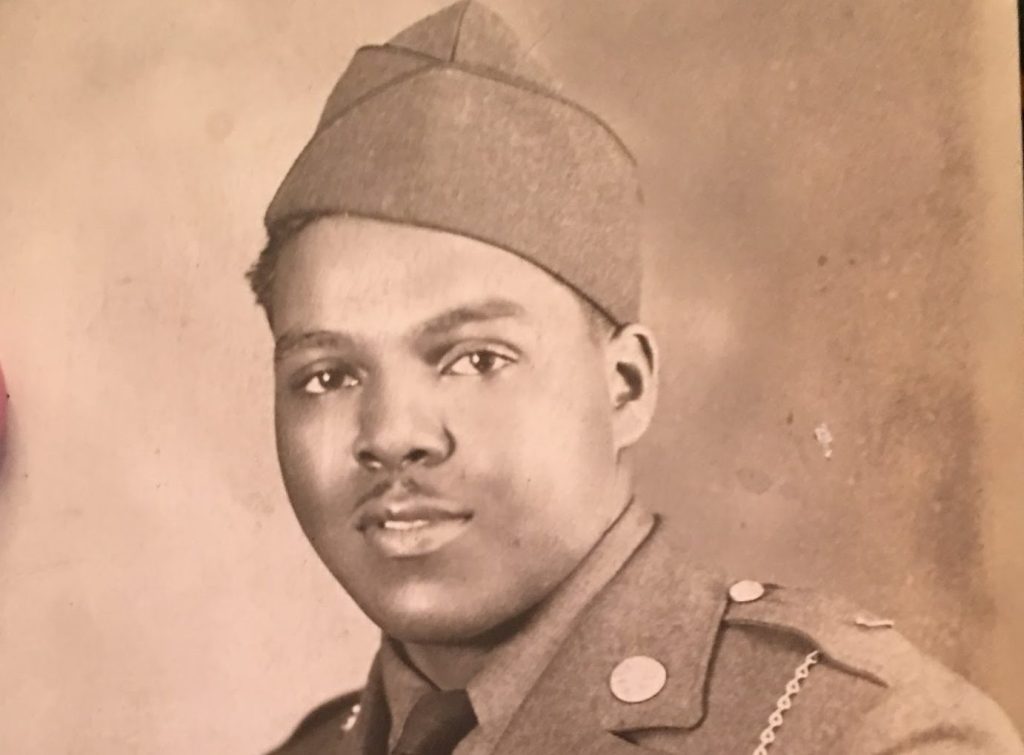
The story of Black soldiers in World War II is one of profound paradox. They fought for a nation that did not yet fight for them, defending a freedom they were still denied at home. They built roads, cleared mines, transported supplies, and guarded the lifelines of victory, often while enduring humiliation and violence from their white counterparts. Many were denied medals, promotions, or even the dignity of being properly buried. Some were laid to rest beneath crosses marked “unknown,” though their names were known. My grandfather was one of those men who served. The experience scarred him so deeply that he could not speak about it with me. His silence, I came to realize, was not forgetfulness but protection, a shield against reliving what he had endured in uniform for a country that refused to see him fully. His story, and those like his, are not side notes in American history. They are central to understanding the nation’s unfinished struggle for justice, belonging, and equality.
When the World Teaches America About Freedom
The Netherlands knows the cost of silence. It knows what happens when injustice goes unchallenged and history becomes selective. Dutch citizens have long wrestled with their own colonial past, but they have also built a culture of remembrance that refuses to hide from pain. The annual Liberation Day commemorations honor not only the Allied soldiers who freed the Netherlands but also the moral responsibility to tell their full stories. When Dutch leaders call America to account for erasing Black veterans, they are not lecturing. They are reminding. They are saying that freedom without truth is a fragile illusion.
For Americans, this moment should be humbling. It should prompt reflection on how easily we treat history as a political tool rather than a collective inheritance. When our allies abroad defend the integrity of our memory more vigorously than we do, it reveals a deep crisis of conscience. The Dutch have become our mirror, reflecting the parts of our national character that we prefer not to see.
Baldwin Was Right Again
James Baldwin warned that “ignorance, allied with power, is the most ferocious enemy justice can have.” He would not be surprised by what has happened in Margraten. He would recognize it as another chapter in the long American habit of avoiding self-examination. Baldwin believed that truth was the only path to redemption. He understood that nations, like individuals, cannot heal until they confront their own reflection. If Baldwin were alive today, he would likely thank the Dutch for doing what America refuses to do: to tell the truth about itself.
Baldwin often reminded his readers that history is not something we leave behind. It is something we carry within us, consciously or not. The act of remembrance is not a luxury. It is the foundation of justice. When we lose that memory, we lose the moral gravity that keeps democracy from floating into delusion. Baldwin’s warning rings louder now than ever: “Not everything that is faced can be changed, but nothing can be changed until it is faced.”
Restoring More Than a Memorial
Restoring those panels is about more than correcting a bureaucratic mistake. It is about reaffirming a principle that should never have been questioned. Black soldiers fought, suffered, and died under the American flag. Their stories are not expendable exhibits. They are sacred truths. If the Dutch can honor them with clarity and courage, then the United States can too. To do less is to betray not only those soldiers but also the ideals they believed they were defending.
When a foreign nation must become America’s conscience about race, the moral message is unmistakable. The world still expects the United States to live up to its own rhetoric of equality. The Dutch have shown that remembrance can be an act of resistance. The question now is whether America will have the humility to listen.
The moral test of a nation is not whether it remembers its victories, but whether it remembers the people it once chose to overlook. In Margraten, the Dutch still remember. The world is watching to see if America will do the same.
Julian Vasquez Heilig is a nationally recognized policy scholar, public intellectual, and civil rights advocate. A trusted voice in public policy, he has testified for state legislatures, the U.S. Congress, the United Nations, and the U.S. Commission on Civil Rights, while also advising presidential and gubernatorial campaigns. His work has been cited by major outlets including The New York Times, The Washington Post, and Los Angeles Times, and he has appeared on networks from MSNBC and PBS to NPR and DemocracyNow!. He is a recipient of more than 30 honors, including the 2025 NAACP Keeper of the Flame Award, Vasquez Heilig brings both scholarly rigor and grassroots commitment to the fight for equity and justice.




 Cloaking Inequity
Leave a comment