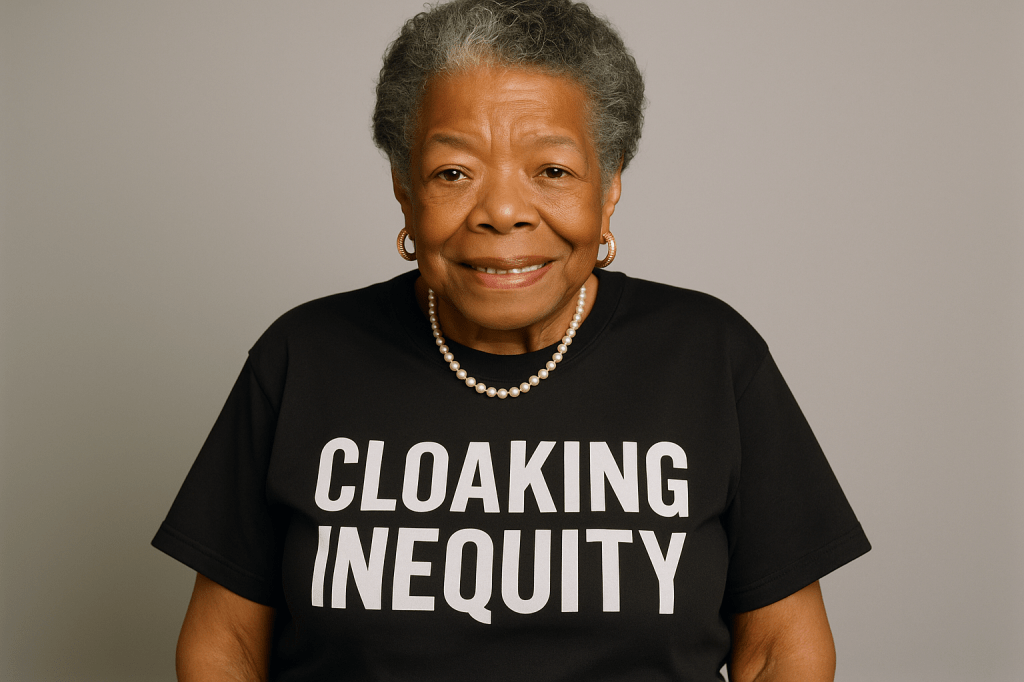
When I stepped down as provost, I knew it would come with uncertainty. The role had been a privilege, one that few faculty members ever experience. Most vice presidents, when they leave their posts, leave the university altogether. Their work ends when the office door closes. But provosts are different. We come from the faculty, and when our administrative season ends, we return to the classroom and the life of the mind. It is one of the few positions in higher education that allows a leader to both serve and then stay, to continue teaching and mentoring within the same community. That continuity is a gift, but it can also carry its own quiet tension.
Leadership transitions are often surrounded by whispers, speculation, and the subtle distance that can follow when a title disappears. I wondered whether my colleagues would still see me as part of the community or if stepping down meant stepping out. I had spent years working to lead with integrity, to create space for dialogue, and to center equity even when it was uncomfortable for some executive leaders. Yet when the moment came to return to faculty life, I could not help but wonder whether the relationships I had built would feel altered, whether the space I once inhabited would still feel like home.
What I found instead was grace. The faculty welcomed me with warmth that was genuine and disarming. There were kind words, open smiles, and gestures that reminded me that belonging is not granted by hierarchy but sustained by trust. They offered a proverbial hug that affirmed community as something deeper than position. In that moment, I saw what Maya Angelou meant when she said, “Try to be a rainbow in someone’s cloud.” My colleagues became that rainbow for me. They were the umbrella in the storm that accompanies transition. Their compassion turned uncertainty into renewal and reminded me that every ending, if met with grace, can become a beginning.
That experience greatly reshaped how I think about leadership, community, and resilience. The hardest moments in life are not always about failure; they are about redefinition. The people who reach out when the applause fades are the ones who remind us what truly matters. They are the ones who make the storm bearable. And in our own lives, when we have the opportunity to be that source of light for someone else, it is both a privilege and a responsibility.
The Mirage of Perfection
In the world we inhabit, storms are often hidden behind filters. Scroll through your social media feed and you will see beaches, dinners, awards, and endless sunsets. You will see people on your feed smiling with family, friends traveling to beautiful places, and announcing new titles or projects. What you will rarely see are the doubts, the sleepless nights, the personal losses, or the moments of disillusionment that shape the human experience beneath the surface. Everyone is navigating something unseen, but the digital world and corporate algorithms encourage us to present only the sunlight.
That performance of perpetual happiness can be exhausting. It distorts our perception of reality and makes struggle feel like failure. When you believe that everyone else is thriving, your own pain feels like isolation. You begin to wonder why the storm has found only your address, when in truth, everyone is carrying weather of their own. The illusion of perfection turns comparison into quiet suffering. It makes it harder to reach out when we most need connection.
Angelou’s wisdom pushes against that illusion. To be a rainbow in someone’s cloud, you first have to acknowledge the cloud itself. You have to see others in their vulnerability, not just their victory. You have to be willing to stand in the rain with them, to listen without judgment, and to reflect compassion instead of performance. Being a rainbow is not about pretending everything is fine. It is about showing up when it is not. It is about bringing humanity to spaces that often prize image over authenticity.
The Villages That Hold Us
None of us were meant to weather life’s storms alone. Every person needs a village. That village might be made up of family members, friends, mentors, or the colleagues who become something closer to kin. They are the ones who remind us that we are more than the sum of our titles, our outputs, or our mistakes. They are the ones who call, who check in, and who see us clearly even when we cannot see ourselves. They are the quiet architects of belonging.
When I left the provost’s office, I found myself worrying less about the next event or institutional problem that needed to be fixed and more about whether I would still have a community. I had seen enough transitions in higher education to know how quickly relationships can shift when roles change. What I discovered was that genuine relationships are not transactional. They are built on respect, not convenience. My colleagues welcomed me back as a teacher and scholar with open arms. Their support reminded me that community, when authentic, can withstand the changes of title, politics, and time.
That experience also made me reflect on the importance of cultivating those kinds of relationships long before we need them. Your village does not appear overnight; it is built through trust, kindness, and reciprocity, through moments when you choose empathy over ego. The people who become your rainbow later are often the ones whose clouds you once helped navigate. The cycle of care sustains us all—it is the invisible infrastructure of a life well-lived. I have learned over time that how you treat people on the way up determines who will be there when you are on your way down. Titles, accolades, and positions fade quickly, but the memory of how we make others feel endures. Respect and humility have a longer half-life than any achievement. Those who mistake authority for immunity often discover, too late, that success without grace leaves you standing alone when the weather turns. When I stepped away from the provost’s office, the people who reached out were not the ones who had needed something from me; they were the ones who had seen and valued the person behind the position. Their kindness reminded me that relationships are the true currency of leadership. They are what remain when the titles disappear. The storms of transition reveal the strength of our connections and the truth of our character.
Rainbows Are Not Accidents
A rainbow is the result of light meeting resistance. It cannot appear without both the sun and the storm. That is why Angelou’s metaphor endures. It captures the paradox of human resilience. Hope is not born in comfort. It is born in the collision of grief and grace. When we reflect light during difficult times, we are not ignoring pain. We are transforming it. We are refracting our own struggle into a spectrum that can guide someone else toward steadier ground.
In the professional world, particularly in education and leadership, this kind of reflection is essential. There are seasons when the clouds are thick, when you are tested by conflict, and when people retreat into self-preservation. Yet, the measure of any community is how it responds when things are hardest. Do we isolate, or do we illuminate? Do we close our doors, or do we reach out? Rainbows are not accidents. They are deliberate acts of grace that appear when people choose connection over detachment.
Angelou understood that kindness is not weakness. It is strategy. It is how we survive the long arcs of injustice, fatigue, and disappointment. The people who can bring beauty to difficult moments are the ones who keep institutions human. They are the people who remind us that systems do not care for people; people care for people. Every workplace, every classroom, and every community needs those quiet lights who choose compassion when the easier choice is cynicism.
The Quiet Work of Hope
Hope is rarely loud. It is the quiet work done behind the scenes, the phone call made to check in, the note of encouragement sent when no one is watching. It is the choice to respond with patience when frustration feels justified. It is the decision to believe in someone who has stopped believing in themselves. In a time when anger dominates public discourse, hope has become a radical act. It refuses to accept despair as destiny.
Being a rainbow is not about grand gestures. It is about consistent care. It is about seeing the humanity in others when systems have reduced them to roles or outcomes. It is about being the person who says, “I see you,” when someone feels invisible— and actually meaning it, not just saying it. It is about creating small moments of light that remind others that the story is not over. Hope is cumulative. It grows through the steady presence of people who refuse to stop believing in goodness, even when the world gives them reasons to.
The truth is that everyone you know is navigating something unseen. Every colleague, every friend, every student is balancing visible performance with invisible struggle. The question is whether we will contribute to their storm or their light. Whether we will add to the weight they carry or help lift it. Angelou’s challenge is to choose the latter. To choose reflection over reaction. To choose care over indifference. To choose to be the rainbow that reminds someone else that there is still color left in the sky.
Finding the Horizon Again
Every generation believes its clouds are the darkest, and every leader thinks their storm is the most severe. Yet history reminds us that humanity has always found ways to reflect light in the middle of chaos. The rainbow is not a denial of the storm; it is its complement. It is proof that beauty and struggle can coexist. It is a call to remember that grace is not weakness but strength refined by compassion. It is the choice to answer adversity with empathy instead of anger, and to rebuild faith in what connects us rather than surrender to what divides us.
When the news feels relentless and the world feels fractured, the temptation is to withdraw into fear. But fear is the cheapest currency; it costs nothing and invests nothing. Hope, on the other hand, requires courage. It demands that we care when it is easier not to, that we show up when it feels safer to stand back, that we keep reflecting light even when the atmosphere grows heavy. That is the work of real leadership. That is the quiet revolution that sustains humanity through every generation’s storm.
So try to be a rainbow in someone’s cloud literally today, not because it changes the weather, but because it changes what the weather means. And when your own clouds gather, allow others to be that reflection for you. Build your village. Nurture your people. Let them remind you that life is not only about surviving storms but about transforming them into moments of renewal. Maya Angelou’s words endure because they reveal a truth that transcends time: the miracle is not that the rain stops, but that even in the downpour, we can still find enough light within and among each other to shine.
Julian Vasquez Heilig is a nationally recognized policy scholar, public intellectual, and civil rights advocate. A trusted voice in public policy, he has testified for state legislatures, the U.S. Congress, the United Nations, and the U.S. Commission on Civil Rights, while also advising presidential and gubernatorial campaigns. His work has been cited by major outlets including The New York Times, The Washington Post, and Los Angeles Times, and he has appeared on networks from MSNBC and PBS to NPR and DemocracyNow!. He is a recipient of more than 30 honors, including the 2025 NAACP Keeper of the Flame Award, Vasquez Heilig brings both scholarly rigor and grassroots commitment to the fight for equity and justice.





 Cloaking Inequity
Leave a reply to gruntinthetrenches Cancel reply