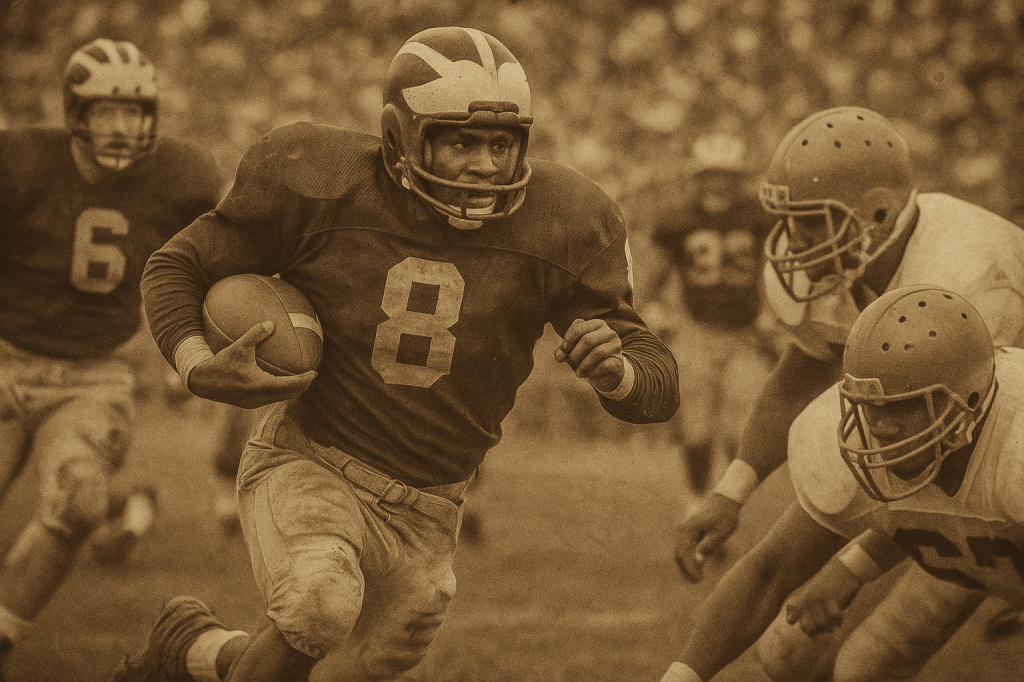
I recently came across a Facebook post from my friend Chris Howard, former running back on the University of Michigan’s 1997 national championship team. It stopped me mid-scroll. In a few words, Chris wrote, “Nothing irritates your opponent more than when we support each other.” Simple. Sharp. True. In a digital world obsessed with conflict, that line was a reminder that unity is not passive; it is powerful. Support is not sentimental; it is strategic.
Howard’s post took me back to the ethos of that 1997 team and its legendary coach, Lloyd Carr. Carr had a quiet but deliberate way of teaching lessons that went beyond the field. Players have recalled how he used a mountain climbing axe as a motivational symbol. He told them that the journey to a championship was like scaling Mount Everest together. Each practice, each play, each hard day was another step upward. The summit was the goal, but the lesson was in the climb.
That metaphor has stuck with fans and players for nearly three decades because it captured something deeper than sport. Carr’s message was not about domination but about discipline. He understood that success is not built on individual achievement alone but on the strength of the rope connecting them. Every climber depends on the others. Every player depends on the team. When one falters, the others hold the line. The ice axe was both tool and teacher, a symbol of resilience bound by trust.
Climbing Together
When Howard wrote that nothing irritates your opponent more than mutual support, he was describing a life principle. Teams, communities, and nations fracture when they forget that success is collective. The true test of leadership is not whether we can climb quickly but whether we can climb together. In that shared climb lies the kind of strength that cannot be easily divided or defeated.
The 1997 Michigan National Championship team embodied that truth every Saturday. They were built on trust, repetition, and belief in the system. From Charles Woodson’s electrifying interceptions to Brian Griese’s calm precision, from Howard’s runs to the defensive wall that refused to bend, their greatness emerged from chemistry. They were a living illustration of the idea that unity wins where ego could falter.
That lesson still holds power in our classrooms, workplaces, and communities. The temptation today is to chase personal recognition, to climb the mountain for oneself. But the higher we go, the more dangerous the terrain becomes for those without a rope team. In leadership, as in sports, the summit means little if we leave others stranded below. Carr’s axe was a reminder that individual triumph is temporary, but collective effort endures.
The Symbolism of the Axe
Coach Carr’s mountain axe was not a gimmick; it was a gospel. It was a tangible reminder that the climb toward excellence requires endurance and cooperation. The axe symbolized both progress and protection. A climber uses it to gain traction on icy ground, but also to stop a fall. In other words, it was a metaphor for accountability. If one player slipped, the others were responsible for anchoring him. No one ascended without responsibility for another.
That ethic has all but vanished from much of our public life. In politics, education, and social media, many have traded the climbing axe for the spotlight. The message of Carr’s Michigan was the opposite: the summit means nothing if you step over your teammates to reach it. He built a culture where everyone was expected to swing the axe together. That meant preparing mentally, and trusting the process. It also meant encouraging one another when fatigue set in, because fatigue always comes before the summit.
The axe has become a kind of folk symbol for Michigan’s golden season. But its deeper meaning is universal. It tells us that shared struggle builds character, that endurance builds empathy, and that empathy builds champions. Whether you are running a classroom, leading a team, or building a movement, the axe still applies. It asks: who are you climbing with, and who will hold the rope for you when the weather turns?
Why Support Disarms Division
Howard’s line about irritating opponents with mutual support reveals a subtle truth about power. Divisiveness thrives on attention. It feeds on envy, isolation, and suspicion. When people refuse to play that game and instead lift each other up, the machinery of resentment grinds to a halt. Support, in this sense, is subversive. It interrupts the expected cycle of competition and conflict. It transforms struggle from a zero-sum contest into a shared ascent.
The 1997 Wolverines played with joy, with trust, and with composure. Their unity created pressure that talent alone could not match. When you know the person next to you will hold the rope, you can play with freedom. When you are not worried about blame, you can focus on execution. That kind of culture makes teams, classrooms, and institutions not only successful but sustainable.
In a broader sense, our society needs to rediscover that mindset. Whether in higher education, civic life, or the workplace, we are surrounded by systems that reward individual gain over collective progress. But nothing disarms those systems faster than solidarity. When people collaborate across divisions, when they celebrate each other’s wins, when they refuse to compete for crumbs, they change the terms of power. They irritate every structure that profits from keeping them apart.
The Climb Ahead
Carr’s mountain-climbing metaphor reminds us that progress is not permanent. Every generation has to climb its own mountain, weather its own storms, and find new ways to stay connected. The summit of 1997 was never the end; it was an example. The players who carried that axe up the mountain have gone on to lead in sports (Tom Brady was a backup on that team), business, military service, education, media, community life and so much more. They understood what Carr was teaching: that teamwork is not a season-long strategy but a lifelong discipline.
Howard’s reflection is timely because we live in an era where disagreement is often mistaken for disloyalty. Supporting one another across differences feels rare, even risky. Yet history shows that solidarity is the only path to real, lasting change. Whether on the field or in the public square, the climb demands both strength and humility. The mountain never asks which side you are on; it asks only whether you can endure together.
So here is the lesson for all of us who are still climbing. Cheer for others. Lend a hand when someone slips. Celebrate the progress of those ahead of you, because their success makes your own ascent possible. And when you reach a ledge, turn around and extend your axe to the next climber. Because nothing unsettles your opponent more than watching people climb the mountain together. When we support one another, every step grows steadier, every summit closer. That is how endurance becomes triumph—and how heroes and heroines are made.
Julian Vasquez Heilig is a nationally recognized policy scholar, public intellectual, and civil rights advocate. A trusted voice in public policy, he has testified for state legislatures, the U.S. Congress, the United Nations, and the U.S. Commission on Civil Rights, while also advising presidential and gubernatorial campaigns. His work has been cited by major outlets including The New York Times, The Washington Post, and Los Angeles Times, and he has appeared on networks from MSNBC and PBS to NPR and DemocracyNow!. He is a recipient of more than 30 honors, including the 2025 NAACP Keeper of the Flame Award, Vasquez Heilig brings both scholarly rigor and grassroots commitment to the fight for equity and justice.




 Cloaking Inequity
Leave a reply to gruntinthetrenches Cancel reply