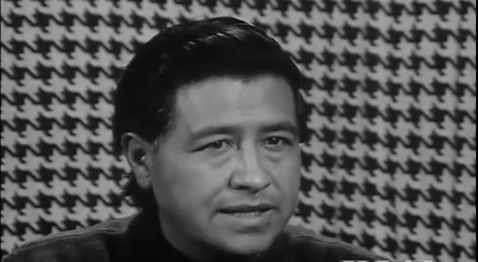
Cesar Chavez once observed, “The job of the leader is to get his people from where they are to where they have not been.” At first, the sentence feels familiar, almost predictable, as if it belongs in a leadership handbook or a Ted talk. But the longer you sit with it, the more it reveals something deeper and more human. Chavez was not just talking about leaders with titles, offices, or formal responsibility. He was describing a universal truth about how people grow and how that growth often depends on simple acts of attention from everyday leaders. He was pointing to movement, not authority.
People tend to imagine leadership as something that belongs to those who occupy prominent positions. They think about managers, directors, coaches, principals, pastors, and elected officials. Yet when most people reflect on those who truly helped them expand their understanding of themselves, they rarely begin with someone in a position of authority. They begin with a friend who listened at the right moment. They remember a family member who pushed them gently toward something they did not think they were ready to attempt. They recall a colleague who saw a skill that felt invisible to them and insisted that it mattered.
The essence of Chavez’s observation becomes clearer when you consider that growth rarely begins with a formal directive. It begins with someone who can see beyond the immediate moment. It begins with someone who understands that people often stand on the edge of possibility without realizing how close they are to a breakthrough. It begins with the belief that motion is possible even when circumstances feel fixed. Movement is the quiet work of planting seeds. It is the work of encouraging someone to take a step they did not think they could take. It is the work that is carried not only by leaders but by everyday people who choose to pay attention.
Movement Begins Quietly
Movement often begins in moments that do not look significant. A casual conversation becomes the spark for a new way of seeing. A single question helps someone reconsider the story they have been telling themselves. A quiet word of encouragement at the right time becomes a turning point in how someone interprets their own capacity. These early movements are so subtle that people rarely recognize them as beginnings. They simply feel like small interactions that pass without ceremony. Yet these are often the moments that later define a shift in direction.
Growth rarely announces itself in dramatic fashion. It usually enters through incremental signals that something is changing internally. People begin to notice new thoughts taking shape. They become more open to possibilities that once felt out of reach. They experience small but meaningful successes that accumulate into confidence. Over time, these internal changes gather enough strength to influence external choices. Movement that began quietly becomes visible through new actions and new beliefs about what is possible.
One of the most powerful aspects of this quiet beginning is that it is almost always relational. People often do not change in isolation. They change in response to someone who pays attention to them. They change because someone offers presence during a moment of uncertainty. They change because someone reflects back a version of themselves they had not yet learned to trust. These early steps in movement are less about strategy and more about connection. They rely on trust, timing, and the simple practice of noticing another person’s potential.
The Human Work of Lifting
Chavez’s words describe a form of lifting that relies on steadiness rather than force. When people help each other grow, they do not need to push or pressure. They create environments where growth becomes possible by lowering the emotional temperature, increasing clarity, and offering reassurance when doubt enters the room. This kind of lifting feels natural because it is grounded in care. It is an expression of belief in another person’s emerging strength. It is a way of saying, You do not have to get there alone.
Lifting requires patience because growth unfolds at its own pace. People often need time to experiment with new behaviors or ideas before they feel confident enough to claim them. For example, I have taken two steps forward and one step back. I’ve circle an opportunity several times before I stepped toward it. Those who lift understand that inconsistency is not a sign of failure. It is a normal part of the process. Patience becomes one of the most important tools because it helps us remain engaged even when the path feels uneven.
In addition to patience, lifting requires humility. When an everyday leader is guiding another person, their goal is not to take credit for the movement. Their goal is to support the journey in a way that allows the other person to own their growth. Humility creates space for the person being lifted to experience self-generation. It creates space for them to recognize their own agency. It invites them to trust their strength rather than depend solely on the person who guided them.
Seeing Beyond the Immediate Moment
Everyday leaders often help others see possibilities that are not visible in the present moment. They listen in a way that reveals the gap between someone’s current view and their actual potential. They ask questions that illuminate options hidden beneath self-doubt or fear. They help people sense the possibility that the future might hold more than they previously imagined. This ability to see beyond the immediate moment is one of the most valuable forms of guidance a person can offer. It becomes the lens through which movement becomes imaginable.
Seeing beyond the immediate moment requires a certain level of emotional steadiness. Everyday leaders who offer this kind of guidance are not overwhelmed by the uncertainty that often accompanies growth. They are able to remain grounded when someone else feels unsettled. Their steadiness helps create an emotional buffer through which new ideas can emerge. This steadiness does not mean they have all the answers. It means they have the capacity to support someone through the ambiguity that accompanies transformation. They become a point of stability during moments when change feels risky.
Everyday leaders who see beyond the present moment also understand that growth is not always linear. People frequently revisit familiar patterns as they test the boundaries of new identity. This return to the familiar is often misinterpreted as regression. But those who support movement understand that revisiting old patterns is part of the learning process. It allows people to compare how their old ways feel in light of new possibilities. The contrast between the two becomes the catalyst for sustained change. By recognizing this, everyday leaders become more effective guides. They help others interpret the process not as a series of failures but as a series of refinements.
Are you an Everyday Leader?
When someone experiences movement that feels meaningful, they often begin to guide others in a similar way. Growth tends to generate more growth. Once a person recognizes their own capacity for everyday leadership, they become more attuned to the potential in others. They begin to notice subtle signs of readiness in their friends, colleagues, and family members. They begin to offer the same quiet guidance they once received. This creates a cycle in which movement becomes contagious. No title is required for everyday leaders when people understand their ability to influence another person’s direction.
Becoming a source of future direction does not require perfection. It requires intention. Someone who has learned to navigate new territory becomes more skilled at supporting others as they attempt similar journeys. Their experience equips them with a deeper understanding of the emotions, hesitations, and uncertainties that accompany change. They can recognize when someone is close to a breakthrough. They can offer encouragement that is grounded in lived experience rather than abstraction. Their presence becomes a form of direction that helps others take steps toward their own possibilities.
This cycle of guidance is one of the most powerful aspects of everyday leaders. When people take responsibility for helping others move forward, communities grow stronger. Families become more resilient. Workplaces become more humane. Schools become more supportive. This ripple effect is what Chavez was pointing toward. The work of movement does not belong solely to selected leaders. It belongs to anyone who chooses to invest in another person’s future. It is work that multiplies whenever an everyday leader decides that lifting another person is worthy of their time and energy.
The Future Begins With Ordinary People
During my MCAN keynote Q and A session a few weeks ago, I posited something true. It is the everyday leaders who make the world go round. It is not presidents, CEOs, or provosts, no matter how loudly those roles are celebrated or denigrated. The people who actually keep institutions and communities alive are the ones at the grass tops, where daily decisions shape culture and where quiet influence becomes real movement. Executive leaders often do not want people to recognize this truth because it disrupts the mythology that their authority is the primary engine of change. Yet anyone who has watched a school, a nonprofit, a university, a corporation, or a community organization operate can see that the real power lives with the people who show up every day and choose to invest in others.
Every future begins because someone is willing to go first. Usually that someone is not the person with the title. It is the everyday leader who sees something possible before others do and who holds that vision long enough for others to begin seeing it too. This is not a dramatic act and it rarely occurs in a boardroom. It often happens in informal conversations that feel small until their impact becomes clear. It is present in moments when someone says, I think you can do this, and offers that belief without hesitation. It shows up when someone refuses to let fear or doubt close a door that could lead to growth. These everyday acts of vision shape futures quietly but powerfully.
When an everyday leader helps another person step into new territory, they create a transformation that reshapes identity at its core. They help someone build new skills, new beliefs, and new understandings of what they are capable of becoming. They strengthen the sense that hope has weight and that potential has direction. These outcomes form the foundation of strong communities, strong relationships, and strong organizations, and this is how we actually get things done when our leaders refuse to act, have the wrong priorities, or simply lack the ability, capacity, or interest to address longstanding issues.
Everyday leaders give people the confidence and resilience needed to face future challenges because they invest in growth at the human level, where real change begins. This has always been the truth captured in Chavez’s words. People need encouragement, presence, and someone willing to walk beside them long enough for the next step to feel possible. No journey requires certainty, only a willingness to move. What everyday leaders offer is the steady belief that movement matters and that no one has to walk alone. Their influence builds the futures chosen leaders often fail to imagine and becomes the quiet architecture of progress.
Julian Vasquez Heilig is a nationally recognized policy scholar, public intellectual, and civil rights advocate. A trusted voice in public policy, he has testified for state legislatures, the U.S. Congress, the United Nations, and the U.S. Commission on Civil Rights, while also advising presidential and gubernatorial campaigns. His work has been cited by major outlets including The New York Times, The Washington Post, and Los Angeles Times, and he has appeared on networks from MSNBC and PBS to NPR and DemocracyNow!. He is a recipient of more than 30 honors, including the 2025 NAACP Keeper of the Flame Award, Vasquez Heilig brings both scholarly rigor and grassroots commitment to the fight for equity and justice.






 Cloaking Inequity
Leave a reply to gruntinthetrenches Cancel reply