Right wing governments do not attack the liberal arts and humanities by accident. They do it because history, literature, philosophy, and cultural study train people to recognize patterns of power. People who learn how past injustices were justified are harder to fool when similar arguments reappear dressed up as pragmatism, patriotism, or common sense. People who understand history are not easily persuaded that extraordinary claims are harmless or that dangerous ideas are “just talk.” That is why assaults on the humanities almost always precede assaults on democratic norms.
It is also why I am deeply grateful to have studied history at the University of Michigan. Studying history does not tell you what will happen next. It gives you something more valuable. It teaches you how to recognize the broader context in which politics operates, how rhetoric shapes reality, and how societies slide into catastrophe not through sudden madness but through repeated acts of normalization. History opens the door to what has come before so that we are not trapped inside the illusion that our moment is unprecedented or immune. That perspective matters when we look at the annexation of Poland in 1939 and when we examine contemporary rhetoric about Greenland today.
Poland, 1939 and the Language of Inevitability
In September 1939, Adolf Hitler ordered the invasion of Poland. The act itself was brutal and unmistakable. What deserves attention, especially for those trained in historical thinking, is how long the ground had been prepared with rhetoric before the first troops crossed the border. The justifications were framed as reasonable. Germany, Hitler claimed, was correcting historical wrongs. Ethnic Germans needed protection. Borders drawn after World War I were unstable and unfair. These arguments were repeated in speeches, interviews, and diplomatic exchanges until they became familiar. Familiarity and repetition does not make ideas true, but it does make them easier to tolerate for some.
Poland was not invaded in a vacuum. It followed the annexation of Austria and the dismemberment of Czechoslovakia. Each move was met with concern but also hesitation. European leaders feared another world war and hoped that accommodation might prevent it. In doing so, they misunderstood the nature of the threat. Expansion was not a bargaining tactic. It was the project. When Germany invaded Poland, Britain and France, the core of the Allies, declared war. That declaration mattered, but it came after years of normalization. Europe entered the war divided, underprepared, and still uncertain about how far the danger extended. The lesson Poland teaches is not simply that aggression exists. It is that aggression thrives when language is allowed to do its work unchecked.
Europe’s Reckoning and the Cost of Delay
Europe in the late 1930s was shaped by trauma. World War I had left deep scars due to debt and other issues. Political leaders were haunted by the fear of repeating that catastrophe. As a result, they treated Hitler’s claims as negotiable and his ambitions as potentially limited. They were wrong. Once Poland fell, the illusion collapsed. Europe moved from appeasement to resistance, but the cost of delay was staggering. Tens of millions would die. Cities would be leveled. Entire populations would be displaced or exterminated. Sovereignty, once violated, did not repair itself through patience or dialogue alone. History students are taught to sit with that discomfort. Not to indulge guilt, but to understand how decisions made in moments of uncertainty reverberate across generations.
Greenland and the Return of Dangerous Rhetoric
Fast forward to the present. Donald Trump has repeatedly raised the idea that the United States should annex and acquire Greenland. Greenland is a self governing territory within the Kingdom of Denmark, a NATO ally. The idea was not framed around consent or self determination. It was framed as a transaction. At first, many treated the comments as absurd or unserious. History warns us about that instinct.
When first asked directly whether he would rule out using military force to take Greenland, Trump responded, “No comment.” In other remarks reported widely by international media, he stated, “We’re going to be doing something with Greenland, either the nice way or the more difficult way. I would like to make a deal, the easy way. But if we don’t do it the easy way, we’re going to do it the hard way.” The phrase “the hard way” was left intentionally vague. That ambiguity was the signal.
Administration officials reinforced the message. According to media reports, the White House emphasized that “utilizing the U.S. military is always an option.” There was no invasion plan announced. No formal threat issued. But the language itself mattered. It reframed sovereignty as conditional and force as a background tool of negotiation.
Europe’s Immediate Response and Why It Matters
This time, Europe did not hesitate. Danish leaders rejected the idea outright and used a few f-bombs. Greenlandic officials emphasized that their future would be decided by Greenlanders alone. European governments and commentators framed the rhetoric as incompatible with international law and alliance principles. The contrast with the 1930s is striking. Where earlier leaders minimized early warnings to avoid discomfort, contemporary Europe recognized that clarity is stabilizing. Drawing boundaries early prevents escalation later. Greenland is not yet Poland. No troops crossed borders. No lives were lost. That distinction matters. But it should not obscure the underlying pattern. Powerful actors testing whether sovereignty can be discussed as optional are engaging in a familiar historical move.
No Credit for Restraint After the Fact
It is important to be explicit about what this rhetoric implies. The United States could attempt to invade Greenland at any point based on what has already been said publicly. The fact that it has not done so is not evidence of Nobel Peace Prize level restraint deserving praise. No one should be congratulated for refraining from an act that never should have been proposed, hinted at, or normalized in the first place.
The danger lies in the introduction of the idea itself. Once military force is spoken of as an option, even abstractly, the boundary between imagination and action narrows. History shows that institutions are tested not only when violence occurs, but when leaders decide whether to shut down dangerous ideas before they take root. Poland did not fall because war was inevitable. It fell because aggression was discussed, tolerated, and rationalized until resistance came too late. Greenland is not Poland, but the lesson remains intact.
Why the Humanities Matter Right Now
This is why attacks on the liberal arts and humanities are never neutral budget decisions. They are political acts. Teaching people how to read history critically makes it harder to sell coercion as strategy and force as diplomacy. It equips citizens to hear phrases like “the hard way” and recognize them as warnings rather than jokes.
My undergraduate training in history at the University of Michigan did not give me answers. It gave me context. It taught me that rhetoric precedes reality, that power reveals itself first in language, and that the most dangerous moments are often the ones that feel awkward, exaggerated, or easily dismissed. Those who do not learn history are not doomed by fate to repeat it. They are made vulnerable to repeating it by design. That reality became painfully clear to me recently when my daughter told me that one of her high school classmates had emphasized to her that Adolf Hitler was not really that bad and that the number of people killed in World War II was exaggerated or outright false, part of some supposed big lie. I was genuinely shocked. Not simply because the claim was wrong, but because a young person could arrive at such a belief at all.
My shock was sharpened by something deeply personal. My grandfather fought in World War II. He served his country in the Navy Seabees in the Philippines, doing the dangerous, unglamorous work that made military operations possible, while millions across Europe and Asia were dying as a direct result of Nazi violence and fascist ideology. So many people sacrificed their lives fighting those sick ideas and the humans who carried them out. When that history is dismissed or denied, it is not an abstract error. It is an erasure of real suffering, real courage, and real loss. When students are cut off from serious engagement with history, they do not simply lack information. They become susceptible to denial, distortion, and propaganda. That is how the unthinkable becomes sayable again, and how ideas that should have been buried by evidence and memory quietly find their way back into public life.
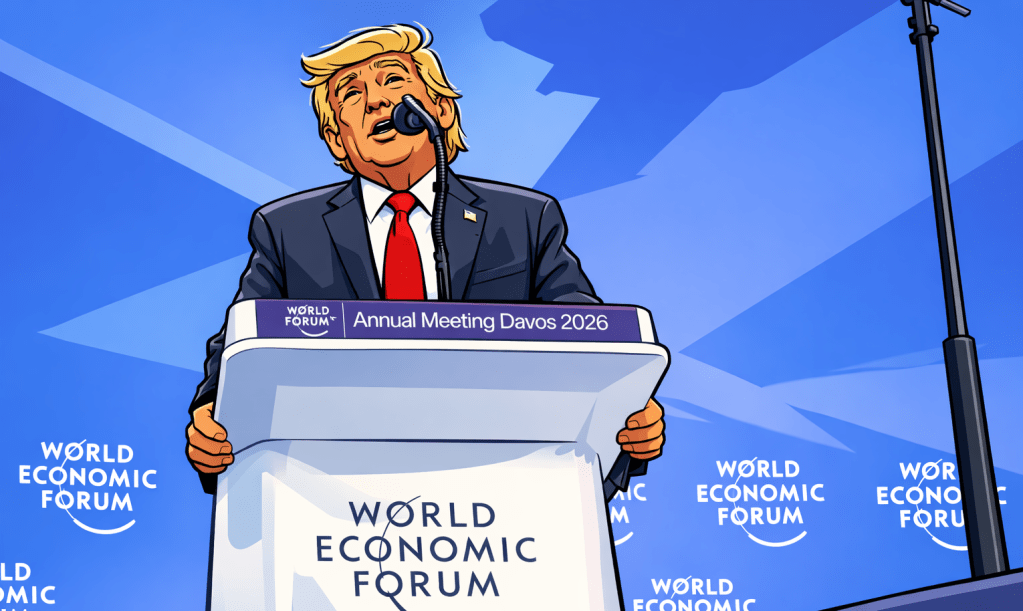
Today at Davos, Trump has renewed his demand for Greenland, insisting he “won’t use force” for now, even as European officials prepare to use the forum to cool tensions around his stated ambitions to annex the island, according to Reuters and the AP. That this moment requires quiet intervention is a warning. But it is also a call. Democracy does not exist only to stop tanks at borders. It exists to shape a moral horizon where domination loses its appeal and dignity becomes the shared measure of power. When we choose education, language, and action that affirms restraint, humanity, and mutual respect, we do more than avert crisis. We keep the future open, not by fear, but by principle.
Please share.
Julian Vasquez Heilig is a scholar, public intellectual, and policy analyst who writes about the intersections of education, democracy, and power. He has spent his career examining how systems—whether in higher education, public policy, or politics—use influence, money, and narrative to shape outcomes. His blog Cloaking Inequity and Without Fear or Favor newsletter on Linkedin explores the hidden structures that govern American life, from public education to presidential politics, and challenges readers to see how leadership, integrity, and equity intersect.





 Cloaking Inequity
Leave a comment