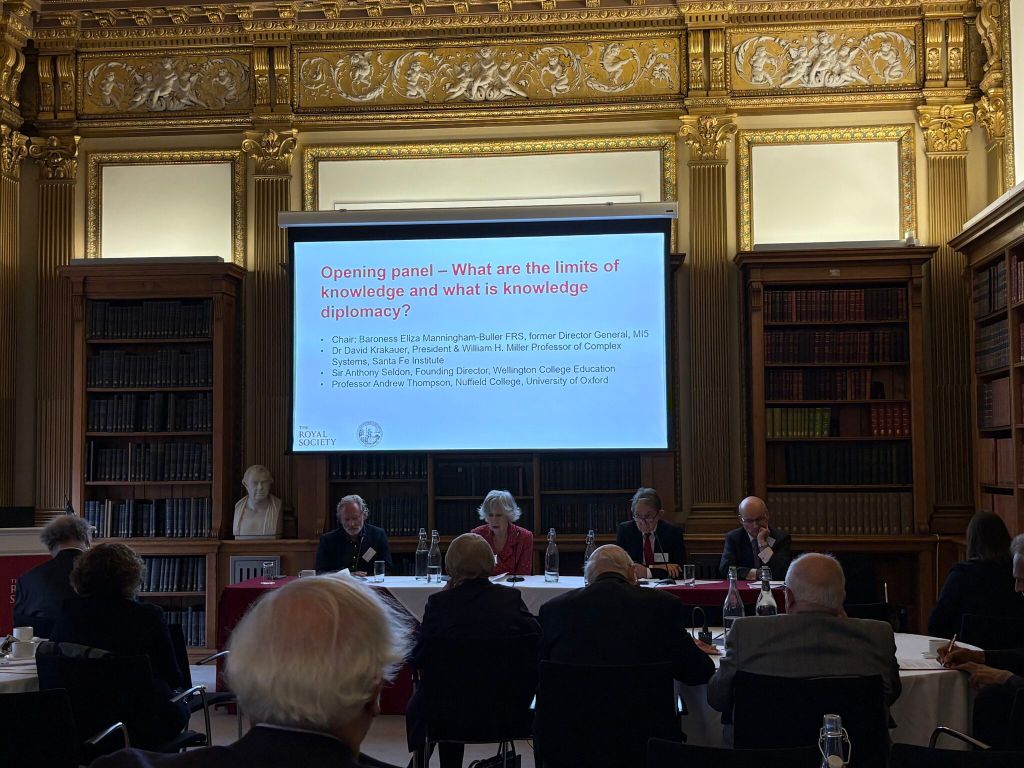
I recently read a LinkedIn post by Dominic Grasso, interim President of the University of Michigan, describing a convening in London hosted by the Royal Society and co-sponsored by the American Academy of Arts and Sciences. The meeting, titled “Knowledge Diplomacy as a Response to Knowledge Under Threat,” brought together leaders from academia, government, and national security to examine growing threats to research integrity, academic freedom, and democratic institutions.
What stayed with me was not just the substance of the conversation President Grasso described, but the posture it modeled for this moment in history. It raised a question we should be prepared to answer clearly: what responsibility do educational institutions have when knowledge itself is under pressure?
Meeting that responsibility requires leaders and educational institutions with deep respect for evidence and academic freedom, fluency across disciplines and borders, and the ability to engage publics beyond their own campus. Knowledge diplomacy demands intellectual humility, historical awareness, and the courage to communicate clearly in contested environments. It calls for backgrounds that combine scholarly credibility with experience navigating civic, global, and political contexts, and for the capacity to listen as carefully as one speaks while holding fast to the norms that make knowledge trustworthy.
The threats to knowledge are not theoretical in the current moment. Around the world, research agendas are being politicized. Academic freedom and the right to learn is constrained through both formal policy and informal pressure. Universities and K-12 schools are increasingly portrayed as ideological actors rather than civic institutions. These dynamics weaken not only higher education, but the democratic systems that depend on credible, independent knowledge.
In that context, I believe knowledge diplomacy has become a core responsibility of educational institutions. By knowledge diplomacy, I mean the intentional engagement of educational institutions and their communities in protecting the conditions under which knowledge is produced, shared, and trusted. This includes international collaboration, public engagement, and principled interaction with governments, media, and civil society, all grounded in academic independence and institutional integrity.
Educational leaders occupy a unique position in this work. They are stewards of complex organizations, but they are also public figures whose words and actions carry meaning far beyond campus. When president or superintendent or commissioner of education speak about research, academic freedom, or global collaboration, they are not only representing their institutions. They are signaling what knowledge is for and who it serves.
In the post, President Grasso’s participation in a panel on “Knowledge Under Threat,” chaired by Lord David Willetts, reflects that reality. It illustrates how educational institutions can engage directly in conversations about democratic resilience without compromising institutional autonomy or independence. Engagement of this kind does not politicize universities. It affirms their public purpose for communities they serve.
What is especially important is that the London convening included voices from national security and government from around the world alongside academic leaders. That matters because threats to knowledge exist within and between power structures, fields, and country borders. Educational institutions operate within geopolitical realities and the question is not whether school and universities are implicated, but how they choose to engage.
Jumping off from the London convening, to me, practicing knowledge diplomacy means several things for educational institutions. It means defending academic freedom and the right to learn publicly and consistently, even when doing so is uncomfortable. It means being intentional about international and community partnerships, prioritizing transparency and reciprocity over prestige alone. It means supporting scholars and students whose research and scholarly endeavors attract political scrutiny from the right or left. And it means communicating clearly to the public why independent research and open inquiry are essential to democratic life.
It also requires judgment. Knowledge diplomacy is not advocacy on behalf of any government or ideology. It is a commitment to the norms that make scholarship credible. Independence, evidence, openness, and accountability are not abstract ideals. They are operational principles that leaders must actively protect.
One of the lessons I took from President Grasso’s reflection is that leadership silence has consequences. When university leaders refrain from engaging with threats to knowledge, others fill the space. Narratives about education, expertise, and truth are shaped regardless of whether educational institutions choose to participate. The absence of credible academic leadership leaves room for distortion by political actors who have agendas.
That is why I believe knowledge diplomacy is no longer an optional dimension for educational institutions. It is rapidly becoming a baseline expectation and an important skill to prioritize in hiring and choosing leaders. Universities and K-12 schools remain among the most trusted institutions in society. That trust creates an obligation to engage beyond campus boundaries, particularly when knowledge and democracy are intertwined.
For me, the convening in London underscores what this moment demands of education itself. Across colleges and K–12 schools, democracy depends on more than the transmission of information. It requires spaces where inquiry is protected, evidence is valued. I tell my students in my classes that I am not going to teach them what to think, but how to reason, question, and learn in community with others.
Horace Mann captured this responsibility clearly when he wrote that “education is the great equalizer of the conditions of men.” That insight remains vital today. When truth is contested and knowledge is treated as suspect, education cannot withdraw into neutrality or silence. Democracy requires schools and universities to defend the conditions that make learning possible. Open inquiry. Academic freedom. Respect for evidence.
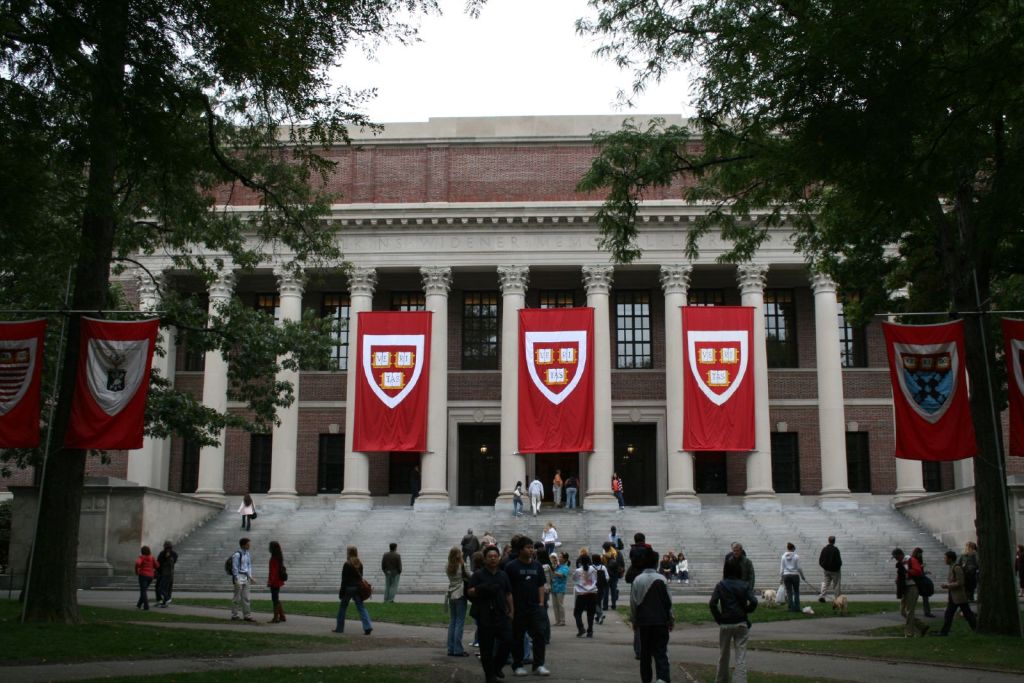
These are not abstract values. They are daily practices that allow students to become informed citizens capable of participating in a pluralistic society. That is why many have taken note when institutions such as University of Michigan, Harvard University, and Princeton University have chosen to stand publicly for knowledge diplomacy in courts, before Congress, and in global convenings. Their actions affirm that defending academic freedom and research integrity is essential when democratic norms are under strain. At the same time, there is growing concern and disappointment when peer institutions, including University of Pennsylvania and Columbia University, have not only remained largely absent from these efforts, but have also conceded aspects of the independent pursuit of knowledge and teaching in response to external and internal political pressure. When educational institutions retreat from open inquiry or narrow the scope of what can be studied, taught, or debated, they weaken the very foundations they exist to protect. In this sense, education serves democracy by remaining faithful to its core purpose: to cultivate understanding, preserve the integrity of knowledge, and prepare students, at every level, to engage a complex world with curiosity, humility, and responsibility. When colleges and K–12 institutions uphold these commitments, they do more than educate individuals. They sustain the democratic life we share.
Julian Vasquez Heilig is a professor of educational leadership and research whose work focuses on the public purposes of education, academic freedom, and the role of schools and universities in democratic life. He has served in senior academic leadership roles and regularly writes on issues at the intersection of education, policy, and civic responsibility. His scholarship and public commentary emphasize evidence, equity, and the conditions that allow knowledge to be produced, shared, and trusted.


Leave a Reply