Tenure is no longer a quiet, internal academic process. It has become a central political battleground for policymakers in recent years. Conservative lawmakers across multiple states have intensified efforts to weaken or eliminate tenure protections in both K–12 and higher education. What was once a cornerstone of academic freedom is now being reframed by politicians as a problem to be solved.
Across Florida and Texas, lawmakers have already implemented or proposed sweeping changes to tenure, including post-tenure review systems and governance shifts that expand administrative and political oversight. Similar legislative efforts have emerged in Ohio, South Carolina, and Iowa. In Oklahoma, Governor Kevin Stitt has already eliminated tenure at regional and community colleges, while additional legislation could extend those changes further. At the same time, states such as Tennessee, Kentucky, and Alabama are advancing laws that weaken tenure protections, shift authority to governing boards, and reduce faculty control over curriculum and employment decisions. Even where tenure has not been fully eliminated, as in Tennessee, new laws have significantly eroded its protections. Meanwhile, system-level changes in North Carolina have raised additional concerns about the future of academic freedom across public universities. These actions are not isolated. They reflect a broader and evolving political effort to reshape who controls knowledge in higher education.
What we are witnessing is not a debate about accountability or financial efficiency. It is actually a struggle over knowledge itself. Tenure has always functioned as a structural protection for academic freedom. It creates the conditions where scholars can pursue evidence, challenge dominant narratives, and produce knowledge that may be inconvenient to those in power. When tenure is weakened or eliminated, that protection erodes. The result is not just a change in employment conditions. It is a shift in who feels safe asking hard questions and whose ideas are allowed to circulate.
This is why the current moment feels so contradictory. Many of the same conservative political actors who have long argued for freedom of speech and diverse perspectives are now advancing policies that narrow those very conditions within universities. The rhetoric emphasizes intellectual diversity. The policy mechanisms move in the opposite direction. When tenure protections are weakened, the range of what can be safely researched, taught, and publicly discussed begins to contract. Faculty become more vulnerable to external pressure. The boundaries of acceptable knowledge are shaped less by disciplinary expertise and more by political climate.
Why? At its core, this is about control. Control over curriculum. Control over research agendas. Control over which histories are told and which are minimized. Control over whether scholarship on race, inequality, gender, or power is treated as legitimate inquiry or political threat. When knowledge challenges power, efforts to regulate it often follow. That pattern is not new, but it is becoming more visible and more direct in higher education.
Tenure disrupts that control. It distributes authority across communities of scholars rather than concentrating it in political or administrative hands. It allows departments and the field, grounded in expertise, to evaluate knowledge on its own terms. Weakening tenure recenters that authority elsewhere. It shifts decision making away from peer review and toward systems that are ideologicallly influenced. That is why these policy efforts matter. They reshape the conditions under which knowledge is produced and validated.
Who should decide?
In most universities, the most important factor in tenure and promotion decisions is what departmental colleagues think about a faculty member’s work. These are the scholars who understand the field, the journals, the methodologies, and the intellectual contributions in ways that cannot be replicated at higher administrative levels. Their evaluations are grounded in disciplinary expertise and long-standing norms of peer review. Departments are where scholarly legitimacy is established, debated, and refined. This is where the deepest understanding of intellectual contribution resides.
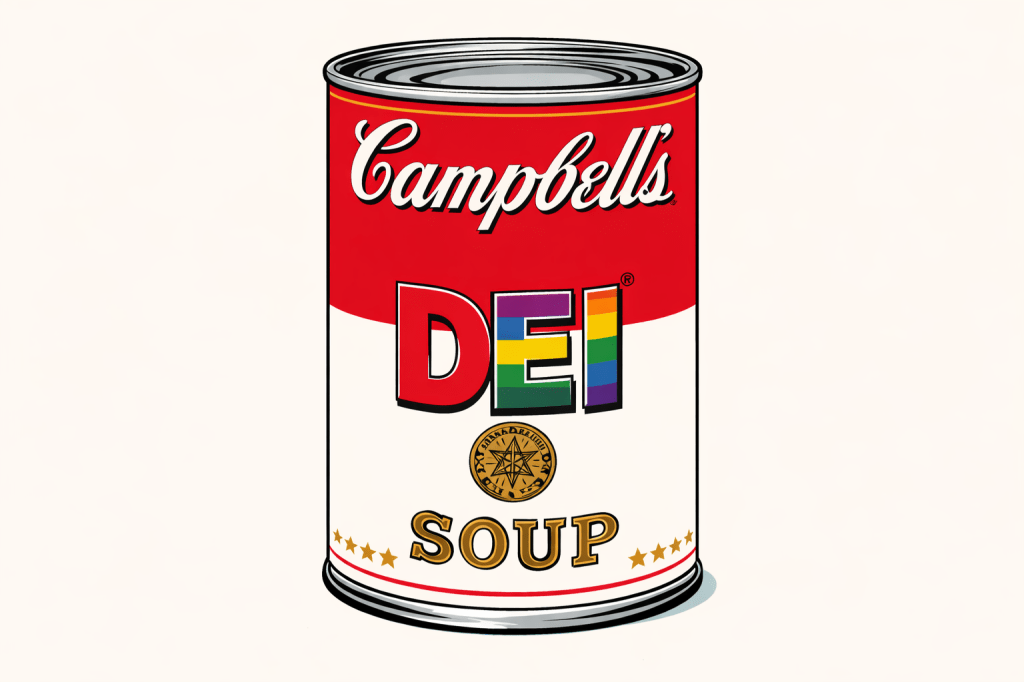
If we are honest, this is one of the places where a can of help already exists inside higher education. It is not external political oversight that sustains academic quality. It is the collective judgment of scholars working within disciplines. Departments are not perfect. Over nearly two decades in academic leadership, I have seen them make mistakes— even very recently. But they are designed to evaluate knowledge on its own terms. When that system is respected, it provides accountability grounded in expertise rather than ideology. That is a form of help we already have, if we are willing to use it.
At the same time, tenure does not end at the department level. That is where complexity enters. Deans, provosts, presidents, and trustees all play roles in reviewing and affirming recommendations. In stable environments, these levels follow the lead of departments. That is how shared governance is supposed to work. But these layers also introduce pressures that are not purely academic. Institutional reputation, political context, donor influence, and public perception all shape decision making. This is where the system begins to strain. When leadership reinforces departmental expertise, the system works. When leadership wavers or responds to external pressure, the system shifts away from evidence and toward optics.
If this feels abstract, consider the case of Sajida Jalalzai at Trinity University. Despite unanimous support from her department and the Promotion and Tenure committee, her case was denied at higher levels of administration. There was no disagreement among experts. There was no split decision. The scholars most qualified to evaluate her work reached the same conclusion. Yet that conclusion was overridden.
That is not a normal outcome within a healthy system of shared governance. When no dissent exists at any stage of faculty review, yet the final decision reverses that consensus without clear academic justification, it signals something deeper. It suggests that the center of gravity in decision making has shifted away from disciplinary expertise and toward political considerations. Those considerations are often less visible, less transparent, and more vulnerable to external influence.
Even when departments do their jobs well, broader institutional pressures can override them. The can of help exists, but it can be closed by fear, political pressure, or misaligned priorities. That is not a failure of scholarship. It is a failure of leadership.
Tenure, DEI, Knowledge, and Political Pressure
Scholarship focused on diversity, equity, and inclusion sits at the center of these tensions. This work is deeply rooted in rigorous academic traditions across multiple disciplines. It draws on theory, empirical evidence, and methodological innovation. It examines how systems of power operate and how inequities are reproduced. It also offers pathways for change grounded in research.
Yet this scholarship has become a focal point in political debates. This reflects what scholars call epistemic injustice, where certain forms of knowledge are devalued because of who produces them and what they challenge. Research connected to marginalized communities often faces scrutiny that is not applied equally across fields. Not because it lacks rigor, but because it disrupts dominant narratives.
When knowledge challenges power, it is often reframed as controversial rather than necessary. That reframing is not academic. It is political. And when tenure protections weaken, the scholars producing that work become more vulnerable.
Opening the Cans of Help
University leadership carries a responsibility that goes beyond managing budgets. Educational leaders are also stewards of academic freedom and guardians of scholarly integrity. Protecting tenure is not about protecting individuals. It is about protecting the conditions that make knowledge possible.
Here are cans of help that matter. They are not abstract ideas. They are practical, actionable steps. They are grounded in experience. Based on nearly 20 years of academic leadership across multiple institutions, I have seen what works, what fails, and what is at stake when systems hold or break under pressure. These are not theoretical recommendations. They come from lived experience.
First, reaffirm departmental and field primacy. Tenure decisions must be grounded in disciplinary expertise. Deviations should be rare, transparent, and justified.
Second, protect the integrity of external reviews. Reviewers must be selected for expertise, not ideology. The credibility of the system depends on it.
Third, institutions should support clear, job-related standards for rigor, impact, and contribution that are developed through shared governance processes, including faculty senates, unions, and other representative bodies
Fourth, create firewalls against political interference. Universities cannot claim academic freedom while allowing external actors to shape internal decisions.
Fifth, support deans and chairs in high-pressure cases. Mid-level leaders need institutional backing to uphold standards and departmental recommendations.
Sixth, recognize public scholarship. Faculty who engage the public expand the impact of research and should be valued, not penalized.
Seventh, invest in legal and policy protections. Academic freedom must be enforceable, not symbolic.
These are cans of help in the current debate about tenure. They already exist. The question is whether institutions will open them.
The Future Depends on What We Do Now
The future of higher education depends on whether we recognize what is at stake. This is not just about tenure. It is about whether universities remain spaces for independent inquiry or become extensions of political power.
While tenure attacks impact all scholars, the work of those who study inequality, history, and power is particularly vulnerable. This scholarship is essential for a democratic society. It helps us understand how we arrived at the present and how we might build a more just future. Ignoring that work does not eliminate the problems it addresses. It simply limits our ability to understand and respond to them.
Universities that retreat from this responsibility risk losing their relevance. They risk becoming institutions that manage knowledge rather than produce it. They risk trading long-term credibility for short-term political stability.
The cans of help are already on the table. The tools are already in our hands. What matters now is the courage to use them and the conviction to stand by what they demand. This is a moment that calls for clarity, for leadership, and for a willingness to protect what makes higher education matter.
The future of higher education will be shaped by the choices we make right now.
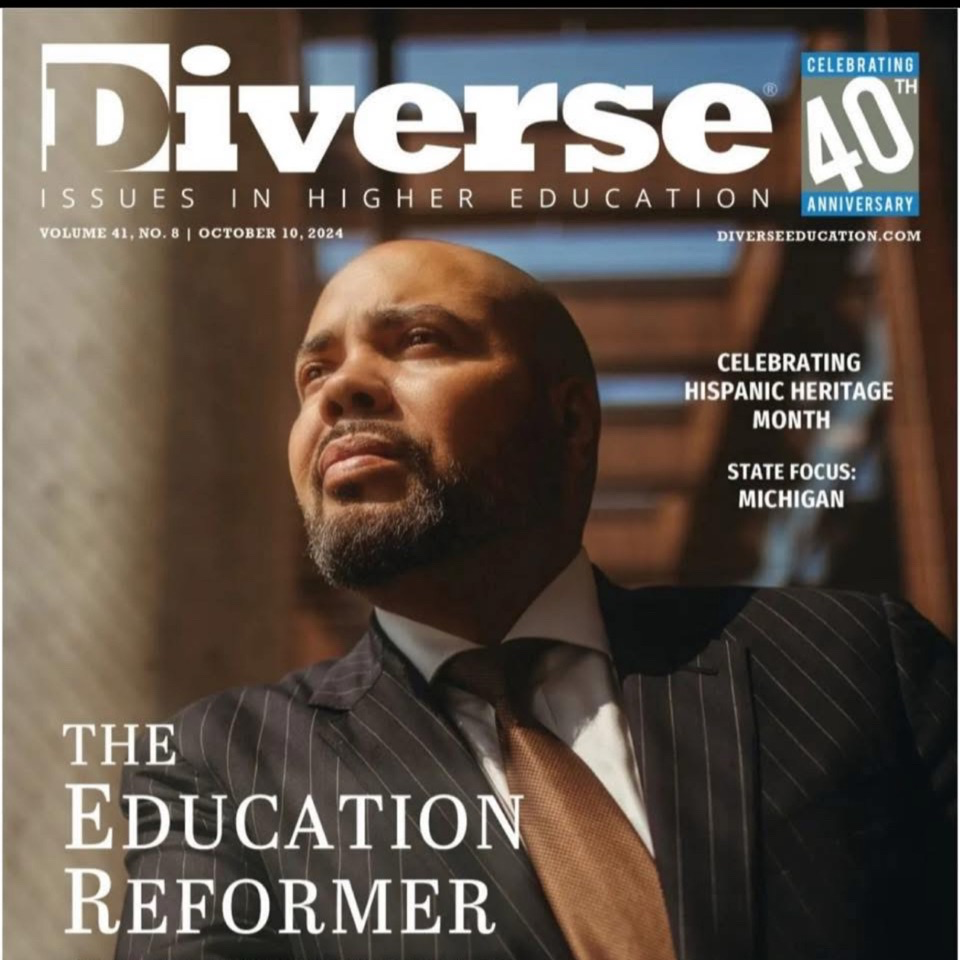
Julian Vasquez Heilig is a nationally recognized public scholar, commentator, and civil rights advocate. He has appeared on major national platforms including Democracy Now!, MSNBC, Al Jazeera, NBC News, PBS, and Univision. His media work reflects a longstanding commitment to making complex policy issues accessible, urgent, and meaningful for the public.



Leave a Reply