
In the 1980s, rabbit’s feet were everywhere. They hung off keychains in gas stations, corner stores, and mall kiosks across my part of Michigan. They came dyed in bright colors, attached to cheap chains, sold as symbols of good luck. Even then, it never quite made sense. A severed foot on a keychain was supposed to bring something positive into your life, and yet it always felt like an odd way to think about fortune. Looking back now, I still do not understand how that became a thing people believed in. I think it says something about how deeply people want to make sense of uncertainty, even when the symbols themselves do not hold up under scrutiny.
Knock on wood, cross your fingers, do not step on cracks, there is a whole set of these small rituals people use to try to influence what cannot be controlled. They show up in conversations, in classrooms, in workplaces, and in moments when outcomes feel uncertain. These habits are passed down without much questioning because they create a sense of comfort. They allow people to feel like they are doing something, even when there is nothing tangible to be done. That sense of control, even if it is symbolic, can be reassuring in unpredictable situations. But over time, it becomes clear that these rituals do not actually shape outcomes in the way people hope.
But those rabbit’s feet remind me of something deeper. People have always been searching for a way to explain why some moments open and others do not. They are trying to understand timing, chance, and the uneven way opportunity shows up in different lives. Whether it is a keychain, a phrase, or a habit, the goal is the same. It is an attempt to bring order to something that feels unpredictable. That instinct is human, and it shows up across cultures, generations, and contexts. The question is not whether people search for explanations, but what those explanations lead them to believe about their role in the process.
Luck or Providence
Some people call it luck. Others call it providence. The perspectives are different, but the experience feels the same. A door opens that you did not plan for. A conversation shifts your trajectory in a way you did not anticipate. A moment appears that seems larger than coincidence, even if you can trace the steps that led up to it. There is something about those experiences that feels different from ordinary progress. They carry a sense of timing that is difficult to fully explain.
That is where the language begins to diverge, but the experience itself remains consistent. Some people are comfortable calling it randomness, believing that these moments are the result of probability and chance. Others see higher power intention or spiritual meaning in the timing, interpreting those same moments as part of something larger. The words change depending on belief, but the pattern does not. Something happens that was not scheduled, and it changes what comes next. That shared experience is what makes this conversation so persistent.
Preparation Still Matters
When Chef Ina Garten, the Barefoot Contessa, says to be ready when luck happens, she is naming something practical. She is talking about preparation, awareness, and the ability to recognize an opportunity when it appears. The moment does not adjust itself to your level of preparation. It shows up as it is, and you either are ready and recognize it or you do not. That is what makes preparation so important. It is not about controlling the moment, but about being able to respond when it appears. Without preparation, meaningful opportunities can pass by unnoticed. With preparation, those same moments can become turning points.
Abraham Lincoln is often credited with saying, “I will prepare and someday my chance will come.” That idea sits right at the intersection of opportunity and preparation. Preparation is the part we control, and it is the work that happens long before any visible outcome appears. The timing of opportunity is not something we can schedule or predict.
Readiness is an act of belief. It is a commitment to doing the work without a guarantee that the work will be rewarded. It requires discipline, patience, and consistency over time, that is doing something well for a long period of time. It also requires the ability to continue even when there is no immediate feedback or recognition. That kind of preparation is not always visible, but it is essential. It builds the foundation that allows you to respond when something unexpected appears.
The Role of Surprise
When I mentor students and early career scholars, I often tell them that the most interesting things in my life have been surprises. You can have a plan, and you should, but it is hard to predict what is actually going to happen. Plans are important because they provide direction and structure. They help you make decisions and stay focused on your goals. But they are not sufficient for navigating real life. The most meaningful moments rarely follow a predictable path.
They do not arrive in the form you expect, and they do not always align with the timeline you imagined. They interrupt your plans rather than confirm them. That is what makes them easy to overlook if you are too focused on a specific outcome. It is also what makes them powerful when you are open to recognizing them. That openness is part of readiness.
I was watching a reel on Facebook recently and I cannot source it, but the speaker made a point that stayed with me. He said that if you put one hundred people in a room, he could probably tell you who would become millionaires based on discipline, focus, and consistent effort. Those traits are visible, measurable, and often predictive of success at a certain level. But he also said he could not tell you who would become billionaires. That next level required something else that could not be predicted in the same way.
He argued becoming a billionaires requires a moment, a break, something that could not be manufactured through effort alone. Some people would call that luck because it appears to be outside of individual control. I would call it something closer to providence because of how those moments align with preparation and belief. Either way, it reinforces the same idea. There are limits to what planning alone can produce, and there is a role for the unexpected in shaping outcomes.
Recognizing the Moment
One of the most consistent truths is that opportunities often come as surprises, and they even appear in forms that are easy to dismiss at first. The job you did not apply for appears through a conversation you almost skipped. The introduction you did not seek out turns into a relationship that changes your direction. The idea that comes at the right time opens a path that did not exist before.
These moments interrupt your plans rather than follow them. They rarely look significant at the beginning, and they often require interpretation before they reveal their importance. That is why they are easy to miss. It is also why readiness matters. Without the ability to recognize them, they pass by without impact.
Sometimes, people overlook these moments because they are waiting for something that looks more obvious, more predictable, or more aligned with their predetermined plan. They are looking for confirmation rather than possibility. But the real moments rarely look that way at the beginning. They often show up as small openings, uncertain possibilities, or unexpected invitations that do not immediately make sense.
Recognizing them requires openness, awareness, and the willingness to move even when the path is not fully clear. It requires a shift from certainty to curiosity. It also requires trust in your preparation and your ability to respond. That kind of readiness cannot be developed overnight. It is built through experience, reflection, and a willingness to engage with uncertainty over time.
Equity and Access to Opportunity
We also have to name something that is often left out of these conversations. Not everyone encounters opportunity in the same way, and that reality matters. Whether you call it luck or providence, access to those moments is shaped by systems. Who gets into the room matters. Who gets introduced matters. Who gets seen and heard matters. These are not neutral processes.
Opportunity is not distributed evenly, and it never has been. There are patterns to who experiences these moments and who does not. Those patterns are shaped by institutional decisions, historical context, and social structures. Ignoring that reality makes the conversation incomplete and potentially misleading. It shifts responsibility away from systems and places it entirely on individuals.
There is a danger in talking about luck or providence without acknowledging structure. It can make inequality feel natural or inevitable when it is not. It can suggest that outcomes are simply the result of individual readiness, when in reality they are also shaped by access, networks, and institutional design. Systems create the conditions under which opportunity appears, and those conditions can either expand or limit who benefits.
That is why readiness must be paired with justice. We should be building institutions where more people encounter opportunity, where talent is not overlooked, and where preparation is met with real pathways forward. This is not about eliminating uncertainty. It is about reducing unnecessary barriers that prevent capable people from being seen and supported.
What Readiness Really Means
Being ready is not just about skill. It is about alignment across multiple dimensions of who you are and how you show up. It is intellectual readiness, meaning you have something to offer when the moment comes. It is emotional readiness, meaning you are willing to step into uncertainty without complete assurance. It is relational readiness, meaning you have built trust and credibility with others over time. It is moral and value readiness, meaning you know what you stand for and can act with clarity.
These dimensions work together rather than separately. You can have knowledge without emotional readiness, and that can limit your ability to act. You can have relationships without clarity of purpose, and that can create hesitation. Readiness requires integration across these areas. It is about being prepared in a way that allows you to respond fully when the moment appears.
Preparation often gets reduced to credentials, accomplishments, or visible and measurable markers of success. Those things matter, but they are not sufficient on their own. They represent effort and achievement, but they do not guarantee readiness. Readiness is deeper than that. It is about how you respond when something unexpected appears and whether you can move forward without full certainty.
Conclusion
When I was finishing my PhD at Stanford, I never expected my career to lead to becoming a full professor, serving in seven academic leadership roles, engaging in community and civil rights leadership work, and developing a public voice that would reach millions of people through media and scholarship. That was not the plan I had in mind at the time. I thought I would likely be working in Washington, DC at a think tank, or perhaps return to an urban school district like the one I had worked in Houston. Those were the paths that seemed logical, available, and visible to me. They were the outcomes that fit the plan I had constructed based on what I knew.
But that is not what happened. The path opened before me in ways I could not have predicted at the time. Opportunities appeared that I did not anticipate, and directions became clear only after I had already begun moving. Looking back, those moments did not feel fully certain when they first arrived. They required decisions without complete information. They required stepping forward without knowing exactly where things would lead.
And I would not go back and change any of it. There is a temptation to imagine what might have been different with more control or more foresight. But it reminds me of a time travel movie where someone tries to fix one thing and ends up disrupting everything else in the timeline. The path that unfolds is connected in ways that are not always visible in the moment. Changing one part of it risks changing everything. What felt uncertain at the time becomes meaningful in hindsight.
So whether you knock on wood, carry a rabbit’s foot, cross your fingers, avoid stepping on cracks, or rely on spiritual guidance, the underlying truth remains the same. The moment will come when it comes. It will not wait for you to be ready, and it will not announce itself clearly. It will likely feel uncertain at first, and it may not look like what you expected. When it arrives, you will have to decide whether to step into it.
That decision is where preparation and belief meet. It is the point where all of the work you have done becomes relevant. It is also the point where uncertainty becomes action. You may not know exactly where the path leads, but you will know whether you are willing to take the next step. That willingness is what allows possibility to turn into direction.
Be ready.
Please share.
No rabbits were harmed in the development of this post.
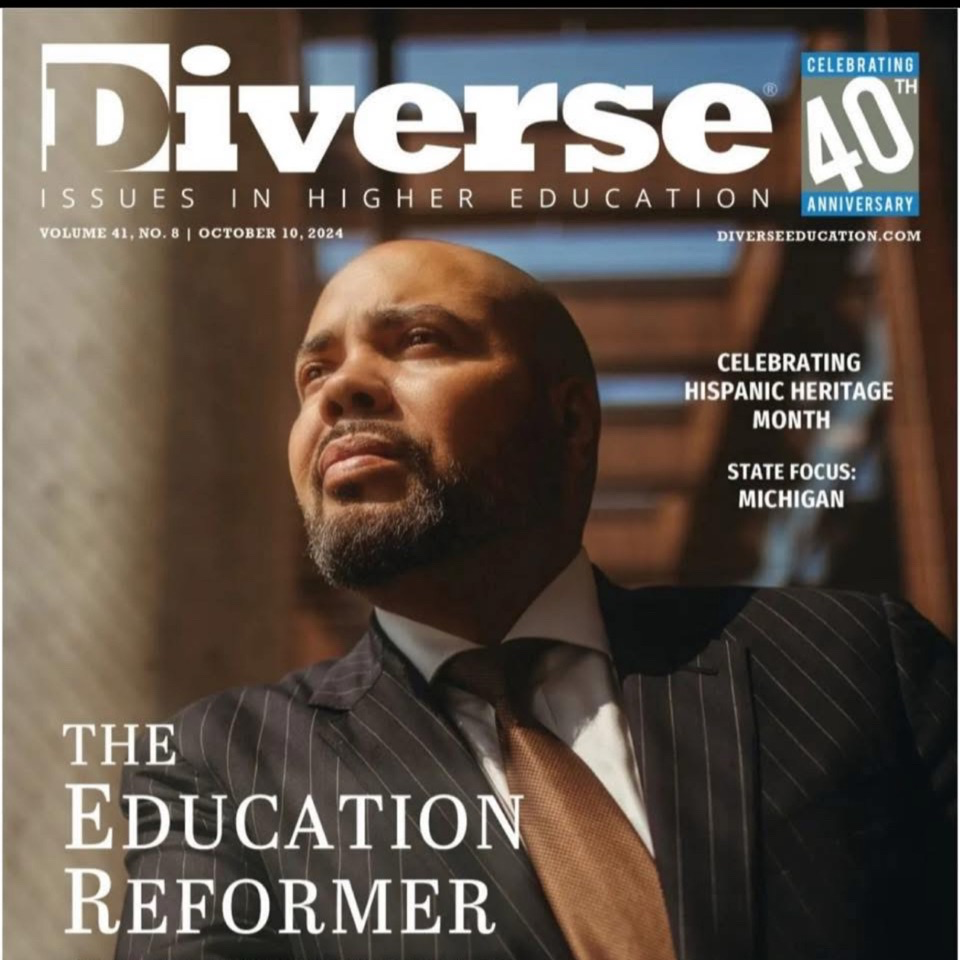
Julian Vasquez Heilig is a nationally recognized public scholar, commentator, and civil rights advocate. He has appeared on major media platforms including Democracy Now!, MSNBC, Al Jazeera, NBC News, PBS, and Univision. His media work reflects a longstanding commitment to making complex policy issues accessible, urgent, and meaningful for the public.



 Cloaking Inequity
Leave a reply to Rebekka Jez Cancel reply