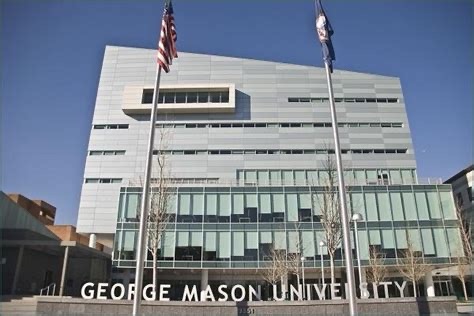
In a country that claims to value academic freedom and democratic discourse, the news that the U.S. Department of Justice has launched an investigation into George Mason University educators, for passing a nonbinding resolution of support for their president, should terrify all of us. But it should not surprise us.
The facts are clear. On July 25, the DOJ’s Civil Rights Division issued a letter targeting the George Mason University Faculty Senate. Their alleged offense? Expressing support for their president, Gregory Washington, the first Black president of Virginia’s largest public university. The DOJ is using a single phrase from a “Whereas” clause in the resolution, not a policy, not a directive, not an implementation memo, to justify a sweeping demand for internal faculty communications. That phrase simply echoed a 2022 strategic goal adopted unanimously by the university’s Board of Visitors: that faculty and staff demographics should mirror student demographics. Nothing more. No hiring quota. No preference program. Just a vision of institutional alignment rooted in transparency and intentionality. Constitutionally protected free speech.
And yet, the federal government has decided to treat that statement as a potential civil rights violation.
Let that sink in.
The Department of Justice, under a second Trump administration, is investigating educators for publicly supporting a Black president and for referencing a board-approved strategic goal focused on inclusive representation. There is no evidence of discriminatory hiring. No indication that the resolution called for illegal action. What there is, however, is a clear pattern of unconstitutional political retaliation—one that begins in the offices of far-right state leaders in Richmond and path all the way to Washington, DC.
This is not about civil rights. This is about power.
When educators debate and pass resolutions, they are engaging in the fundamental practices of shared governance and constitutional free assembly. When they cite strategic plans created by their own institution’s board, they are not violating policy—they are honoring it. When they express support for a university leader, they are exercising their rights as stakeholders in the institution’s mission. But under the Trump regime’s misuse of federal power, even this is now enough to trigger surveillance.
As Todd Wolfson, President of the American Association of University Professors (AAUP), noted in his public statement, this moment is about more than George Mason. “If the Department of Justice can investigate faculty governance bodies for citing a university’s own strategic plan—one approved unanimously by its governing board—then no campus in America is safe.” He is right.
The target may be George Mason. But the message is national. The federal government is signaling that educator free speech, particularly when it supports equity or leaders of color, will be treated as illegal. That solidarity itself is punishable.
This is not the first time we have seen tactics like this. In previous Uppity Minority posts, we’ve explored how institutions and political actors weaponize process, policy, and law to silence, marginalize, or eliminate leaders of color who succeed on their own terms. But this case brings that pattern to an entirely new level.
What is being criminalized here is not illegal activity. It is free speech. Faculty stood by a president under siege, and now the state is punishing them for it.
This is also a racialized pattern. Gregory Washington is not just a university president. He is a first. His leadership represents a break from decades of homogeneity at the top of Virginia’s higher education system. And like so many Black leaders who rise to positions of power, his mere presence becomes politicized. His success becomes suspicious. His support becomes a scandal. This is the same pattern we’ve seen play out across the country—from the character assassination of Claudine Gay at Harvard to the forced resignations of courageous K–12 superintendents who spoke out for justice.
It is also a classic tactic of dictators in authoritarian countries.
And now the same story is playing out in Fairfax, Virginia.
We cannot afford to treat this as isolated. This is a coordinated strategy. Over the past five weeks, George Mason University has been subjected to five separate federal inquiries. That is not coincidence. That is escalation. The goal is clear: to discredit leadership, divide faculty, and destroy shared governance. The real crime here is not civil rights abuse. The real crime, in the eyes of these officials, is defiance.
The AAUP has correctly identified this as a “gross misuse of federal power.” But it is more than that. It is a test. If they succeed in making an example out of George Mason, they will not stop there. The next faculty senate, the next equity-minded president, the next institution that dares to speak openly about justice will be next.
That is why this moment demands more than statements. It demands resistance.
The Board of Visitors at George Mason must reject the DOJ’s request in full. They must affirm that faculty deliberation will not be policed. They must state clearly and publicly that President Washington will not be undermined by outside political interference. If they fail to do this, they are not neutral. They are complicit.
Faculty across the country must recognize what is at stake. We cannot afford to sit on the sidelines. Every department, every campus, every governance body should be watching this closely. When the federal government tries to criminalize free speech, the only response is to pass more resolutions. Loudly. Boldly. In solidarity.
This moment also calls for courage from university presidents and chancellors across the nation. If you believe in academic freedom, if you claim to support faculty governance, if you have issued DEI statements in the past three years, now is the time to prove it. Not with platitudes, but with presence. Speak out. Stand with George Mason. Call this what it is—an assault on democratic discourse.
If we let this pass quietly, we are inviting the normalization of political suppression in higher education. We are telling every faculty senate in the country to stay silent. We are warning every president of color that their legitimacy is fragile and that their allies will be punished.
But that is not the future we are building.
As Wolfson reminds us, “The AAUP has defended academic freedom for over a century. We are not backing down now.” Neither should we. We owe it to every student, every scholar, and every leader who believes that truth should not be determined by power.





 Cloaking Inequity
Leave a reply to The Uppity Minority: What We Will Not Be Apologizing For – Cloaking Inequity Cancel reply