Juneteenth is often described as a celebration of freedom. It is. But it is also a reminder that freedom, opportunity, and recognition arrive later than they should.
When enslaved people in Texas learned of their freedom on June 19, 1865, the Emancipation Proclamation had already been signed more than two years earlier. Freedom had been declared and the law had changed, yet the reality had not. The delay between what was promised and what was experienced became part of the story of Juneteenth itself. That history is one reason I have always found firsts to be so complicated.
Even in this decade, you can still be the first. That fact should probably surprise us more than it does. After decades of speeches about diversity, all the strategic plans about inclusion, all the public commitments to equity, and all the celebrations of representation, there are still many, many rooms where someone is walking in as the first.
The first woman to lead the company, the first Black partner in the firm, the first Latino superintendent in the district, the first Indigenous scientist in the laboratory, the first Asian American judge in the courthouse, or the first person of color in the executive office all represent breakthroughs that continue to occur in the twenty-first century.
The existence of those firsts tells us something important about progress, but it also tells us something important about delay. Juneteenth reminds us that delayed recognition is not a new phenomenon in American life. Freedom had already been declared. The question was whether institutions and individuals would recognize it.
What the First Reveals
To be first is an honor, but it is also a burden. It is not simply a line in a biography, a sentence in a press release, or a historical footnote attached to a title. Being first means carrying your own hopes while also carrying the hopes of people who have been waiting to see someone like themselves occupy a particular role. You earned the opportunity through preparation, experience, excellence, and sacrifice. You built a record and did the work necessary to get there. Yet once you arrive, you quickly realize that you are not only evaluated as an individual. You are often interpreted as a symbol, whether you asked for that role or not.
That reality became clear to me after stepping down last year as Provost and Vice President for Academic Affairs at Western Michigan University. During a conversation with the former president of the university, I told him that one of the most disappointing aspects of leaving the position was that I had been the first. The first provost of color in the more than 120-year history of the institution. That truth carried both pride and disappointment. I was proud of what the appointment represented, but privately disappointed that it had taken more than a century for the institution to reach that point. If a university has existed for generations before appointing its first provost of color, then the story is not only about the person who arrived. It is also about the institution that waited.
That is the uncomfortable truth about firsts. They are evidence of progress, but they are also evidence of delay. They tell us that an organization, profession, or institution finally crossed a line that it should have crossed long ago. They remind us that talent was always present, but recognition and opportunity were not always distributed fairly.
When someone becomes the first, the story is often framed as though something extraordinary suddenly appeared. In reality, the capability was already there, the qualifications were already there, and the leadership was already there. What was missing was recognition from decision makers. The first therefore serves as both a milestone and a mirror because it reflects the achievement of the individual while also exposing the shortcomings of the institution that took so long to acknowledge what had been present all along.
Juneteenth reminds us of this truth. The formerly enslaved did not suddenly become capable of freedom on June 19, 1865. They had always possessed their humanity, intelligence, dignity, aspirations, and capacity for self-determination. The delay was about a society that had not yet found the moral courage to set African Americans free. The same principle applies to the firsts we celebrate today. The breakthrough often reveals less about the person or community who broke through than it does about the institution that finally recognized what had always been necessary. Progress deserves celebration, but delay deserves scrutiny.
The Burden No One Sees
There is also a private side to being first that people do not always understand. You are often expected to be both bold and careful at the same time. You are expected to change things without making anyone uncomfortable. You are expected to represent progress while simultaneously managing resistance to progress. You are expected to carry organizational aspirations while absorbing organizational anxieties. That can be lonely work because the celebration that accompanies a breakthrough often obscures the challenges that proceeded and follow it. Being first means learning how to navigate both visibility and vulnerability at the same time.
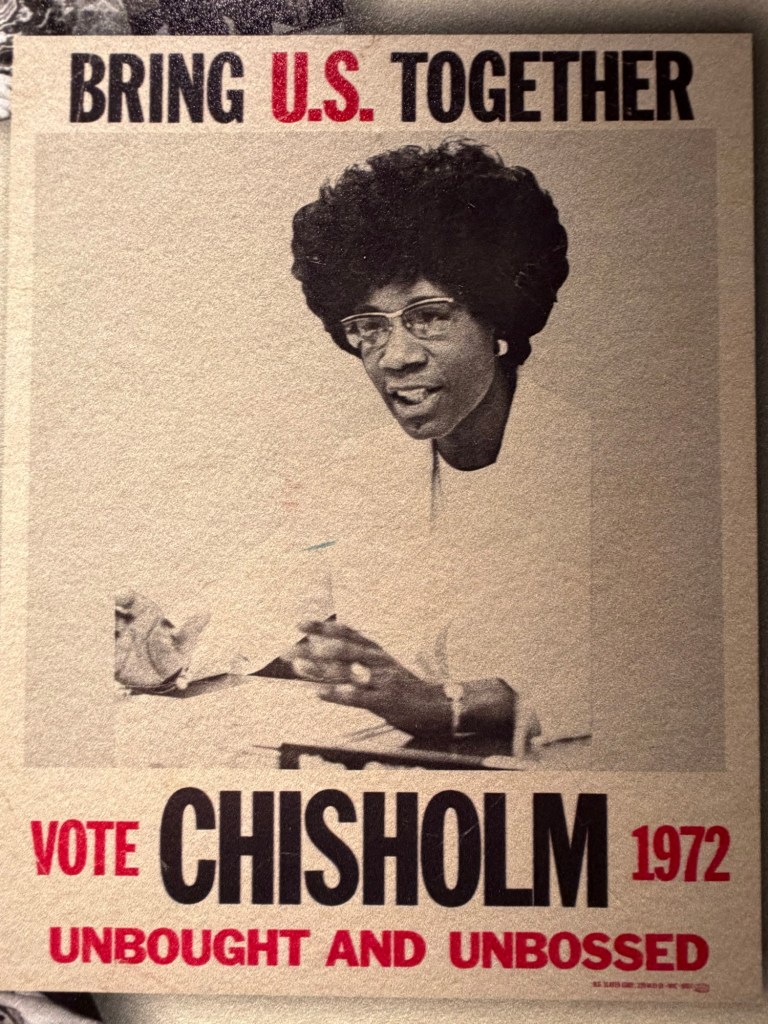
Shirley Chisholm Campaign poster in National Museum of Civil and Human Rights
Shirley Chisholm understood this burden. As the first Black woman elected to Congress and the first woman to seek the Democratic presidential nomination, she understood that breakthroughs rarely occur without friction. Her description of herself as “unbought and unbossed” continues to resonate because it captured both courage and independence in the face of systems that did not welcome her leadership.
Chisholm’s example reminds us that firsts often have to be excellent and disruptive at the same time. They have to prove that long-held assumptions were wrong while also surviving the discomfort created by that realization. They are often celebrated publicly while encountering extensive resistance privately. The burden of being first is therefore not simply about success. It is also about persistence.
The Backlash After the Breakthrough
There is another reality about firsts that organizations rarely discuss openly. The breakthrough is often followed by backlash. We like to imagine that progress unfolds in a straight line, but history suggests otherwise. The end of slavery was followed by Reconstruction and then Jim Crow segregation. The civil rights movement was followed by decades of resistance, including the erection of Confederate monuments, the drawing of discriminatory school district boundaries, the practice of redlining, and other efforts designed to preserve racial inequality even after legal segregation had been dismantled. Advances in opportunity are frequently followed by efforts to restore that past. Progress often produces anxiety among those who were comfortable with previous arrangements of power and want to be “great” again.
For example, a university may have celebrated prior leaders from historically underrepresented backgrounds and point to those appointments as evidence of progress. Yet when the next leadership transition arrives, decision-makers often gravitate toward leaders who more closely resemble those who historically occupied those positions. While there are exceptions (e.g. Rutgers), usually breakthrough of the first becomes an episode rather than a new norm. The issue is not whether any individual successor is qualified. The issue is whether the institution truly embraced a broader understanding of leadership or merely made a temporary exception. Organizations are often better at discussing diversity than sharing power. They are often more comfortable with a first than with a pattern.
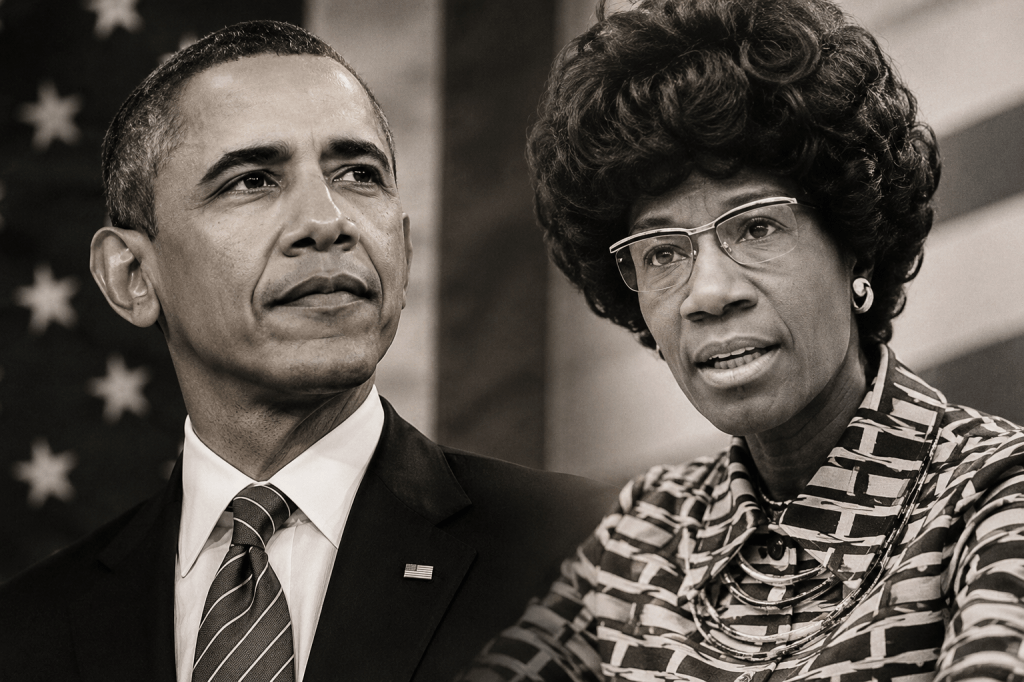
The symbolic breakthrough receives applause, while the structural changes required to make the breakthrough ordinary often generate resistance. The same dynamic can be observed in American politics. The election of Barack Obama represented a historic milestone and inspired millions of Americans who saw new possibilities in democracy. Yet it also energized opposition that was determined not merely to defeat his policies but to reject much of what the multi-racial coalition that propelled him to the presidency symbolized for the United States. Some disagreed with his policy choices. Others were reacting to what his election represented for race in America. It was about competing visions of who belongs at the center of American life.
The intensity of the backlash represented by the election of Donald Trump, twice, actually reveals the significance of the breakthrough. If the change from Obama’s election were insignificant, there would be little reason to resist it so extensively in rhetoric and policy. The real test of progress is therefore not whether the first arrives. The real test is what happens after the backlash. Do we build on the breakthrough and normalize broader participation, or do we permanently return to familiar patterns of American history? The answer to that question will reveal whether transformation has actually occurred.
Conclusion: The Deeper Calling
Over time, I have come to believe that being first is both a privilege and a responsibility. The privilege comes from knowing that you were call to an opportunity that others never received. The responsibility comes from making sure that opportunity does not end with you. The point is not to become a plaque on a wall, a photograph in a hallway, or a footnote in an institutional history. The point is to leave the door open a little wider than you found it.
That is why I am blogging so furiously.
When I think about Juneteenth, I think about people who never had the opportunities that many of us take for granted today. I think about people who dreamed of freedom without ever fully experiencing it. I think about people who planted trees knowing they would never sit in the shade. Their sacrifices created possibilities for future generations. The question for us is what we will do with those possibilities.
Dr. Martin Luther King Jr. once observed that “the arc of the moral universe is long, but it bends toward justice.” Juneteenth reminds us that the arc does not bend on its own. It bends because ordinary people push it. It bends because people are willing to challenge racism, sexism, homophobia, xenophobia, anti-semitism, and more to expand opportunity, and refuse to accept exclusion as inevitable. It bends because each generation decides that the future should be better than the past.
Success is not measured by becoming the first. Success is measured by whether others can follow. It is measured by whether the path becomes a little easier, the door opens a little wider, and the opportunities become a little more accessible for those who come next. If the next generation still has to fight all the same battles, then we have not finished the work.
Juneteenth reminds us that progress is possible, even when it arrives later than it should. As I watched President Obama open the Obama Presidential Center yesterday on Juneteenth, I understood why he chose that date. It was a statement about freedom, opportunity, and the belief that communities too often left on the margins belong at the center of the American story. Perhaps that is also the lesson of being first. The goal is not simply to make history. The goal is to create new possibilities for those who follow. The most meaningful legacy is not that you were the first person to walk through the door. The most meaningful legacy is making sure you are not the last.
Please share.
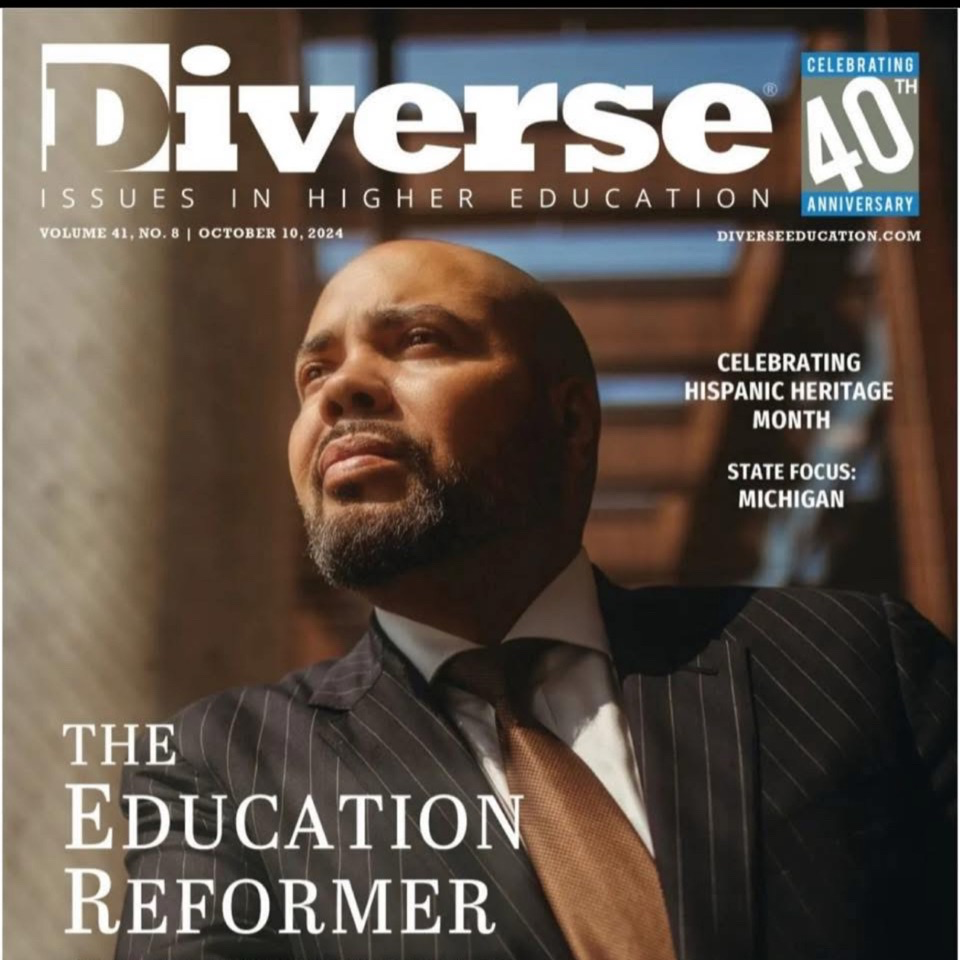
Julian Vasquez Heilig is a nationally recognized public scholar, commentator, and civil rights advocate. He has appeared on major media platforms including Democracy Now!, MSNBC, Al Jazeera, NBC News, PBS, and Univision. His media work reflects a longstanding commitment to making complex policy and leadership issues accessible, urgent, and meaningful.



Leave a Reply