Given enough time something will eventually go wrong.
For years I have been fascinated by science fiction stories in which someone discovers a way to send a message into the future. Those stories usually ask the same question. If you could send messages to people who have not yet been born what would you say? I want to return to that idea at the end because I have come to believe that we are already doing exactly that. Until then let me begin somewhere much more familiar.
Every family. Every friendship. Every church. Every business. Every university. Every organization. Given enough time someone will make a mistake. Someone will be hurt. Someone will ask difficult questions. Before long a familiar conversation begins behind closed doors. “We need to make a statement.”
Those may be the most consequential words spoken during any crisis. A statement does far more than communicate information. It reveals priorities and explains strategy. It exposes values. It tells people whether leaders are pursuing truth or protecting themselves. Every sentence becomes a window into an individual’s or an institution’s character. The hardest words you will ever write are rarely about explaining what happened. They are about revealing who you become when something does.
Every Statement Begins Before the First Word
Every organization claims to value truth until the truth becomes uncomfortable. Several years ago I found myself in exactly that moment. A university where I served in senior leadership was responding to a student protest. No statement had been written. Communications professionals had not yet begun drafting language. Attorneys had not yet reviewed a single sentence. Instead the leadership team was debating what actions the university should take and what message those actions would ultimately communicate.
When the vote was taken I was the only dissenting vote. My objection was never about wording because no words yet existed. My objection was about values. I believed the proposed course of action conflicted with everything I believed about higher education. Universities exist to strengthen community rather than suppress disagreement. Students have the right to participate meaningfully in institutional life. Peaceful protest is not a problem to eliminate. It is evidence that students care enough to engage with their institution. Freedom of speech matters most when the speech makes those in power uncomfortable.
I also believed the proposed response would have been a profound strategic mistake. Rather than reducing tensions it would almost certainly have inflamed them on campus. Rather than strengthening public confidence our community it would have weakened institutional credibility. Rather than reinforcing our stated values it would have contradicted them in full view of the nation. I made it clear that if the university chose that course my name would not be attached to the decision.
Leadership ultimately changed direction and adopted the recommendation I had advocated from the beginning. The approach I opposed was never implemented. Looking back I remain convinced that decision helped the university avoid what could have become a national controversy. However, the political consequences for me inside with leadership of the institution were substantial. Yet I have never regretted casting the only dissenting vote because leadership ultimately demands loyalty to values before loyalty to consensus.
Every Leadership Team Needs a Tenth Person
I have often thought about the “10th Man Rule” popularized in the film World War Z. In the story, Jurgen Warmbrunn, played by Ludi Boeken, explains that if nine people in the room agree about a course of action the responsibility of the tenth person is to disagree on principle. The purpose is not to be argumentative. The purpose is to protect the organization from the danger of false certainty. Someone must imagine that everyone else could be wrong. Someone must examine the possibility that the unlikely explanation deserves serious consideration.
That idea stayed with me because leadership research has reached remarkably similar conclusions. Irving Janis demonstrated how groupthink emerges when leadership teams value consensus more than critical evaluation. Daniel Kahneman showed that human beings consistently overestimate their own judgment and underestimate uncertainty. Amy Edmondson found that organizations make better decisions when people feel psychologically safe enough to challenge prevailing assumptions. Chris Argyris warned that defensive routines often prevent organizations from hearing the very information they most need to hear. Different scholars use different language. They all reach a remarkably similar conclusion. Healthy organizations require principled dissent.
Looking back I realize that I became the tenth person in that meeting. I was not trying to win an argument. I was trying to prevent the institution from making a decision that conflicted with its own values. Being the lone dissenting voice is rarely comfortable. It can carry political consequences that last for years. Leadership, in my view, is measured by whether we are willing to ask difficult questions of power before everyone else stops asking them.
The Statement Is Never Just About Words
That experience permanently changed how I think about statements. Most people assume statements exist to calm difficult situations. Sometimes they do. Sometimes they make matters dramatically worse. Poorly conceived statements often inflame conflict because people quickly recognize when leaders are protecting themselves instead of addressing legitimate concerns. Trust is built through authenticity rather than public relations.
Most statements also have invisible authors. Communications professionals think about headlines. Attorneys think about legal exposure. Governing boards think about institutional stability. Executives and managers think about reputation. Many perspectives contribute to what ultimately appears in the public communication. I argue that someone in the room must ask different questions. Does this response reflect our values? Does it respect the people most directly affected? Are we trying to understand what happened or merely trying to control how it will be perceived? Have we confused protecting our reputation with protecting our mission? Those questions cannot be answered by communications strategy alone. They require moral judgment.
When Statements Become Defensive
Recently a professor sent me an email after reading a presidential response to my family discussed in the media, Ohio Conference President Refuses Conversation with Parent About Camp Mohaven Problem. Her subject line simply read, “He’s such an arse!” She then introduced me to a concept widely discussed in social work called DARVO. The acronym stands for Deny, Attack, Reverse Victim and Offender. She suggested that the response reflected communication patterns commonly associated with that framework. Whether readers agree with that assessment or not, the broader leadership lesson is worth considering. We should all learn to recognize communication patterns that redirect attention away from the underlying concerns and toward the individuals raising those concerns because those shifts can make it more difficult to evaluate the issues on their merits..
Ethical leadership requires resisting that temptation. Accountability begins with curiosity by humans rather than defensiveness. Credibility grows when we demonstrate a willingness to investigate uncomfortable questions rather than dismiss them. Institutions earn trust by showing that values remain intact precisely when circumstances become difficult. Those are the moments when communities discover whether mission and value statements actually mean anything.
Every Person Is Now a Communications Office
A generation ago organizations and the media largely controlled public communication. Today everyone possesses a publishing platform. Parents write statements. Employees write statements. Friends write statements. Students make statements on TikTok. Churches issue statements. Sometimes those statements appear on official letterhead to press organizations. Sometimes they appear as a Facebook post or emails written late at night.
That reality creates enormous responsibility. Emotional satisfaction should never be confused with effective communication. Anger often produces communication that feels powerful in the moment and regrettable a week later. Personal attacks rarely persuade people who are still deciding what to believe. However, FACTS remain remarkably persuasive because they allow readers to reach their own conclusions.
Your Statement Belongs to the Future
We may joke that this heading sounds like something from the Back to the Future films. The older I get the less it feels like science fiction. Every photograph we post, every public statement we sign, every interview we give, every email we choose to make public, and every social media post becomes part of an expanding archive of who we are in the digital public square. Previous generations disappeared into history with only fragments of their daily lives preserved. Ours may become one of the first generations whose lives are catalogued in extraordinary detail.
Whether that archive is eventually studied by historians, analyzed by artificial intelligence, explored by our descendants, or even one day used to construct sophisticated digital representations of individuals and placed in robots is difficult to know. That last possibility maybe belongs to the realm of science fiction speculation. The larger point does not. Future generations will almost certainly know more about our everyday lives than we know about almost anyone who lived in the twentieth century. They will not simply read about our decisions. They will read our words exactly as we wrote them.
That realization changes how I think about statements. A statement is not merely written for today’s audience. It is written for tomorrow’s readers as well. It becomes part of a permanent public record that outlives the controversy that inspired it. The crisis fades. The headlines disappear. The statement remains waiting for someone decades from now to ask a simple question. What kind of person was this? What kind of institution was this? What did they choose to say when the pressure was greatest?
The hardest words you will ever write are therefore not just about managing in the present. They are about introducing yourself to the future. Every public statement becomes one more chapter in the story someone else will eventually tell about your life. Make sure the words they inherit are worthy of the person you hope history remembers.
Please share.
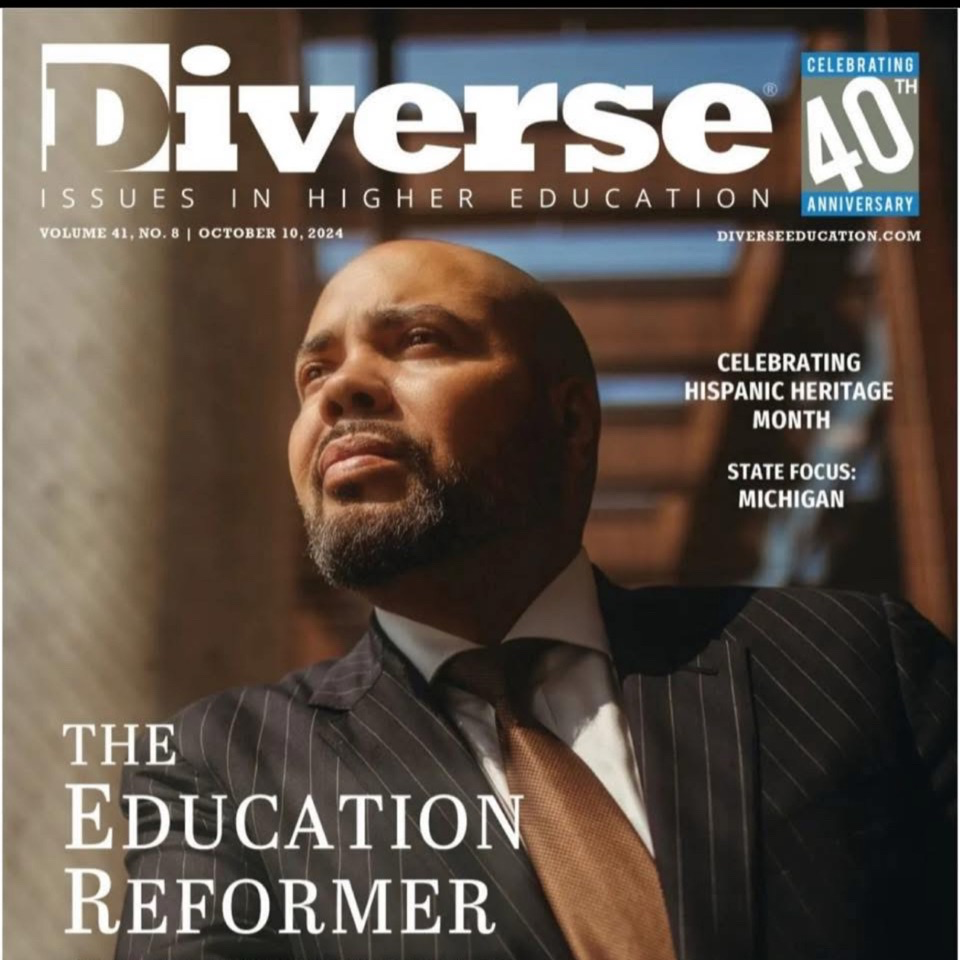
Julian Vasquez Heilig is a nationally recognized public scholar, commentator, and civil rights advocate. He has appeared on major media platforms including Democracy Now!, MSNBC, Al Jazeera, NBC News, PBS, and Univision. His media work reflects a longstanding commitment to making complex policy and leadership issues accessible, urgent, and meaningful.




Leave a comment