
Have you ever had someone suddenly disappear from an organization?
I first saw it happen in the 1990s when I began working in the Research and Accountability Department of the Houston Independent School District after graduate school. It happened more than once. Each time it was a shock. One day a colleague was there. The next day they were gone. No explanation seemed to match what many of us had observed. That experience stayed with me throughout my career.
At the time, I assumed those disappearances were unusual. Three decades later, I am no longer convinced. What once seemed like isolated incidents now appears to follow a surprisingly familiar script. The names change. The organizations change. The circumstances change. Yet the pattern often remains remarkably consistent.
When things are truly bad with an employee, explanations are rarely necessary. Coworkers have witnessed the behavior. Supervisors have documented the concerns. Colleagues have experienced the disruption firsthand. Long before the separation occurs, most people understand the reasons behind it. The departure may still be surprising, but it is not confusing. Little mystery surrounds the decision because the facts have already done the work.
Far more interesting are the situations where confusion immediately follows the separation. Suddenly phones are ringing, text messages are flying, and former coworkers are comparing notes. In some cases, reporters start asking questions. In others, social media becomes the gathering place for people trying to make sense of what happened. The reason is simple. What people are hearing does not align with what they personally observed. Meetings were attended. Projects were completed. Results were delivered. Then a story emerges that seems disconnected from the reality many people witnessed firsthand.
The Story They Tell After You Are Gone
In most cases, the story is not delivered through a formal public announcement. Instead, it develops through private conversations, carefully crafted statements, and selective disclosures. Rather than fully explaining the decision, the narrative often relies on implication. Leadership had reasons. Confidence was lost. Concerns existed. Details cannot be shared. Before long, uncertainty replaces clarity.
What fascinates me is how frequently these explanations collide with the experiences of the people closest to the situation. The individuals who worked side by side with the departed employee often struggle to reconcile what they are hearing with what they observed. They remember the meetings. They remember the projects. They remember the outcomes. Most importantly, they remember the person. That creates a tension between institutional narrative and lived experience.
Under those circumstances, perception management becomes almost as important as the original decision. Stakeholders need reassurance. Questions need answers. Conversations need direction. Yet the more effort devoted to explaining a decision, the more some observers begin to wonder whether the explanation is as obvious as leaders claim. If everyone already understood what happened, there would be little need to shape the story afterward.
This dynamic is not limited to education. It appears in government agencies, nonprofit organizations, corporations, and religious institutions. Wherever power exists, the temptation to manage perceptions exists as well. That temptation becomes especially strong when leaders recognize that reasonable people may disagree with their actions.
The Duct Tape of Dysfunction
Last year I wrote a post titled The Duct Tape of Dysfunction: How NDAs Are Weaponized Against Truth. The response was overwhelming. Messages arrived from educators, public servants, nonprofit leaders, and private-sector employees. Although the organizations differed, the stories often sounded strikingly familiar. Different settings. Different industries. Different personalities. The same underlying pattern.
Many of those stories involved financial incentives tied to silence. Others described settlement agreements that discouraged public discussion. Still others involved informal pressure to keep concerns private. Whether the mechanism was legal, financial, or cultural mattered less than the outcome. Information that might have helped others understand a situation remained hidden from view.
Conversations on my podcast Truth for America revealed similar themes. Former members of Teach For America repeatedly described situations in which financial benefits appeared connected to confidentiality agreements. The message they received was difficult to miss. Speak publicly and lose the benefit. Remain silent and receive it. Accountability and compensation were often presented as competing choices.
I encountered a version of that dynamic myself. When I left the provostship at Western Michigan University, I was offered compensation in exchange for signing a non-disclosure agreement. I declined the offer. That decision reflected my own circumstances, values, and tolerance for risk. Others may reach different conclusions, and I do not judge them for doing so. Careers, finances, families, and health concerns all influence how people respond when placed in difficult situations.
What concerns me is not the individual choice. What concerns me is the broader system. Silence becomes a commodity. Information becomes negotiable. Transparency becomes something that can be exchanged for compensation. Institutions rarely describe these arrangements in those terms. Instead, they are framed as professionalism, resolution, or closure. Regardless of the language used, the result is often the same. Questions remain unanswered. Important information never reaches public view. Accountability becomes more difficult.
Theories of Power and Leadership
As a scholar of educational leadership, I believe theory matters. Leadership theory helps us understand organizations, ethics, decision-making, and power. Yet theory becomes truly useful when it helps explain real-world experiences. Too often leadership preparation relies on clean case studies with tidy endings. Real life is usually messier. Real organizations rarely fit neatly into textbook examples.
Political theorist Steven Lukes argued that power operates on multiple levels. One level involves making decisions. Another determines which issues receive attention. The most consequential level may be the ability to shape how people interpret events. Most observers focus on the visible decision because it is easiest to see. Someone is hired. Someone is fired. A board takes a vote. A president issues a directive. Lukes encouraged us to look beyond the decision itself and examine who controls the narrative surrounding it.
That insight helps explain many of the situations discussed here. The separation is often only the beginning. A second struggle immediately follows. Why did it happen? Which facts matter? Which facts remain hidden? Who gets to define the meaning of the event? Control over those questions can be every bit as powerful as control over the original decision.
French philosopher Michel Foucault pushed this analysis further. Rather than focusing solely on authority figures, he examined how systems shape behavior. Investigations, confidentiality agreements, professional norms, and information management all become mechanisms through which power operates. Expectations are established. Boundaries are reinforced. Individuals learn what can be said and what should remain unspoken.
Viewed through that lens, many familiar practices take on new significance. The outside law firm. The carefully crafted statement. The confidentiality agreement. The repeated call for professionalism. None of these actions are inherently improper. Yet each influences how information flows through an organization. Each shapes the environment in which people decide whether to speak, remain silent, or ask difficult questions.
Leadership scholar Robert Greenleaf offered a very different perspective. His servant leadership framework asks a deceptively simple question: Are people better off because of leadership decisions? During moments of success, answering that question is easy. During moments of conflict, separation, and uncertainty, the answer becomes much harder. Those are precisely the moments when leadership reveals its true character.
The Silence They Need
All of this helps explain why I have become skeptical whenever leaders insist that everyone should simply be “mature” about a separation. Employees are encouraged to move on quietly. Stakeholders are advised not to speculate. Community members are urged to trust the process. The guidance often sounds reasonable, responsible, and professional. What interests me is not the advice itself but the purpose it serves.
Public discussion introduces uncertainty. Additional facts invite scrutiny. Questions create accountability. Once information begins circulating beyond official channels, leadership loses some ability to control how events are understood. Silence, by contrast, offers stability. Silence protects decisions from examination. Silence shields leaders from uncomfortable questions. Silence allows organizations to move forward without fully confronting what occurred.
None of this means every personnel decision is wrong. Performance concerns are real. Conflicts occur. Some separations are entirely justified. Organizations have every right to make difficult decisions. The relevant question is not whether leaders should act. The relevant question is whether those actions can withstand scrutiny once they are examined carefully.
That brings us to the central question. Will you give them the silence they want? Will you sign the agreement placed in front of you? Will you carry the burden of their decision while protecting them from the consequences of it? These are not easy choices. Speaking publicly can carry very real costs. Every individual must weigh those costs against their own responsibilities and circumstances.
A different question, however, deserves equal attention. What happens if nobody speaks? When truth remains hidden, patterns survive. When patterns survive, harm often repeats itself. Eventually another person finds themselves sitting where you once sat. Confusion follows. Questions emerge. The same cycle begins again.
Whether you are considering a settlement, contemplating an NDA, or simply deciding whether speaking is worth the personal cost, the same question remains.
Do you want this to happen to the next person?
One final thought deserves consideration. What if the position was vacant because something similar happened to the person before you? What if the reason the job opened was that someone else experienced the same treatment and chose—or was pressured—to remain silent? Before uprooting your family, relocating across the country, turning down other opportunities, or investing years of your life in an institution, would you have wanted to know? Most people would answer yes.
Reasonable individuals want as much information as possible before making major career decisions. They want to understand patterns. They want to know whether concerns have surfaced before. They want to determine whether the official story aligns with the experiences of those who came before them.
That is why institutionalized silence matters. Its impact extends far beyond the person who leaves. Future employees, future students, future leaders, and future community members all lose access to information that might shape their decisions. Once recurring patterns are hidden, informed consent becomes impossible.
That next person could be a recent graduate accepting a first professional position. It could be a faculty member relocating across the country. It could be a vice president, superintendent, dean, provost, or camp counselor. It could be someone who genuinely believes they are stepping into a new opportunity when they are actually stepping into a recurring problem.
That question will not always produce an easy answer. It may, however, produce an honest one. And honesty is the first step toward accountability from those who hold power.
Please share.
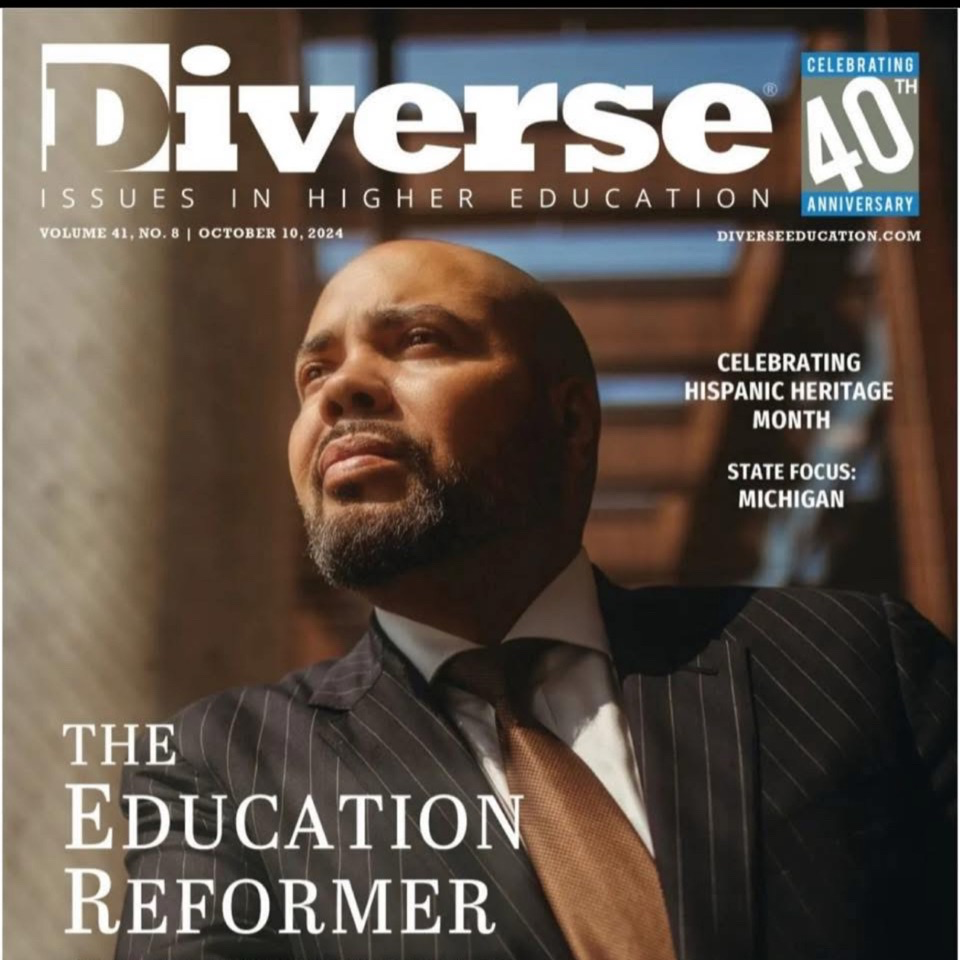
Julian Vasquez Heilig is a nationally recognized public scholar, commentator, and civil rights advocate. He has appeared on major media platforms including Democracy Now!, MSNBC, Al Jazeera, NBC News, PBS, and Univision. His media work reflects a longstanding commitment to making complex policy and leadership issues accessible, urgent, and meaningful.





Leave a Reply